How to Store a Lady Dior
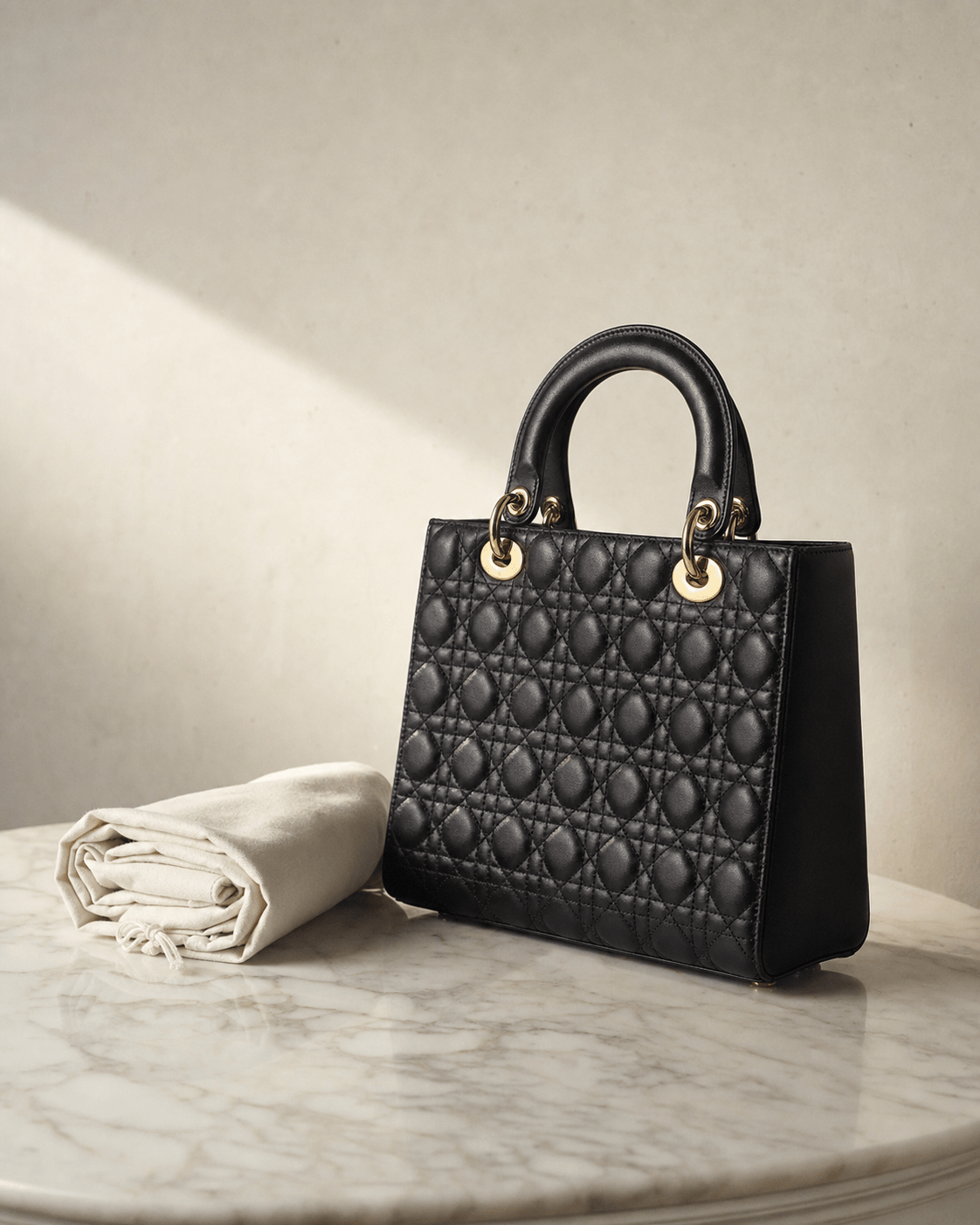
The Lady Dior looks like a bag built for a display shelf, and in most ways it is: a boxy, structured frame, a cannage-quilted lambskin body, and a charm bracelet of D.I.O.R. letters that chimes when you set it down. But that structure is exactly what makes storage decisions matter more than owners expect. A frame bag does not slouch the way a soft tote does, but it scuffs at the corners, loosens at the stitch points if you pack it wrong, and tarnishes at the hardware if you leave it in the wrong closet. The failure modes are different from a Neverfull or a Birkin, and the fixes are specific to this bag's construction.
This guide covers the Lady Dior's real storage risks: cannage stitch integrity under stuffing pressure, lambskin's particular fragility, corner and frame protection, the D.I.O.R. charm, hardware tarnish, and handle care. It also covers how the protocol shifts across Mini, Small, Medium, and Large sizes.
Why the Lady Dior needs its own protocol
Three structural facts drive everything in this guide:
- The body is cannage-quilted lambskin. The diamond stitch pattern is decorative and structural at once, and the stitching itself can loosen under sustained pressure. Lambskin is also one of the softer, more easily marked leathers used in luxury leather goods, more delicate than the calfskin Dior uses on some Lady Dior variants.
- The frame is rigid, which cuts both ways. A boxy internal structure holds the bag's silhouette far better than an unstructured tote, so slouching is not the concern here. Instead, the risk shifts to the corners and base edges, which take the brunt of any contact and scuff or crack before the flat panels show any wear at all.
- The hardware and charm are exposed, not tucked away. The D.I.O.R. letter charm swings freely from the handle, and the hardware, in gold, silver, or gunmetal finishes, sits on the exterior with nothing shielding it from other bags on a shared shelf.
Cannage quilting: the storage-specific risk
Cannage is Dior's signature diamond quilting, and it is more than a surface pattern. Underneath the lambskin or calfskin exterior sits a layer of padding, stitched through in a dense diamond grid that gives the bag its structured, slightly puffed look. That stitching is under a small amount of tension by design, and tension has limits.
Do not overstuff for extended storage
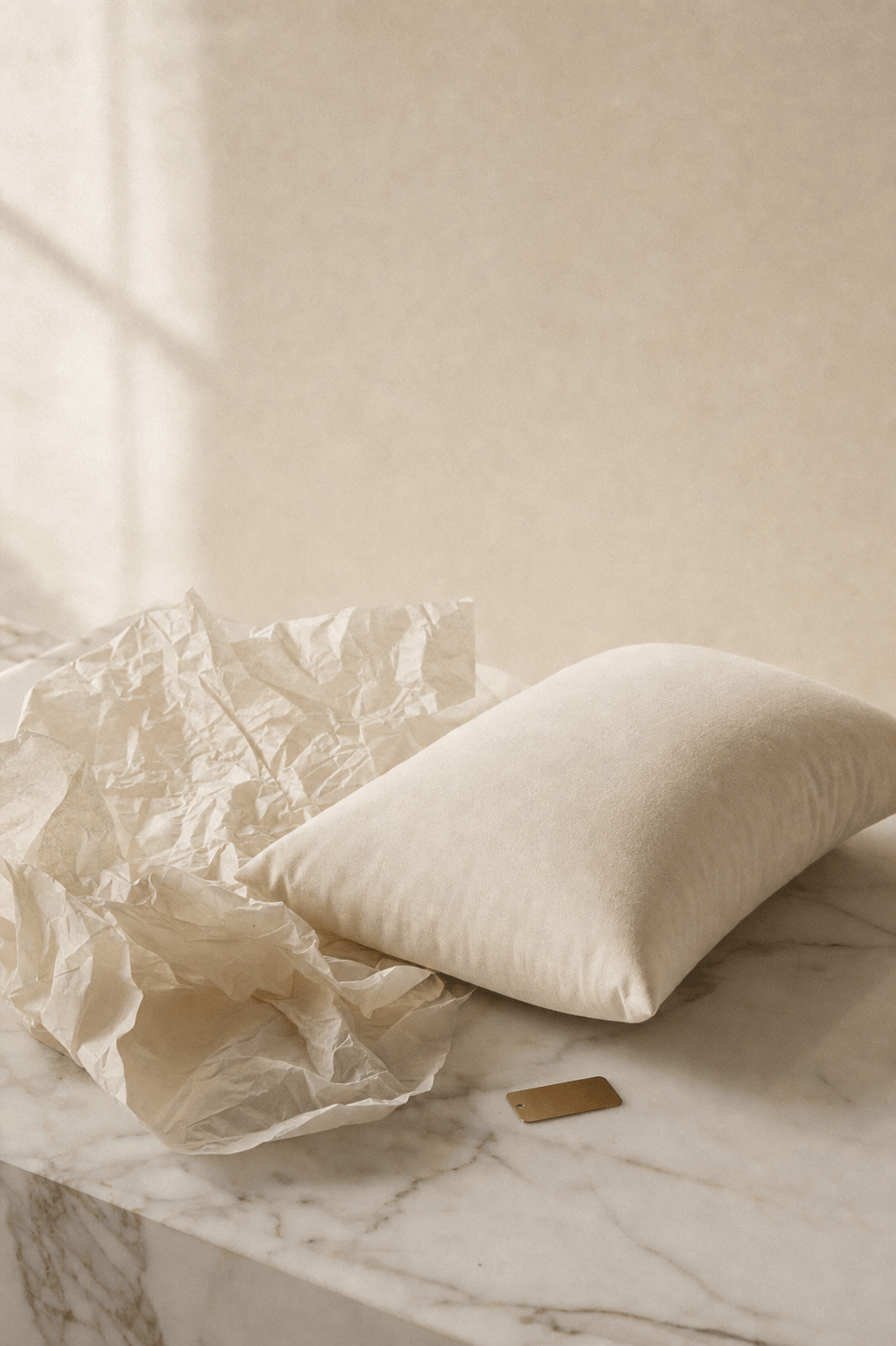
The most common mistake with Lady Dior storage is treating it like a Neverfull: packing it as full as possible to hold its shape. The Lady Dior already has an internal frame doing that job. Overstuffing pushes outward against the cannage stitching from the inside, and over weeks or months of sustained pressure, the stitches around the diamond points can loosen, leaving a slightly puckered or uneven quilt pattern that does not fully tighten back up once the pressure is removed. Fill the bag enough to keep the top from caving in and the front and back panels from touching each other, and no more. Acid-free tissue paper, loosely packed, does this without adding constant outward tension. For a full breakdown of how the stitch pattern is constructed and what damages it specifically, see our cornerstone guide on cannage quilting care.
Watch for early stitch pulls
Before storing a Lady Dior long-term, run a hand lightly over the quilted panels and check the diamond points where multiple stitch lines converge. These intersections are the first place tension shows as a slightly raised or loosened thread. Catching this early, before a full stitch pull becomes a visible gap or a snag catches on something in storage, is much easier to address with a professional repair than waiting for the damage to spread.
Lambskin fragility in storage
Lambskin is thinner and softer than the calfskin used on some Lady Dior variants, which is part of why it takes cannage quilting so beautifully, the padding shows through more distinctly on a softer hide. It is also why lambskin Lady Diors are more prone to fine scratches, surface creasing, and pressure marks than their calfskin counterparts. Anything that presses against a lambskin panel for an extended period, another bag's hardware, a stiff dust bag seam, a shelf edge, can leave a faint impression that takes time to relax out, if it fully does at all. For the deeper material comparison between lambskin and a structurally similar quilted leather, see our guide on caviar vs. lambskin, which covers why textured, coated leathers resist this kind of marking better than smooth lambskin does.
Corners and frame: where the damage actually starts
Because the Lady Dior's frame holds its shape so well, owners sometimes assume the bag is close to indestructible in storage. The opposite is often true at the corners specifically. The rigid base and corner seams take direct contact whenever the bag is set down, shelved next to another bag, or nudged during a closet reorganization, and unlike a soft slouchy tote that absorbs a bump by deforming slightly, the Lady Dior's structured corners transfer that contact straight into the leather and stitching. Scuffs, light creasing, and eventually cracking at the corner seams show up here well before the flat quilted panels show any comparable wear.
Give it real space on the shelf
Store the Lady Dior with enough clearance that its corners are not pressed against a neighboring bag's hardware, buckle, or frame edge. Even soft contact, sustained for months, can transfer a texture imprint onto the smooth leather at the corner.
Common mistakes with Lady Dior storage
- Overstuffing to "keep the shape." The internal frame already does this job; overstuffing puts unnecessary tension on the cannage stitching instead.
- Letting the D.I.O.R. charm hang loose against another bag. The charm's edges and the hardware it hangs from can scratch a neighboring bag's leather, and get scratched themselves.
- Storing without a dust bag. Lambskin marks easily from ambient dust and incidental contact; a breathable dust bag is not optional for this bag.
- Ignoring early stitch looseness. A loose stitch at a diamond point does not resolve on its own and tends to spread if left unaddressed.
- Storing hardware against hardware. Two bags' metal hardware touching in a shared drawer or shelf accelerates surface scratching and, in humid conditions, tarnish transfer.
- Leaving the padded handle folded or creased under weight. This can set a permanent crease line into the padding and leather.
The D.I.O.R. charm: small piece, real risk
The letter charm bracelet that hangs from the Lady Dior's handle is one of its most recognizable details, and one of the easiest things to overlook in storage. Left to swing freely, the charm's metal edges can scratch the bag's own leather panel if it presses against the body during handling, and it can also mark up a neighboring bag on a shared shelf. Tuck the charm inside the dust bag along with the rest of the bag, or wrap it separately in a soft cloth pouch if your dust bag does not fully enclose it, rather than letting it dangle loose against any leather surface for an extended period.
Hardware tarnish: silver and gold finishes
Lady Dior hardware comes in gold-tone, silver-tone (palladium), and gunmetal finishes, and all three are vulnerable to tarnish under the wrong storage conditions. Humidity is the primary driver: metal plating oxidizes faster in damp air, and a closet with fluctuating humidity accelerates the process more than one held at a stable, moderate level. Silver-tone hardware tends to show tarnish as a dulling or slight yellowing first, while gold-tone hardware is somewhat more tarnish-resistant but can still dull over years in poor conditions.
What actually helps
Keep the bag in a closet at 45 to 55 percent relative humidity, away from direct sources of moisture, and avoid sealing it in plastic, which traps whatever ambient humidity exists against the hardware. A silica gel packet placed near, not directly touching, the hardware inside the dust bag can help manage humidity in a closet that runs slightly damp. For the broader mechanics of how humidity affects metal hardware and leather together, see our guide on how humidity destroys luxury leather and our practical guide to silica gel and dehumidifiers in a bag closet.
Padded handle care
The Lady Dior's top handles are padded and quilted to match the body, which makes them comfortable to carry but also means they hold a crease if folded or compressed for long periods. Store the bag with the handles resting naturally rather than folded flat under the flap or pinned beneath the bag's own weight on a shelf. If your storage space is tight and the handles must lie down rather than stand, position them so they curve gently rather than fold at a sharp angle, and avoid resting anything heavy on top of them.
Expert tip: use tissue, not a rigid pillow insert, inside the Lady Dior
Because the Lady Dior already has an internal frame holding its shape, a firm shaped pillow insert can push outward against the cannage stitching with more constant force than the bag needs. Loosely packed, acid-free tissue paper fills the interior enough to prevent the front and back panels from touching or the top from caving in, without adding the sustained structural pressure a rigid insert applies. Save the firm pillow inserts for unstructured totes and totes without an internal frame, and use a gentler fill for frame bags like this one.
Mini, Small, Medium, and Large: does size change the protocol
The core storage rules are identical across every Lady Dior size, but a few details shift with scale. The Medium, at roughly 24 by 20 by 11 centimeters, is the most common reference size and the one most of this guide is written around. The Mini and Small versions need proportionally less tissue to avoid caving, and their smaller frame makes corner damage from shelf contact more noticeable relative to the bag's overall size. The Large carries more weight when filled, so store it upright on its base rather than suspended by the handles for long stretches. Across every size, the cannage stitching, lambskin surface, and hardware face the same risks; only the proportions change.
For the underlying principles behind humidity, shelving, and rotation that apply across every brand in this library, see the pillar guide on how to store luxury handbags properly. The rules for stable humidity and upright shelving apply here too, adjusted for the Lady Dior's rigid frame and quilted lambskin body.
Closing thoughts
The Lady Dior rewards a lighter touch than most owners expect from a structured bag. Do not overstuff it, since the frame is already doing the shape-holding work and the cannage stitching only has so much tension to give. Keep the lambskin away from sustained contact and the hardware away from humidity swings, tuck the D.I.O.R. charm somewhere it cannot scratch or be scratched, and let the padded handles rest without a hard crease. Handled this way, the frame that makes this bag look so composed on a shelf stays composed for decades, not just for the first few years.