Cannage Quilting Care: Dior's Signature Stitch
Cannage is the reason a Lady Dior is recognizable from across a room, and it is also one of the more misunderstood constructions in luxury leather goods. Owners tend to treat it as a surface pattern, something stamped or printed on, when it is actually a full structural system: a layer of padding stitched through in a dense diamond grid that gives the bag its shape, its texture, and its particular set of vulnerabilities. Understanding how cannage is actually built changes how you handle, store, and repair it, and it explains why a Lady Dior ages differently than a smooth-leather bag or even a Chanel flap with its superficially similar diamond quilting.
This is the cornerstone reference for cannage across the Dior catalog: what the stitch actually is and where it comes from, how it differs mechanically from Chanel's quilting, the tension and padding underneath the surface, how lambskin and calfskin cannage behave differently, how to spot early stitch damage, and what professional repair actually involves once a stitch has gone.
What cannage actually is
Cannage is a diamond-patterned quilting motif that Dior has used since the house's earliest handbag designs, most famously on the Lady Dior. The name and the pattern both come from the caning technique used on the Napoleon III chairs that lined the salon at Christian Dior's first couture show in 1947, the same chairs the house has referenced in runway sets for decades since. The interlaced, diamond-lattice look of woven cane seating was translated into a leather quilting pattern: rows of diagonal stitching crossing to form a repeated diamond grid across the bag's exterior panels.
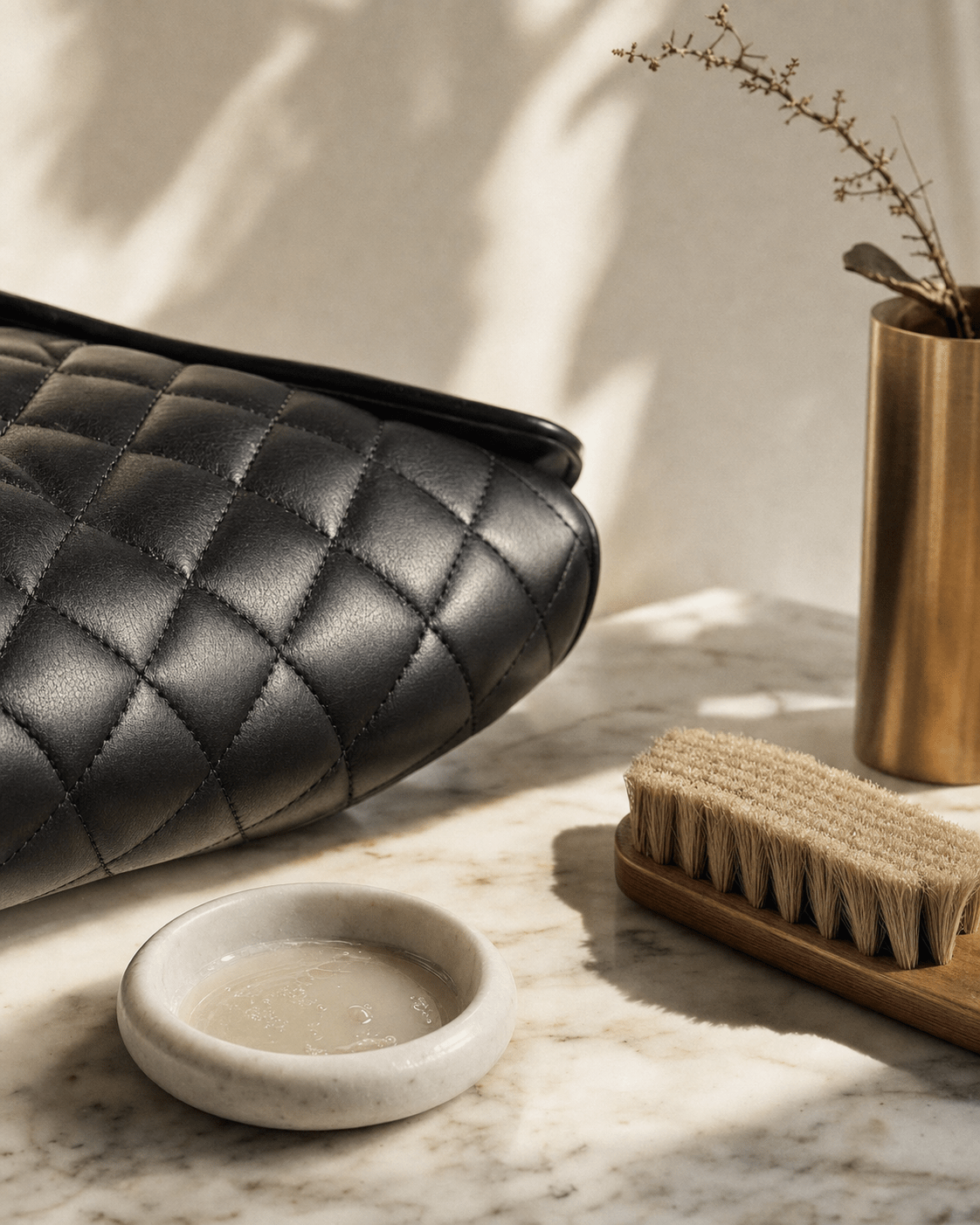
Structurally, cannage is not a print or an embossed texture. It is a genuine three-layer construction: the outer leather panel, a layer of padding underneath (historically a traditional wadding, more commonly a synthetic foam in current production), and a stitched grid running through both layers that compresses the padding at each stitch line and lets it puff slightly between them. That alternating compression and puff is what gives cannage its dimensional, slightly pillowed look rather than a flat quilted surface. The stitching is doing real mechanical work, not just decorating a flat panel.
Cannage vs. Chanel's diamond quilting: what actually differs
Cannage and Chanel's matelassé quilting look related at a glance, both are diamond-grid stitched leather, and it is a fair comparison to draw. But the two constructions differ in ways that matter for durability and care.
Diamond size and density
Dior's cannage diamonds are generally larger than Chanel's matelassé diamonds, and the stitch density, the number of stitch lines per given area of leather, is higher on cannage. More stitching per diamond means more points of tension across the same panel area, which is part of why cannage has a more pronounced three-dimensional, padded look than Chanel's flatter, tighter quilting.
Padding thickness
Cannage typically uses a noticeably thicker padding layer than Chanel's matelassé, which is part of what produces the puffier, more sculptural surface on a Lady Dior compared with the flatter profile of a Classic Flap. That thicker padding also means more material shifting underneath the stitching over time, which is one reason cannage tends to show stitch-line settling in visible, sometimes uneven ways as a bag ages, where matelassé's thinner padding shows this less.
Stitch orientation and construction consistency
Both houses arrange their diagonal stitch lines to form diamonds, but the exact angle, spacing, and construction sequence differ enough that a cannage repair specialist and a matelassé repair specialist are not always interchangeable. Restoring cannage correctly means matching Dior's specific diamond proportions and stitch density, not just replicating "diamond quilting" in a generic sense. For the equivalent breakdown on Chanel's construction, see our guide on caviar vs. lambskin, which covers how Chanel's leather choice interacts with its own quilting.
Stitch tension mechanics: how cannage actually fails
Every stitch in a cannage grid holds a small amount of tension, pulling the leather and padding together at that point and creating the compressed valley between the puffed diamonds. That tension is fine under normal handling. It becomes a problem under sustained or repeated stress beyond what the construction was built for.
Where stress concentrates
The diamond points, where two or more stitch lines cross, are the highest-stress locations in the entire grid. A single stitch line running in isolation distributes tension along its length, but at an intersection, multiple lines are pulling against the same small area of leather and thread simultaneously. This is why stitch pulls almost always begin at an intersection rather than in the middle of a straight stitch run.
What causes tension beyond normal wear
Overstuffing a cannage bag for storage is one of the more common avoidable causes of stitch stress. Packing the interior tightly pushes the leather and padding outward from the inside, adding constant tension on top of what the stitching already carries from its own construction. Repeated overloading with heavy items during use has a similar effect from a different direction, straining the seams and the stitching at the points bearing the most load. Both cases add stress the cannage was not specifically engineered to absorb indefinitely.
How loosening actually progresses
A stitch under excess tension does not usually snap outright on its first exposure to stress. It loosens gradually, first as a barely perceptible give at one diamond point, then as a visibly slack stitch that no longer holds the padding compressed at that intersection, and eventually as a full pull where the thread separates from the leather entirely, sometimes leaving a small gap or a section of exposed padding. Catching the problem at the first stage, a slightly loose stitch rather than a visible gap, is the difference between a minor tightening job and a more involved repair.
Lambskin cannage vs. calfskin cannage
Dior produces cannage in multiple leathers, most commonly lambskin and calfskin, and the choice of hide changes how the quilting behaves in ways that go beyond simple softness.
Lambskin cannage
Lambskin is thinner and softer than calfskin, which lets the padding underneath show through more distinctly and produces the plush, pillowy look many Lady Dior owners specifically seek out. The tradeoff is that lambskin is more prone to fine surface marking, pressure creasing, and, relevant here, slightly more vulnerable stitching, since the thinner leather offers less material for each stitch to grip relative to a thicker hide. Stitch pulls on lambskin cannage can also stretch the surrounding leather itself, not just the thread, in a way that is harder to fully restore.
Calfskin cannage
Calfskin is thicker and firmer, which produces a slightly crisper, less pillowed quilting profile but holds up better under repeated handling and sustained storage pressure. Calfskin cannage generally resists stitch loosening somewhat better than lambskin for the same reason it resists surface marking better: there is simply more structural leather for the stitching to anchor into. Owners choosing between the two for durability, rather than aesthetics, generally find calfskin the more forgiving option for daily use.
How to spot stitch pulls before they become tears
Regular, deliberate inspection catches cannage problems while they are still minor repairs rather than visible damage. Run a hand lightly and evenly across every quilted panel every few months, feeling rather than just looking, since a loose stitch is often easier to feel as a slight give than to see.
- Check every diamond intersection you can reach, not just the areas that see the most handling. Stress can build in a spot you rarely touch if the bag has been overstuffed or overloaded.
- Look for a slightly raised or puckered thread at any intersection, which usually signals the first stage of loosening before a visible gap appears.
- Compare panels against each other. A Lady Dior's front and back panels should show a consistent, even diamond grid. A section that looks flatter, more sunken, or less crisp than its counterpart panel often indicates padding shift or early stitch give underneath.
- Address a loose stitch immediately once found, rather than waiting for a full pull. A single loose stitch caught early is a minor tightening job; a fully separated stitch that has stretched the surrounding leather is a more involved repair with a less certain outcome.
What actually damages cannage stitching
- Overstuffing the bag for storage. Pushes outward tension onto the stitching from the inside, on top of the tension already built into the construction.
- Habitually overloading the bag with heavy items. Strains the seams and stitch points bearing the most load during carry, accelerating loosening over time.
- Letting a loose stitch go unaddressed. Loosening tends to progress from a slight give to a visible pull rather than stabilizing on its own.
- Pressing or resting other objects directly against quilted panels for extended periods. External pressure on top of internal stitch tension compounds stress at the same intersections.
- Attempting a DIY re-stitch with mismatched thread or stitch spacing. This is difficult to reverse and can look worse than the original damage, or create new stress points nearby.
Professional repair options for loosened cannage
Once a stitch has loosened or pulled, home fixes are rarely a good idea, cannage's stitch density and diamond proportions are specific enough that mismatched thread, spacing, or tension can look conspicuously wrong even on close inspection. Professional leather restoration specialists who work specifically with structured quilting can typically re-tension a loose stitch, replace a pulled section with matching thread and stitch angle, and, where padding has shifted or compressed unevenly underneath, redistribute or replace the padding layer before restitching the surface. The cost and complexity scale with how far the damage has progressed: a single loose stitch caught early is a minor, often same-day fix, while a section with multiple pulls and shifted padding underneath may require the panel to be partially reconstructed. This is the practical case for the inspection habit above: catching the problem early is not just about aesthetics, it materially changes what repair options remain available.
Expert tip: fill cannage bags with tissue, not a firm pillow insert
Cannage bags with an internal frame, the Lady Dior chief among them, do not need a firm structural insert to hold their shape in storage the way an unstructured tote does. A rigid pillow insert pushes constant outward pressure against the quilted panels from the inside, adding to the tension the stitching already carries from its own construction. Loosely packed, acid-free tissue paper fills the interior enough to prevent the panels from touching or the top from caving in, without the sustained structural load a firm insert applies. For the broader logic behind matching fill material to a bag's internal structure, see our guide on why tissue paper is ruining your bags, which covers this tradeoff in more depth.
Cleaning cannage without disturbing the stitching
Routine cleaning of a cannage panel should stay light and avoid saturating the stitching itself. A dry, soft cloth for dust and surface debris handles most day-to-day maintenance. If a deeper clean is needed, use the smallest amount of appropriate leather cleaner the job requires, applied to the cloth rather than directly onto the leather, and avoid working the cloth aggressively into the stitch lines, where trapped moisture can sit against the thread and, over time, weaken it or encourage the padding underneath to hold dampness longer than the surrounding leather. Let the panel air dry fully before the bag goes back into storage.
How this applies across the Dior catalog
Cannage appears across multiple Dior bags, and the mechanics covered here, stitch tension, intersection stress, padding behavior, and lambskin-versus-calfskin durability, apply consistently wherever the pattern shows up. What changes between models is scale and how much of the bag's surface is quilted versus smooth leather or canvas. For the broader principles behind humidity, shelving, and handling that apply across every brand in this library, see the pillar guide on how to store luxury handbags properly.
Closing thoughts
Cannage rewards understanding more than most quilted leather does, because so much of what looks like a surface pattern is actually a working structural system underneath. Treat the stitching as load-bearing, not decorative, avoid stacking extra tension onto it through overstuffing or overloading, and inspect the diamond intersections periodically rather than waiting for a visible gap to appear. Do that, and the padded, dimensional quilting that traces back to a set of chairs from a 1947 couture show holds its shape for decades rather than years. A Lady Dior's cannage, cared for this way, ages the way it was designed to: evenly, and on its own long timeline.