Goyardine Canvas: Everything You Need to Know
Goyardine is one of the oldest surviving luxury canvas constructions still in commercial production, and it is also one of the most misunderstood. Owners and shoppers routinely describe it as painted canvas, printed canvas, or a coated fabric similar to Louis Vuitton's monogram material, and none of those descriptions is quite right. Goyardine is a specific, hand-finished construction with a distinct fiber blend, a distinct water-resistance mechanism, and a distinct set of care rules that follow from both. Understanding what it actually is changes how you clean it, how you think about its durability, and what you should reasonably expect from it over decades of use.
This is the cornerstone reference for goyardine canvas: its history and origin, what the material actually consists of, how its water resistance works, the color range available, how hand-painted personalization is done, cleaning guidance, common misconceptions, and how its durability compares to Louis Vuitton's coated canvas and to painted leather more broadly.
Where goyardine comes from
Goyard traces its house history to 1853, but the chevron-patterned canvas most associated with the brand today, goyardine, was developed later, in 1892, by Edmond Goyard. The house had built its early reputation on trunk-making, and the distinctive herringbone-chevron pattern was originally conceived as a durable, recognizable exterior surface for trunks and travel cases meant to survive the punishing conditions of 19th-century travel: repeated handling, exposure to weather, and years of transit by rail and ship. Over more than 130 years since, the construction has been refined but not fundamentally reinvented, which is part of why goyardine feels, in hand, more like a genuinely old textile tradition than a modern coated fabric engineered primarily for a handbag.
What goyardine actually is
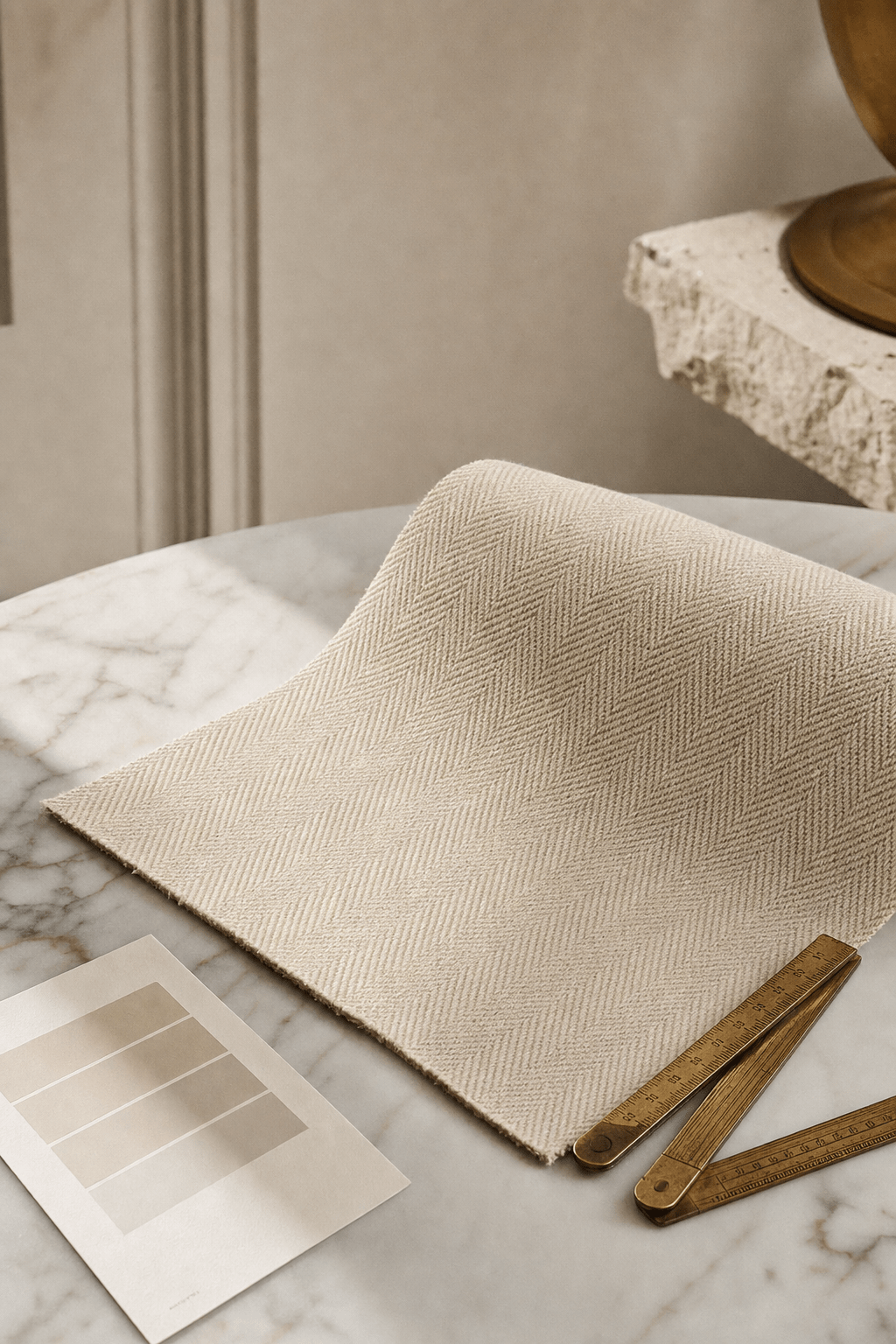
Goyardine's base fabric is a blend of linen, cotton, and hemp fibers, woven together before the chevron pattern is applied. This fiber blend is a meaningful departure from the vinyl-coated canvas used by most other coated-canvas luxury houses, since it starts from a genuine woven textile rather than a synthetic-coated base cloth. Historically, the chevron pattern was hand-painted onto this woven base using a stencil technique, applied by skilled artisans in a multi-step process. Contemporary production has shifted primarily to a print-based application of the chevron pattern for efficiency and consistency at scale, but the material still receives meaningful hand-finishing in production, and personalization work, discussed below, remains genuinely hand-done to this day.
This distinction, a woven fiber base with an applied surface pattern, rather than a synthetic material with an embedded pattern, is the single most important thing to understand about goyardine, because it explains both the material's water-resistance mechanism and its particular durability profile compared to alternatives.
How goyardine's water resistance actually works
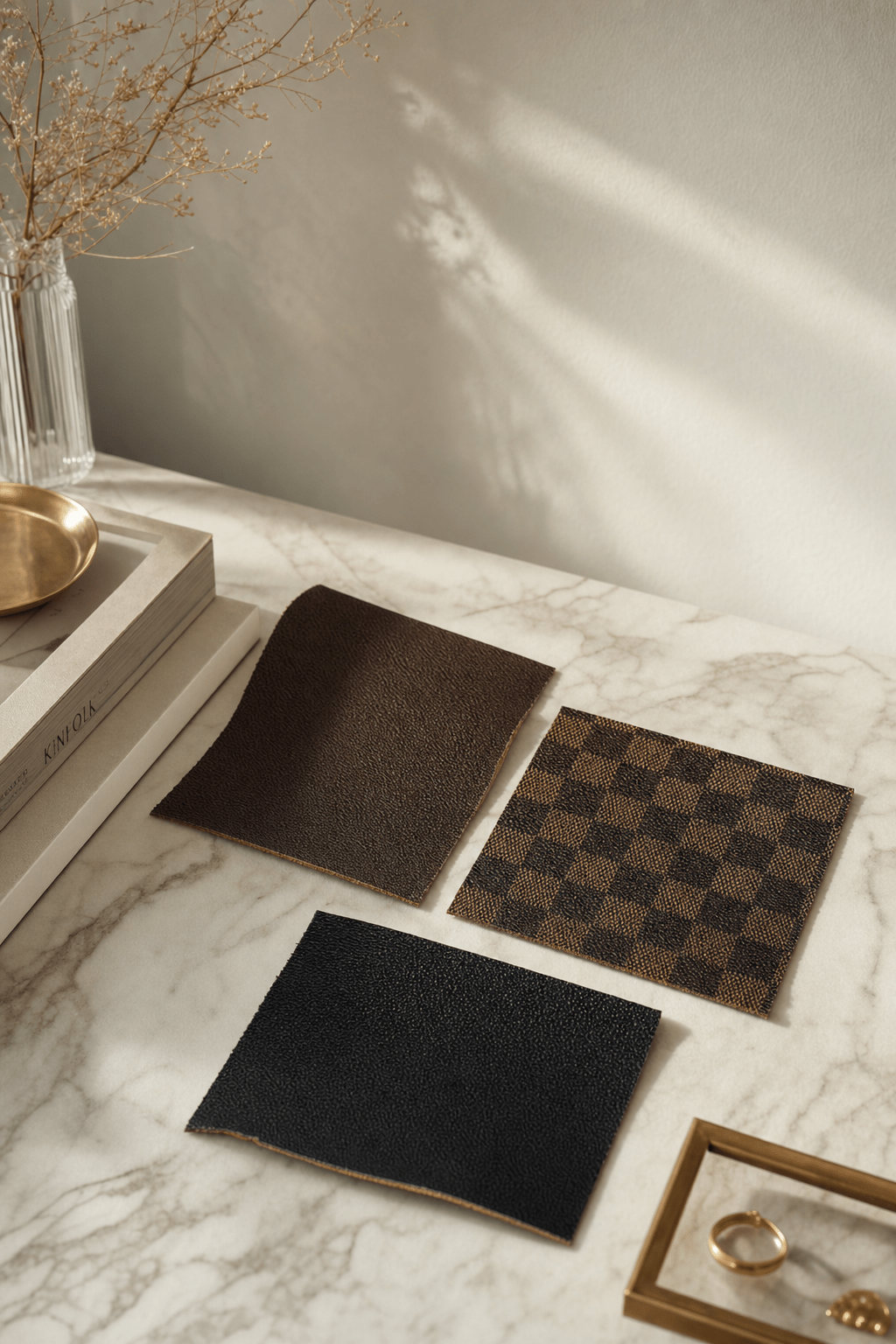
Goyardine's water resistance comes from a coating applied over the woven fiber base, conceptually similar in function to the coating Louis Vuitton applies to its monogram and Damier canvas, but mechanically different because of what sits underneath. Louis Vuitton's coated canvas starts from a cotton canvas base treated with a PVC-based coating that essentially seals the surface. Goyardine's coating sits over a genuine linen-cotton-hemp weave, which means the water resistance is doing its job atop a fabric that still has real woven structure and texture underneath, rather than atop a flatter, more uniformly sealed base cloth.
Practically, this means goyardine sheds water effectively from normal exposure, rain, splashes, incidental spills, in a way that has made it one of the most trusted materials for travel luggage and everyday totes in the luxury category. It is not waterproof in the way a fully sealed synthetic material is; sustained submersion or prolonged heavy soaking can eventually work moisture past the coating and into the woven base, where it is more difficult to fully dry out than a synthetic-coated equivalent. For ordinary use and weather exposure, though, the coating performs reliably.
Color range: more variety than most owners expect
Goyard produces goyardine in more than 13 colors across its collections, spanning classic neutral tones as well as bold, saturated options, a considerably wider palette than the two or three signature canvas patterns most competing houses maintain as their primary offering. This range matters for personalization in particular, since owners choosing a base canvas color are also choosing the backdrop against which any painted initials or stripes will read, and the color selection has expanded over time as the house has leaned further into customization as a core part of its retail experience.
Personalization: still genuinely hand-done
Even as the base chevron pattern application has shifted toward more efficient production methods, Goyard has kept personalization, initials, stripes, and custom motifs painted directly onto a bag's canvas, a hand process performed by trained artisans, typically in-store or through the house's dedicated personalization service. This hand-painted work is a genuine point of differentiation: it is not a printed monogram or a heat-stamped initial the way some competitors handle personalization, but paint applied by hand to a finished bag, which is part of why appointment scheduling and lead times for the service can run longer than a simple in-store purchase. The paint itself is formulated to be durable under normal handling, but it remains a surface application, meaning it can scratch or wear with abrasive contact or aggressive cleaning over years of heavy use, the same durability profile any hand-painted decorative leather good has.
How to clean goyardine canvas
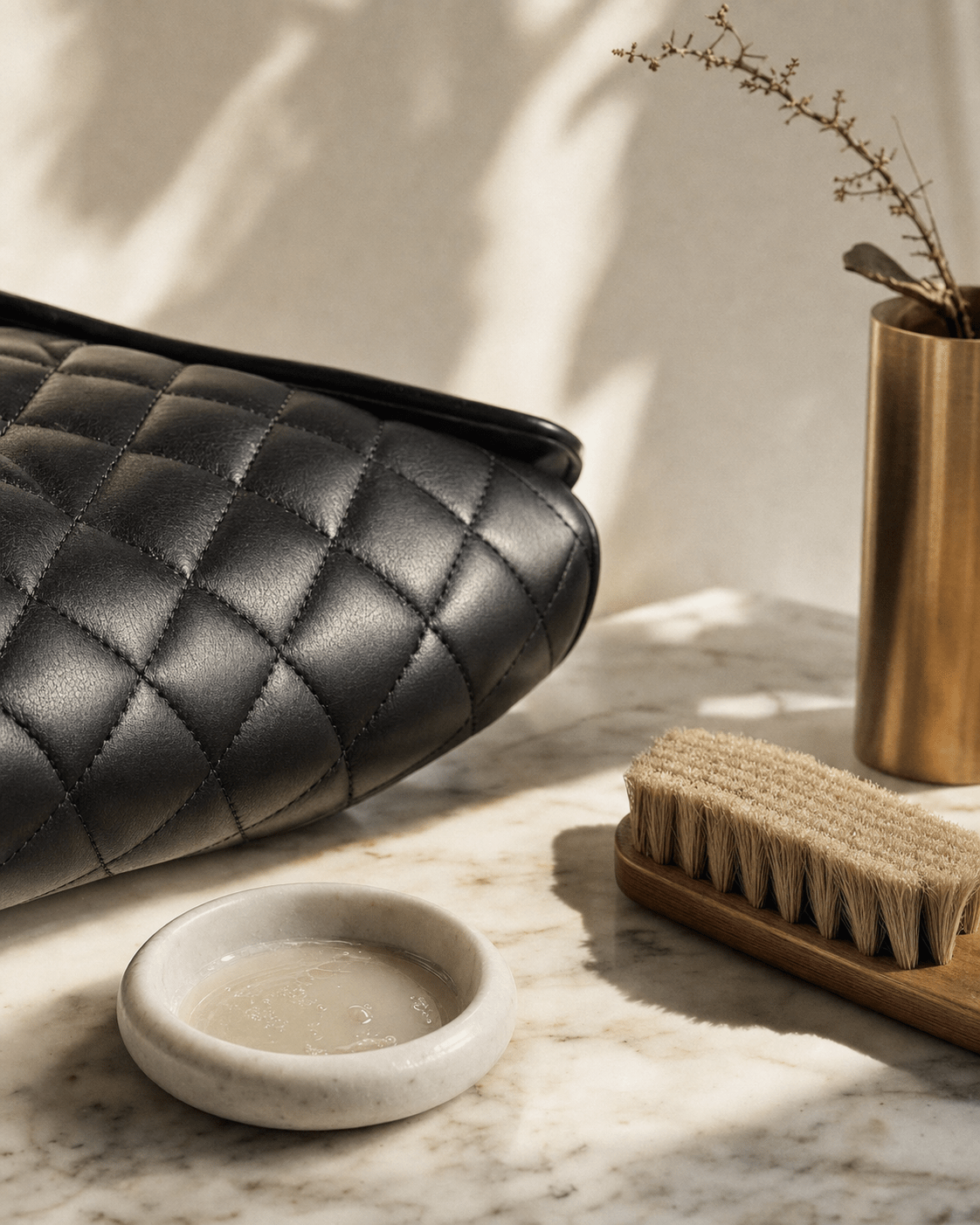
Routine cleaning should stay light and avoid saturating the fabric. A soft, slightly damp cloth handles most surface dust and light marks; work in the direction of the chevron pattern rather than scrubbing across it, and dry the surface promptly with a separate dry cloth afterward rather than letting it air dry with residual moisture sitting on the coating.
What to avoid
- Harsh solvents or alcohol-based cleaners. These can degrade the surface coating over repeated use, reducing the water resistance the coating is there to provide.
- Abrasive scrubbing, especially over painted personalization. Hand-painted sections are more vulnerable to surface wear than the printed or coated chevron base.
- Prolonged soaking or submersion. While the coating sheds incidental water well, sustained soaking can eventually let moisture into the woven base underneath, which is harder to dry out fully than a synthetic-coated equivalent.
- Machine washing or dry cleaning. Goyardine is not designed for either process and both risk damaging the coating and the underlying weave.
For stubborn marks or anything beyond light surface dust, a professional cleaning service experienced with coated fiber-canvas luxury goods is the safer option over home remedies, particularly for bags with hand-painted personalization that a harsher cleaning method could damage.
Common goyardine misconceptions
- "It's just painted canvas." The base fabric is a genuine linen-cotton-hemp weave with an applied coating and pattern, not a plain canvas with paint on top, and the coating's water resistance depends on that underlying fiber structure.
- "It's the same as Louis Vuitton's coated canvas." The two share the broad category of coated canvas but differ in base material composition, which affects how each behaves under sustained moisture exposure and how each ages over time.
- "It's fully waterproof." It is genuinely water-resistant under normal exposure, but sustained soaking can eventually let moisture reach the woven base underneath the coating.
- "Personalization is printed or stamped." Initials and stripes are hand-painted by trained artisans, a meaningfully different process and durability profile than a printed or embossed monogram.
- "The canvas is the fragile part of a Goyard bag." On most models, the leather trim and handles are more vulnerable to water spotting and uneven wear than the goyardine body itself.
Expert tip: let the coating do its job, don't add another one
Because goyardine already carries a factory-applied protective coating, aftermarket fabric protectant sprays are generally unnecessary and can interact unpredictably with the existing finish, sometimes leaving a slightly different sheen or texture than the untreated canvas nearby. Unlike untreated leather trim, where a protective spray is a genuinely debated option, goyardine's own coating is doing that job already. If you are looking for an area to focus protective effort, the leather trim and handles are the better target, since those genuinely lack the canvas's built-in defense.
Durability compared to LV coated canvas and painted leather
Goyardine holds up to daily abrasion and water exposure at least as well as Louis Vuitton's coated canvas, and many long-term owners of both report that goyardine's woven fiber base resists the kind of surface cracking that can eventually appear on heavily-flexed corners of synthetic-coated canvas after many years of hard use, since a woven fiber structure tends to flex more forgivingly than a fully sealed synthetic surface. Against painted leather, goyardine is generally the more durable choice for a bag's primary body material: painted or lacquered leather surfaces, like Dior's or other houses' glazed calfskin treatments, are more prone to surface cracking and color loss at flex points than a woven-and-coated canvas base. Where painted leather and goyardine converge in durability terms is specifically at Goyard's own hand-painted personalization, which shares painted leather's general vulnerability to surface wear regardless of what sits underneath it.
Aging and patina: what changes over years of use
Unlike untreated leather trim, which is designed to visibly patina and darken with handling, goyardine canvas is engineered to resist visible change over time, and that is by design rather than an accident of manufacturing. The coating that provides water resistance also protects the surface pigment from significant fading under normal light exposure, which is part of why a well-kept goyardine tote from a decade ago can look remarkably close to new next to a recent purchase, a contrast that is much starker with this canvas than with, say, a vachetta-trimmed bag from the same era. The most common visible aging goyardine does show is a very gradual softening of the coating's sheen from a slightly glossier finish toward a more matte one, along with light surface creasing at the most-flexed points, corners, base edges, and handle attachment points, after years of heavy use. Neither change is a defect; both are the natural result of a woven, coated material being handled the way bags are meant to be handled.
How this applies across the Goyard catalog
Goyardine construction and care are consistent across every bag that uses it, from the St. Louis tote to structured styles like the Anjou. What changes between models is how much leather trim accompanies the canvas and how the bag's structure interacts with the material, an unstructured tote flexes the canvas differently than a boxier, more structured silhouette. For the broader storage principles that apply across every brand in this library, see the pillar guide on how to store luxury handbags properly, and for the mechanics of how untreated leather trim behaves on a coated canvas bag, see our guide on Louis Vuitton vachetta care.
Closing thoughts
Goyardine earns its durability reputation honestly, a genuine woven fiber base under a protective coating, refined across more than 130 years rather than engineered from scratch as a modern synthetic. It tolerates daily use and ordinary weather better than most alternatives in its category, but it is not invincible, and the leather trim, painted personalization, and prolonged soaking scenarios are where real caution still belongs. Treat the canvas as the tough, low-maintenance part of the bag it actually is, and reserve your careful attention for the parts of the bag that genuinely need it.