Louis Vuitton Vachetta Care: The Complete Guide
No material in the Louis Vuitton catalog generates more anxiety than vachetta, and most of that anxiety is misplaced. Vachetta is untreated cowhide, left raw and uncoated specifically so it darkens, deepens, and develops character over years of ownership. The panic most new owners feel over a water spot, a faint tan line, or a slightly darker patch is usually a reaction to the leather doing exactly what it was designed to do, not evidence that something has gone wrong. The real risks to vachetta are narrower and more specific than most care advice suggests, and knowing the difference between normal patina and actual damage is most of what this guide is for.
This is the cornerstone reference for every vachetta-trimmed Louis Vuitton bag: what the leather is, how the patina timeline actually works, the difference between even and uneven patina, the three things that genuinely damage it, and the honest answer on conditioning and protective sprays.
What vachetta actually is
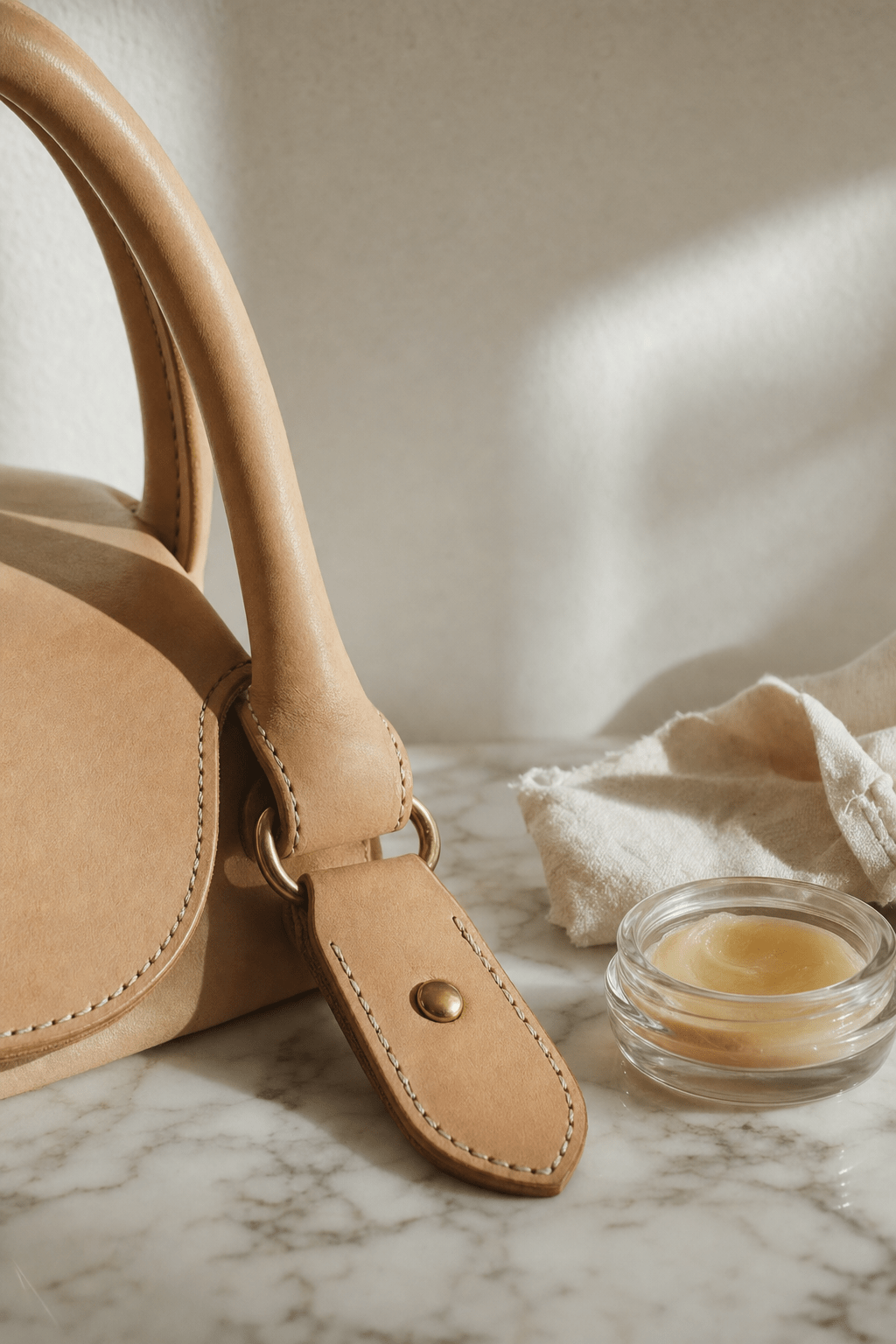
Vachetta is full-grain, vegetable-tanned cowhide used untreated and uncoated on the handles, trim, piping, and lacing of Louis Vuitton's canvas bags — the Neverfull, Speedy, Alma, Keepall, and most of the classic Monogram and Damier lines. Unlike the coated canvas body it accompanies, vachetta has no protective topcoat, no dye sealant, and no water-resistant finish. It leaves the tannery pale, almost blonde, and is meant to change color through exposure and handling. Louis Vuitton has used undyed, untreated leather trim on its canvas bags since the 19th century specifically because the aging process is part of the product.
Because it is uncoated, vachetta behaves more like a sponge than a shield. It absorbs UV light, oil, water, and dye readily, and shows the effects permanently rather than shedding them the way sealed leather would. Every piece of advice in this guide follows from that one structural fact.
The patina timeline: what actually happens and when
Patina is the color and texture change vachetta undergoes with light exposure and handling over time. It is gradual, and the timeline below is a general pattern, not a fixed schedule — climate, handling frequency, and sun exposure all speed it up or slow it down.
The first few months: pale honey
Fresh vachetta is nearly cream or pale blonde. Within the first few weeks of regular handling and light exposure, it shifts to a light honey tone. This stage is the most vulnerable to visible staining, since the leather is at its most porous and least colored, which means any oil, water, or dye contact shows up starkly against the pale base.
Six months to two years: deepening amber
With continued handling and light exposure, vachetta moves through progressively deeper amber and golden-brown shades. This is usually the stage where owners start to appreciate the patina, since early handling marks have blended into the overall tone rather than standing out against pale leather.
Two to five years: dark caramel to cognac
Given consistent use over several years, vachetta reaches a deep caramel or cognac color, sometimes nearly the shade of aged whiskey on bags carried heavily in direct sun. This is generally the most desirable end state for collectors, and the point at which the leather has typically stiffened slightly compared to its softer starting state.
Beyond five years: stability
Once vachetta reaches a deep, even caramel tone, further darkening slows considerably. The leather has absorbed most of the UV exposure and oils it is going to absorb through normal handling, and the color becomes relatively stable barring a major event like sustained direct sun on one panel or a significant water exposure.
Even patina vs. uneven patina: the biggest issue
The single most common vachetta complaint is not that it darkened, it is that it darkened unevenly. This is the real problem to manage, far more than darkening itself.
Why unevenness happens
Vachetta darkens fastest wherever it gets the most combined light and handling. A handle gripped constantly on one side and resting against a shoulder on the other will patina unevenly between the two surfaces. A base corner that always touches the ground darkens faster and dirtier than a corner that never touches a surface. A bag carried on one side of the body every day develops a visible tan line where a strap habitually sits versus where it does not.
How to keep patina as even as possible
- Rotate handling. Switch which hand carries the bag and which shoulder it rests against periodically, rather than always favoring one side.
- Rotate orientation in storage. If the bag sits on a shelf between wears, turn it periodically so one side is not perpetually shaded by a neighboring bag while the other catches ambient light.
- Wipe down evenly, not just where you notice a mark. A quick, even wipe with a dry cloth after each wear keeps oil and dust distribution consistent across the whole trim rather than concentrated wherever your hands happen to touch most.
- Address spills immediately and evenly. A localized water spot that is blotted quickly patinas back into the surrounding leather far better than one left to dry and set as a distinct ring.
Uneven patina is not usually catastrophic, and it does soften somewhat as the leather continues to age with more exposure. But a sharp, high-contrast mark, like a distinct water ring or a stark tan line, can remain visible for years even after the surrounding leather catches up in depth of color.
The three great enemies of vachetta
1. Water
Water is the fastest way to create a permanent mark on vachetta. A raindrop, a splash, or condensation from a cold glass all leave dark spots that dry into a distinct ring with a harder edge than the surrounding leather. Water carries the leather's surface tannins toward the edge of the wet area as it evaporates, concentrating color there. Blotting with a soft cloth the moment water contacts the leather significantly reduces the eventual mark. Once a spot has fully dried and set, it rarely disappears completely, though continued patina over months can blend it in somewhat.
2. Oil and hand cream
Body oils, hand lotion, sunscreen, and cooking oils transfer onto vachetta almost instantly on contact and create dark, greasy-looking patches that patina at a different rate than the surrounding leather. This is why handling vachetta with clean, dry hands is not a fussy suggestion — it is the single highest-leverage habit in this guide. A handle gripped right after applying hand cream develops a visibly darker patch within weeks.
3. Sun
Direct, prolonged sun exposure accelerates darkening dramatically and unevenly. A bag left on a car seat for an afternoon, or displayed in a sunlit window for months, develops darker patina on the sun-facing side than the shaded side, often with a hard visible line between the two. Moderate, ambient light produces attractive, even patina over years; direct, concentrated sun produces fast, blotchy, and sometimes brittle results, since UV exposure also dries out the leather's natural oils.
Preventive vs. reactive care
Vachetta care splits cleanly into two categories, and confusing them is where most owners go wrong.
Preventive care (what you should actually be doing)
- Handle with clean, dry hands, every time.
- Wipe down with a dry, soft cloth after each wear to remove surface dust and any incidental oil.
- Keep the bag away from direct water exposure, including rain, and dry it immediately and gently if it does get wet.
- Rotate handling and storage orientation to encourage even patina.
- Keep vachetta away from dyed fabric, colored dust bags, and other dyed leather during storage, since prolonged contact can transfer color onto the pale leather.
Reactive care (damage control, not a cure)
- Blot fresh water spots immediately with a clean, dry cloth — never rub.
- For a fresh oil mark, a light dusting of cornstarch or talc-free powder left on the spot for several hours can absorb some of the surface oil before it fully sets, though this only helps if caught early.
- For significant staining, mold, or deep discoloration, a professional leather restoration service is the safer option over any home remedy involving household chemicals, magic erasers, or heavy scrubbing, all of which can strip or damage the leather's surface permanently.
Should you condition vachetta? Mostly no
Conditioning is the most misapplied piece of vachetta advice in circulation. Leather conditioners are generally formulated for finished, coated, or dyed leathers that benefit from replenished oils. Vachetta is unfinished by design, and a standard conditioner can darken it unevenly and faster than natural patina would, leave a tacky surface that attracts more dust, or interfere with how it patinas naturally going forward.
Most experienced owners and restoration specialists recommend leaving vachetta alone and letting it patina through normal handling. The exception is leather that has become genuinely dried out or cracked, usually from excessive sun exposure, where a very small amount of plain, colorless leather balm applied by someone experienced with vachetta can help — but this is a repair measure for damaged leather, not routine maintenance for healthy vachetta.
Protective sprays: the Apple Guard debate
Protective sprays, sold under names like Apple Guard and Collonil, are a genuinely contested topic among Louis Vuitton owners, with no single correct answer.
The case for spraying
A water-and-stain repellent spray, applied correctly before the bag is ever used, can reduce water spotting and slow oil absorption on fresh, pale vachetta. For owners in humid climates, or anyone who wants to minimize spotting risk on a bag they intend to carry hard, a light, even application before first use is a reasonable preventive step.
The case against spraying
Sprays applied unevenly can cause blotchy, inconsistent patina, since the coating changes how the leather absorbs light and oil in treated versus untreated patches. Some owners and restoration specialists argue any topical treatment interferes with the natural patina process that is the entire point of vachetta, producing a flatter color over years. There is also no way to fully undo an uneven spray application.
The practical middle ground
If you choose to use a protective spray, apply it only on fresh, unpatinated vachetta, in thin, even coats, in a well-ventilated space, following the product's instructions exactly, and test on an inconspicuous area first. Do not apply protective spray to vachetta that has already started to patina unevenly, since the spray will lock in whatever unevenness already exists. If you are uncertain, the lower-risk choice is to skip the spray and rely on careful handling instead, since careful handling has no risk of an uneven or irreversible result.
What patina cannot be reversed
Normal patina darkening is not damage, and it is not reversible, nor should you want it to be. But a few specific outcomes genuinely cannot be undone.
- A fully set, dried water ring. Once the tannins have concentrated at the boundary of a water spot and fully dried, that ring is essentially permanent. It may blend somewhat as the surrounding leather continues to darken, but the hard edge rarely disappears entirely.
- Dye transfer from dark fabric or denim. Blue or black dye that has soaked into pale vachetta from prolonged contact with dyed textiles is very difficult to fully remove and often requires professional restoration, with mixed results.
- A sharp, high-contrast sun line. A hard boundary between sun-darkened and shaded leather on the same piece, caused by prolonged partial sun exposure, generally stays visible even as both sides continue to darken over time.
- Mold staining. Mold that has been left untreated on vachetta for an extended period, usually from storage in a damp environment, can leave a permanent discoloration even after the mold itself is cleaned off.
Common vachetta mistakes
- Panicking over normal darkening. Patina is the leather working as intended, not a defect.
- Applying standard leather conditioner. This is formulated for finished leather and can darken vachetta unevenly or leave a tacky surface.
- Ignoring a fresh water spot instead of blotting it immediately. Prompt blotting significantly reduces the eventual visible ring; a spot left to dry usually does not.
- Applying protective spray unevenly, or over leather that has already patinated unevenly. This locks in blotchiness rather than preventing it.
- Handling the bag right after applying hand cream or sunscreen. This is one of the most common causes of dark, greasy-looking patches on handles.
- Leaving the bag in direct sun for extended periods "to speed up patina." This produces fast, uneven, and sometimes brittle results rather than the rich, even tone slow ambient aging produces.
Expert tip: let the first six months set the tone
Vachetta is at its most vulnerable to uneven marking in its first few months, while it is still pale and highly absorbent. If you handle the bag with clean hands, keep it away from water and direct sun, and rotate handling evenly during this early window, the leather tends to settle into a more even, predictable patina pattern for the rest of its life. Owners who are careless in the first few months and careful afterward often end up with a permanent early mark that the rest of the patina has to age around.
How this applies across LV bags
Vachetta care is identical whether the trim is on a Speedy 25, 30 and 35, a Neverfull, an Alma, or a Keepall 45, 50, 55 or 60. What changes between models is how much vachetta is exposed and how it is handled: a Speedy's rolled handles get constant hand contact, while a Neverfull's flat handles and side lacing see more varied contact points. The underlying leather and the rules for caring for it stay the same. For storage-specific guidance, see our guides on how to store a Louis Vuitton Speedy and how to store a Louis Vuitton Neverfull, and how to store a Louis Vuitton Keepall.
Closing thoughts
Vachetta asks less of you than most vachetta advice implies. It does not need conditioning, it does not need to be babied out of sunlight entirely, and a slightly uneven patina in year one is not a permanent verdict on the bag's future. What it does need is clean hands, prompt attention to water, and reasonable caution around sun and dyed fabric. Everything else is the leather doing, slowly and on its own schedule, exactly what it was tanned to do. For the broader storage and handling principles that apply across every material in this library, see the pillar guide on how to store luxury handbags properly.
How should I protect a Speedy's vachetta while it is stored?
For a Louis Vuitton Speedy, let the rolled handles and leather trim rest naturally without tight bands, sharp folds, or sustained pressure from other objects. Keep the bag in a clean, dry indoor location away from direct sunlight and obvious dampness. Interior support should fit gently so it does not place unnecessary tension on the zipper, seams, or exterior.
For the complete bag-storage routine, see How to Store a Louis Vuitton Speedy. Fabrinique also makes model-specific storage pillows for the Speedy 25, Speedy 30, and Speedy 35.