How to Store a Louis Vuitton Neverfull
The Neverfull's entire design is a soft, unstructured tote, which is exactly why it fails in storage the way structured bags do not. There is no internal frame holding the sides up. There is no rigid base keeping the silhouette square. Left empty on a shelf for a few months, a Neverfull does not just look a little tired, it develops a slouch and set of creases that no amount of steaming or conditioning fully reverses. Add untreated vachetta leather trim that darkens and stains with the smallest amount of contact, and you have a bag that punishes casual storage more than most owners expect from something this casual-looking.
This guide covers the Neverfull's three real failure points and the storage protocol that actually addresses them: canvas slouch, vachetta trim and handle care, and the removable pouch's role in holding the bag's shape. It also covers the differences between MM, GM, and PM sizes, since fullness and stuffing matter differently across the range.
Why the Neverfull needs its own protocol
Three things make this bag behave differently from a structured tote or a hardware-heavy flap bag:
- The canvas has no internal structure. Monogram and Damier coated canvas is stiffer than plain fabric, but the Neverfull's construction relies on the bag being filled to hold its open-tote shape. Empty, it collapses inward and the sides fold on themselves.
- The vachetta trim is untreated leather. The handles, side laces, and base piping are natural cowhide with no protective coating. They absorb moisture, oil, and dye from anything they touch, and they darken permanently wherever contact is uneven.
- The removable pouch is not just an accessory. Tucked inside, it adds enough volume and weight to keep the tote's base square and its sides from folding in on themselves during storage, a job most owners do not realize it is doing.
The Neverfull's biggest failure: canvas slouch when empty
An empty Neverfull stored upright on a shelf for weeks will develop a soft fold at the sides and a collapsed, cave-like opening at the top. This is the single most common complaint from long-term Neverfull owners, and it is entirely preventable. The coated canvas itself does not stretch out of shape easily, but the bag's shape depends on internal volume, not the material's own rigidity. Without something filling the interior, gravity does the rest.
Stuff it every time, not just for long-term storage
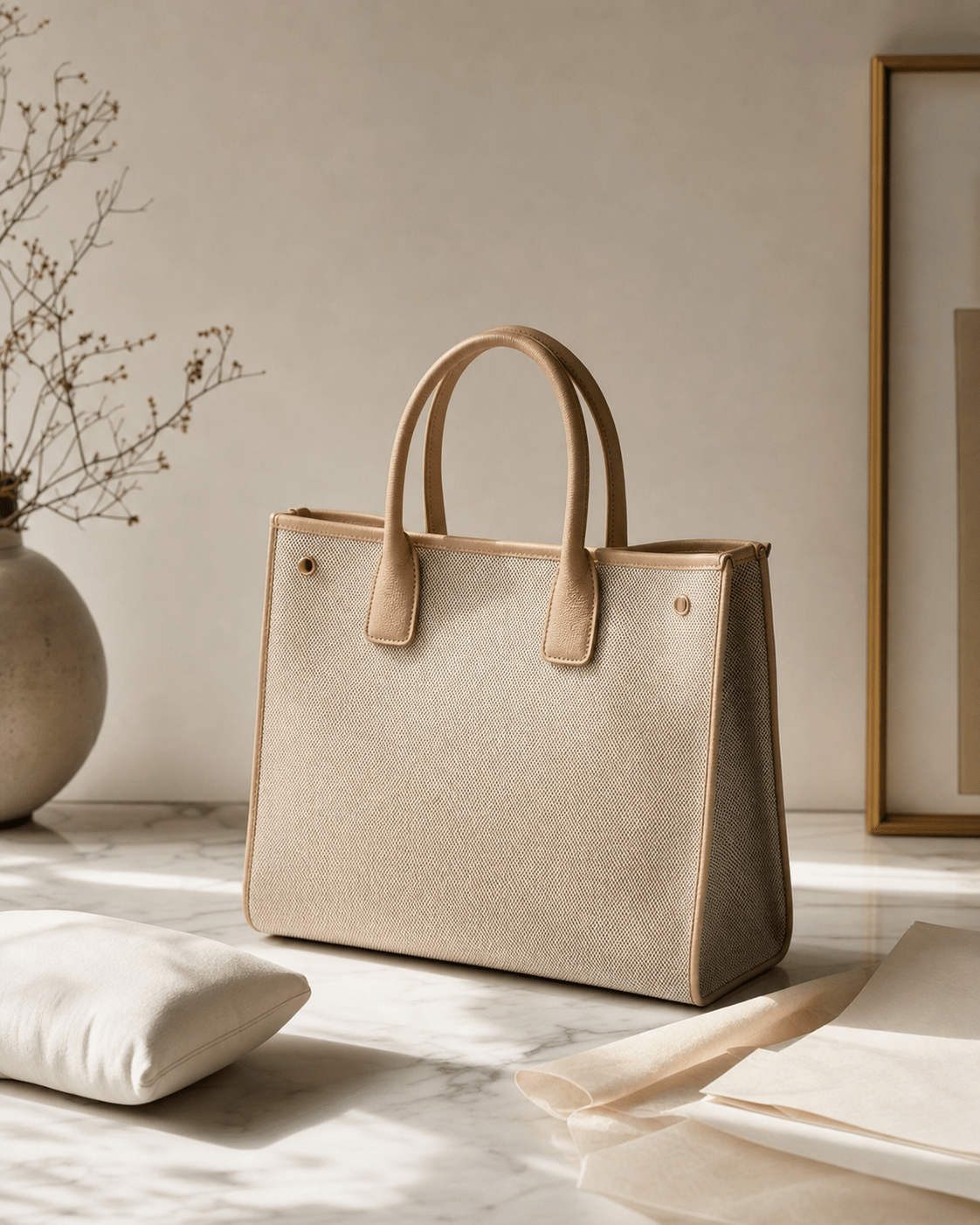
Even between same-week wears, an empty Neverfull left standing on a shelf overnight starts to lean and fold at the sides. Use a shaped pillow insert sized for the Neverfull's tote silhouette, or acid-free tissue paper packed into both side panels and the base corners. The goal is to restore the tote's rectangular footprint, not just to fill volume. A purse pillow insert sized for LV tote and duffle silhouettes holds the side panels square in a way that loosely packed tissue tends not to, especially at the base corners where sag starts.
Do not overstuff either
The opposite mistake is packing the interior so tightly that the canvas stretches at the top opening or the side seams take on tension they were not built for. Fill enough to hold the rectangular shape upright, not so much that the bag strains to close or the top rim bows outward.
Vachetta trim and handle care in storage
Vachetta is the natural, undyed cowhide used for the Neverfull's handles, side lacing, and base trim. It has no topical protection, which is exactly why it develops the warm honey patina collectors like over time, and exactly why it is the most storage-sensitive part of the bag. Three things damage vachetta specifically in storage, not just in use:
Uneven light exposure
Vachetta darkens with UV exposure as part of its natural patina process. If a Neverfull sits on a shelf with one handle catching indirect sunlight and the other shaded by an adjacent bag, the two handles will patina at different rates and develop a visibly uneven color. Rotate the bag's orientation on the shelf periodically, or better, keep it inside a breathable dust bag so the whole trim ages at the same rate rather than in patches.
Contact staining from other materials
Vachetta picks up color and oil from anything it touches for an extended period. Denim dye, colored tissue paper, dark dust bags without a light lining, and even the ink from a nearby leather care card can all transfer onto light vachetta over weeks of contact. Keep the vachetta trim from resting directly against colored fabric or another bag's dyed leather while in storage.
Humidity against untreated leather
Because vachetta has no sealant, it is more porous than the coated canvas body. In humid closets, the trim can develop a slightly tacky surface or, in bad cases, faint mold spotting at the stitching where moisture sits longest. Keep the storage space at 45 to 55 percent relative humidity and avoid resting the bag directly against a damp wall or window.
Why the removable pouch matters for shape
The zippered pouch that clips inside the Neverfull is frequently treated as a lost-and-found catch-all and left out of the bag entirely when it is not in use. In storage, that is a mistake. The pouch's volume, even lightly filled or empty itself, gives the interior something to push against, which helps the tote hold its open, squared silhouette rather than folding in at the middle where there is otherwise nothing but air.
For storage, clip the pouch back into the bag even if you do not plan to use it, and let it sit toward the center of the interior rather than pushed to one side, where it can create an asymmetric lean instead of even support.
Drawstring cinch position in storage
The Neverfull's signature side laces can be worn cinched tight for a structured look or left loose for maximum interior volume. In storage, position matters for two reasons. First, laces cinched very tight over long periods put sustained tension on the eyelets and can eventually stretch or distort them. Second, laces left loose and dangling can catch on adjacent bags' hardware on a shared shelf. The safest storage position is a light, even cinch, snug enough that the laces are not swinging free but not pulled to the tightest notch you would use for a night out.
Humidity concerns for coated canvas
The Monogram and Damier canvas body is more forgiving of humidity than the vachetta trim, since the coating resists moisture penetration. That said, sustained high humidity can still cause the canvas backing to soften slightly over years, and any residual moisture trapped against the canvas after a rainy day can encourage a musty smell in the interior lining. Let a wet or damp Neverfull air out fully in a dry room before you put it away, and never store it inside a sealed plastic bag, which traps whatever moisture is present against both the canvas and the vachetta.
Where to keep it: shelf, closet, or box
Upright, stuffed, dust bag on
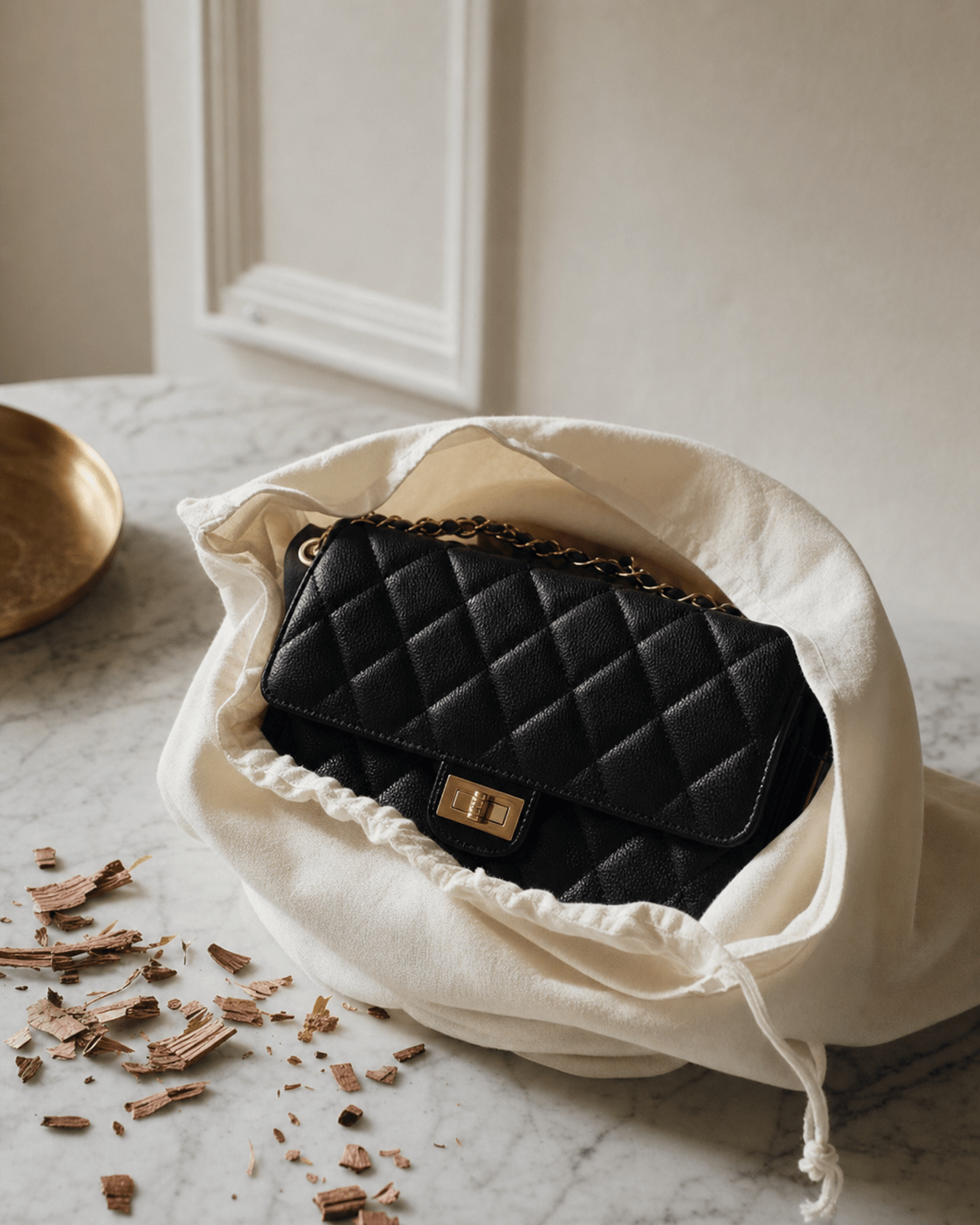
Store the Neverfull upright the way it sits when set down on a table, stuffed with a pillow insert, inside a breathable cotton or muslin dust bag. Never lay it flat with weight on top; even light pressure across the open top rim can distort the canvas at the seams.
Keep it away from dyed neighbors
Because the vachetta trim is so easily stained, give the Neverfull a little more separation from dark or dyed leather bags on the same shelf than you would with an all-canvas or all-hardware bag. A dust bag helps, but direct contact between vachetta and another bag's dyed leather is worth avoiding even through fabric if the contact is sustained for months.
Common mistakes with Neverfull storage
- Storing it empty and unstuffed. This is the single fastest route to permanent side-panel slouch and a collapsed top opening.
- Leaving the pouch out of the bag during storage. The pouch is doing structural work, not just holding your keys.
- Resting the vachetta trim against colored fabric or dyed leather for months. Uneven staining from contact is difficult to reverse once it sets in.
- Sealing the bag in plastic. Traps humidity against both the canvas and the untreated vachetta trim.
- Letting one handle sit in light while the other is shaded. Produces a visibly mismatched patina between the two handles over time.
- Cinching the side laces to their tightest notch for long-term storage. Sustained tension on the eyelets over months can distort them.
Expert tip: handle the vachetta with clean, dry hands only
Every time you pick up or reposition a Neverfull in storage, the handles are the first thing your hands touch. Hand cream, lotion, and even natural skin oils transfer onto vachetta almost instantly and can create dark, greasy-looking patches that patina unevenly with the rest of the trim. Wash and fully dry your hands before handling the bag, especially before a long stretch in storage when you will not be able to catch an early stain and address it.
MM, GM, and PM: does size change the protocol
The storage principles are identical across all three Neverfull sizes, but scale changes a few practical details. The GM has the most interior volume and the most surface area prone to visible slouch, so it needs a proportionally larger pillow insert or more tissue to hold its shape fully. The PM, being the smallest and most structured relative to its size, tends to slouch less dramatically but still benefits from the same stuffing habit. The MM sits in between and is the version most owners carry daily, which also means it is the version most likely to go into storage still slightly damp from a day out, so let it air out before shelving regardless of size.
For the underlying principles behind shelving, humidity, and rotation that apply across every brand in this library, see the pillar guide on how to store luxury handbags properly. The same rules about stable humidity and upright shelving apply to the Neverfull, adjusted for its unstructured canvas body and untreated leather trim.
Closing thoughts
The Neverfull looks casual, but it is not a low-maintenance bag once you look closely at what it is made from. Stuff it every time you put it away, keep the vachetta trim away from moisture, uneven light, and dyed neighbors, and leave the pouch clipped inside doing the structural work it was quietly designed to do. Do those three things consistently, and the tote that looks effortless in use stays that way in storage too. A properly shaped interior support makes the stuffing step consistent, which is the single habit most likely to slip when you are putting the bag away in a hurry.