How to Care for a Goyard St. Louis
The Goyard St. Louis has a reputation for being nearly indestructible, and for the canvas body, that reputation is largely earned. Goyardine chevron canvas resists water and abrasion better than almost anything else in the luxury tote category. The reputation becomes a liability when owners extend it to the whole bag, because the leather trim, the unlined interior, and the easily separated pouch all have real vulnerabilities that the canvas's toughness does nothing to protect. This guide separates what the St. Louis actually tolerates from what it does not.
This guide covers the St. Louis's real risk points: leather trim water-spotting and darkening, the collapsed-without-support structure shared with other unstructured totes, the frequently lost matching pouch, raw canvas interior staining, and painted personalization durability. It also covers the difference between PM and GM sizing for storage purposes.
Why the St. Louis needs its own protocol
Four facts about this bag's construction matter more than the canvas's famous durability:
- The canvas is genuinely tough, but the leather trim is not. Goyardine chevron canvas is water-resistant and abrasion-resistant by design. The leather handles and trim piping have no comparable protection and behave like any other untreated or lightly finished leather trim.
- There is no internal frame. The St. Louis collapses and creases when empty, the same structural problem the Neverfull has, for the same reason: an unstructured tote shape depends on what fills it.
- The matching pouch is easy to lose and expensive to replace. It rarely comes up in general care advice, but a lost pouch is a real, recurring cost for St. Louis owners.
- The interior is raw, unlined canvas. Unlike a lined interior that contains spills and hides light staining, the St. Louis shows every mark directly on visible fabric.
Goyardine canvas: the part that is actually tough
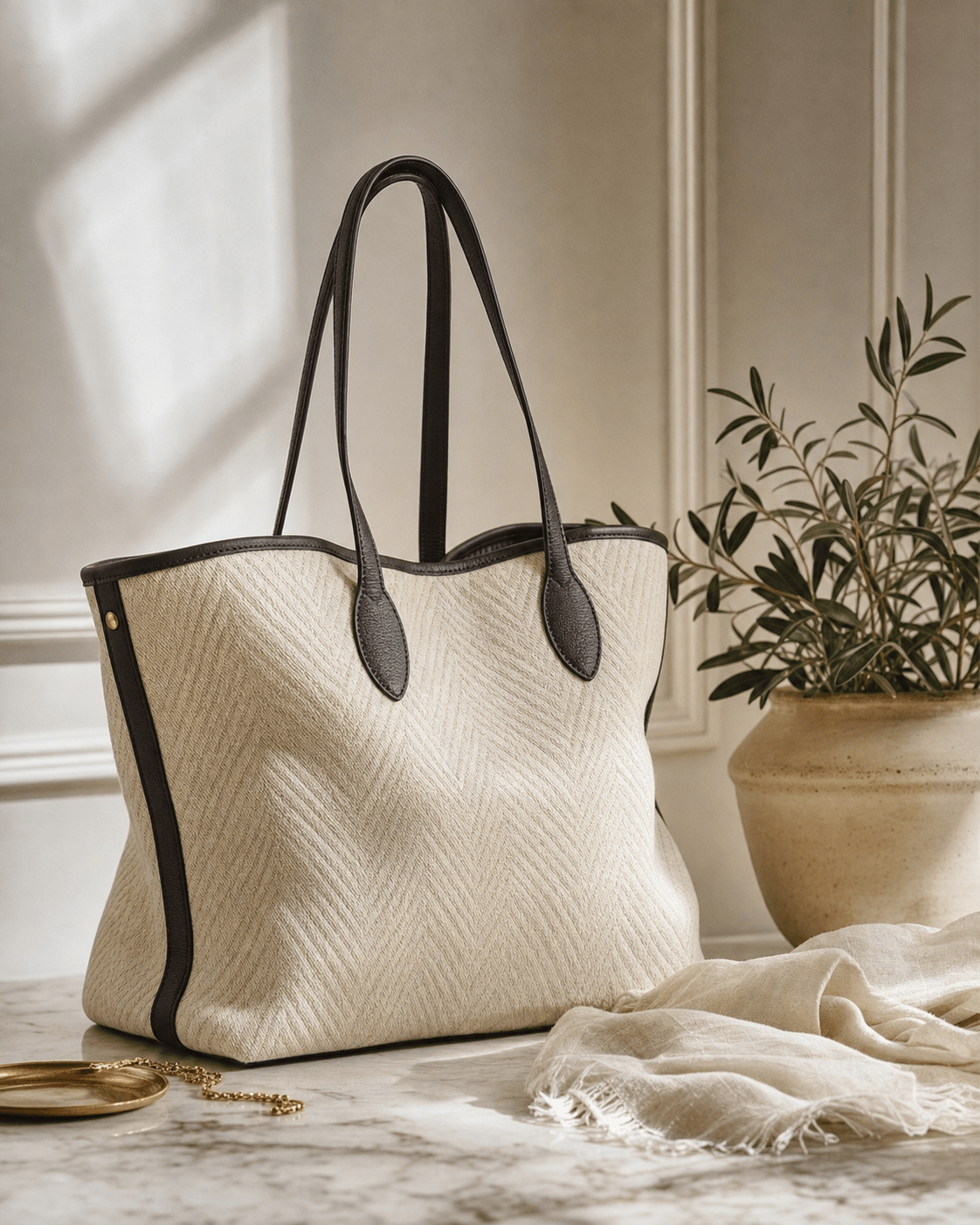
The St. Louis's signature chevron-patterned canvas is coated for water resistance and woven from a durable natural fiber blend, which is exactly why it has become one of the most trusted totes for travel and daily heavy use. Rain beads and wipes off the canvas body rather than soaking in, and the surface resists surface abrasion from normal handling far better than smooth leather or delicate coated canvas from other houses. For the full material history and care breakdown of what makes goyardine what it is, see our cornerstone guide on goyardine canvas: everything you need to know.
None of that durability extends to the leather trim, and this is where most St. Louis care mistakes actually happen: owners treat the whole bag as low-maintenance because the canvas is, and then are surprised when the trim looks worn years before the canvas does.
Leather trim: the St. Louis's real vulnerability
The St. Louis's handles and edge piping are leather, and on natural or light-colored trim in particular, that leather behaves much like the untreated vachetta found on Louis Vuitton's canvas bags: it water-spots, it darkens with oil and handling, and it ages unevenly if exposed to inconsistent light or contact.
Water spotting and darkening
A raindrop or splash on the leather trim dries into a visible dark ring in the same way vachetta does, since the moisture concentrates the leather's natural oils and tannins at the edge of the wet area as it evaporates. Blot any water contact on the trim immediately with a clean, dry cloth rather than letting it air dry on its own, which gives the ring time to set. For the underlying mechanism and the broader case for treating light leather trim carefully, see our guide on Louis Vuitton vachetta care, which covers the same category of untreated leather risk in more depth.
Uneven handling wear
Trim leather darkens fastest wherever it gets the most combined light and handling, which means a handle gripped consistently on one side, or a bag habitually carried against one shoulder, can develop a visibly uneven tone between high-contact and low-contact areas over time. Rotating handling and storage orientation slows this the same way it does with any untreated leather trim.
Structural collapse without an internal frame
Like the Neverfull, the St. Louis has no internal frame, and its open-tote silhouette depends entirely on what fills it. An empty St. Louis left standing on a shelf for weeks develops the same soft side-panel fold and collapsed top opening that afflicts any unstructured canvas tote, and because the goyardine canvas itself holds its coating and color extremely well, owners sometimes do not notice the shape has degraded until they compare it against a photo from when the bag was new.
Stuff it every time, including short breaks
Use a shaped pillow insert or acid-free tissue packed evenly into the base corners and side panels every time the bag goes into storage, not just for long-term shelving. The goal is restoring the tote's rectangular footprint, not simply filling volume. For the detailed mechanics of why this matters and how to do it properly for an unstructured tote of similar construction, see our guide on how to store a Louis Vuitton Neverfull, whose structural logic applies almost directly to the St. Louis.
The matching pouch: rarely discussed, genuinely important
The St. Louis ships with a matching zippered pouch that clips inside, and general care guidance across the internet largely ignores it, which is a mistake, because the pouch does real structural work and is also one of the most commonly lost accessories among St. Louis owners. Tucked inside the bag, the pouch's volume helps the tote hold a squared shape the same way the Neverfull's pouch does, and losing it is not just an aesthetic loss: the standalone replacement cost for a genuine matching Goyard pouch runs in the range of several hundred dollars, making it one of the more expensive small accessories to casually misplace in this category. Keep the pouch clipped inside the bag when not in active use, both to preserve the bag's shape in storage and to reduce the chance of it being left behind somewhere.
Raw canvas interior: every stain shows
The St. Louis's interior is unlined raw canvas on most versions, which means it has no protective layer standing between whatever you put inside the bag and the visible fabric surface. A leaking pen, a spilled drink, or a loose cosmetic product can stain the interior canvas directly, and because there is no lining to contain the mark, it can be more visible and harder to fully clean than an equivalent spill inside a lined tote. Use a pouch or organizer for anything with spill or leak risk, and address any interior spill immediately with a dry cloth rather than letting it sit and set into the raw fibers.
Common mistakes with St. Louis care
- Assuming the whole bag is as durable as the canvas. The leather trim and raw canvas interior do not share the coated canvas's resistance to water and staining.
- Leaving the matching pouch out or losing track of it. It does structural work for the bag's shape and is expensive to replace on its own.
- Storing the bag empty and unstuffed. With no internal frame, this produces the same slouch and collapsed opening seen in any unstructured tote.
- Letting a water spot on the leather trim air dry instead of blotting it. This gives the mark time to set into a visible ring that is difficult to reverse.
- Carrying loose pens, cosmetics, or leaking containers directly in the raw canvas interior. Any leak stains the unlined fabric directly and permanently.
- Scrubbing at painted personalization to remove a mark. Hand-painted initials or stripes can be scratched or worn away with aggressive cleaning.
Painted personalization: durable, but not indestructible
Many St. Louis owners add hand-painted initials, stripes, or other personalization directly onto the canvas, applied by Goyard's own artisans. This paintwork is more durable than it might look, designed to hold up under normal handling, but it is still a surface application and can be scratched, chipped, or gradually worn by abrasive contact, aggressive scrubbing, or repeated rough handling in the same spot. Clean around personalized areas gently, avoid abrasive cleaning products or hard scrubbing directly over painted sections, and keep painted panels from resting against rough or textured surfaces in storage the same way you would protect embroidery or other surface detailing on any bag.
Expert tip: separate the leather trim from the canvas mentally, not just physically
The single most useful shift in how to think about St. Louis care is to stop treating it as one material. Care for the goyardine canvas body the way you would any coated, water-resistant textile: wipe clean, minimal fuss, high tolerance for daily wear. Care for the leather trim the way you would vachetta or any other untreated leather accent: careful about water, careful about oil, careful about uneven light and handling. Applying vachetta-level caution to canvas is unnecessary. Applying canvas-level carelessness to the trim is how trim ends up looking older than the bag around it.
PM vs. GM: does size change the protocol
The storage and care principles are identical across the St. Louis PM, at roughly 34 by 27 by 17 centimeters, and the GM, at roughly 47 by 35 by 21 centimeters. The GM's larger surface area means more visible slouch potential when empty, so it needs proportionally more fill to hold its shape fully in storage. It also has proportionally more leather trim exposed along its longer handles and edges, which means more total surface area at risk from water spotting or uneven handling wear. The PM, being smaller and often carried as an everyday size, tends to go into storage more frequently in a still-slightly-used state, so letting it air out and dry fully before shelving matters just as much as it does for the larger size.
For the underlying principles behind humidity, shelving, and rotation that apply across every brand in this library, see the pillar guide on how to store luxury handbags properly. The same core rules apply to the St. Louis, adjusted for its water-resistant canvas body and untreated leather trim.
Closing thoughts
The St. Louis earns its reputation for toughness, but that reputation applies specifically to the goyardine canvas, not to the whole bag. Treat the leather trim with the same caution you would give any untreated leather accent, keep the matching pouch clipped inside rather than loose in a drawer somewhere, stuff the bag every time it goes into storage, and protect the raw canvas interior from anything that leaks or stains. Handled this way, the St. Louis lives up to its reputation for decades rather than just where the canvas is concerned.