How to Store a Dior Book Tote
The Book Tote looks like the easiest bag in the Dior catalog to store: no frame to warp, no delicate hardware charm, no clasp mechanism to worry about. That impression is wrong in a specific, expensive way. The Book Tote's embroidered canvas is more storage-sensitive than most owners assume, its complete lack of a closure leaves the interior exposed in a way a zip-top or flap bag never is, and its unlined canvas interior stains through to the outside if you are not careful about what touches it. This is a bag that punishes casual storage differently than a structured leather tote does, and the failure modes are specific enough to need their own protocol.
This guide covers the Book Tote's four real storage risks: embroidery thread snags and pulls, structural collapse without an internal frame, dust and debris exposure from having no closure, and interior staining that shows through unlined canvas. It also covers base wear from dragging and how personalized embroidery changes the care calculus.
Why the Book Tote needs its own protocol
Four construction facts drive everything in this guide:
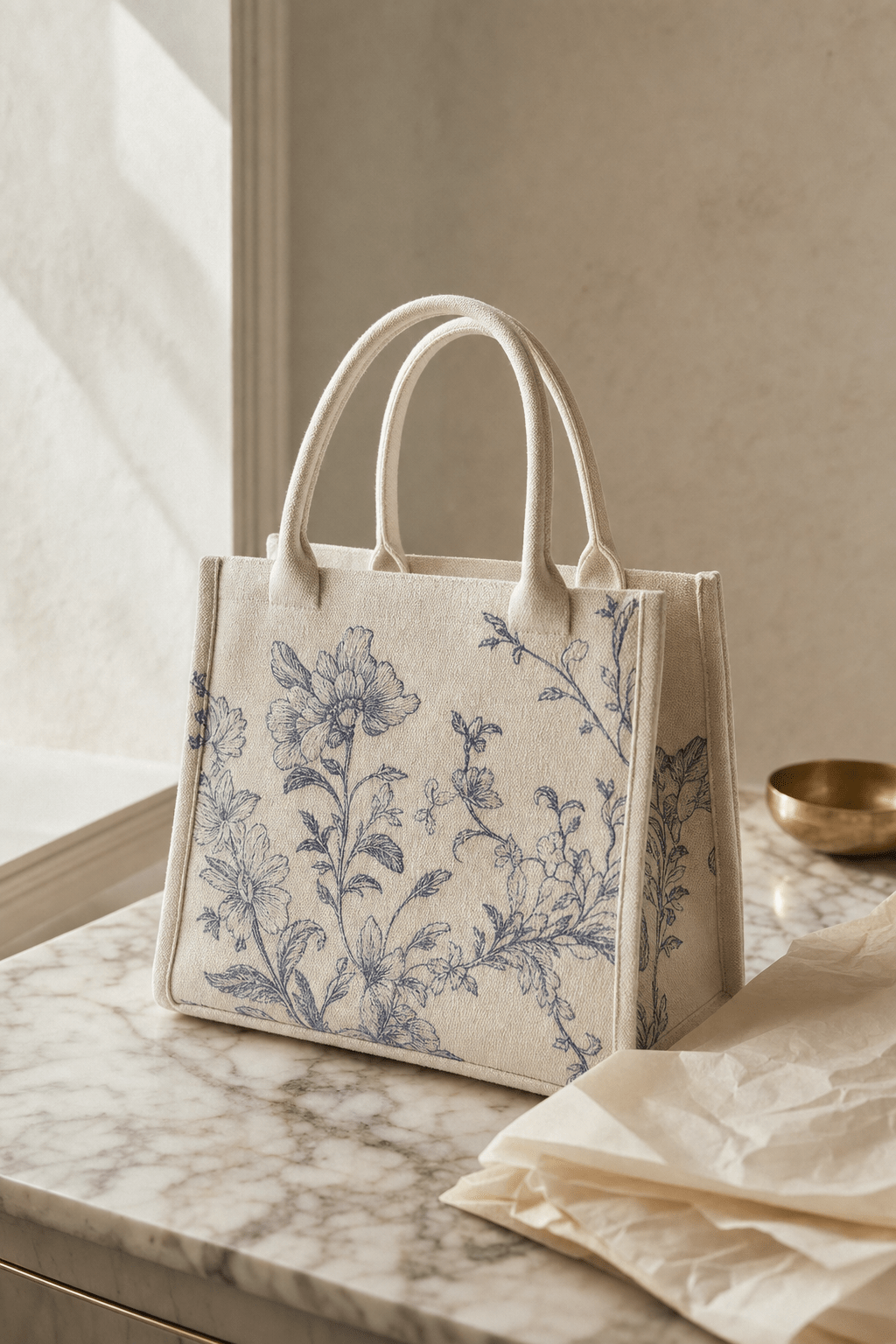
- The exterior pattern is embroidered, not printed or woven. Every Book Tote's signature motif, whether the classic Oblique jacquard or a custom design, is stitched thread sitting on top of the canvas base, which means it can snag, pull, and fray in ways a flat printed or coated surface cannot.
- There is no internal frame. Like the Neverfull, the Book Tote's structure depends on what is inside it, not on built-in rigidity. Left empty, it collapses and creases at the sides.
- There is no closure at all. Not a zip, not a flap, not even a magnetic snap on most versions. The top is fully open, all the time, which means dust, ambient moisture, and light have unrestricted access to the interior whenever the bag is not inside a dust bag.
- The interior canvas is unlined on many versions. Without a protective lining layer, anything that stains the interior canvas can show through to the exterior, and anything spilled inside has direct contact with the visible outer surface from the reverse side.
Embroidery thread: the Book Tote's most distinctive risk
Most luxury canvas bags carry their brand pattern as a coating, a weave, or a print sitting flush with the material's surface. The Book Tote's embroidery sits proud of the canvas, raised thread stitched through the base fabric, which makes it beautiful and also makes it vulnerable to a category of damage most other bags in this library simply do not face.
Snag risk from rough contact
Any surface with texture, a stiff dust bag seam, a shelf's raw wood edge, another bag's zipper pull or buckle, can catch a raised embroidery thread and pull it. A single caught thread can loosen a small section of the pattern, and repeated snagging in the same area can eventually create a visible gap or loose loop in the design. Store the Book Tote inside a smooth-lined dust bag, and keep it clear of contact with any hardware or rough-textured object on a shared shelf.
Fraying at pattern edges
The edges of embroidered motifs, where the stitching starts or stops, are more prone to fraying than the middle of a stitched section. Handle the bag by its handles and base rather than gripping the embroidered panel directly, and avoid folding the bag in a way that creases directly across an embroidered section, since a sharp fold repeated over time can work a stitch loose at the crease line.
Custom embroidery: extra care for personalized totes
Personalization is one of the Book Tote's biggest draws, and custom embroidered names, motifs, or artwork carry the same snag and fray risks as the standard pattern, sometimes more, since custom designs can include finer detail, smaller lettering, or denser stitching than the classic Oblique motif. A personalized Book Tote is also harder to have professionally re-embroidered if a section is damaged, since matching a custom design's exact thread color, stitch density, and placement is a more involved job than repairing a section of the standard, mass-produced pattern. Treat a personalized Book Tote with, if anything, slightly more caution than a standard one: a smooth-lined dust bag, minimal folding across the embroidered area, and prompt attention if you notice a loose thread rather than waiting to see if it gets worse.
Structural collapse: no frame means no free-standing shape
The Book Tote shares the Neverfull's core structural problem: without an internal frame, the bag's open, boxy silhouette depends entirely on what is filling it. An empty Book Tote left standing on a shelf develops the same soft fold at the sides and collapsed top opening that afflicts any unstructured tote, and the medium size, at roughly 36.5 by 27.5 by 16.5 centimeters, has enough surface area that the slouch is visually obvious within weeks.
Fill it every time you put it away
Use a shaped pillow insert sized for a large structured tote, or acid-free tissue packed evenly into the base corners and both side panels. The goal is restoring the tote's rectangular footprint, not simply filling volume, since a Book Tote packed unevenly can develop an asymmetric lean rather than a uniform slouch. Because the exterior is embroidered rather than smooth leather or coated canvas, avoid a pillow insert with a textured or seamed cover that could press an impression into the embroidery from the inside during long-term storage; a smooth, soft-cover insert or well-distributed tissue is the safer choice here.
No closure: the dust and exposure problem
Most totes in this library have at least some barrier between the interior and the outside world, a zip, a flap, a drawstring. The Book Tote has none of that on most versions. The top is open at all times, which means that whenever the bag sits outside its dust bag, dust, airborne debris, and ambient humidity have direct, unobstructed access to the interior lining and the base.
This makes the dust bag less of a nice-to-have and more of a structural necessity for this specific model. A Book Tote stored on an open shelf without its dust bag accumulates interior dust noticeably faster than a comparable zip-top tote, and that dust settles against the unlined canvas interior where it can be harder to remove than from a coated or lined surface. For the general case on why a dust bag matters across every bag in this library, and the specific mechanisms of dust, oil, and light damage it addresses, see our guide on why every handbag needs a dust bag. For the Book Tote specifically, treat the dust bag as mandatory for any storage period longer than an overnight stay, not just for long-term shelving.
Unlined interior: why stains show through
Many Book Totes have an unlined or minimally lined canvas interior, which means the same fabric forms both the inside surface you see when the bag is open and, in effect, the reverse side of what shows on the exterior at the base and lower panels. A spill or stain on the interior canvas is not contained behind a separate lining layer the way it would be in a fully lined bag; it can visibly show through or bleed toward the exterior-facing side of the fabric, especially at the base where the two surfaces are closest.
What this means practically
Never set the Book Tote down inside on a surface with anything wet, oily, or freshly inked nearby, and be especially cautious with cosmetics, pens, or leaking bottles carried loose inside the bag rather than in a pouch. Wipe up any interior spill immediately, and let the canvas dry fully in open air before storing the bag, since trapping moisture against unlined canvas in a closed dust bag can encourage a musty smell or, in humid climates, mold at the base seams.
Base wear from dragging
The Book Tote's flat, unstructured base has no reinforced feet or protective studs on most versions, which means it takes direct abrasion whenever it is set down, slid across a car seat, or rested on the floor. Repeated contact with rough surfaces, pavement, textured flooring, a car's carpeted footwell, gradually wears the base canvas thinner and can eventually expose the underlying structure at the corners before the rest of the bag shows comparable wear. Set the bag down on soft, clean surfaces where practical, and check the base periodically for thinning or fraying, since this is one of the first places heavy daily use shows up on this model.
Common mistakes with Book Tote storage
- Storing it empty and unstuffed. With no internal frame, this produces the same side-panel slouch and collapsed opening that afflicts any unstructured canvas tote.
- Skipping the dust bag "just for a few days." With no closure at all, the interior is exposed to dust and debris the entire time the bag sits uncovered.
- Letting the embroidered panel rest against a rough or textured surface. This is the most common cause of snagged or pulled threads in storage.
- Ignoring a loose embroidery thread. A single caught thread tends to loosen further with continued handling rather than staying contained on its own.
- Leaving spilled liquid or loose cosmetics inside an unlined interior. Stains can show through toward the exterior-facing side of the canvas, especially near the base.
- Sealing a damp bag inside a closed dust bag. Traps moisture against unlined canvas and encourages musty odors or mold at the seams.
Expert tip: store the Book Tote with the embroidered panel facing away from contact
If shelf space is tight and the bag cannot sit with full clearance on every side, orient it so the embroidered panel faces outward, away from the shelf wall or any neighboring object, rather than pressed against a surface. The plain canvas base and sides can tolerate incidental contact far better than the raised embroidery can, and a few seconds of deliberate positioning when you put the bag away meaningfully reduces snag risk over months of storage.
Medium size and beyond
The Medium Book Tote, at roughly 36.5 by 27.5 by 16.5 centimeters, is the version most of this guide is written around and the most commonly carried size. Larger versions carry more interior volume and correspondingly more weight when filled for storage, which puts more sustained strain on the handles if the bag is hung rather than set down, so store larger totes upright on a shelf rather than suspended by the handles for extended periods. Smaller versions need proportionally less fill to avoid collapse but show embroidery snags just as readily, since thread vulnerability does not scale with bag size the way structural sag does.
For the underlying principles behind humidity, shelving, and rotation that apply across every brand in this library, see the pillar guide on how to store luxury handbags properly. The same core rules apply to the Book Tote, adjusted for its unframed structure, open top, and embroidered surface.
Closing thoughts
The Book Tote's casual, everyday look conceals a genuinely specific set of storage risks: embroidery that snags on contact a smooth surface would shrug off, no internal frame to keep its shape without help, no closure at all to keep dust out, and an unlined interior that does not forgive a careless spill. Store it stuffed, store it covered, and give the embroidered panel the same deliberate care you would give a hand-finished detail on any other bag in this library, because that is exactly what it is.