How to Store a Handbag: Practical Storage Guide
Good handbag storage reduces avoidable pressure, crowding, moisture exposure, direct sunlight, and contact with materials that may transfer color or residue. There is no universal storage formula that guarantees preservation for every leather, textile, coated canvas, or handbag construction.
Empty the bag
Remove everyday contents before long-term storage. Pens, cosmetics, bottles, keys, chargers, and other objects can leak, add weight, or create concentrated pressure against the lining.
Make sure it is dry
Do not enclose a damp handbag in a dust bag, box, or cabinet for long-term storage. If the bag has been exposed to significant moisture, follow the manufacturer's care guidance before putting it away.
Choose a stable indoor location
Keep handbags away from direct sunlight, obvious dampness, radiators, heating vents, and large environmental swings. Avoid treating a particular temperature or relative-humidity number as universally correct for every handbag material.
Give the bag space
Do not tightly crowd handbags together or stack heavy objects on top of them. Avoid prolonged hanging under unnecessary weight, especially when the bag is loaded.
Use interior support when useful
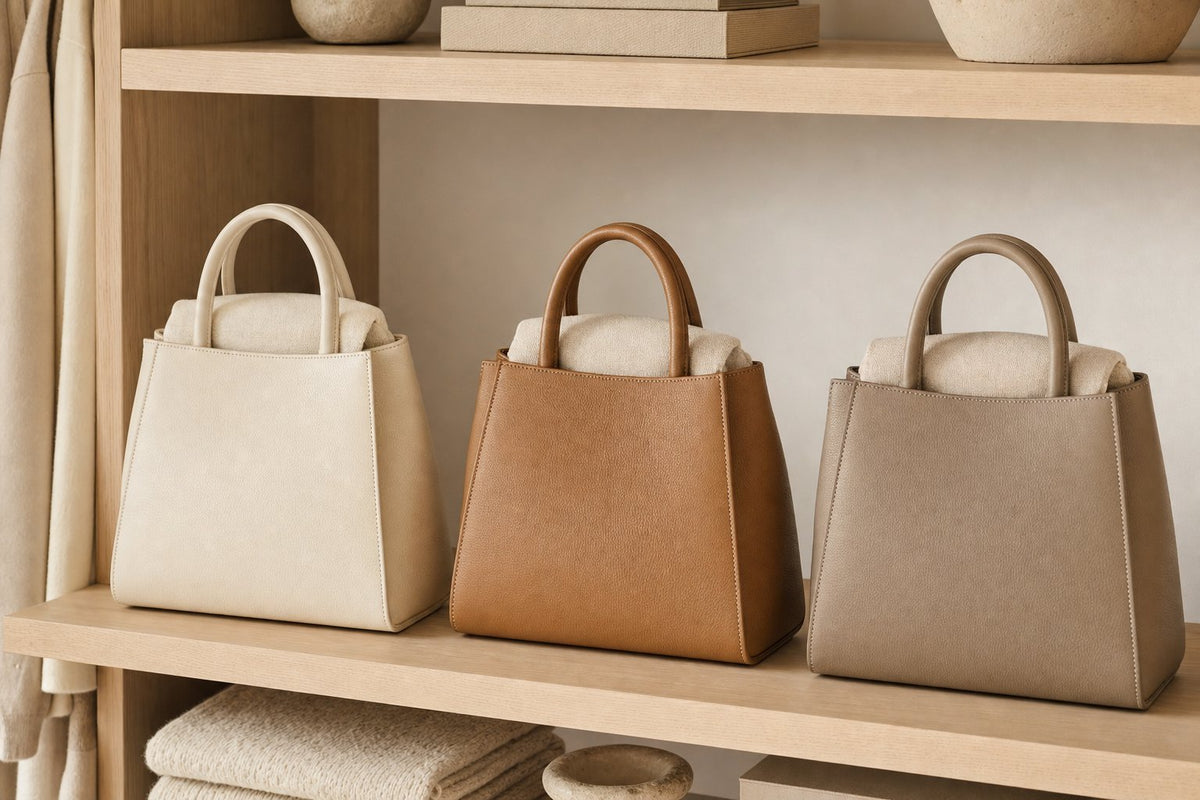
If the bag tends to collapse when empty, a soft insert can help it rest more naturally. Choose support that fills the interior gently. Do not deliberately oversize the pillow to make the bag appear firmer.
Use a clean dust bag
A breathable dust bag can help reduce dust and incidental contact. Avoid sealing damp materials in plastic. If you use temporary tissue or fabric for stuffing, keep it clean, dry, and loosely arranged.
Inspect periodically
Check for moisture, odor, pests, color transfer, pressure marks, damaged storage materials, or changes in the bag. The appropriate inspection frequency depends on the environment and how long the bag remains unused.
Follow material-specific guidance
Leather, suede, coated canvas, textiles, exotic skins, hardware, adhesives, and finishes can require different care. When in doubt, prioritize the manufacturer's current guidance or advice from a qualified specialist familiar with the specific material.
For Fabrinique sizing, use Find Your Bag. A Purse Pillow provides soft interior support during storage but cannot guarantee prevention of creasing, wear, mold, aging, or changes in resale value.
How do I store a Louis Vuitton Speedy?
For a Speedy, empty the bag, make sure it is dry, and use gentle interior support if you want the soft-sided body supported between wears. Avoid overstuffing or placing heavy objects against the exterior. Fabrinique makes model-specific Purse Pillows for the Speedy 25, Speedy 30, and Speedy 35. See the complete Speedy storage guide for model-specific guidance.
How do I store a Louis Vuitton Keepall?
Empty the Keepall, make sure it is dry, and give its long soft-sided body enough shelf space that other luggage is not pressing against it. If you want interior support between trips, use a soft insert matched to the numbered model without stretching the exterior. Fabrinique makes Purse Pillows for the Keepall 45, Keepall 50, Keepall 55, and Keepall 60. See the complete Keepall storage guide.
How do I store an Hermès Birkin?
Empty the Birkin, make sure it is dry, give it enough shelf space to avoid pressure from neighboring items, and use gentle interior support if helpful. Do not force the leather outward or size up simply for a firmer appearance. Fabrinique makes dedicated Purse Pillows for the Birkin 25, Birkin 30, and Birkin 35. See How to Store a Birkin for the complete model-specific routine.
How do I store an Hermès Kelly?
Empty the Kelly, make sure it is dry, give it enough shelf space to avoid pressure from neighboring items, and use gentle interior support if helpful. Let the flap, sangles, handle, strap, and hardware rest without unnecessary tension. Fabrinique makes dedicated Purse Pillows for the Kelly 25, Kelly 28, and Kelly 32. See How to Store a Kelly: Sellier vs. Retourné for construction-specific guidance.