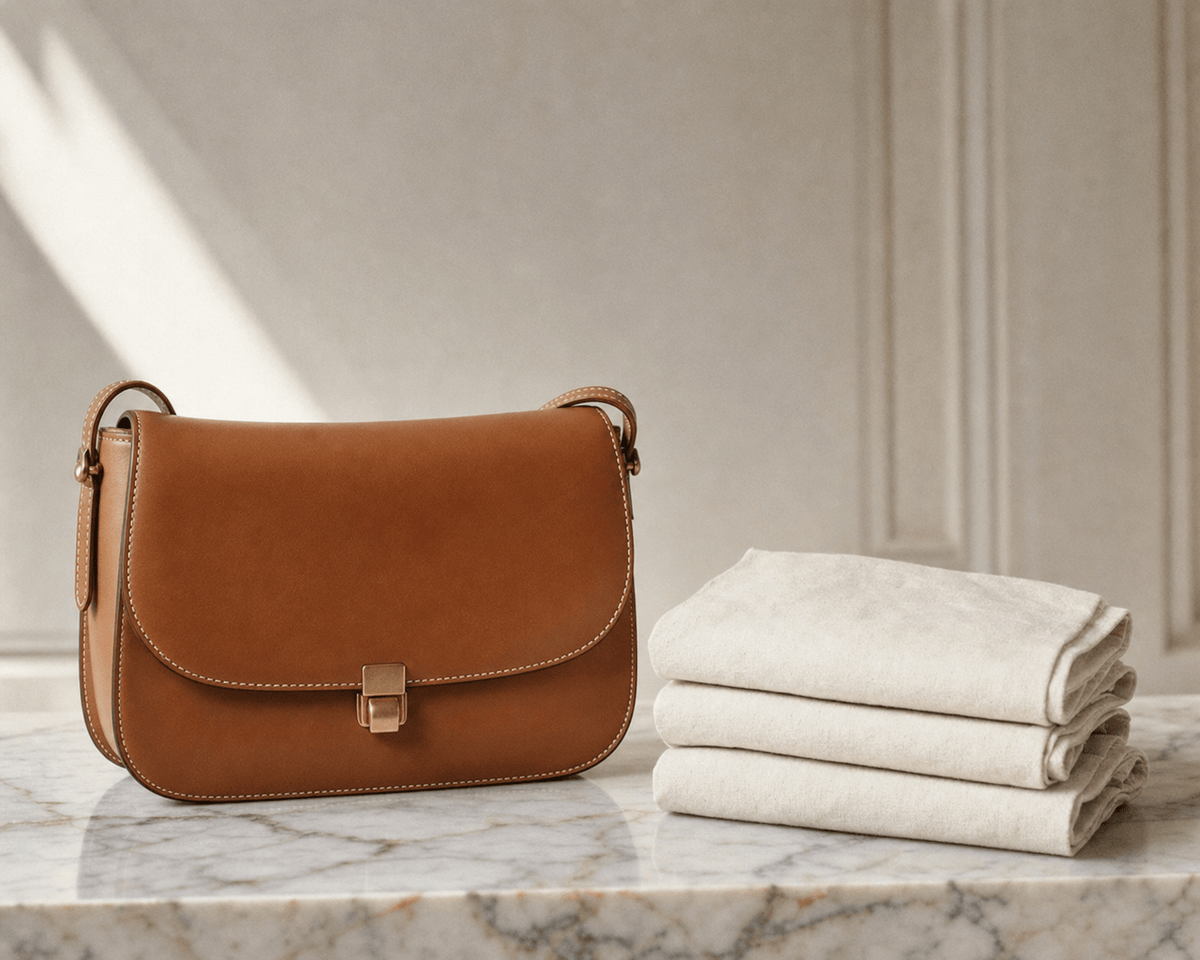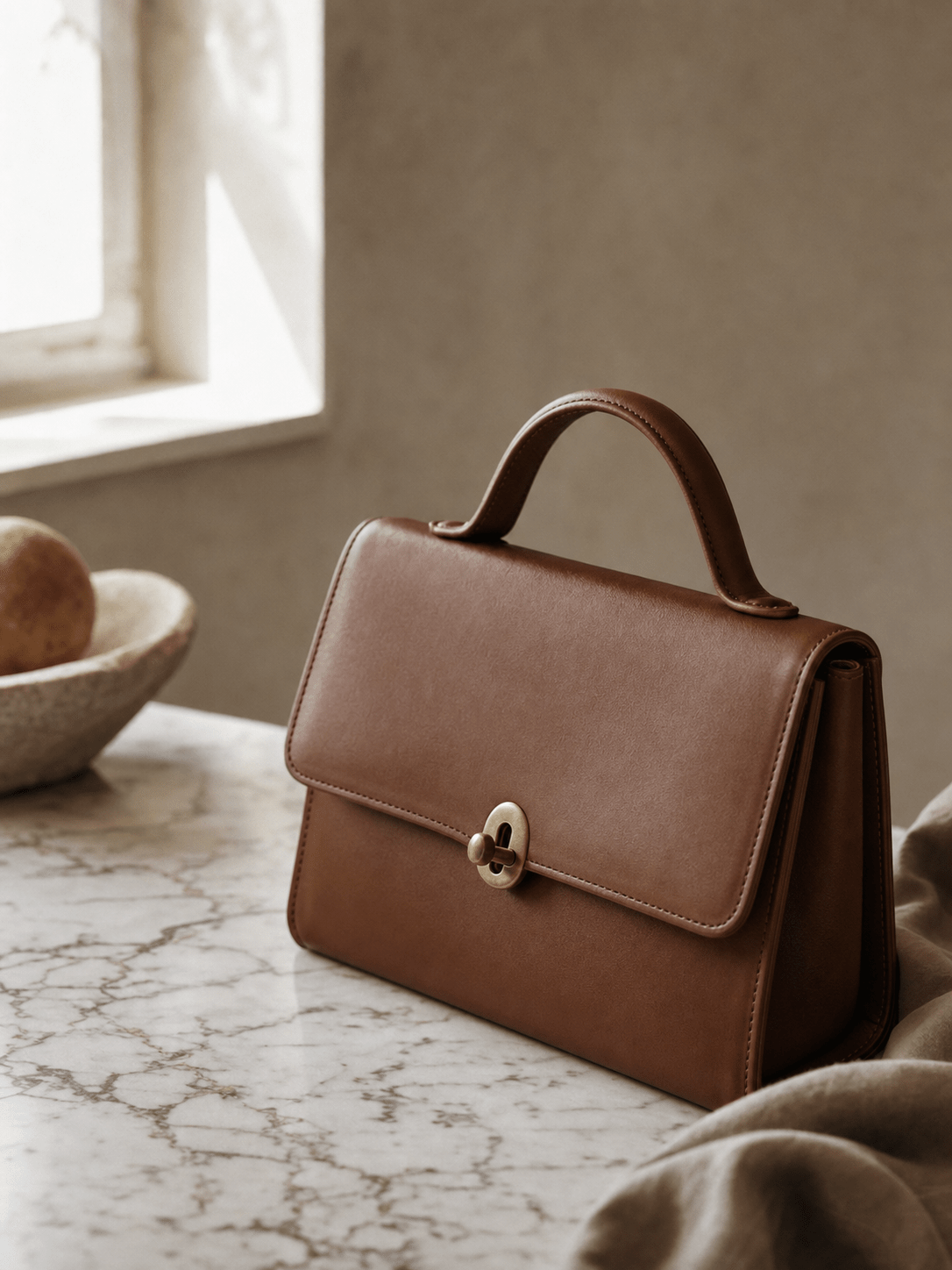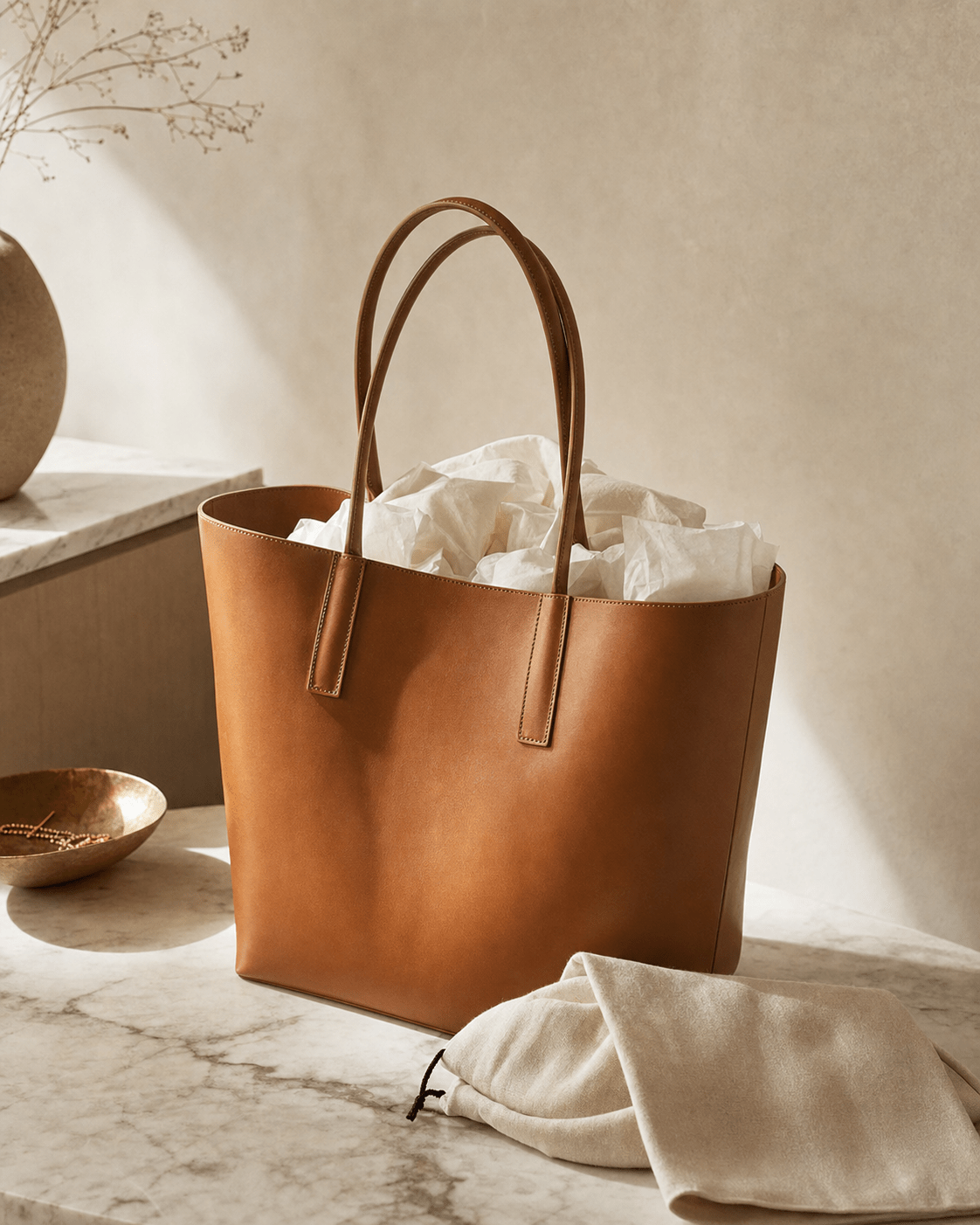
The Birkin is engineered by hand from a single hide, hand-stitched over 18 to 24 hours, and finished by an artisan whose initials are stamped inside the flap. What you do with it between wears is what determines whether it looks the same in twenty years — or whether the front panel sags, the corners soften, and the handles crease permanently within five.
This is the definitive Birkin storage guide. It covers every leather Hermès produces, every common Birkin size (25, 30, 35), and the seasonal rhythms that keep a bag in reference-grade condition. If you own a Birkin — or you're about to — read this once, set it up correctly, and you'll rarely need to think about storage again.
The four conditions every Birkin needs in storage
Before we get into what goes inside the bag and what goes around it, understand the environment. Every Birkin lives longest when four conditions are held stable:
- Temperature 60–70°F (15–21°C). Not the temperature of your living room during a heat wave. Not the temperature of a garage in winter. A stable, moderate temperature — think a closet on an interior wall, not one that shares a wall with the outside of your house.
- Humidity 40–55%. Above 60%, mold and mildew begin to develop on natural leathers. Below 30%, leather dries out, loses suppleness, and can crack at fold lines. A $15 hygrometer in your closet is one of the highest-value storage tools you can buy.
- Complete darkness. UV light fades vachette trim, darkens interior linings, and dulls dyes. Never store a Birkin in direct sun. Even indirect daylight over months causes visible changes. Prefer a closed closet over an open shelf.
- Full internal support. This is the single most-overlooked element and the single most-damaging omission. Herme's leathers — especially Togo, Clemence, and Swift — remember every crease. Without a properly shaped insert, the front and back panels bow inward within weeks of storage.
The Fabrinique storage system
The system has three components, in this order:
1. A properly sized pillow insert
This is the foundation. A Birkin without internal support in storage will develop front-panel sag — the front of the bag bows inward toward the interior — as the unsupported leather panels lose their memory. Once sag sets in, it's harder (though not impossible) to reverse.
The right insert:
- Occupies the full interior cavity without over-stretching the leather panels
- Weighs enough to settle into the base under gravity — not so light that it shifts, not so heavy that the base bows
- Uses breathable materials (cotton cover, hypoallergenic fiber core) so moisture escapes rather than pooling
Fabrinique's Birkin inserts are engineered to the exact interior dimensions of the 25, 30, and 35. You can see the Birkin 25 guide, Birkin 30 guide, and Birkin 35 guide for the specific measurements.
2. The original Hermès dust bag
The orange cotton dust bag Hermès provides is not decorative. It's breathable, dye-stable, and sized to your specific bag. Never substitute plastic. Never substitute a random cotton bag from another brand. If you've lost the original, buy a natural, unbleached cotton or muslin replacement in the correct size — never store the bag exposed.
3. Upright rest position
Store the Birkin upright, resting on its four feet, in a way that lets the weight of the pillow settle naturally. Never store it on its side. Never lean it against another bag. Never stack anything on top. Never hang it by its handles — this stretches them permanently and creates permanent stress lines at the handle base.
Storage by leather type
Every Hermès leather has slightly different storage sensitivities. The core system above works for all of them, but here are the specific adjustments:
Togo
The most common Birkin leather and the most forgiving. Togo tolerates humidity variations better than most leathers, holds shape well, and shows scratches least. Standard storage system applies. Rotate every 6–8 weeks in active collections.
Clemence
Softer than Togo, more slouchy, and more absorbent. Clemence is especially prone to water spotting — never store it near any moisture source, and never store it wet (even from ambient humidity). If you live in a humid climate, add silica gel packs to the closet and check them every 3 months.
Epsom
The most durable and scratch-resistant Hermès leather. Epsom is essentially indestructible in storage — it doesn't absorb water, doesn't scratch, and holds shape perfectly. Standard system applies but with the least sensitivity to environmental drift.
Swift
The most delicate common Birkin leather. Swift is soft, matte, and shows every scratch or scuff. Store with extra padding around the corners, never let anything touch it, and inspect monthly for early signs of surface wear.
Box calf
Highly polished, formal, and shows every scratch. Requires the most attentive storage of any Hermès leather. Store in absolute darkness, wipe monthly with a soft dry cloth, and consider a felt liner in the dust bag for extra corner protection.
The seasonal storage rhythm
For collectors with multiple Birkins in rotation, seasonal storage is not the same as daily storage. Here's the annual rhythm:
Every 6–8 weeks (rotation)
Bring the bag out of storage. Remove the pillow, wipe the exterior with a soft dry cloth, check the interior for any dust or debris, inspect the hardware for early tarnish, then re-insert the pillow and return to storage.
Quarterly (deep inspection)
Every three months, do a full inspection. Check the front panel for early bowing (should be perfectly vertical when the pillow is in). Check the corners for softening. Check the handles for stress lines at the base. Check the base stitching for any fraying. Check the turnlock and clasp for smooth operation.
Twice yearly (rest cycle)
Every six months, put the bag into a full one-week rest cycle: pillow in, flap closed, dust bag on, undisturbed for seven days. This lets any accumulated stress from use fully release.
Annually (professional check)
Every year, book a Hermès spa evaluation. Even without visible damage, a professional assessment catches stitching, hardware, and leather issues before they become expensive to fix. Hermès does not charge for basic evaluations.
Expert tip
The single most-damaging habit is stuffing a Birkin with balled-up tissue paper for long-term storage. Tissue dries out, compresses, and leaves acid residue against the leather. A weighted, breathable pillow insert lasts indefinitely and never carries these risks.
Common storage mistakes
These are the mistakes we see collectors make most often. Any one of them, sustained over months, can permanently degrade a Birkin.
Storing without interior support
The front and back panels of a Birkin have no armature. Without an insert holding them out, they slowly bow inward. Within 3–6 months, the front-panel sag becomes visible from the side. Within a year, it may be irreversible without professional restoration.
Storing in plastic
Plastic dust bags, garment bags, or vacuum-sealed containers trap moisture against the leather. Within weeks, this can develop into visible mildew that damages the leather permanently. Always use the original Hermès dust bag or unbleached natural cotton.
Hanging by the handles
A common storage solution — hooks or hangers with bags dangling by their top handles — is one of the worst. Handles stretch permanently under sustained weight, and the leather at the handle base develops permanent stress lines. Never hang.
Stacking bags
Storing bags on top of each other, or letting one bag lean against another, presses stress into the leather that shows within weeks. Every bag needs its own space, resting upright, with air around it.
Direct sun or heat exposure
Even indirect sun through a closet window fades vachette trim and darkens some interior linings over months. Storage near a radiator, heating vent, or in an attic that gets seasonally hot damages the leather permanently.
Storing with contents inside
Loose keys, coins, or pens sitting in the corners of a stored bag create pressure points that show as permanent indentations on Togo and Clemence. Empty the bag completely before storing.
How to store multiple Birkins together
Collectors with multiple Birkins face the additional challenge of storing many bags in the same closet. The rules:
- Each bag gets its own dust bag. Never share, never stack in the same bag.
- Space between bags. Air must circulate. Don't crowd a shelf.
- Never stack. Even if bags are in dust bags, stacked bags press on each other and distort shape.
- Add closet dehumidifiers or silica gel if you have more than a few bags in the same space, since combined humidity from the leather itself can rise slightly.
- Rotate storage position. A bag that lives on the same shelf spot for years may develop a settled shape from that resting position. Rotate positions every quarter.
What to do if your Birkin already shows storage damage
If front-panel sag, corner softening, or handle creasing has already developed, the situation is often correctable — the earlier you catch it, the more reversible it is.
Early-stage front-panel sag
Insert a properly sized pillow, close the flap, and let the bag rest upright in the dust bag for 2–4 weeks continuously. Most early-stage bowing corrects itself with sustained interior pressure. Check weekly for progress.
Corner softening
The corners of a Birkin can soften if the bag has been stored on its side or without support. Insert the pillow, ensure the base is fully square, and let rest upright for 3–4 weeks. Softening at 4+ corners simultaneously may require professional restoration.
Handle stress creasing
Handles that have been over-stressed (from carrying too-heavy loads or hanging in storage) develop permanent creasing at the base. This is not reversible with home storage — book a Hermès spa evaluation.
Severe damage
Any damage visible from 6+ feet away — deep sag, deep creasing, corner collapse — warrants professional restoration through the Hermès spa. Book early; wait times can exceed 6 months.
The bottom line
A Birkin is a durable object. It is engineered to last generations. Almost all of the damage that shows up on Birkins in the resale market is from storage neglect, not use. The bag can survive a decade of daily carry. It cannot survive a decade of being stuffed with tissue and shoved on a closet shelf.
Set up the storage system once — a properly sized pillow insert, the original dust bag, an upright rest position in a stable-climate closet — and the bag holds shape indefinitely. Combine that with the seasonal rhythm above, and you've done everything you can do to preserve the piece.
See the model-specific care guides for exact interior dimensions and insert sizes: Birkin 25, Birkin 30, Birkin 35. Or start with the Hermès brand hub for the complete care overview across every Hermès model.