How to Store a Chanel Boy Bag
The Chanel Boy Bag was built to be tougher than a Classic Flap — heavier leather, a boxier silhouette, and a chain that reads like hardware rather than jewelry. Owners often assume that toughness means the Boy takes care of itself in storage. It does not. The Boy's specific failure point is the top flap: a rigid, hinged panel that creases permanently if it is stored shut under pressure, stacked under another bag, or left compressed in a too-small dust bag for months.
This guide is for anyone who owns a Small (20 cm), Medium (25 cm), or Large (28 cm) Boy Bag and wants to store it the way its construction actually demands, not the way a Classic Flap gets stored.
Why the Boy Bag stores differently than a Classic Flap
The Classic Flap and the Boy Bag look like siblings, but their construction is different enough that the same storage routine will not protect both equally.
- Heavier, firmer leather. The Boy is typically made in a stiffer calfskin than the Classic Flap's lambskin or caviar, sometimes with a grained or box-calf-like finish. This leather resists the soft, rounded sagging that affects a lambskin Classic Flap.
- A structured, squared silhouette. The Boy holds its shape well even when it's not stuffed, which means owners are tempted to skip stuffing entirely. That is a mistake — see below.
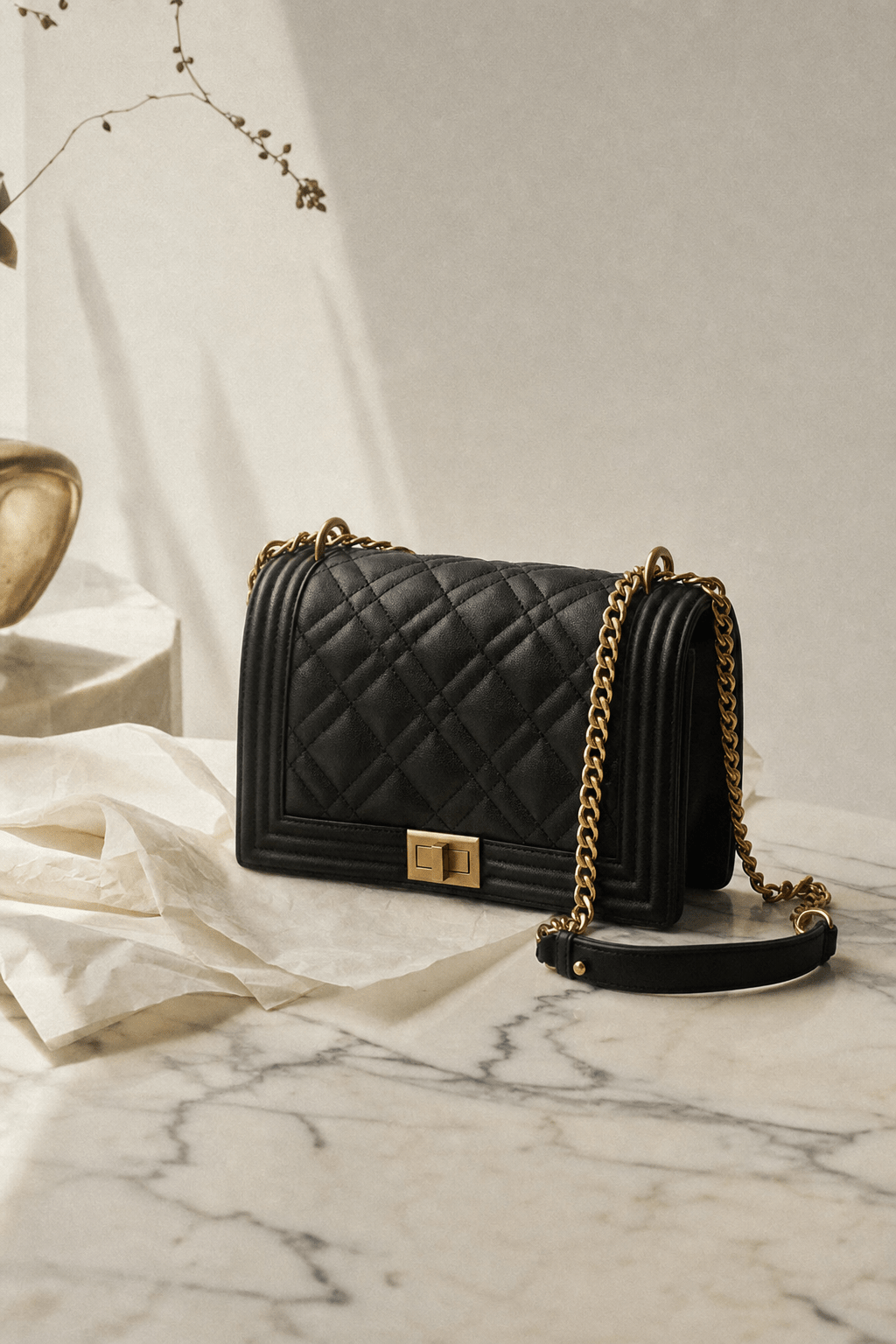
- A chunkier, more angular chain. The Boy's chain-and-leather strap is heavier gauge than the Classic Flap's, with a push-lock clasp (the "Boy lock") on the front instead of the CC turn-lock. The chain's added weight, left to dangle or coil against the flap for months, telegraphs texture into the leather beneath it.
- A rigid top flap with an internal frame. This is the Boy's real vulnerability. Unlike the Classic Flap's softer, foldable flap, the Boy's flap has more internal structure. Structure resists soft sagging but creases sharply and permanently if the bag is stored flat, closed, and weighted down.
In short: a Boy Bag is less prone to sag than a Classic Flap, but more prone to crease damage at the flap hinge if it is mishandled in storage.
The core storage setup
Climate: 15–21°C (60–70°F), 40–55% relative humidity
The Boy's firmer leather is somewhat more humidity-tolerant than lambskin, but it is not immune. Excess humidity above 55% invites mold on the leather backing and tarnish on the chain and Boy lock hardware. Below 35% relative humidity, the leather can dry out and the creases at the flap hinge become brittle rather than supple, making them harder to reverse. An interior closet away from exterior walls, garages, and attics is the baseline. For a full breakdown of humidity thresholds and monitoring, see Storing Hermès in Humid Climates: A Complete Playbook — the humidity mechanics are brand-agnostic even though the guide is Hermès-specific.
Stuffing: light, even, and flap-aware
Stuff the body of the Boy Bag with acid-free tissue paper or a shaped purse pillow insert sized for the bag — not so much that the flap strains to close, not so little that the front and back panels touch and crease against each other. The purse pillow inserts for Chanel flap are cut to hold a flap bag's silhouette without pushing outward on the flap seam, which loose tissue paper can do if overpacked. Because the Boy's flap has its own internal structure, over-stuffing the body directly increases pressure at the flap hinge — the exact point you're trying to protect.
Never store the Boy lying flat and fully weighted
This is the single most common Boy-specific storage error. Owners lay the bag flat on a shelf, close the flap, and stack something on top — a sweater, another bag, a shoebox. The Boy's rigid flap has almost no give, so sustained downward pressure on a closed flap creases the leather right at the hinge line within weeks. Store the Boy upright, supported on its base, with nothing resting on top of the flap.
Chain positioning matters more on the Boy
Because the Boy's chain is heavier and chunkier than the Classic Flap's, letting it coil directly on the flap leather for extended storage leaves link impressions. Lay the chain flat across the top of the stuffed body, or tuck it inside the bag against the interior lining, rather than letting it rest across the exterior flap.
Boy Bag storage by size
Small (20 cm)
The Small Boy is compact enough that even a modestly filled dust bag can compress it. Use a firm insert or dense tissue that holds the corners square — the Small's proportions make any softening at the corners visually obvious.
Medium (25 cm)
The most common size and the one most often over-stuffed. Fill until the sides are taut but the flap closes without resistance. If the push-lock needs force to close, you've overstuffed it.
Large (28 cm)
The Large carries more weight in the leather itself, so it needs a sturdier shelf placement — not stacked on top of softer bags that could deform under its weight, and not stacked underneath heavier items that could crease its flap.
Dust bag and box protocol
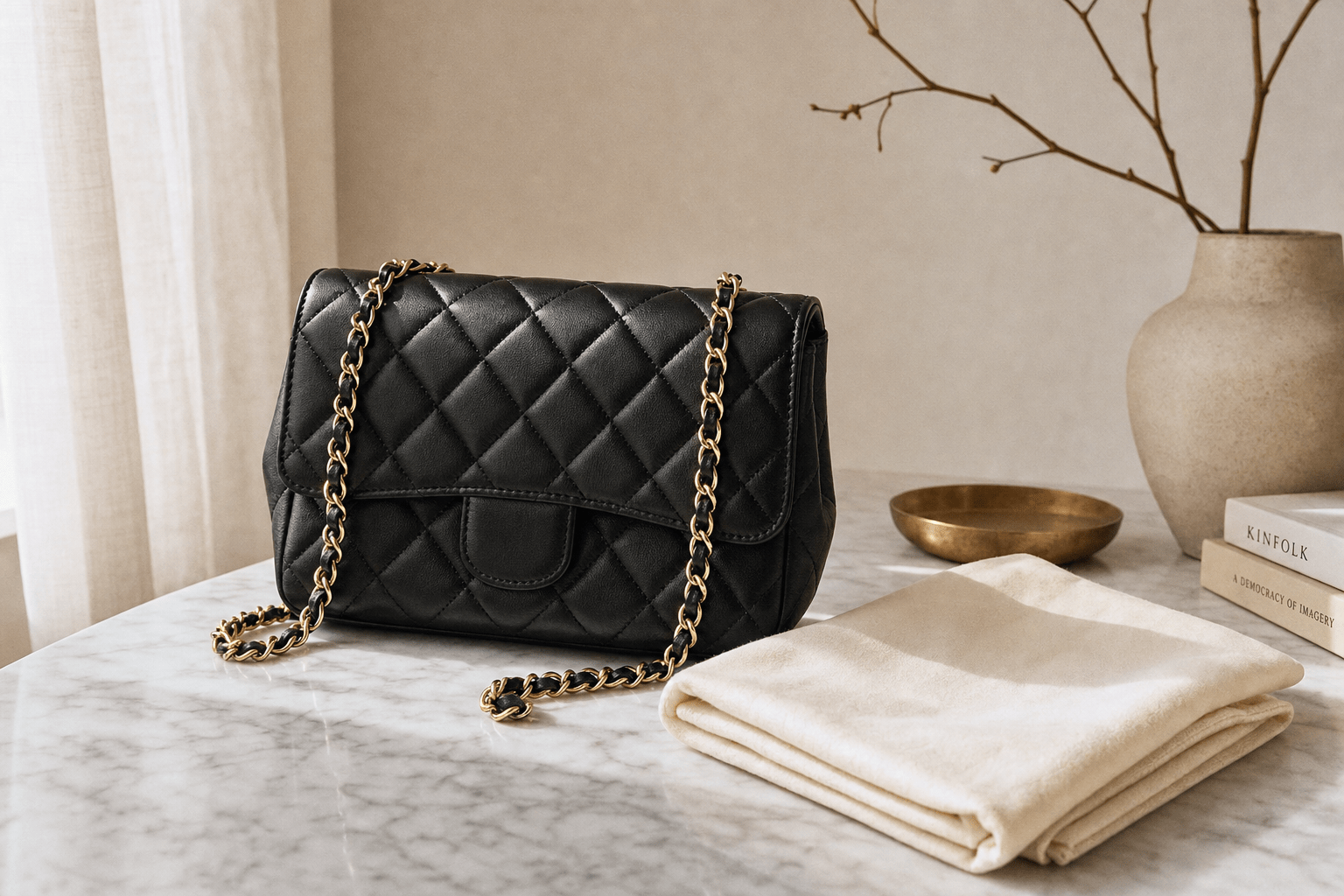
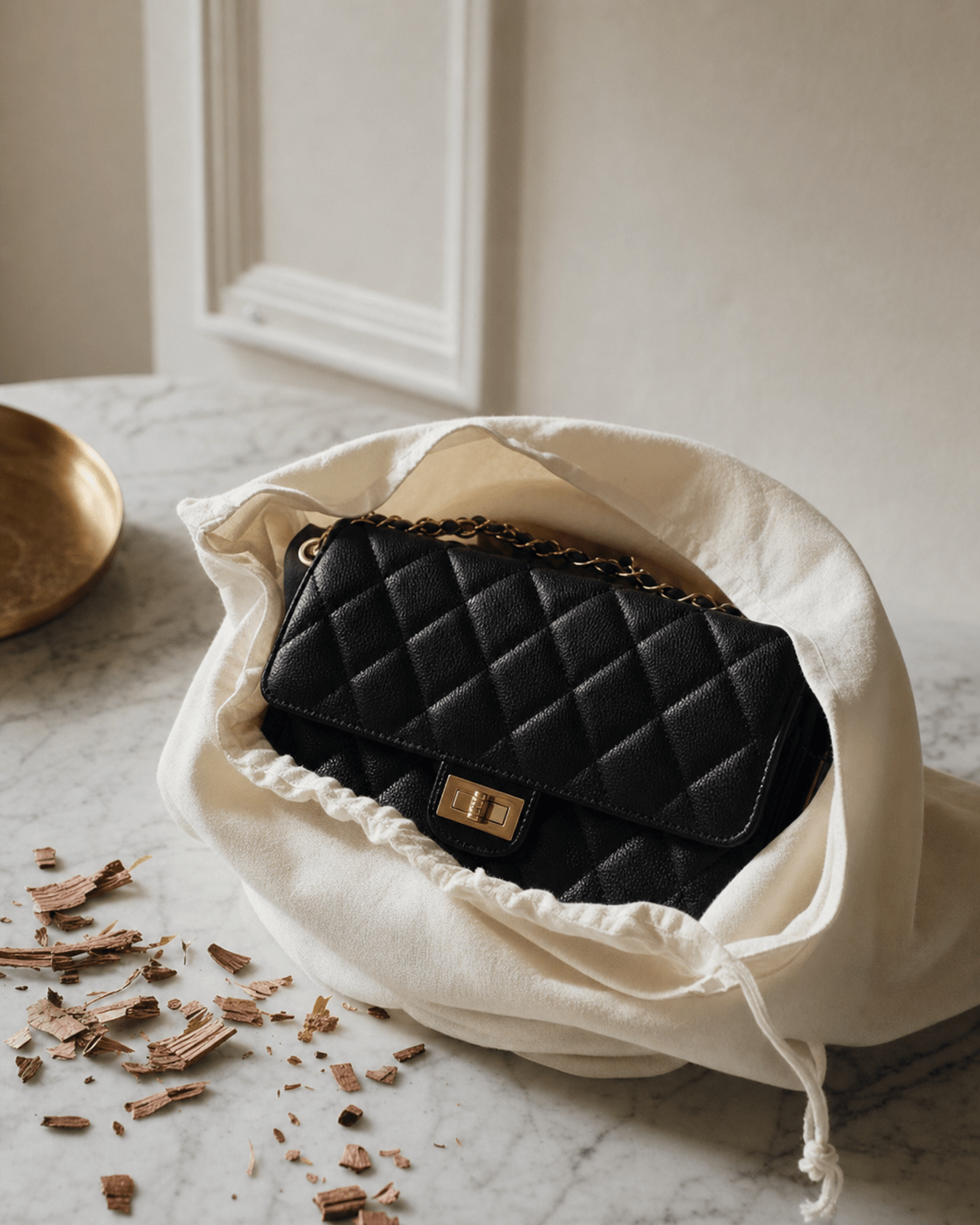
Store the Boy in its flannel dust bag, then in its original box or a rigid storage box, upright and unstacked. Never store a Boy Bag in a plastic bag, which traps humidity against the leather and hardware. If you rotate the Boy seasonally, check on it every 4–6 weeks rather than leaving it sealed for a full season — this catches early tarnish or a slow flap crease before it sets.
Common mistakes with Boy Bag storage:
- Storing it flat with weight on top. The Boy's rigid flap creases permanently under sustained pressure — always store upright.
- Assuming the firmer leather means no stuffing is needed. An empty Boy Bag still collapses at the sides over months; the leather is firm, not rigid enough to self-support indefinitely.
- Leaving the chunky chain coiled on the flap. The heavier chain links leave visible impressions in the leather faster than the Classic Flap's finer chain.
- Sealing it in plastic for "protection." Plastic traps moisture and accelerates both mold on the leather and tarnish on the Boy lock hardware.
Expert tip: Every time you take the Boy Bag out of storage, open and close the flap once before setting it down again. This lets you feel whether the push-lock mechanism is moving freely and whether the flap hinge shows any early stiffness — both are easier to address early than after months of unnoticed pressure.
How the Boy compares to other Chanel storage needs
If you own both a Boy and a Classic Flap, don't apply identical routines to both. The Classic Flap's softer construction needs more generous, gentler stuffing and is more sag-prone; the Boy needs less stuffing volume but stricter attention to flap position and weight. For the Classic Flap's specific protocol, see How to Store a Chanel Classic Flap. If you're deciding which model to add next, Classic Flap vs. Boy Bag vs. 19: Which Chanel to Buy First covers the durability and lifestyle tradeoffs in depth. And for the chain and hardware specifically, The Chanel Chain: How to Prevent Tarnish and Handle Wear goes deeper on tarnish prevention than this guide's storage-focused scope.
For the general principles that apply across every luxury handbag brand — climate control, stuffing philosophy, rotation cadence — the foundational reference is How to Store Luxury Handbags Properly.
FAQ
Does the Chanel Boy Bag need to be stuffed like a Classic Flap?
Yes, though slightly less aggressively. The Boy's firmer leather holds shape longer unstuffed than a lambskin Classic Flap, but the sides still collapse over months without support. Use a light, even fill.
Can I hang my Boy Bag by its chain in a closet?
No. Hanging by the chain stretches the leather tabs where the chain attaches to the body, and over time this creates permanent sag at the attachment points. Always store the Boy supported on its base.
Why does my Boy Bag's flap feel stiff after storage?
This usually means it was stored closed under some form of pressure, or in a space with humidity below 35%, which dries the leather at the hinge. Open and close it gently a few times and relocate it to a more climate-stable spot.
Is caviar or lambskin more common for the Boy Bag?
Chanel has produced Boy Bags in both, along with a grained calfskin that reads similarly to caviar. Caviar and grained calfskin versions are more storage-forgiving than lambskin Boy Bags, which behave closer to a lambskin Classic Flap and need gentler handling.
How often should I rotate a Boy Bag out of long-term storage?
Every 4–6 weeks, even if you're not using it. A quick check lets you catch tarnish, a slow flap crease, or humidity issues before they become permanent.
Should the Boy lock be left open or closed during storage?
Closed, but never forced. The push-lock is designed to sit closed under light tension. If it requires effort to close, the bag is overstuffed and you should remove some filling before storing it shut.
What's the biggest difference in storing a Small vs. a Large Boy Bag?
The Small is more prone to visible corner softening if underfilled, given its compact proportions; the Large carries more overall leather weight and needs a shelf placement where nothing heavier can rest on or against it.
The Boy Bag's structured leather buys you some margin that a Classic Flap doesn't have, but that margin disappears the moment the flap is stored closed under weight. Keep it upright, lightly filled, and out of direct pressure on the flap hinge, and the Boy will hold its shape for decades. A properly sized purse pillow insert for Chanel flap bags takes the guesswork out of how much to stuff it.