The Chanel Chain: How to Prevent Tarnish and Handle Wear
The chain is the single most-touched piece of hardware on your Chanel, and it is also the piece most owners neglect until it already looks dull. This guide is for anyone who has noticed their chain losing its shine, developing dark spots, or shedding a faint metallic residue on light clothing — and wants to know what is actually happening and how to stop it.
What the chain is actually made of
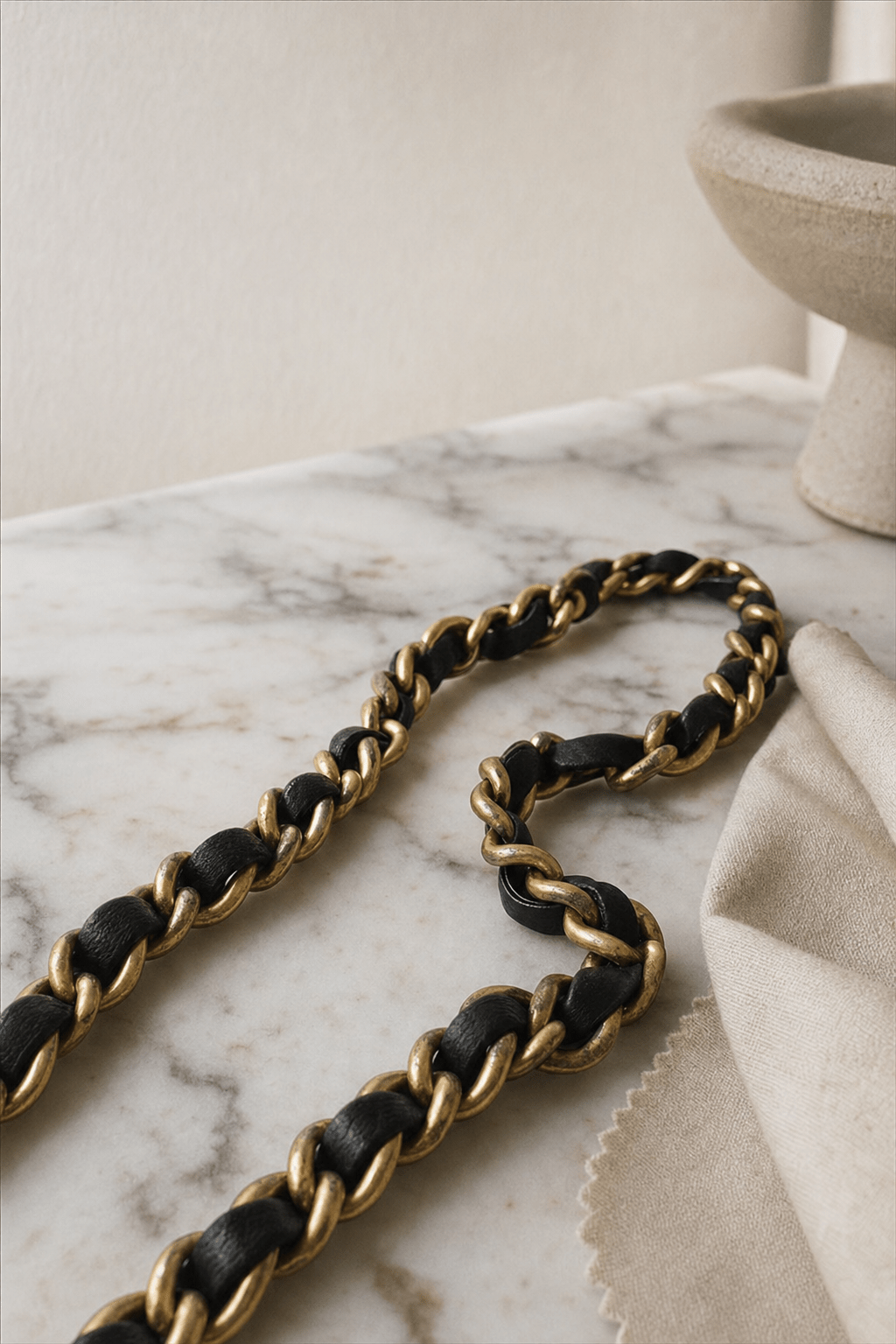
Chanel's signature strap threads leather through a metal chain, which is plated brass in most eras — never solid gold or silver despite how owners often describe it. The plating sits over a base metal, and the thickness and composition of that plating is what determines how a chain ages. Vintage chains, particularly pre-1980s, are frequently a heavier, more durable plating than some modern production, which is part of why some vintage bags show remarkably little tarnish decades later while a five-year-old modern bag can look dull.
Two hardware finishes dominate the current line: gold-tone and silver-tone. They are not interchangeable in how they age.
Gold-tone hardware
Gold-tone plating tends to show tarnish as a yellowish-brown dulling rather than obvious discoloration, which makes early tarnish easy to miss until it has progressed. It is generally more forgiving of skin oils than silver-tone, though not immune.
Silver-tone hardware
Silver-tone plating is more prone to visible dark spotting and a grayish tarnish that shows clearly against the metal's original bright finish. It reacts faster to humidity and to sulfur-containing air pollutants, which is why silver-tone chains in humid climates often show tarnish sooner than gold-tone chains from the same production year.
What actually causes chain tarnish
Tarnish is a chemical reaction between the plating and its environment, not a sign that the bag is defective. Three factors drive nearly all of it:
Moisture
Humidity accelerates oxidation of the metal beneath the plating, and any plating with microscopic pores lets moisture reach that base metal faster. This is why a chain stored in a humid closet tarnishes noticeably faster than one kept in a controlled environment.
Skin oils
Natural oils and the salts in perspiration are mildly acidic, and repeated contact — carrying the bag by the chain, resting it against skin, handling the clasp — wears down plating over time and leaves the residue that later shows as dullness or spotting.
Air pollutants
Sulfur compounds in urban air, and even trace chemicals from perfume or hairspray settling onto the chain, react with the plating surface. This is a slower contributor than moisture or oils but adds up over years of regular wear.
Prevention: what actually works
Buff after every wear
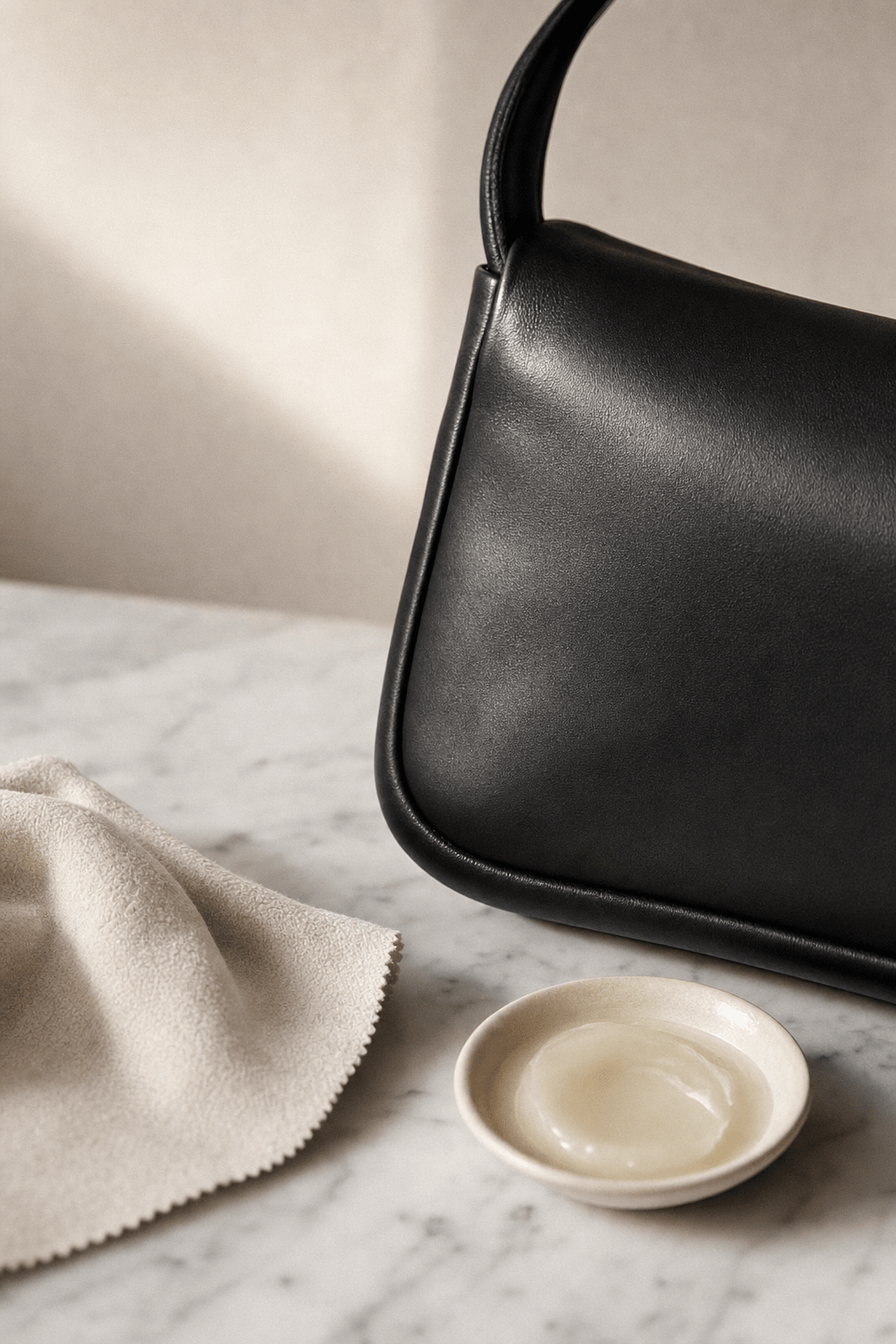
A soft, dry cloth run along the chain after each use removes the oil and moisture film before it has time to react with the plating. This single habit prevents more tarnish than any product you can buy. Thirty seconds after taking the bag off is enough.
Use a polishing microfiber, not a jewelry polish
A dedicated polishing microfiber cloth — the kind sold for silver and gold jewelry — lifts light tarnish without abrasive chemicals. Liquid jewelry polishes and dips are too aggressive for plated hardware; they are formulated for solid metal and can strip thin plating down to the base layer, which cannot be undone.
Store away from humidity
Keep the bag in a stable, moderate environment — roughly 18–21°C (65–70°F) with controlled humidity — rather than a damp closet, basement, or bathroom storage area. Silica gel packets in the storage box or dust bag absorb ambient moisture and are one of the cheapest, most effective tarnish-prevention tools available. Our full environmental storage guide covers humidity targets in more depth: How to Store Luxury Handbags Properly.
Avoid direct perfume and hairspray contact
Spray perfume and finish hairspray before putting the bag on, not after. Both settle onto metal surfaces and contribute to the pollutant load the chain has to withstand.
Rotate the contact points
If you wear the bag crossbody or doubled on the shoulder frequently, be aware that the same links take the most friction and skin contact every time. There is no way to fully avoid this with regular wear, but being conscious of it helps you catch early wear before it becomes visible tarnish.
Reading the wear: normal aging vs. real damage
Some dulling over years of wear is normal and, for many collectors, part of a bag's character. The distinction that matters is between surface tarnish, which is a chemical film sitting on top of the plating, and plating loss, which is the plating physically wearing away to reveal a different-colored base metal underneath.
- Surface tarnish looks like even dulling or light spotting and often responds to gentle buffing or polishing.
- Plating loss shows as a distinct color change at specific wear points — often a brassy or silvery patch breaking through gold-tone plating — and does not respond to cleaning, because the plating itself is gone in that spot.
Plating loss cannot be reversed with home cleaning. It requires replating, which is a different service than polishing.
When to send the chain to Chanel for repair
Chanel's boutiques and spa services offer hardware assessment and, in many cases, chain replacement or repair for bags with significant plating loss, a damaged link, or a chain that has separated from the leather threading. Costs vary meaningfully by the extent of the work and current service pricing, so we won't cite a specific figure here — confirm directly with a boutique or authorized spa service before committing. As a general rule of thumb based on public reporting, minor cleaning or polishing services tend to be the least expensive tier, while full chain replacement is a more significant undertaking and priced accordingly.
Send the bag in when you see any of the following: a visibly broken or bent link, leather pulling loose from the chain's leather-threading channels, plating loss exposing base metal across a large area, or a clasp that no longer closes securely. For light tarnish or spotting, home care with a proper polishing cloth is almost always sufficient and should be tried first.
If you are trying to decide which Chanel to buy with long-term chain durability in mind, our sizing guide for the Classic Flap covers how strap length and drop vary by size, which affects how much wear the chain sees day to day: Chanel Classic Flap Sizes Explained. And if your chain concerns are part of a broader storage overhaul, start with our model-specific protocol: How to Store a Chanel Classic Flap.
Common mistakes with Chanel chain care:
- Using silver or jewelry dip cleaners, which are formulated for solid metal and strip thin plating on contact
- Letting the bag sit in a damp closet or bathroom, which accelerates tarnish faster than almost any other single factor
- Scrubbing tarnish with an abrasive cloth or brush instead of a proper polishing microfiber, which can scratch the plating rather than clean it
- Ignoring early plating loss because it looks minor, when it will only progress and cannot be reversed without professional replating
- Spraying perfume or hairspray while wearing the bag, letting the chemicals settle directly onto the hardware
Expert tip: Keep a dedicated polishing microfiber cloth in the same drawer or box as your Chanel, not in a separate cleaning kit you have to go find. Chains that get buffed the moment tarnish is noticed stay ahead of the problem indefinitely, while chains that wait for a scheduled deep-clean rarely get one. When the bag is not in rotation, store it with the chain laid flat rather than coiled, and consider a purse pillow insert for Chanel flap bags to keep the body shaped so the chain is not bearing the bag's weight unevenly against a collapsed flap.
Chain tarnish is one of the few Chanel care issues that is almost entirely preventable with a habit rather than a product — buff after wear, store dry, and reach for a polishing cloth before anything stronger. Catch plating loss early and a boutique or spa service can often address it; wait too long and replacement becomes the only option. Either way, the chain is worth the same attention you already give the leather.