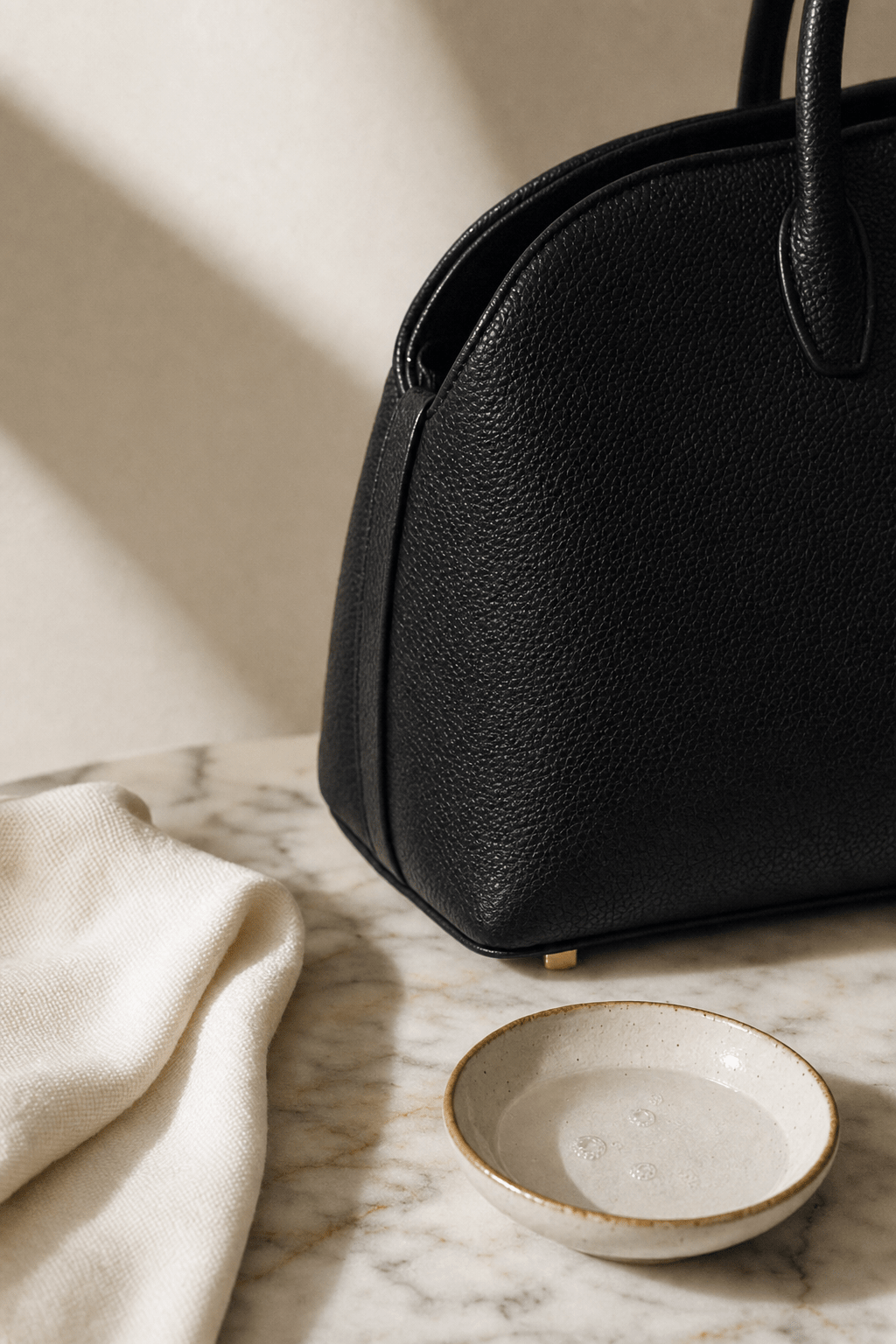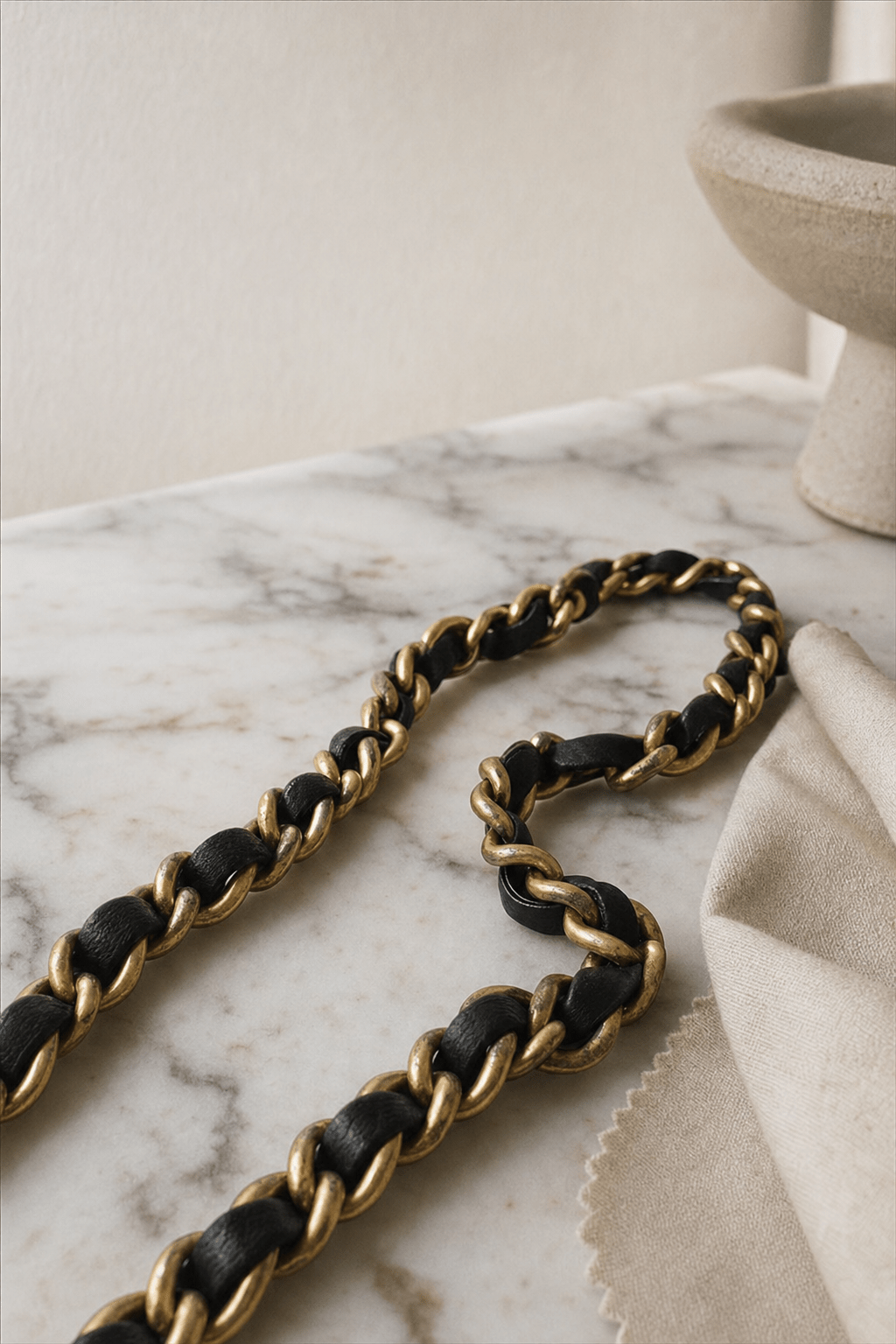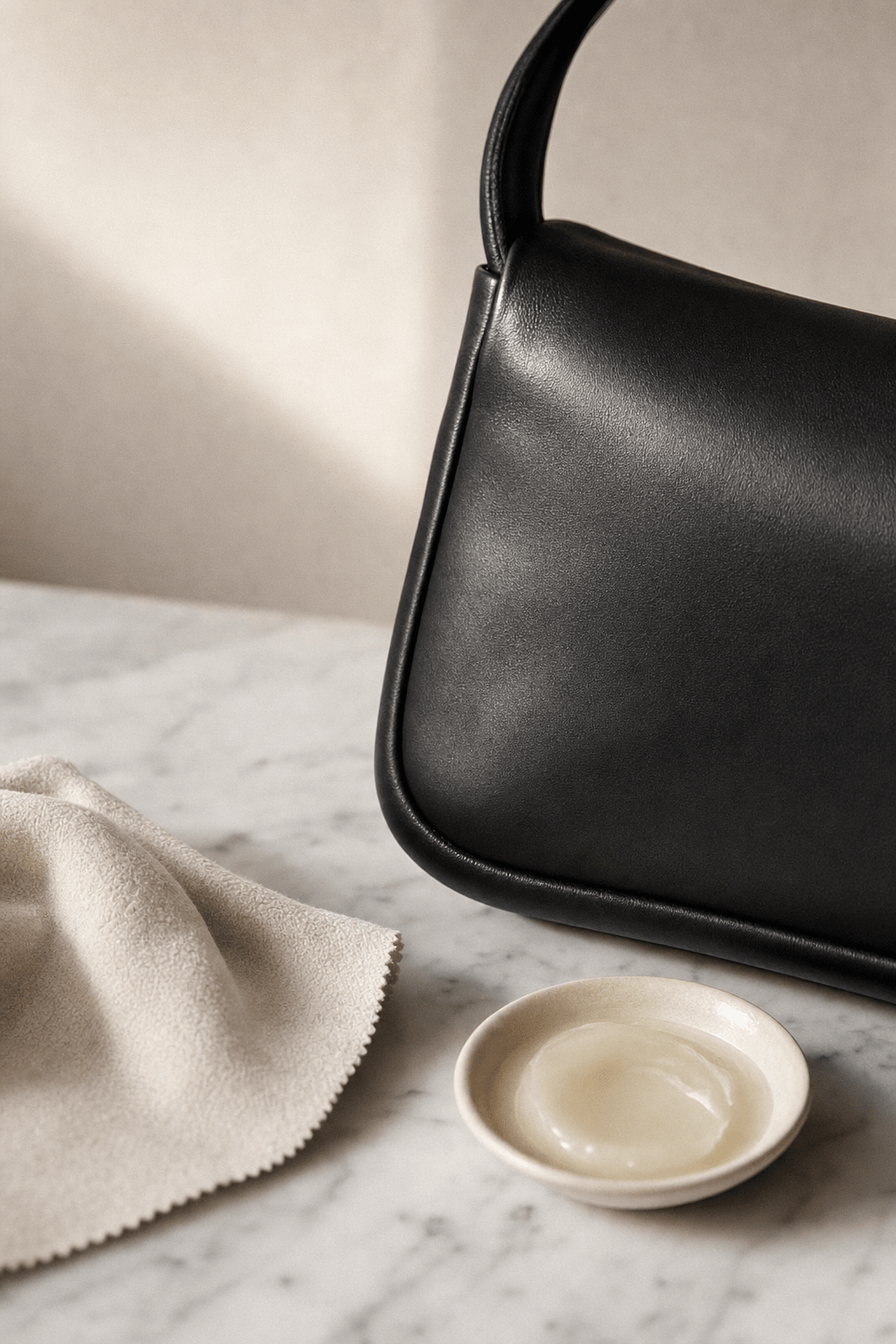
How to Clean Chanel Lambskin: A Delicate-Leather Playbook
Lambskin is the leather that made your Chanel feel like a Chanel in the first place — soft, pillowy, faintly glossy. It is also the leather most likely to scar if you clean it the way you would clean caviar. This guide is for owners of lambskin Classic Flaps, Boy Bags, and any quilted Chanel who want a cleaning routine that respects how thin and unstructured this leather actually is.
Lambskin is calfskin's younger, thinner cousin. Where caviar is heavily grained and pebbled to resist marks, lambskin is finished smooth or lightly textured, with a much thinner cross-section. That thinness is what gives your Chanel its buttery drape — and it is exactly why lambskin shows fingernail marks, water spots, and product residue that caviar simply shrugs off.
Why lambskin behaves differently from caviar
Caviar leather is coated and structured to be nearly worry-free. Lambskin has a thinner finish layer sitting over a softer hide, so anything you apply sits closer to the surface and penetrates faster. Three practical consequences follow:
- Water marks are visible and often permanent. A single raindrop can leave a dark ring that caviar would never show.
- Pressure leaves memory. Press a fingernail into lambskin and you may see the indent for days. Rubbing during cleaning can do the same.
- Oils migrate faster. Hand cream, natural skin oils, and even some leather conditioners can darken lambskin in the exact spot they touched.
None of this means lambskin is fragile in the sense of falling apart. It ages beautifully with the right care. It just requires a gentler, slower process than caviar or epsom leather.
What you need before you start
- Two clean microfiber cloths — one for dry work, one reserved for anything damp
- A dry makeup or cosmetic sponge for light surface dust
- Distilled water only, applied in the smallest amount possible
- A leather-specific cleaner formulated for aniline or lightly finished leathers, tested on an inconspicuous patch first — the underside of a strap tab is ideal
- A purse pillow or acid-free tissue insert to hold shape while you work, so the quilting is not pressed flat against a table surface
Skip anything with alcohol, ammonia, or silicone. All three are common in general-purpose leather wipes and all three will eventually dull or discolor lambskin.
The step-by-step lambskin cleaning protocol
Step 1: Dust and dry-wipe first
Run a dry microfiber cloth over the entire surface in the direction of the grain, following the quilting lines rather than crossing them. This removes surface dust and light residue without introducing any moisture. For most lambskin bags in regular rotation, this is 80 percent of the maintenance they will ever need.
Step 2: Spot-test before anything damp
If dry wiping does not resolve a mark, dampen — not wet — a cloth with distilled water and test on the hidden patch first. Wait 10 minutes and check for any color change, darkening, or texture shift. If the patch looks unchanged, proceed to the actual mark, using the lightest possible pressure.
Step 3: Blot, never rub
Lambskin's biggest cleaning mistake is friction. Rubbing a mark spreads it and can burnish the surface, leaving a shiny patch that never quite matches the surrounding leather. Blot straight down and lift straight up. Repeat with a fresh section of cloth rather than going back over the same damp spot.
Step 4: Dry away from direct heat
Let the bag air dry at room temperature, stuffed gently with tissue or a purse pillow to keep the quilting from creasing while damp. Never use a hairdryer, radiator, or direct sun to speed drying — lambskin dries unevenly under heat, which can leave a slightly stiff or puckered patch exactly where the leather was dampest.
Step 5: Condition sparingly, if at all
Most lambskin does not need conditioner if it is stored and handled well. If the leather feels dry or is showing early cracking at stress points — corners, handle drops — use a small amount of a leather cream made for fine aniline leathers, applied with a clean cloth in a thin, even layer, and buffed until it disappears. Over-conditioning is a more common problem than under-conditioning on lambskin, because excess product sits on the surface and attracts dust.
Handling specific lambskin problems
Color transfer from denim or dark clothing
Address this immediately with a dry cloth before it sets. If it has already set, a leather-safe cleaner tested on a hidden patch is your next step — do not reach for a household stain remover, which will strip the finish faster than the dye will lift.
Ink marks
Ink on lambskin is one of the few marks best left to a professional leather restorer or a Chanel spa service rather than attempted at home. Home ink-removal methods rely on solvents that are too aggressive for this leather's thin finish.
General darkening or shine at corners
This is usually oil transfer from hands and clothing over time, not a cleaning failure. A gentle cleaner test-patched first can lift some of it, but expect that heavily handled corners will always show slightly more patina than the body of the bag. This is normal wear, not damage.
Storage habits that reduce how often you need to clean
Cleaning frequency drops significantly when storage habits are right. Keep your lambskin Chanel stuffed with a purse pillow or acid-free tissue so the quilting holds its shape and does not fold against itself, store it away from direct sunlight and away from other bags whose hardware or zippers could press into the leather, and maintain a stable environment around 18–21°C (65–70°F) with moderate humidity. Our full storage protocol covers humidity control and stacking rules in more depth: How to Store Luxury Handbags Properly.
If you are deciding between lambskin and caviar for your next Chanel, the leather-by-leather tradeoffs — including how each ages and how each cleans — are laid out in Caviar vs. Lambskin: Which Chanel Leather Is Right for You. And if your household has both leathers, the caviar-specific protocol is worth bookmarking too: How to Clean Chanel Caviar Leather (Without Damaging It).
Common mistakes with lambskin cleaning:
- Using baby wipes or general leather wipes — the moisturizing agents in most wipes darken lambskin permanently
- Rubbing a mark in circular motions instead of blotting, which spreads the mark and burnishes the surface
- Applying any cleaner without testing a hidden patch first, since lambskin reacts faster and more visibly than caviar
- Drying with a hairdryer or leaving the bag near a heat vent, which causes uneven stiffening
- Over-conditioning healthy leather, which leaves a surface film that attracts more dust than it prevents
Expert tip: Keep your lambskin Chanel stuffed even when it is not being cleaned, not just during storage. A slack, unstuffed bag left on a shelf between wears is more likely to develop the creases and press-marks that later get mistaken for stains. A shaped insert like a purse pillow insert for Chanel flap bags does double duty — it holds the quilting's shape day to day and keeps the leather from folding against itself in storage, which is often the real source of the marks owners try to clean off later.
Lambskin does not need to be treated as fragile — it needs to be treated as thin. Dry-wipe first, blot rather than rub, test before you introduce any moisture, and let storage do most of the preventive work. Between cleanings, a purse pillow insert for Chanel flap bags keeps the quilting shaped correctly so you are cleaning dust, not creases.