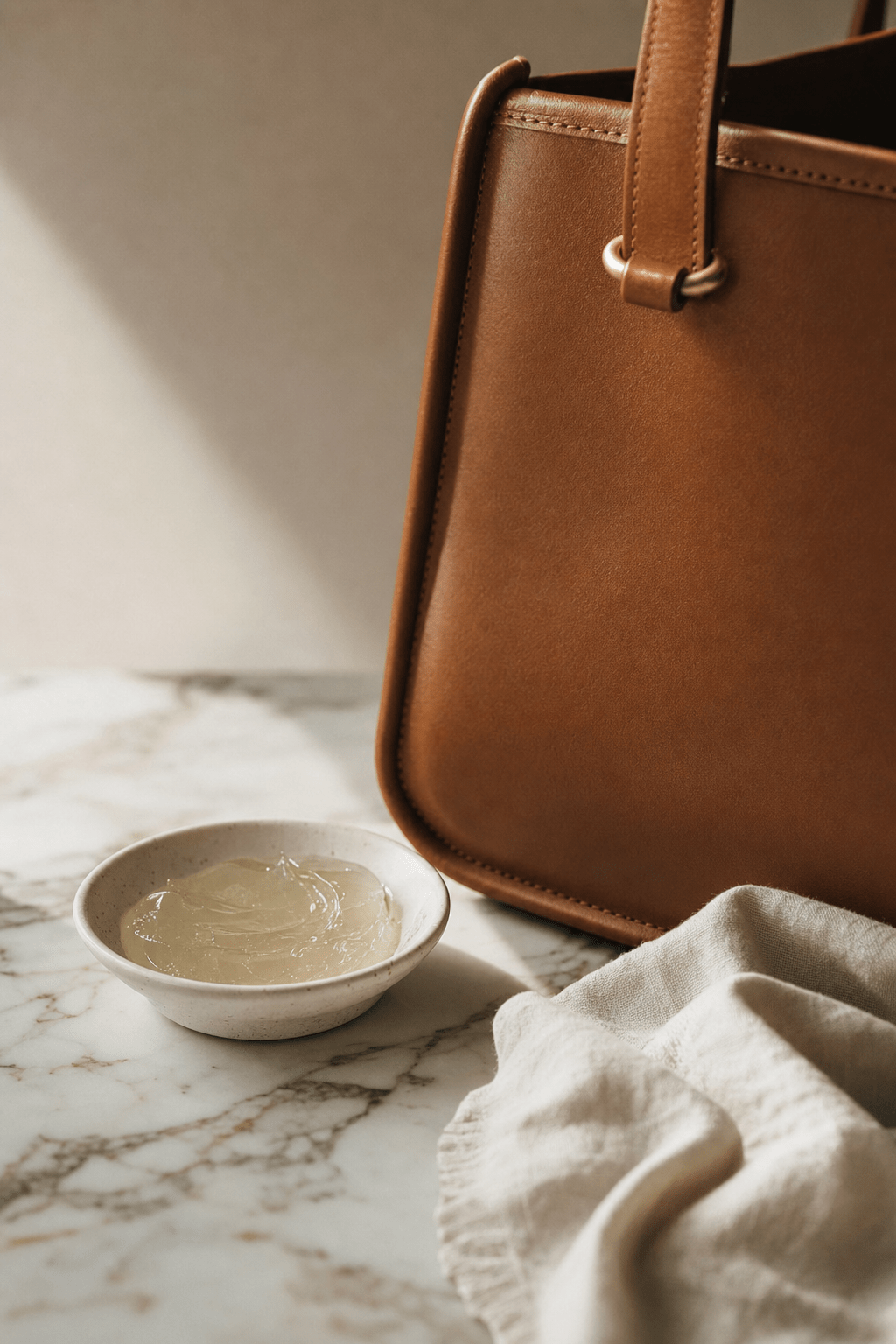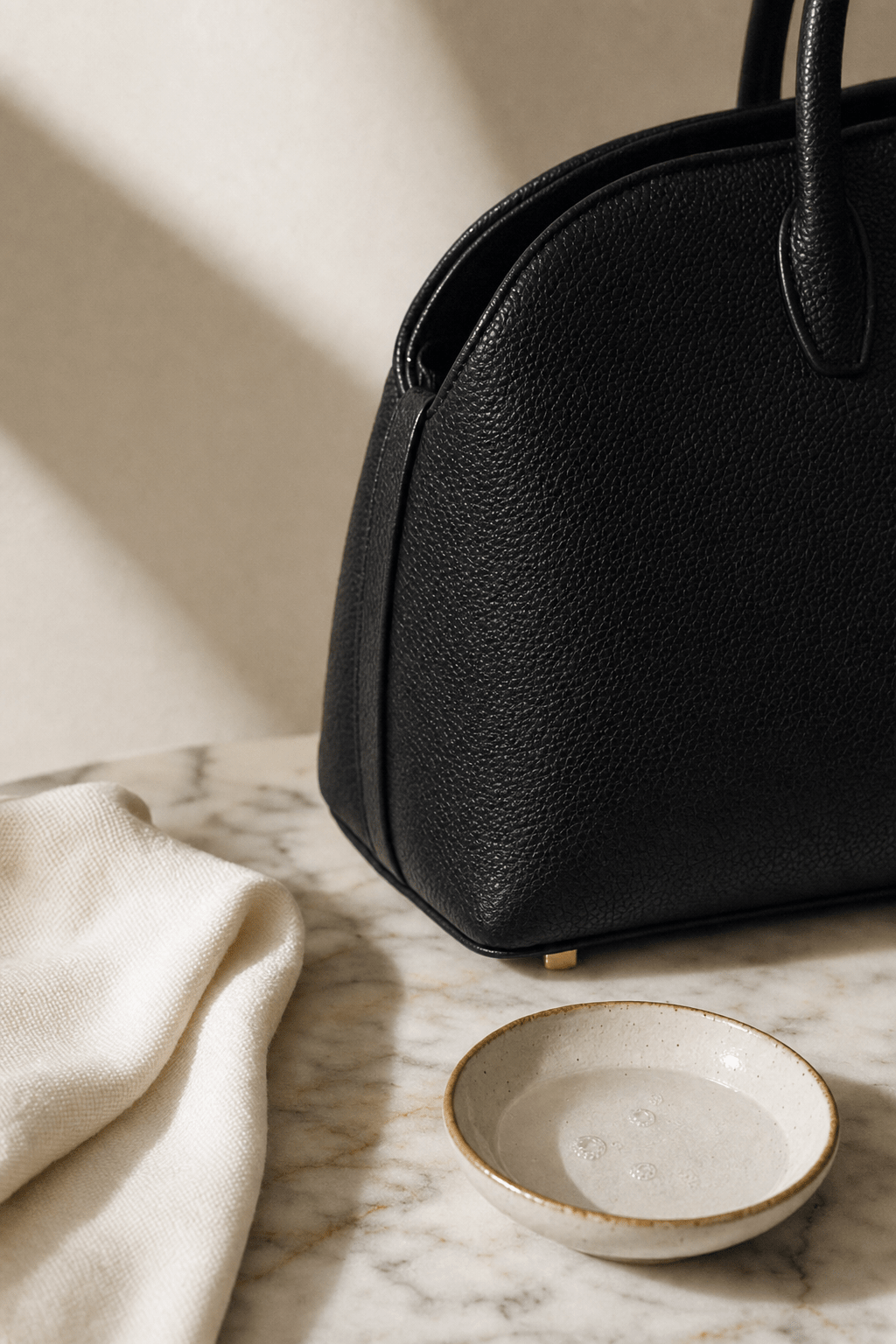
How to Clean Chanel Caviar Leather (Without Damaging It)
Caviar leather earns its reputation as the tougher of Chanel's two signature leathers, but "tougher" does not mean "cleanable with anything." Owners regularly damage caviar with products meant for smooth leather, or by scrubbing at a stain the way they would a countertop. If you own a caviar Classic Flap, Boy Bag, or any other caviar piece, this is the cleaning protocol that gets it clean without stripping the finish.
Caviar's coating is what gives it that pebbled texture and scratch resistance. Damage that coating with the wrong cleaner and you lose the exact quality that made you choose caviar in the first place.
What makes caviar leather different to clean
Caviar is calfskin embossed with a grain pattern and finished with a protective coating, usually a lacquer-like top layer that seals the surface. That coating is why caviar resists water and scuffs so well compared with lambskin. It is also why aggressive cleaners, solvents, and oils can dull or strip the finish rather than simply cleaning the surface. Your goal with any caviar cleaning routine is to remove dirt and oils sitting on top of the coating, never to penetrate or soften the coating itself.
Routine cleaning: what to do after every few wears
Dry wipe first
A soft, dry microfiber cloth removes the majority of what accumulates on a caviar bag: dust, light surface oils from hands, and airborne grime. Wipe in the direction of the grain rather than in circles, and do this after most wears rather than waiting for visible dirt to build up.
Address the high-contact zones
Handles, the base, and corners take the most contact and show buildup first. Pay extra attention to these zones during your dry wipe, since oils from hands and friction from setting the bag down accumulate here faster than anywhere else on the bag.
Deeper cleaning: when dry wiping is not enough
Step 1: test first
Before using any product beyond a dry cloth, test it on a small hidden area, such as the underside of the base or the interior of a strap, and wait to see how the leather reacts. This single step prevents the majority of caviar cleaning mistakes.
Step 2: use a barely damp cloth
Dampen a microfiber cloth with distilled water, wring it out until it is close to dry, and wipe gently. Distilled water avoids the mineral deposits that tap water can sometimes leave behind on a leather surface. Follow immediately with a dry cloth to remove any remaining moisture — caviar should never be left damp.
Step 3: use a leather cleaner formulated for finished, coated leather, sparingly
If a barely damp cloth does not fully lift a mark, a small amount of a cleaner specifically designed for coated or finished leather can help. Apply it to the cloth, never directly to the bag, and work in small sections. Skip anything marketed as an all-purpose cleaner, a baby wipe, or a household cleaning product — none of these are formulated for finished calfskin and all carry real risk of dulling the coating.
Treating specific stains
Ink
Ink is one of the hardest stains to fully remove from any leather, including caviar. Blot immediately, never rub, and take the bag to a leather professional if the mark does not lift with a barely damp cloth. Attempting a DIY ink removal with alcohol-based products often spreads the stain and can strip the coating in that section.
Grease or makeup
Blot excess product away first with a dry cloth, then use a barely damp cloth to lift the remainder. Do not apply heat or a hairdryer to try to "melt" a grease stain out — heat can damage the coating and set the stain further.
Water spots
Caviar handles water far better than lambskin, but standing water left to dry on the surface can still leave a faint spot. Blot any wet caviar bag dry immediately with a soft towel rather than letting it air dry on its own, which reduces the odds of a lasting mark.
What never to use on caviar leather
- Baby wipes — the moisturizing agents in most baby wipes can leave a residue that dulls the coating over repeated use
- Alcohol-based cleaners or hand sanitizer — alcohol breaks down the protective finish and can cause visible dulling or cracking
- Magic erasers or melamine sponges — these are mildly abrasive and can scuff the coating even though caviar looks tough
- Leather conditioners meant for unfinished or aniline leather — caviar's coated finish does not absorb conditioner the way raw leather does, and it can sit on the surface as a greasy film
- Direct sunlight or a hairdryer to speed drying — heat and UV exposure both accelerate cracking of the coating over time
When to call a professional instead
Deep scratches that have penetrated the coating, mold from improper storage, or stains that do not respond to a barely damp cloth after one or two careful attempts are all situations where a professional leather cleaner or the Chanel spa service is worth the cost. Chanel's boutique spa services vary in price depending on scope of work, and independent leather restoration specialists are typically less expensive for surface cleaning; get a quote before committing either way rather than assuming a price. See our related guide on what a luxury brand spa service costs and when it is worth booking for the general framework, which applies across brands even though pricing specifics differ.
Common mistakes when cleaning caviar leather
- Assuming caviar is indestructible because it resists scratches. The coating still degrades with the wrong products or repeated aggressive cleaning.
- Scrubbing at a stain instead of blotting. Scrubbing spreads the stain and can create fine surface abrasion on the coating.
- Skipping the test patch step. Even products marketed as leather-safe can react differently depending on the specific finish and dye lot.
- Using a wet, not damp, cloth. Excess water sitting on the surface, especially at seams, can seep into stitching and the interior lining.
- Waiting too long to treat a fresh stain. A stain treated within the first hour is far more likely to lift completely than one left to set overnight.
Expert tip: clean before you store, not after
Give a caviar bag a full dry wipe before putting it away for any extended period, not just before wearing it again. Surface oils and dust left on the leather during storage have more time to interact with the coating, and starting storage clean makes your next cleaning cycle much lighter.
How this fits into a broader care routine
Cleaning is only one half of keeping caviar leather in good condition. Storage matters just as much: a caviar Classic Flap that is cleaned perfectly but stored flat and unstuffed will still develop structural creasing. See our guide on how to store a Chanel Classic Flap for the storage half of the equation, and the pillar article on how to store luxury handbags properly for the universal principles behind both. If you are deciding between caviar and lambskin in the first place, our caviar vs. lambskin comparison covers the full trade-off.
Closing thoughts
Caviar leather is genuinely low-maintenance compared with most luxury leathers, but low-maintenance is not the same as maintenance-free. A dry cloth after most wears, a barely damp cloth for anything more stubborn, and a professional for anything beyond that will keep a caviar bag looking correct for years. Pair a good cleaning routine with proper structural support — a purse pillow insert for Chanel flap bags keeps the quilting and corners from creasing between cleanings, which matters just as much as the cleaning itself.