Skip to content

Cart

Your cart is empty

Storage Guides Chanel Classic Flap mixed

How to Store a Chanel Classic Flap

The Classic Flap's quilting, chain, and clasp each fail in a different way if stored wrong. Here is the exact storage protocol for Medium and Jumbo, from daily rotation to long-term boxing.

⏲ 8 min read Updated

A Chanel Classic Flap does not fail the way most handbags fail. The quilting crushes if it is stacked on. The turn-lock clasp tarnishes if it sits closed against damp air. The chain tarnishes and imprints itself into the leather if it is left coiled the wrong way for months. If you own a Medium or Jumbo Classic Flap, or you are about to buy one, this is the storage protocol that actually addresses those three failure points.

Most generic "how to store a handbag" advice ignores the specific mechanics of this bag. Below is what actually works, for both day-to-day storage between wears and long-term storage for a bag you are rotating out for a season.

Why the Classic Flap needs its own protocol

Three design features make the Classic Flap different from a structured tote or a Birkin-style bag:

  • The quilting. Diamond quilting (or the newer square quilting on some releases) holds its shape only when the bag is filled and supported evenly. An empty or under-stuffed Flap develops permanent creases across the diamonds within weeks.
  • The chain-and-leather strap. The interwoven metal chain is not decorative hardware you can ignore. Left coiled tightly or piled under other bags, it presses ridges into the leather and accelerates tarnish on the metal.
  • The CC turn-lock. The clasp is plated metal sitting directly against the flap leather. Humidity trapped between the flap and the front panel is the single biggest cause of clasp tarnish reported by Chanel owners.

Daily and weekly storage, between wears

Stuff it before you shelve it

Never store your Chanel flat and empty. Use acid-free tissue paper or a dedicated bag pillow insert sized for the Flap's silhouette — a purpose-built insert holds the quilting's shape evenly across both panels, which loose tissue tends not to do consistently. This is the single highest-leverage habit for keeping the diamond quilting crisp over years of ownership. The purse pillow insert for Chanel flap bags is shaped specifically for this silhouette rather than a generic block of foam.

Chain position matters more than you think

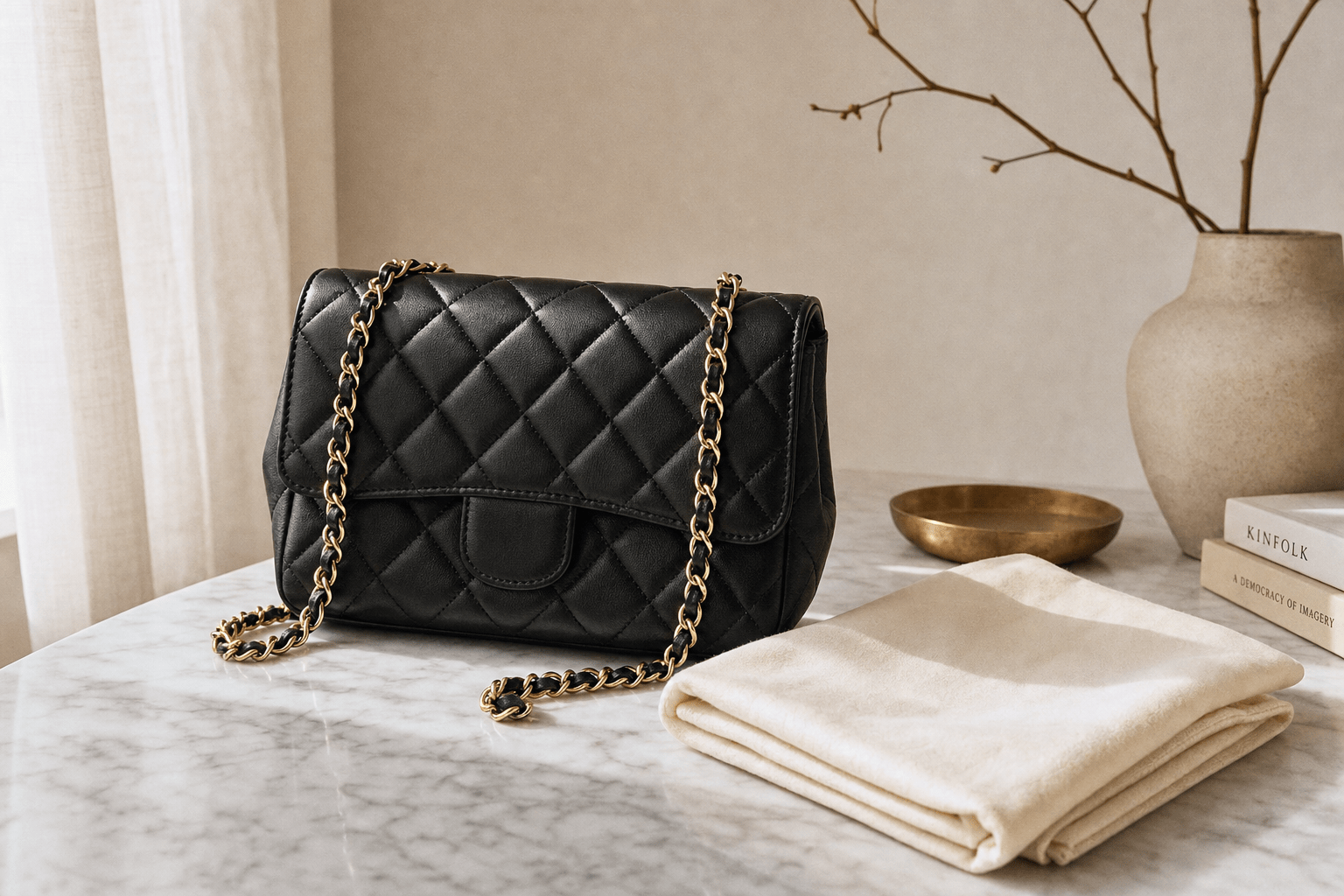
Do not let the chain sit coiled in a tight pile inside the dust bag — over weeks that pile presses a texture into the leather it touches. Instead, lay the chain flat along the top of the bag, or loop it loosely over the flap itself so no section of chain bears weight against another section. If you carry the bag with the chain doubled for a crossbody look, unclip and extend it fully before storing.

Leave the clasp very slightly open, or fully closed but dry

The safest storage position is fully closed with the interior dry — never store a damp bag closed, since trapped moisture against the clasp and flap leather is what starts tarnish and mildew. If you have just carried the bag in humid weather, let it air out fully open for an hour in a dry room before you close it for storage.

Where to keep it: shelf, closet, or box

Upright, never flat, never stacked

Store the Classic Flap upright on a shelf, the way it would sit if you set it down on a table, with a pillow inside for support. Never lay it flat with another bag on top — even a light tote stacked on a flap bag will crease the quilting within a single storage cycle. If your closet only has flat shelving, use bag dividers or stack risers so nothing rests on top of the bag itself.

Dust bag: yes, but ventilated

Keep the flannel dust bag Chanel includes, but do not seal it inside a plastic bin without airflow. Cotton and flannel breathe; leather trapped in unventilated plastic for months develops a musty smell and, in humid climates, mold on the interior lining. A closet with normal airflow, or a cabinet with slatted shelves, is safer than an airtight container.

Climate: hold steady, avoid swings

Keep the storage space at roughly 18–21°C (65–70°F) and relative humidity between 45 and 55 percent. Lambskin Flaps are more sensitive to humidity swings than caviar, since the finish is softer and more prone to surface changes, but both leathers benefit from a stable environment rather than a technically "ideal" one that swings hot and cold seasonally. For a full breakdown of humidity control by climate, see our guide on storing luxury leather in humid climates, which applies the same principles across brands.

Long-term storage: rotating a bag out for months

If you are putting a Classic Flap away for a season or longer:

  1. Clean the exterior lightly with a dry microfiber cloth to remove surface dust and skin oils before storage.
  2. Stuff fully with a pillow insert or acid-free tissue — do not use colored tissue paper, which can transfer dye onto light-colored lambskin over time.
  3. Lay the chain flat, clasp closed, bag upright.
  4. Place in the flannel dust bag, then in the original box if you kept it — the box adds structure protection but is not required if shelf space is tight.
  5. Check on it every 2–3 months. A bag stored and forgotten for a year without inspection is how owners discover mold, tarnish, or pest damage too late to fully reverse.

Common mistakes with Classic Flap storage

  • Storing it flat, especially with other bags on top. This is the number one cause of permanently flattened quilting.
  • Leaving the bag empty and unstuffed for long periods. An unsupported Flap collapses at the corners and the front flap loses its structure.
  • Sealing it in plastic for "protection." Plastic traps humidity against the leather and accelerates both mildew and clasp tarnish.
  • Coiling the chain tightly inside the bag. This presses a ridge pattern into any leather the chain touches.
  • Using colored or non-acid-free tissue on light lambskin. Dye transfer from tissue paper onto pale leather is difficult to reverse.

Expert tip: rotate, don't retire

If you own more than one Chanel, rotate which one is stored versus carried every few weeks rather than leaving one bag on permanent display and another permanently boxed. Leather that is occasionally handled and flexed stays more supple than leather left completely undisturbed for a year at a time — total stillness is not actually the safest state for a bag's structure.

Medium vs. Jumbo: any storage differences

The Jumbo's larger panels are more prone to visible creasing than the Medium simply because there is more surface area to crease, so stuffing fullness matters even more on the Jumbo. Otherwise the protocol above applies equally to both sizes. If you are deciding between sizes in the first place, our Classic Flap sizing guide breaks down which size suits which use case.

For the broader principles behind everything above — shelving, dust bags, humidity, and rotation — see the pillar guide on how to store luxury handbags properly. It covers the universal rules that apply across every brand in this library.

Closing thoughts

The Classic Flap rewards a small amount of consistent care far more than an occasional deep clean. Stuff it properly, keep the chain flat, let it breathe, and hold the room steady, and the quilting, clasp, and chain all stay in the condition they left the boutique in. A shaped purse pillow insert for Chanel flap bags handles the stuffing step consistently, which is the habit most likely to slip when you are storing a bag in a hurry.

Frequently asked questions

Should I store my Chanel Classic Flap standing up or lying flat?
Standing up, always. Lying flat, especially with any weight on top, is the fastest way to permanently crease the diamond quilting. Use a shelf or dedicated bag storage unit that keeps it upright.
Can I leave my Classic Flap in its box year-round?
Yes, as long as the box is not sealed airtight and you check on the bag every 2-3 months. The box adds structure, but a bag left completely unchecked for a year is how owners miss early tarnish or mildew.
Does the chain on a Classic Flap tarnish faster in storage than in use?
It can, if it is coiled tightly or pressed against other metal or leather for months without airflow. Laying the chain flat and keeping humidity around 45-55 percent slows tarnish considerably.
What should I stuff a Classic Flap with if I do not have the original packaging?
Acid-free white tissue paper or a shaped pillow insert both work. Avoid colored tissue on light lambskin, since dye can transfer onto the leather over months of contact.
Is it bad to store a Chanel Classic Flap in a closet with other bags touching it?
Direct contact with hardware from an adjacent bag, like a buckle or clasp, can scratch or press into your Flap's leather. Use dividers or leave a gap so bags do not lean on each other.
How often should I take my Classic Flap out of storage?
Every few weeks if possible. Occasional handling and flexing keeps the leather supple; a bag left completely undisturbed for months can develop stiffer creases than one used periodically.
Does a Jumbo Classic Flap need different storage than a Medium?
The protocol is the same, but stuffing fullness matters more on the Jumbo because its larger panels show creasing more visibly than the Medium's smaller surface area.