Why Chanel Bags Discolor — and How to Prevent It
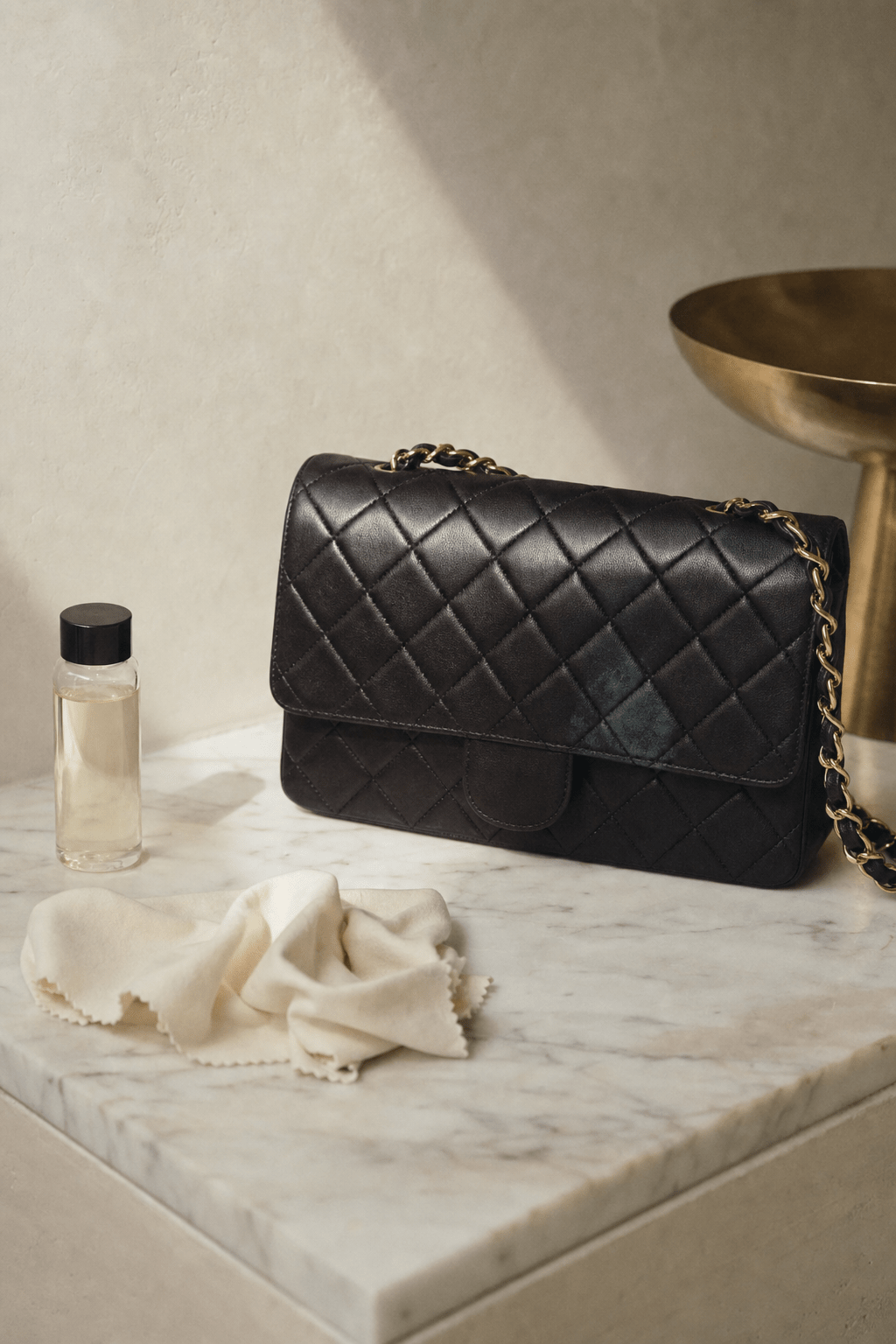
A white or beige Chanel lambskin flap picking up a faint blue-gray shadow along the base is one of the most common damage claims in Chanel resale and authentication forums, and most of it is preventable. This article is for anyone who owns a light-colored Chanel, caviar or lambskin, and wants to understand exactly what causes discoloration and how to stop it before it starts.
The five real causes of Chanel discoloration
Discoloration is not one problem. It is five distinct chemical and mechanical processes that happen to show up as the same result: a permanent shift in the leather's original color. Treating them as one issue is why so many prevention attempts fail.
1. Denim color transfer (the biggest culprit on white and beige lambskin)
Raw and dark-wash denim carries loose indigo dye that has not fully bonded to the cotton fiber. Under friction and body heat, that dye migrates onto whatever the denim rubs against, and light lambskin absorbs it fast because the leather's open, unprotected grain has almost no barrier to pigment. A single afternoon of a Classic Flap resting against jeans on the hip can leave a blue cast that no at-home cleaner fully lifts.
This is a transfer problem, not a leather-quality problem. Even a pristine, brand-new bag will pick up denim dye in under an hour of direct contact in warm weather, because heat opens the leather's pores and accelerates dye migration.
2. Sun and UV fading
UV radiation breaks down the dye molecules in leather at the surface, and it does so unevenly. A bag left near a window, in direct sun on a chair, or in a car for a single hot afternoon will fade faster on the side that faced the light. Caviar leather resists this better than lambskin because its pebbled, heavily pigmented surface scatters light, but no Chanel leather is UV-proof, and pale colors show fading as chalkiness rather than an obvious color shift, which is why it often goes unnoticed until it is advanced.
3. Moisture rings on caviar
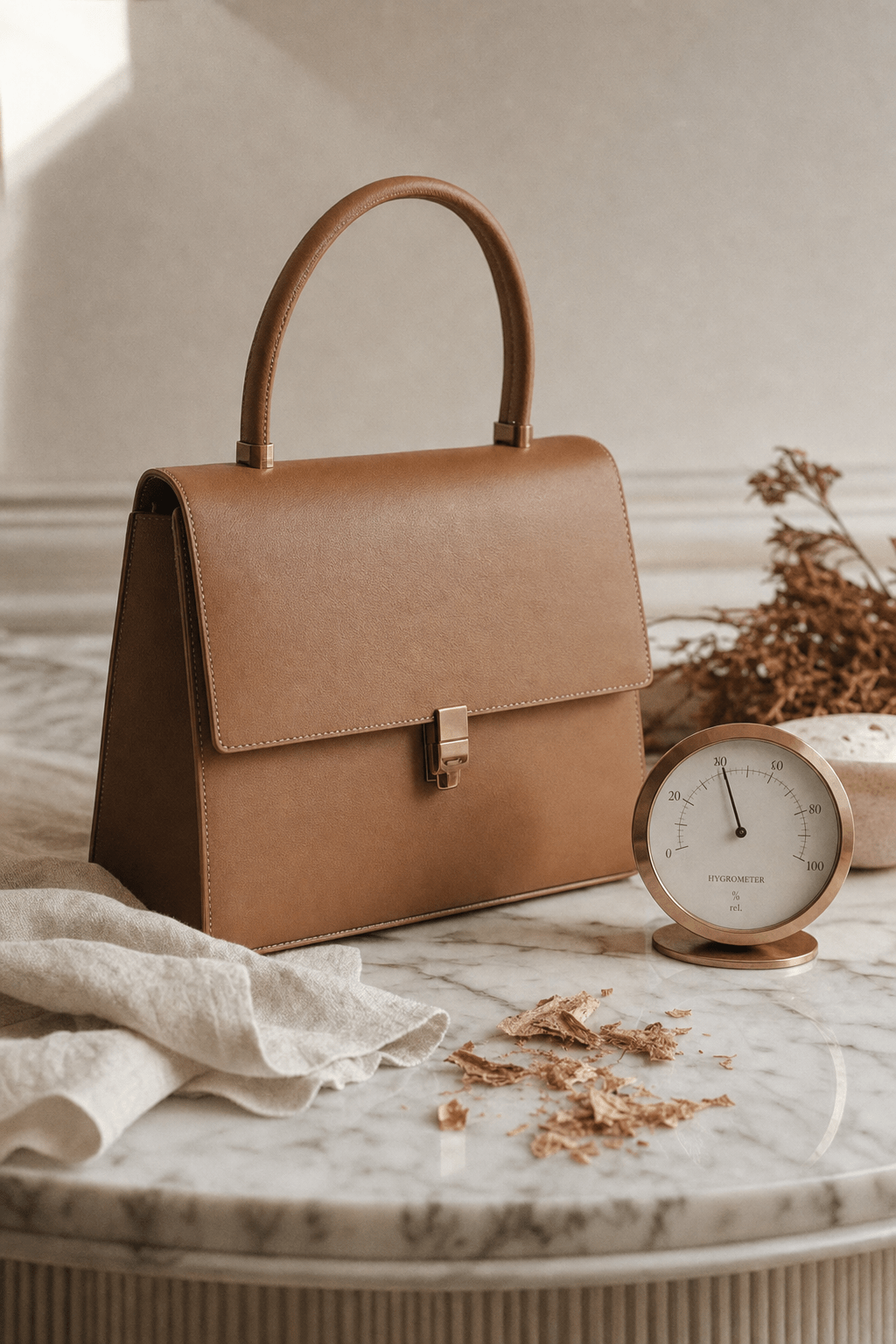
Caviar's grained finish is more water-resistant than lambskin, but it is not waterproof. A drop of water left to air-dry on caviar pulls surface oils and finish toward the edge of the droplet as it evaporates, leaving a faint ring that is slightly lighter or darker than the surrounding leather. Humidity condensation inside a sealed bag, a wet umbrella brushing the base, or setting the bag on a damp café table are the usual sources. Rings on caviar are subtler than on lambskin but they are permanent once the finish has been disturbed.
4. Oil transfer from skin, hair, and personal care products
Hand lotion, sunscreen, foundation, and hair oil all contain compounds designed to penetrate skin, which means they also penetrate leather readily. The classic pattern is a darkened patch on the flap corner where a hand rests when carrying the bag, or a shadow along the top edge where hair contacts the bag on the shoulder. Because these oils are absorbed rather than sitting on the surface, they cannot be wiped away once they have set, only faded slightly with specialized cleaning.
5. Silver (and gold) hardware tarnish darkening surrounding leather
Metal hardware oxidizes over time, and the byproduct of that oxidation is a fine dark residue that can migrate onto adjacent leather, especially at the turnlock and where the chain meets the leather strap. Humidity, salt air, and skin contact all accelerate tarnish, and once tarnish has formed, brushing against the leather during normal handling deposits a gray-black film that reads as a stain rather than a hardware issue.
Prevention protocols, cause by cause
Preventing denim transfer
- Treat any dark or raw denim as a no-contact zone for light Chanel bags for the first 8-10 washes, when dye loss is highest.
- Carry light-colored bags on the opposite shoulder from where jeans would contact the base, or use a cross-body configuration that keeps the bag off the hip entirely.
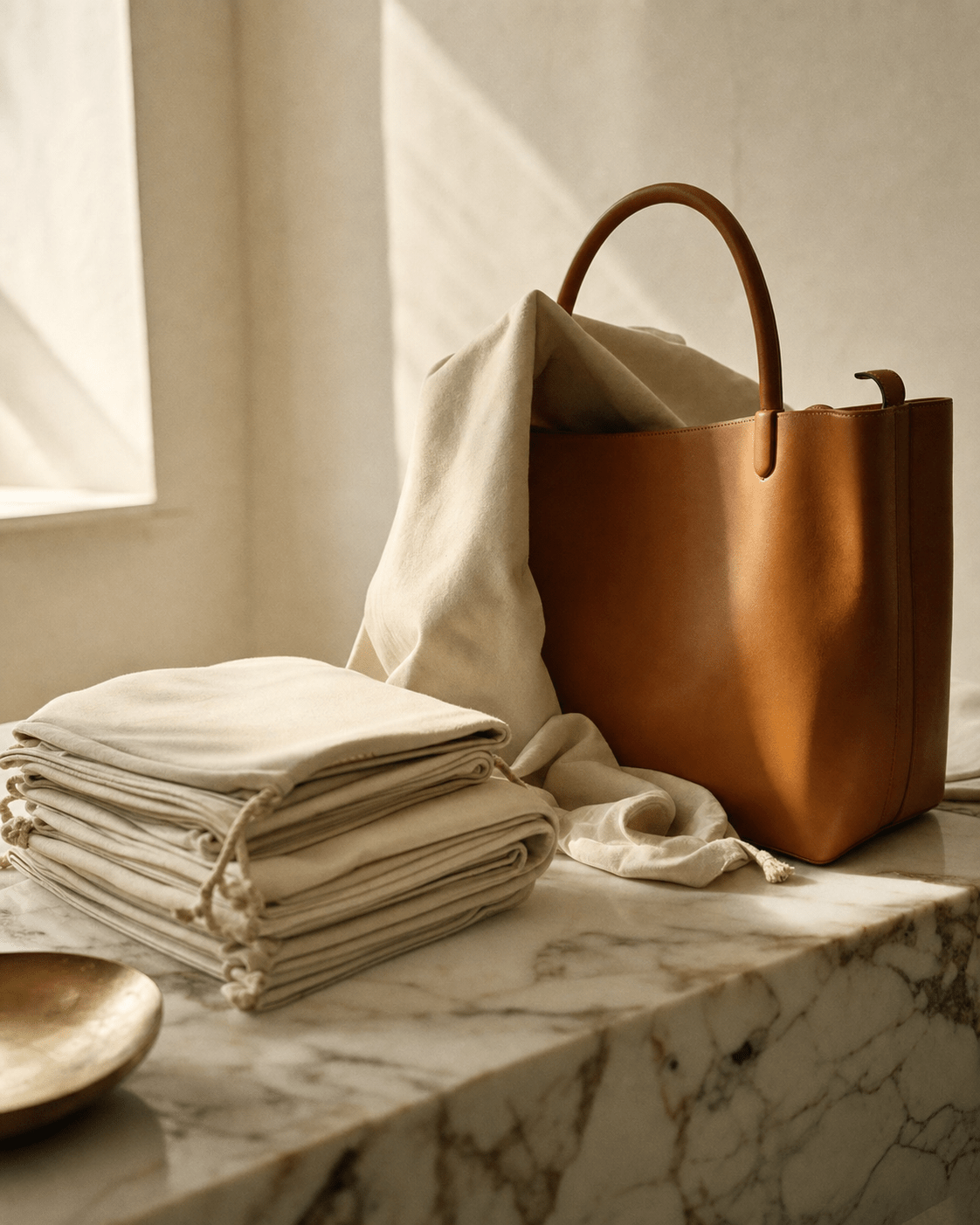
- If a bag rests on your lap or a chair, place a scarf or the dust bag between the leather and denim as a buffer.
- Apply a quality leather protectant/water-and-stain repellent before the first wear of a new white or beige bag. It will not stop transfer completely but it reduces dye absorption meaningfully.
Preventing sun and UV fading
- Never store a bag on an open shelf that receives direct or even strong indirect sunlight. Closets and drawers are strictly better than display shelving for anything beyond short-term styling.
- Use the original box or an opaque storage box rather than a clear acrylic display case for long-term storage. Clear display looks good in a closet photo and is one of the fastest ways to fade a light-colored bag over a year.
- Rotate bags in and out of use rather than leaving a favorite permanently displayed. Even ambient room light contributes to slow fading over months.
Preventing moisture rings on caviar
- Blot, never rub, any liquid that contacts the bag immediately, using a dry microfiber cloth pressed straight down.
- Let a bag that has been rained on air-dry naturally, upright, away from direct heat, stuffed to hold its shape. Never use a hairdryer or heater to speed drying, since rapid heat pulls oils to the surface unevenly and can set a ring permanently.
- Keep a small packet of silica gel in the storage box or purse pillow insert to manage ambient humidity, especially if you live somewhere with real seasons of humidity swings.
Preventing oil transfer
- Wash and dry your hands before handling a light bag when possible, particularly after applying hand cream or sunscreen.
- Be conscious of hair products migrating onto the top edge of shoulder-carried bags. If you use heavy oils or serums, consider a scarf as a barrier or switch the bag to hand-carry for the day.
- Wipe down the flap and handle area with a dry, soft cloth after each wear, as a habit rather than a response to visible marks. This removes surface oils before they have time to fully absorb.
Preventing hardware tarnish stains
- Store the bag with the chain laid flat and fully extended rather than balled up, which reduces metal-on-metal contact that accelerates tarnish and keeps oxidation products from concentrating in one spot.
- Keep bags away from humid bathrooms and salt air when possible, both of which accelerate hardware oxidation.
- Wipe hardware with a dry microfiber cloth regularly. Once tarnish is visible, a leather-safe metal polish applied carefully to the hardware only, avoiding the leather, prevents the residue from spreading further.
Common mistakes
- Using a magic eraser or household stain remover on a discolored spot. These products are alkaline and abrasive and can strip the leather's finish entirely, turning a discoloration problem into a texture problem.
- Assuming caviar leather is immune to staining because it looks tough. It resists surface damage better than lambskin, but water rings, oil absorption, and dye transfer all still occur, just less dramatically.
- Storing a light bag in its dust bag inside a closet that gets afternoon sun through a window. The dust bag blocks dust, not UV, and fabric dust bags do not meaningfully block light.
- Waiting until discoloration is visible before treating hardware tarnish. By the time you can see gray residue on the leather, it has likely already begun to set into the surface.
Expert tip
If you own more than one light-colored Chanel, keep a simple rotation log noting the last wear date and what you wore it with. Most discoloration happens from one specific, repeatable combination (a certain jacket, a certain bag strap length against a certain outfit), and once you spot the pattern, prevention becomes a five-second decision each time you grab the bag rather than a guessing game after the fact.
When discoloration has already happened
Professional Chanel spa services can meaningfully improve, though rarely fully reverse, denim transfer and oil absorption on lambskin, and are generally more effective on caviar's tougher finish. Costs vary by service scope and market, so ask your boutique or an authorized Chanel spa for a current quote rather than relying on a fixed number. For minor surface issues, a dedicated saffiano or lambskin cleaner formulated for luxury leather, used exactly per instructions and tested on an inconspicuous spot first, is the safer first step before considering professional restoration.
Before any of this becomes necessary, the fundamentals covered in How to Store Luxury Handbags Properly and in our dedicated cleaning guides for caviar and lambskin will prevent the majority of the discoloration causes above from ever becoming a visible problem.
Closing thought
Discoloration on a Chanel bag is almost always the sum of small, repeated contact points rather than one dramatic event, which is also why it is preventable with small, repeated habits. Storing your Chanel properly between wears, using a shaped purse pillow insert to keep the quilting and base protected and away from direct contact surfaces, and being deliberate about what the bag touches during a normal day will keep light leathers light and dark hardware bright for years longer than casual handling allows.