Skip to content

Cart

Your cart is empty

Article: Structured vs. Slouchy Handbags: The Complete Storage Guide for Collectors

Illustration 1

Structured vs. Slouchy Handbags: The Complete Storage Guide for Collectors

Why Your Handbag Storage Method Matters More Than You Think

A luxury handbag isn't just an accessory—it's an investment. Whether you've acquired a structured Hermès Kelly or a soft Bottega Veneta, how you store it directly impacts its longevity, resale value, and aesthetic appeal. Many collectors make the costly mistake of tossing bags into closets without proper support, only to discover permanent creasing, sagging, or distorted shapes months later.

The difference between haphazard storage and thoughtful preservation can mean hundreds or thousands of dollars. A handbag that's properly supported maintains its silhouette, resists moisture damage, and stays camera-ready for years. Poor storage, conversely, creates permanent deformations that are nearly impossible to reverse and immediately visible to discerning buyers.

We've worked with collectors who discovered that their most prized pieces had lost structural integrity simply because they lacked adequate interior support during storage. The good news: prevention is straightforward once you understand your bag's specific construction and storage requirements.

Actionable takeaway: Before storing your next bag, identify whether it's structured or slouchy. This single assessment determines which preservation approach will protect it most effectively.

Understanding Structured Handbags and Their Unique Storage Needs

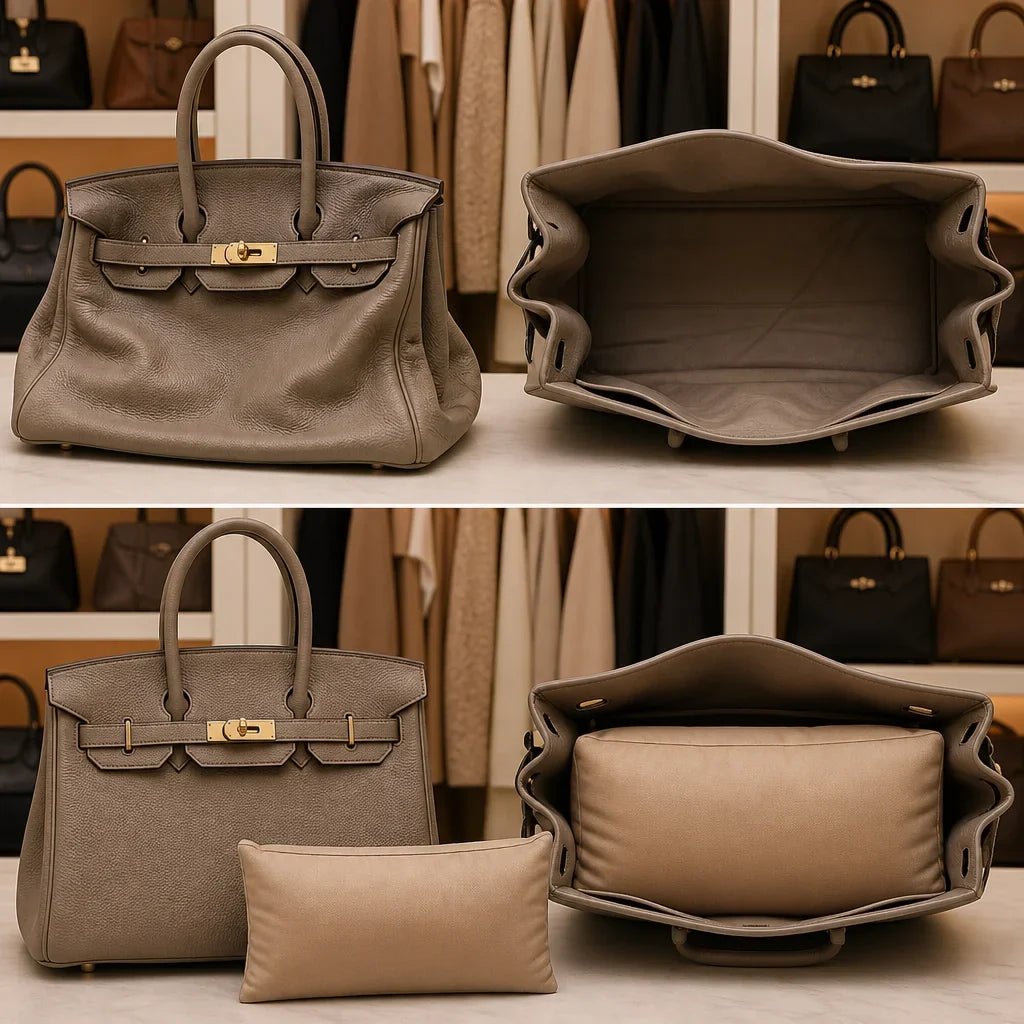
Structured bags have rigid frameworks built into their construction, whether through internal hardware, reinforced panels, or stiffened materials. Think Kelly bags, Birkins, and satchels with defined architectural lines. These bags hold their shape naturally, but that's precisely why improper storage is particularly damaging—collectors expect the structure to remain intact.

Structured bags still face storage challenges despite their rigidity. Without interior support, the base can sag inward, corners can soften, and the overall silhouette can subtly collapse. Hardware-heavy bags develop stress points where metal meets leather. Structured styles with rigid bottoms can develop creases along interior stress lines if they're left empty and folded.

The key insight: structured bags need support that maintains their existing shape rather than imposing one. We design our precision-fit inserts to match the exact interior dimensions of popular structured styles, providing gentle, even pressure that prevents settling while respecting the bag's built-in architecture.

Interior storage environments matter too. Structured bags benefit from climate-controlled spaces that prevent humidity fluctuations, which can weaken adhesives in construction seams and cause material brittleness.

Actionable takeaway: Measure your structured bag's interior dimensions (length, width, and depth at the widest point) to select appropriately sized support inserts that won't overstretch or compress the leather.

The Slouchy Bag Challenge: Preventing Permanent Shape Loss

Slouchy bags represent the opposite challenge. Styles like Bottega Veneta's softer intrecciatos, Hermès Evelyne bags, and crossbody satchels lack rigid internal structure, which means they're naturally prone to settling, creasing, and permanent deformation. A slouchy bag without proper support essentially collapses into itself during storage.

The fundamental problem: gravity works against slouchy bags. Over months or years, an unsupported slouchy style will develop deep creases, a permanently flattened base, and a silhouette that looks tired or worn even though it's barely been used. These deformations aren't cosmetic inconveniences—they're permanent shape changes that collectors find particularly frustrating because the bags looked flawless when last worn.

Slouchy bags require a different preservation philosophy. Instead of maintaining an existing rigid structure, we need to gently support the bag's natural contours while preventing it from collapsing entirely. This requires softer, more forgiving support that accommodates the bag's inherent flexibility.

Material choice becomes critical for slouchy styles. Firmer inserts can create unsightly bulges or unwanted creasing patterns. The ideal approach uses materials that provide even, gentle pressure across the interior without imposing an alien shape.

Actionable takeaway: Store slouchy bags upright or slightly reclined rather than flat. This simple position change dramatically reduces gravitational stress on the bag's base and sides.

How Different Bag Constructions Respond to Improper Storage

Bag construction methods create vastly different storage requirements. A welted leather bag with reinforced seams responds differently to pressure than a glued construction. Canvas-lined interiors have different moisture absorption rates than suede. Hardware placement influences where stress concentrates during storage.

Canvas-lined bags with external hardware develop stress points at attachment locations. Metal feet on bag bottoms create uneven pressure distribution that can develop into visible indentations if the bag isn't supported underneath. Glued leather panels can separate under uneven pressure, particularly if humidity causes the adhesive to weaken and the bag shifts weight unpredictably.

Bags constructed with reinforced base panels handle vertical storage better than unsupported constructions. Conversely, bags with curved bottoms or soft sides develop permanent creasing if stored upright without interior support.

We've observed that construction quality doesn't always predict storage resilience. A masterfully handcrafted bag with premium materials can actually be more vulnerable to storage damage because high-quality leather is more supple and takes permanent impressions more readily than stiffer, lower-quality materials. Paradoxically, better bags require more protective care.

Vintage or pre-owned bags present additional considerations. Older adhesives, dried-out leather, or previously compromised seams make these pieces particularly sensitive to storage stress.

Actionable takeaway: Research your bag's specific construction before choosing a storage method. Check the brand's care instructions or consult the artisan to understand whether your bag has reinforced panels, glued seams, or hardware-dependent structure.

Our Precision-Fit Solution for Structured Handbags

We've engineered our purse pillow inserts specifically to address the storage needs of high-end structured handbags. Each insert combines a premium polyester sateen shell with angel hair fiber fill, creating gentle, even support that preserves shape without compressing delicate materials.

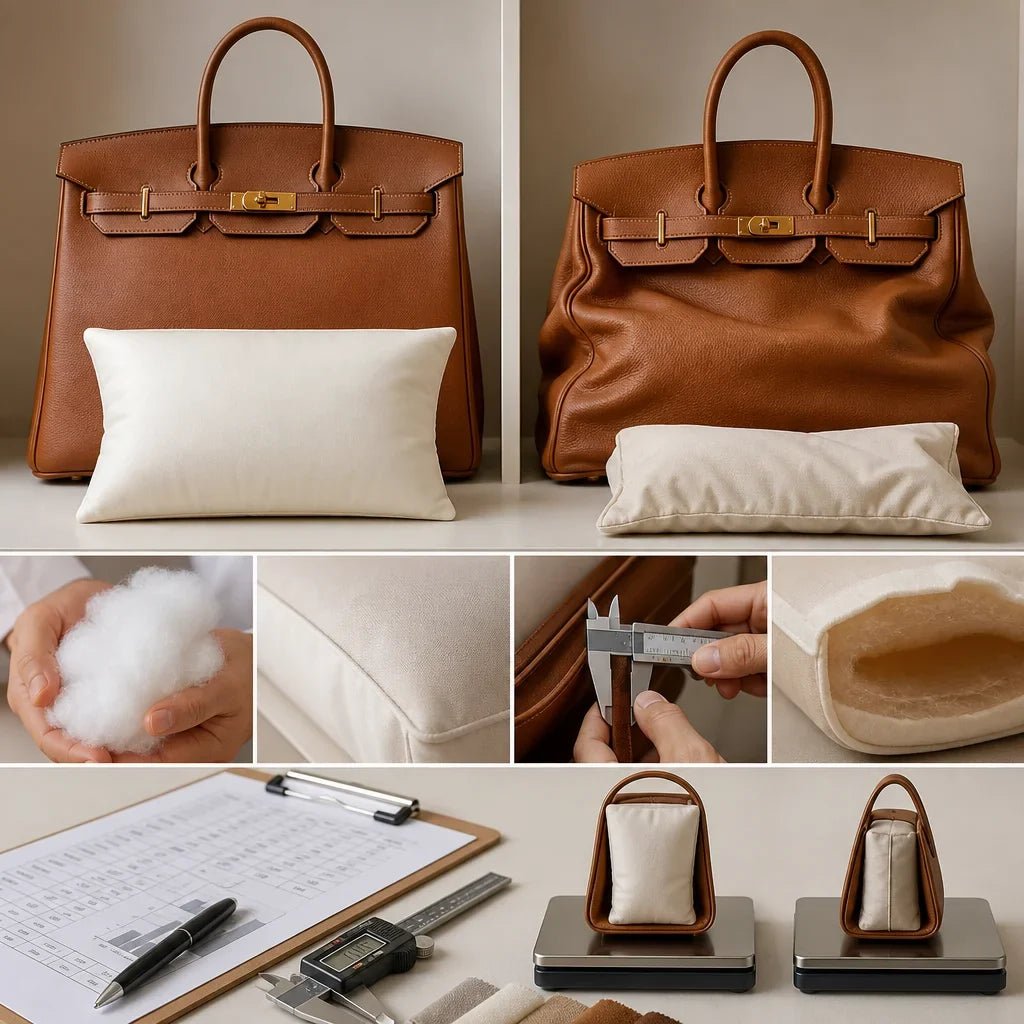
Our Hermès-specific precision fits represent years of research into exact interior dimensions across Kelly, Birkin, Constance, and other signature styles. We measure each bag model at multiple interior points to create inserts that fit snugly without straining the leather or hardware. This precision approach prevents the settling and shape collapse that generic, one-size-fits-all inserts create.

The polyester sateen material we select offers several advantages. It's colorfast, meaning it won't bleed dyes onto luxury leather interiors. It's non-abrasive, so it glides smoothly without scratching leather linings. The material also resists moisture absorption, protecting your bags from humidity-related damage.

Our handcrafted construction ensures that each insert maintains its form over years of use. Mass-produced inserts often compress irregularly, developing lumps or soft spots that create unwanted pressure points. Our construction process maintains fiber distribution consistency, ensuring uniform support throughout the insert's lifespan.

We offer a comprehensive size range from Mini to XL, ensuring that collectors can find precise fits whether they own delicate evening clutches or substantial travel totes.

Actionable takeaway: If you own multiple structured bags in different sizes, invest in size-matched inserts rather than attempting to use single, adjustable inserts. The extra investment protects your collection more effectively.

Protecting Slouchy Styles with Specialized Insert Designs

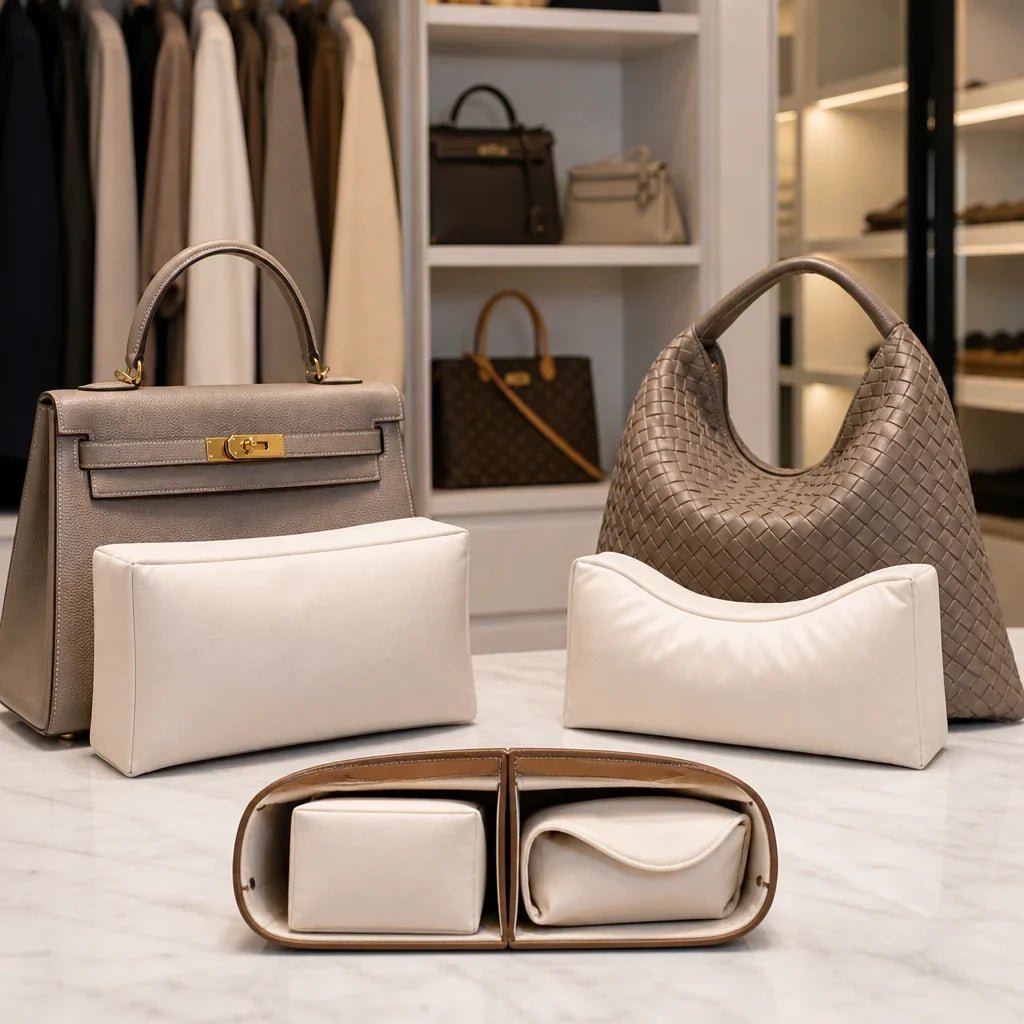
Slouchy bags demand different structural solutions than rigid styles. Our slouchy-specific inserts use softer fiber fill and more flexible shell construction, allowing them to accommodate the bag's natural contours rather than forcing an artificial shape.

The design philosophy differs fundamentally from our structured bag inserts. Rather than creating perfect geometric support, slouchy inserts work with the bag's inherent flexibility, providing distributed support that prevents collapse without imposing rigidity. This approach respects the design intent while preventing storage deformation.

Material softness becomes the critical variable. We use angel hair fiber fill in our slouchy inserts, creating gentle pressure that's distributed evenly across the interior without creating visible bulges or pressure points. This material choice prevents the situation where an insert becomes more noticeable than the bag's natural appearance once removed.

Slouchy bag owners often worry that any interior support will create permanent impressions or unwanted shape changes. Our approach specifically avoids this concern by using materials soft enough that they adapt to slight interior shape variations while still providing the structural support necessary to prevent collapse.

The flexibility of slouchy-specific inserts also accommodates the inevitable minor interior variations that occur when bags are handcrafted. A slouchy bag's interior isn't perfectly uniform; slightly firmer support allows for these natural variations without creating pressure points.

Actionable takeaway: When storing slouchy bags, stuff them loosely with acid-free tissue paper first, then add a sized insert for additional support. This layered approach maximizes protection while maintaining the bag's natural aesthetic.

The Role of Quality Materials in Long-Term Bag Preservation

Premium materials represent the foundation of effective storage solutions. Inexpensive inserts often use synthetic fills that compress unevenly, polyester shells that leach dyes, or construction methods that degrade over years. These shortcuts seem economical initially but fail your collection when it matters most.

Angel hair fiber fill provides superior performance compared to common alternatives like polyester batting or recycled materials. The fiber structure remains consistent, resisting the compression that creates lumps and soft spots. The material is hypoallergenic and doesn't attract moisture, addressing both performance and safety concerns.

Our polyester sateen shell selection reflects decades of textile research. This specific material offers non-absorbency that prevents moisture transfer while maintaining breathability that allows air circulation inside your stored bags. The sateen weave provides a smooth surface that won't snag leather linings or create micro-abrasions over time.

Colorfast materials deserve particular emphasis because hidden staining represents one of the most frustrating storage failures. Luxury leather interiors, particularly in light colors, can absorb dyes from poorly selected insert materials. Once this occurs, the damage is essentially permanent, immediately visible to potential buyers, and nearly impossible to remedy.

The construction method impacts longevity as much as material selection. Inserts with reinforced seams and consistent stitching maintain their form through years of storage cycles. Poorly sewn seams develop gaps that allow fill material to shift, creating the lumps and pressure points that damage your bags.

Actionable takeaway: Before purchasing any storage insert, verify that materials are explicitly colorfast and non-abrasive. Request material samples if possible, and test them against light leather to ensure they won't transfer color.

Common Storage Mistakes That Compromise Your Collection's Value

We've identified recurring storage errors that compromise bag collections. Understanding these mistakes allows you to avoid them and protect your investment.

Mistake 1: Stacking bags horizontally without support. Stacked bags develop deep creasing along pressure points, particularly where the top bag's weight concentrates. Even two or three bags stacked this way create permanent indentations within months.

Mistake 2: Using generic, oversized inserts. One-size-fits-all inserts either leave gaps that allow settling or create excessive pressure that warps the bag's shape. Neither scenario protects your collection effectively.

Mistake 3: Storing bags in plastic containers. Plastic traps moisture and prevents air circulation, creating humidity pockets that encourage mildew growth, material deterioration, and adhesive breakdown. We recommend breathable dust bags or well-ventilated storage instead.

Mistake 4: Leaving bags completely empty. Empty bags collapse progressively, developing permanent shape changes that aren't visible until the bag is removed from storage. By that point, the damage is done.

Mistake 5: Using inappropriate fill materials. Tissue paper compresses and disintegrates over years. Newspaper transfers ink. Cotton fills absorb moisture. These materials create problems rather than solving them.

Mistake 6: Ignoring climate conditions. Uncontrolled temperature and humidity fluctuations cause leather expansion and contraction cycles that weaken construction, dry out materials, and encourage mildew. Even luxury bags deteriorate in poor climate conditions.

Actionable takeaway: Conduct a storage audit of your current collection. Identify which bags are stored incorrectly and prioritize moving them to proper storage conditions and support.

Implementing a Bag-Specific Storage Strategy

Effective collection preservation requires a systematic approach tailored to your specific bags' construction and materials.

Start by categorizing your collection. Group structured bags separately from slouchy styles. Within those categories, further distinguish between bags with hardware-dependent structures versus fabric or leather stiffening. This categorization determines which support solutions work best for each piece.

Next, identify your storage environment. Ideally, bags should be stored in climate-controlled spaces with consistent temperature (65-75 degrees Fahrenheit) and moderate humidity (35-55%). Basements often develop moisture problems; attics experience temperature extremes. A bedroom closet or interior closet typically provides better conditions than exterior-wall closets or garage storage.

Invest in appropriately sized inserts for your collection's most valuable pieces first. Prioritize statement bags, limited editions, or pieces that represent significant investments. You can expand your insert collection over time as budget allows.

Arrange bags vertically on shelves whenever possible rather than stacking them horizontally. This orientation distributes pressure more evenly and makes individual bags easily accessible without moving the entire stack.

Label storage locations or maintain a simple spreadsheet noting which insert size each bag requires. This documentation prevents future confusion and ensures that guests who borrow bags return them to proper storage.

Rotate your collection periodically. Bags stored for extended periods can develop permanent impressions. Removing inserts occasionally and allowing bags to rest empty for brief periods helps maintain their original shape.

Actionable takeaway: This week, photograph each bag in your collection and note which size insert it requires. Create a simple spreadsheet or document that serves as your storage reference guide.

Maintaining Your Investment Through Proper Support and Care

Storage represents only one component of comprehensive bag preservation. Ongoing care practices amplify the protection that proper storage provides.

Before storing a bag, clean it thoroughly with appropriate leather care products. Remove any residual moisture from the interior and let the bag air dry completely in a well-ventilated space. This step prevents mold growth and adhesive breakdown during storage.

Insert a sized support pillow only after the bag is completely dry. Moisture trapped between the insert and the bag's interior accelerates deterioration.

Schedule periodic inspections of stored bags. Every three to six months, briefly examine each piece for any signs of moisture, discoloration, or structural changes. Early detection of problems prevents minor issues from becoming major damage.

Avoid storing bags near direct sunlight, which fades leather and causes material brittleness. Similarly, keep bags away from heat sources like radiators or vents, which dry out leather prematurely.

Replace inserts if you notice compression, lumping, or any signs of deterioration. A damaged insert may transfer pressure unevenly or fail to provide adequate support. The modest expense of replacement inserts is negligible compared to potential collection damage.

When you remove a bag from storage for use, allow it to acclimate to room conditions for several hours before carrying it. This slow temperature adjustment prevents stress on materials and construction seams.

After wearing a stored bag, allow it to air thoroughly before returning it to storage. Fresh inserts also help; never return a used bag to storage with the same insert without allowing both pieces adequate air exposure.

Actionable takeaway: Set a calendar reminder for quarterly collection inspections. This simple habit catches problems early and keeps your preservation strategy consistent.

Transform Your Handbag Longevity Today

Your luxury handbag collection represents significant financial and emotional investment. Protecting these pieces through informed storage decisions preserves their beauty, functionality, and resale value for years to come.

The distinction between structured and slouchy bags isn't merely technical—it fundamentally determines which preservation approaches will protect your collection most effectively. Structured bags need supports that maintain their architectural integrity, while slouchy styles require gentler approaches that prevent collapse without imposing unwanted shapes.

Quality support materials make an immediate, measurable difference. Colorfast, non-abrasive inserts paired with thoughtful storage environments create preservation conditions that luxury bags deserve. We've designed our purse pillow inserts specifically to address these requirements across the range of structured and slouchy styles that serious collectors own.

Your next step is straightforward. Assess your collection's storage situation honestly. Identify which bags currently lack adequate support and which storage conditions might be compromised. Then systematically upgrade your storage approach, starting with your most valuable pieces.

We're here to support this effort. Our comprehensive size range and precision-fit designs for premium brands mean you'll find appropriately sized inserts for virtually any luxury handbag. Free U.S. shipping and handcrafted quality construction ensure that your investment in proper storage pays dividends through years of protection.

Visit our collection today to discover the right support solutions for your handbags. Your future self, and your collection's resale value, will thank you for taking preservation seriously now.

Read more

Illustration 1

How Purse Inserts Protect Your Luxury Handbag Investment and Resale Value

The Hidden Cost of Improper Handbag Storage Most luxury handbag collectors focus on the initial purchase but overlook what happens during storage. A pristine Hermès Birkin or Chanel Classic Flap ca...

Read more
Illustration 1

Handcrafted Purse Pillow Inserts vs Mass-Produced: Performance Data

Why Your Luxury Handbags Deserve Better Protection When you invest in luxury handbags, you're committing more than just capital. You're trusting a piece of craftsmanship to maintain its beauty, str...

Read more