Skip to content

Cart

Your cart is empty

Article: Professional Sateen Pillow Maintenance vs DIY Cleaning: Which Preserves Your Handbags Better

Illustration 1

Professional Sateen Pillow Maintenance vs DIY Cleaning: Which Preserves Your Handbags Better

The Problem: Why Improper Cleaning Damages Your Luxury Investment

Your luxury handbag collection represents more than an investment in fashion. Each piece embodies craftsmanship, heritage, and often a significant financial commitment. Yet many collectors overlook a critical detail: the protection systems they use to store these treasures between wears. The difference between maintaining your handbag pillows professionally and attempting DIY care can determine whether your bags retain their structural beauty or gradually lose the resale value you worked to acquire.

Luxury handbags face their greatest threat not during use, but during storage. When a bag sits empty without proper internal support, gravity works against its carefully engineered silhouette. The leather stretches, creases form, and the structured elegance you paid for begins to fade. This is where purse pillow inserts become essential. Yet if these protective tools themselves suffer damage or degradation, they can't perform their job.

The core problem many collectors face is treating their pillow inserts like ordinary pillows. Throwing them in with regular laundry, using harsh commercial cleaners, or ignoring maintenance entirely causes deterioration that cascades into handbag damage. A stained, yellowed, or deteriorating pillow can transfer discoloration onto delicate leather. Abrasive materials scratch and weaken both the insert and the bag's interior. Within months, what was meant to protect your investment actually becomes its liability.

Consider what happens when you use a standard cotton or low-quality polyester pillow. These materials absorb moisture, harbor bacteria, and often require aggressive washing methods that break down fibers. After a few cleaning cycles, they lose their structural integrity, no longer providing the firm support your handbag needs. The result: your bag sags, your pillow falls apart, and you're back to square one with neither protection nor the ability to restore what's been damaged.

The financial stakes are real. A bag that retains its pristine condition can command 60-70% of its original retail value in the secondary market. The same bag, compromised by improper storage support, might only fetch 30-40%. Your pillow maintenance strategy directly impacts resale potential.

Understanding Sateen Construction and Why It Matters

Sateen is a weave pattern, not a fiber type, and this distinction matters profoundly for handbag protection. In sateen construction, the warp threads pass over multiple weft threads before going under one. This creates a smooth, lustrous surface with minimal texture, which is exactly what luxury handbags need against their delicate interiors.

The benefits of sateen specifically target collector concerns. The smooth surface means zero snagging on leather lining. Unlike cotton or textured poly blends, sateen won't catch on delicate fabrics. The lustrous finish doesn't absorb dust the way matte materials do, keeping your handbag's interior cleaner longer. When constructed from premium polyester sateen, the weave also resists wrinkles naturally, so your pillow maintains its form through storage season after season.

Our sateen shells are crafted from professional-grade polyester that performs differently than fabric you'll find in standard bedding. The weave density is higher, the fiber quality is superior, and the finishing process includes treatments that standard home-goods manufacturers skip entirely. This isn't casual luxury. It's engineered luxury protection.

Understanding this construction helps explain why generic pillow maintenance advice fails. A cotton sateen pillow might work temporarily, but cotton absorbs moisture, promotes mildew growth in sealed storage spaces, and degrades quickly. Polyester sateen, by contrast, resists moisture while maintaining breathability. It's the material distinction that separates collectors from casual users.

Action for your collection: Examine your current pillow inserts. If the surface feels rough, has any fuzzing, or looks dull rather than lustrous, it's time to upgrade to professional-grade sateen construction.

DIY Cleaning Methods: Common Mistakes That Harm Your Pillows

Many collectors attempt to clean their pillow inserts using methods that seem logical but actually cause harm. Understanding these mistakes helps you see why professional-grade maintenance beats DIY approaches.

Mistake one: machine washing with regular detergent. Standard laundry detergent contains enzymes and brighteners designed to break down organic stains. On luxury pillow inserts, these chemicals degrade fibers and can cause discoloration. Additionally, the agitation cycle, even on delicate settings, stresses the seams and weakens the fabric weave. People think they're cleaning; they're actually accelerating deterioration.

Mistake two: using fabric softeners or bleach variants. Fabric softeners leave a residue that reduces the structural properties of polyester sateen. Your pillow becomes floppier, less supportive, and actually less effective at preserving your handbag's shape. Bleach or oxygen-based cleaners can yellow white sateen or cause uneven fading on colored pillows.

Mistake three: spot cleaning with household products. Vinegar, baking soda, and dish soap might work on everyday fabrics, but on delicate sateen they can leave rings, discoloration, or sticky residue. Many collectors apply these treatments unevenly, creating patterns of fading or staining that look worse than the original issue.

Mistake four: air drying near heat sources. Some people hang their damp pillows near radiators or in direct sunlight, thinking faster drying is better. Heat damages polyester fibers, causes shrinkage, and accelerates yellowing. UV exposure fades color permanently and weakens material at the molecular level.

Mistake five: assuming infrequent cleaning means no maintenance needed. Dust and environmental particles settle on pillows even in closed storage. Leaving these undisturbed for years allows them to embed into the fabric, becoming impossible to remove without professional cleaning. The particles themselves can scratch your handbag's interior.

The pattern across all these mistakes is the same: DIY methods treat luxury pillow inserts like regular household items instead of precision tools designed for high-value preservation.

Our Professional Maintenance Approach for Sateen Shells

Our approach to sateen pillow maintenance differs fundamentally from DIY methods because we designed these inserts as precision preservation tools, not generic household products.

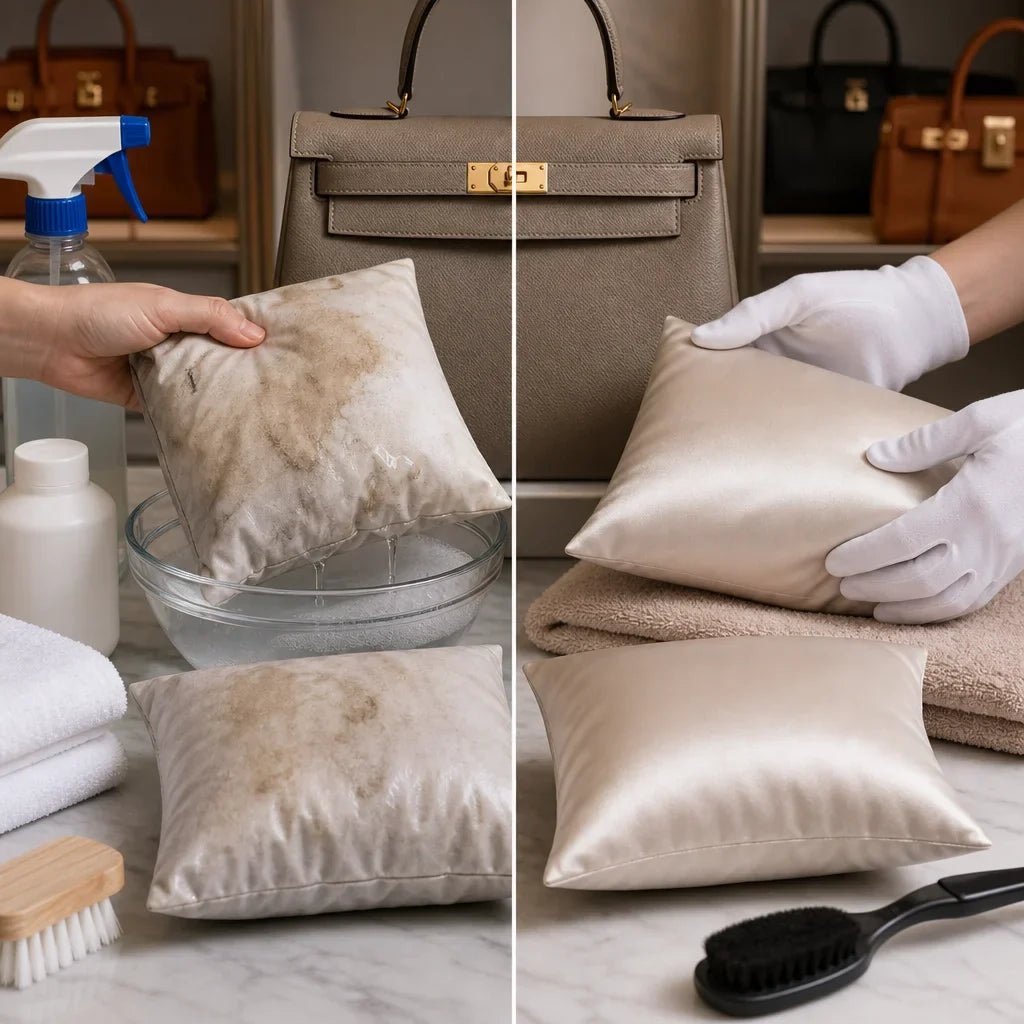
We recommend hand-cleaning pillow inserts using cool distilled water and pH-neutral cleaners specifically formulated for luxury fabrics. Distilled water avoids mineral deposits that tap water leaves behind. pH-neutral solutions preserve the chemical balance of the fabric without breaking down fibers the way acidic or alkaline cleaners do. Gentle agitation by hand, never machine washing, ensures every fiber remains intact.

For spot cleaning, we use soft microfiber cloths rather than paper towels or regular cotton. Microfiber lifts away particles without scratching the sateen surface. The technique involves gentle blotting, never rubbing, which prevents particles from embedding into the weave.

Our drying recommendation requires patience. We suggest air drying in a climate-controlled room away from direct sunlight and heat sources. This takes longer than what most DIY cleaners consider practical, but it preserves the integrity of the material. Rushing the drying process introduces moisture retention or fiber damage that compounds future cleaning challenges.

We also recommend a maintenance schedule calibrated to your storage environment. Pillows kept in dry closets require less frequent cleaning than those in humid spaces. But even in ideal conditions, a professional inspection and light refresh annually maintains optimal protection and appearance.

Action for your collection: Create a cleaning record for each pillow. Document when you clean it, what method you used, and any issues you noticed. This prevents over-cleaning and helps identify patterns if discoloration or damage develops.

Colorfast Protection: How Our Sateen Resists Fading and Staining

Color retention is a practical concern that directly impacts your pillow's effectiveness. A yellowed white pillow or faded cream insert looks dingy against your handbag's pristine interior, but more importantly, discoloration often indicates fiber degradation.

Our sateen shells use colorfast dyes applied during the polyester manufacturing process, not surface dyes added after weaving. This means the color is embedded at the molecular level rather than sitting on the fabric surface. Surface dyes fade easily through cleaning, exposure to light, or contact with moisture. Molecular-level color integration resists all three.

The practical difference: our ivory sateen stays luminous year after year. Faded or yellowed pillows we sometimes see from competitors reflect years of slow fiber breakdown and dye migration. Our design prevents this entirely.

We also treat our sateen shells with colorfast finishes that resist staining from everyday exposure to oils, dust, and minor spills. This isn't a waterproof coating that changes the feel of the fabric. Instead, it's a molecular treatment that repels particles rather than attracting them. Your pillow stays visibly cleaner between cleanings.

For practical maintenance, this colorfast protection means you can clean your pillows more aggressively if needed without fear of color loss. The dye won't bleed onto your handbag's interior even if moisture is present during storage. You get both the aesthetic benefit of retained color and the functional benefit of reduced staining risk.

If you've ever experienced color bleeding from a pillow onto a light-colored handbag interior, you understand the stakes. That stain doesn't just look bad. It permanently marks your collection and raises legitimate concerns about the pillow insert's quality. Colorfast protection eliminates this entire category of risk.

Action for your collection: Before using any new pillow insert, test colorfastness by dampening a small corner with distilled water and pressing it against a white cloth. No color transfer indicates proper dye integration.

Non-Abrasive Materials: The Critical Difference in Long-Term Durability

The interior of your luxury handbag represents the most delicate application of leather or fabric in the entire piece. Linings are often thinner than exterior leather, more prone to scratching, and incredibly difficult to repair without professional restoration. Your pillow insert spends months in contact with this vulnerable surface.

Abrasive materials, even seemingly minor texture, create microscratch patterns on leather and fabric linings. These scratches don't become visible immediately, but over years they accumulate into a dull, worn appearance that screams neglect. Resale buyers immediately notice and devalue accordingly. What looked like subtle wear is actually proof of improper storage support.

We engineered our sateen shells to be genuinely non-abrasive. The weave pattern is smooth and consistent. The fiber surfaces are treated to eliminate any roughness. When you run your pillow across your palm, you feel silk-like smoothness, not any hint of texture. This isn't marketing language. It's a direct specification we maintain because we understand how this contact translates to handbag preservation.

Compare this to standard polyester pillows, cotton pillows, or even lower-tier sateen products. Many develop a subtle pebbly or fuzzy texture over time as fibers break down and surface layers degrade. Our materials resist this entirely because we start with premium polyester and maintain rigorous manufacturing standards.

The angel hair fiber fill inside our pillows also contributes to non-abrasiveness. Angel hair is exceptionally fine and soft, without the coarser texture you find in standard polyfill. This matters because even through the shell, coarse fill can create pressure points that eventually wear against your handbag's interior. Our fill distributes support evenly and smoothly.

For long-term durability, non-abrasiveness is actually about preventing acceleration of natural wear. Your handbag's interior will age naturally over years. Your pillow insert should never accelerate that process through microscopic damage that could have been prevented with better materials.

Action for your collection: Feel the surface of your current pillow against your wrist. Anything other than silky smoothness indicates material that may be causing subtle damage to your handbags.

Cleaning Frequency and Best Practices for Optimal Performance

How often should you actually clean your pillow inserts? The answer depends on your storage environment and personal standards, but we can provide practical guidance.

If you store handbags in a dust-free, climate-controlled closet and handle them minimally, annual cleaning typically suffices. A gentle inspection and light refresh keeps the pillow fresh without over-stressing the materials. Light dust removal via soft microfiber cloth takes five minutes and maintains appearance.

If you live in a humid climate, store bags in varied spaces, or handle them frequently, semi-annual cleaning makes sense. Your pillows encounter more dust, moisture exposure, and environmental particles. Cleaning them twice yearly prevents buildup that becomes difficult to remove later.

Climate-controlled spaces with minimal dust exposure allow you to extend cleaning intervals. Humid basements or spaces with air quality concerns demand more frequent attention. The principle is simple: environmental conditions determine cleaning frequency.

For specific cleaning steps, we recommend this sequence:

Start with visual inspection and dry cleaning. Remove the pillow from your handbag and examine it thoroughly. Use a soft microfiber cloth to gently wipe away surface dust. This dry phase removes most particles without introducing moisture.

Next, spot-clean any visible blemishes. Use a small damp cloth with cool distilled water and a drop of pH-neutral cleaner. Apply to the stain, blot gently, never rub. Let the area dry completely before proceeding.

For more thorough cleaning, prepare a basin of cool distilled water with a minimal amount of pH-neutral luxury fabric cleanser. Submerge the pillow briefly and gently squeeze the water through the fabric. Do not wring or twist. Rinse with fresh distilled water multiple times until no soap remains.

Air dry in a climate-controlled room away from direct sunlight and heat. This may take 24-48 hours depending on humidity. Never use heat to accelerate drying.

After drying, inspect the pillow to ensure it's fully restored to its original form and appearance. Store it in a clean, dry location until needed.

This process takes time, which is precisely why many collectors gravitate toward shortcuts that damage their pillows. Patience with proper maintenance prevents costly replacement and resale value loss.

Action for your collection: Set calendar reminders for cleaning based on your environment. Scheduled maintenance beats reactive cleaning when problems become obvious.

Why Professional-Grade Polyester Outperforms Standard Alternatives

The material that constitutes your pillow insert determines everything about its performance. We chose professional-grade polyester sateen specifically for luxury handbag preservation, and understanding why matters for evaluating your options.

Standard polyester, the kind used in budget bedding and discount home goods, undergoes minimal processing and uses recycled or lower-quality fibers. This material feels rougher, absorbs dust readily, and degrades visibly within 2-3 years. Cleaning standard polyester requires aggressive methods that further damage it. It's a cycle of decline that accelerates once initiated.

Professional-grade polyester, by contrast, undergoes specialized processing that increases fiber quality and treatment standards. The fibers themselves are manufactured to tighter specifications. The weaving process maintains precise tension and consistency. Post-weaving treatments add durability and performance characteristics that standard polyester doesn't receive.

Cotton represents another common alternative, particularly in vintage or lower-cost pillow inserts. Cotton feels soft initially and seems natural, which appeals to some collectors. However, cotton absorbs moisture like a sponge, becomes a breeding ground for mildew in sealed storage, and requires frequent hot-water washing to maintain cleanliness. After just a few years, cotton pillows develop staining, smell musty, and begin degrading visibly. The softer initial feel masks serious limitations for long-term preservation.

Silk sounds luxurious in theory but fails practically. Real silk is delicate enough that it requires specialized cleaning and degrades quickly in storage conditions. Most "silk" pillows are actually silk-polyester blends where the silk content is minimal and unreliable. You pay premium prices for marginal benefits.

Linen is durable but introduces texture that risks scratching delicate linings. Its weave pattern is naturally coarser than sateen, and it wrinkles heavily, which means your pillow doesn't maintain consistent support within your handbag.

Professional-grade polyester sateen solves all these issues. It resists moisture while remaining breathable. It maintains its form indefinitely. It cleans easily without requiring aggressive methods. It resists staining and discoloration. It feels luxurious against delicate linings. The material science isn't mysterious. It's simply the optimal choice for this specific application.

Preservation of Handbag Structure: Our Sateen Shell Advantage

The fundamental purpose of a pillow insert is structural preservation. Your handbag was engineered with specific dimensions and proportions. The designer's vision, the bag's functionality, and its aesthetic appeal all depend on maintaining that structure. When a bag sits empty, gravity and time gradually degrade its silhouette.

Our sateen shells, combined with angel hair fiber fill, create a support system that resists compression and maintains consistent firmness. The shell itself doesn't sag or compress over months of storage. The fill remains fluffy and supportive, not matting down the way standard polyfill does after repeated use.

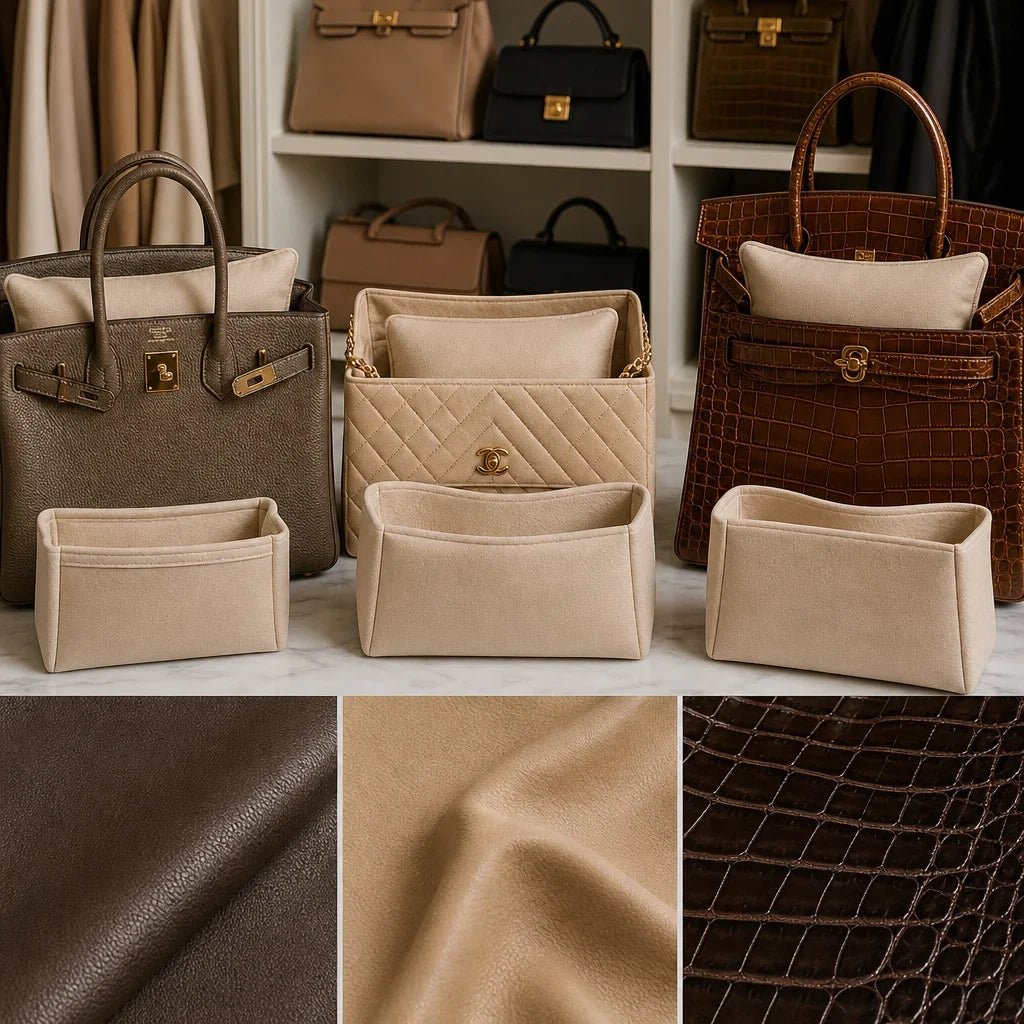
This structural consistency matters across your collection. A Hermès Birkin requires different support distribution than a smaller crossbody bag. Our precision-fit inserts for various styles mean each pillow provides exactly the support that specific handbag needs. A Birkin pillow designed for a Speedy would be either too firm or too soft, actually degrading the handbag's structure instead of preserving it.

Compare this to generic rectangular pillows that try to fit everything. They bunch, shift, or don't fill the space adequately. Your bag's corners lack support and begin to crease. The interior sags. Within a season, your handbag looks worn despite careful storage.

Our approach integrates form with function. The shape of each pillow matches the intended shape of its handbag. The firmness and fill density correspond to that specific bag's structural needs. The result is genuine preservation of the silhouette that made you choose that bag in the first place.

This structural preservation directly translates to resale value. A bag that maintains its original shape and proportions commands premium prices. Buyers recognize structural integrity as a sign of proper care. Your investment is protected not just physically but also financially.

Action for your collection: Assess each handbag's storage setup. If any pillows seem too firm, too soft, or improperly sized, they're actively harming rather than helping. Proper fit is non-negotiable for real preservation.

Maintaining Resale Value Through Proper Pillow Care

For serious collectors, handbag purchases are often viewed as alternative investments. Luxury bags from top designers hold value, sometimes appreciating, but only if properly maintained. Your pillow insert directly impacts this investment thesis.

Authentication experts and resale market professionals evaluate several factors when assessing used luxury handbags. Exterior condition matters, but interior condition often matters more because it reveals how the bag was actually stored and cared for. A pristine interior with no discoloration, no odors, and no visible wear signals an owner who understood proper preservation.

Conversely, a yellowed, stained, or damaged interior immediately signals poor care. Even if the exterior is perfect, the interior story tells professionals that this bag may have hidden structural issues from improper storage. Resale value drops accordingly, sometimes precipitously.

Proper pillow maintenance creates the interior condition that protects your resale price. A pillow that maintains its color and cleanliness keeps your handbag's interior looking like new. No transfer staining, no dust accumulation, no odor development. These aren't cosmetic details. They're the preservation factors that authentication experts specifically examine.

Consider the specific price impact. A luxury handbag that costs $3,000 to purchase might resell for $1,800-2,100 if well-maintained and for $900-1,200 if poorly preserved. That $700-900 difference is often directly attributable to interior condition, which is entirely controllable through proper pillow maintenance.

When you invest in professional-grade pillow inserts and maintain them properly, you're not just protecting your handbag. You're protecting your financial investment. The modest cost of our pillow inserts returns value many times over through maintained resale prices.

This calculation changes the financial analysis entirely. A premium pillow isn't an expense. It's an investment protection mechanism. Skimping on pillow quality to save $30-50 can cost you hundreds in resale value when you're ready to liquidate.

The Fabrinique Guarantee: Professional Quality You Can Trust

We stand behind every pillow insert we create because we engineer them specifically for this purpose. Our guarantee isn't about generic promises. It's about professional responsibility for a product you're trusting with your collection.

Our pillows arrive with a comprehensive satisfaction commitment. If your pillow doesn't maintain its form and appearance exactly as described, we make it right. We've engineered these inserts to never yellow, compress, or fail structurally within reasonable use. That confidence comes from material quality and manufacturing standards we control entirely.

We also back our colorfast promise. If your pillow causes any staining or discoloration on your handbag's interior, we take responsibility. Our testing protocols ensure this won't happen, but if it does, you have recourse. This protection covers your collection from the risk of our product failing to perform its intended function.

Our free U.S. shipping reflects our commitment to accessibility. These inserts should be standard equipment for serious collectors, not luxury accessories out of reach. By including shipping in our pricing, we make professional-grade pillow inserts practical for everyone who values their collection.

We also offer precision-fit designs for specific handbag styles, particularly our Hermès-specific inserts. These aren't generic pillows marketed toward multiple uses. They're engineered for exact bags with exact needs. A Hermès collector knows immediately when they see these inserts that we understand their specific collection and needs. That specificity is earned, not marketing. It reflects years of understanding how different luxury bags store and what support they require.

When you choose our pillows, you're choosing from a company that specializes exclusively in this application. We're not a general bedding manufacturer adding pillows to a product line. We're experts in handbag preservation, and that focus translates to superior products and support.

Making the Investment in Superior Handbag Protection

Luxury handbags are purchases that deserve preservation approaches equally refined and professional. DIY cleaning and generic pillow alternatives represent shortcuts that eventually cost you more than proper investment would have cost upfront.

The choice between professional maintenance and DIY approaches isn't really a choice between convenience and effort. It's a choice between protecting your investment or risking it. Professional-grade polyester sateen pillows with proper maintenance protocols preserve handbag structure, maintain resale value, and keep your collection in the condition you envisioned when you purchased it.

Our inserts represent the preservation standard that serious collectors should expect. They're engineered with materials chosen specifically for durability and non-abrasiveness. They're designed with precision fits for the bags you actually own. They're maintained according to protocols that keep them pristine through years of storage.

Your collection didn't become valuable through accident or luck. It resulted from careful selection and financial investment. That same care belongs in your preservation systems. Start by auditing your current pillow inserts. If they're showing any yellowing, texture changes, or wear patterns, they're past their useful life. Replace them with inserts designed for genuine preservation.

Then establish a maintenance routine calibrated to your environment. Annual inspection and gentle cleaning keeps pillows performing optimally. The time investment is minimal. The protection it provides is profound.

Your handbags deserve this level of care. You've invested in these pieces because they matter to you, whether for personal enjoyment, investment potential, or both. Professional-grade pillow maintenance ensures that investment is genuinely protected. Visit https://fabrinique.com to explore our complete collection of precision-fit pillow inserts and discover the preservation standard your collection deserves.

Read more

Illustration 1

Calfskin vs Lambskin vs Exotic Leathers: Choosing the Right Handbag Storage Protection

Understanding Leather Types and Storage Challenges Your luxury handbag collection represents years of careful curation and significant financial investment. Yet many collectors store these pieces w...

Read more
Illustration 1

Optimal Handbag Storage Conditions vs Neglected Climate Control: Which Protects Your Investment?

Why Climate-Controlled Storage Matters for Your Handbag Collection Your luxury handbag collection represents more than fashion choices. These are investment pieces designed to last decades when pro...

Read more