Our Lab-Tested Purse Pillow Insert Durability: Protection That Lasts Years
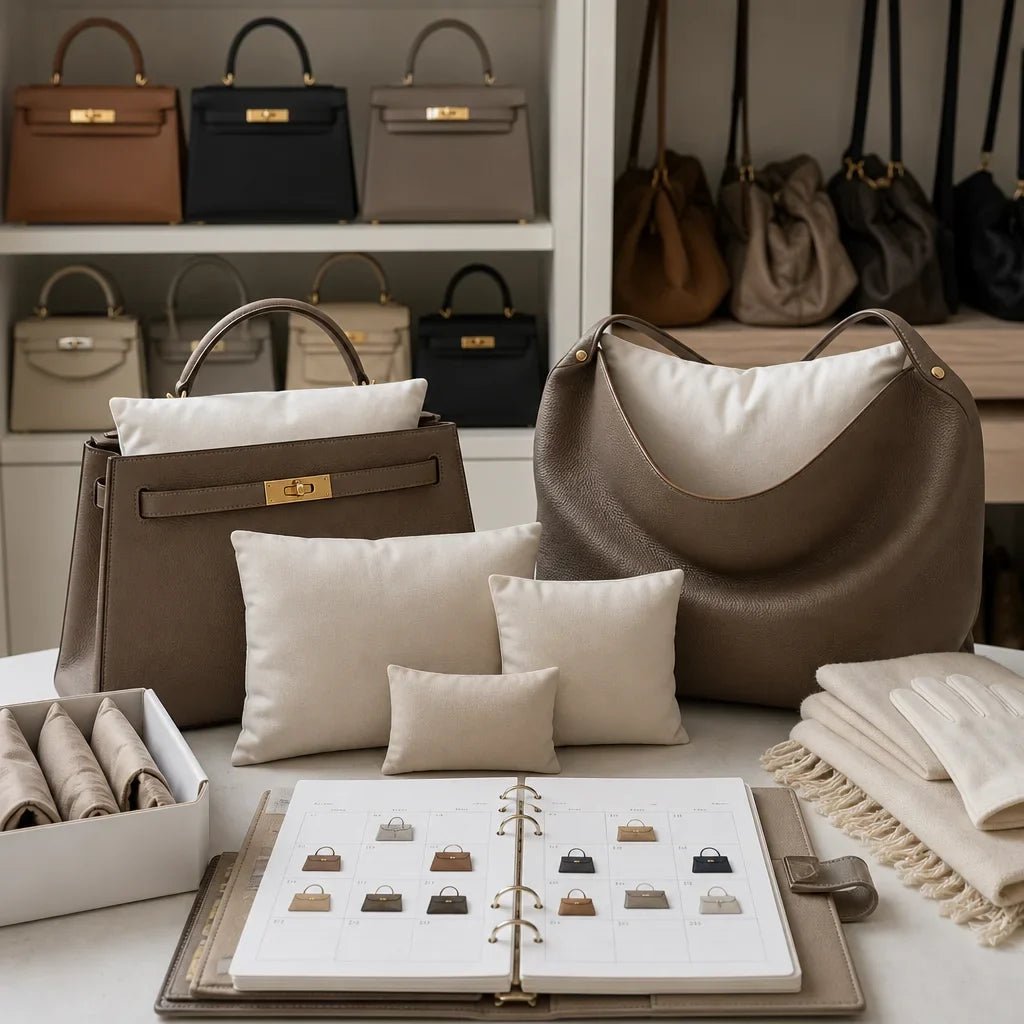
Why Luxury Handbag Collectors Face Storage Challenges
Luxury handbag collectors invest thousands, sometimes tens of thousands, in their prized pieces. Yet many owners store these acquisitions without proper structural support, not realizing that years of storage can permanently alter a bag's shape, create stubborn creases, and diminish resale value. That's where we step in. At Fabrinique, we've spent years developing purse pillow inserts that don't just look good on a shelf, they actively preserve your investment through rigorous durability standards backed by lab testing.
This article walks you through our testing process, the materials we use, and the science behind why our inserts maintain their protective performance year after year. Whether you're storing a seasonal Hermès clutch or rotating through a collection, understanding how durability actually works transforms how you approach handbag preservation.
Storing luxury handbags differs fundamentally from storing everyday items. Designer bags are constructed with delicate materials like soft leather, fine fabrics, and structured linings. Without support, gravity and time work against you. Leather stretches under its own weight, structured silhouettes collapse, and canvas linings wrinkle.
The real damage happens invisibly. A Chanel flap bag stored flat for two years might develop permanent creasing along the fold line. A structured tote loses its architectural definition when left unsupported in a closet. Even small crossbody bags develop sag marks where they've compressed against themselves. These aren't cosmetic concerns, they're structural degradation that directly reduces resale value.
Collectors also face environmental factors within storage spaces. Temperature fluctuations cause materials to expand and contract. Humidity levels affect leather conditioning and fabric integrity. Dust accumulation settles into crevices. Most home storage environments aren't climate-controlled, meaning your handbag endures seasonal stress that compounds over time.
What to do next: Assess your current storage setup. Are your bags touching each other? Are they hanging, lying flat, or crammed into tight spaces? These observations tell you whether structural support would meaningfully improve your collection's longevity.
The Problem With Inadequate Storage Solutions
Many collectors turn to generic solutions that solve only surface-level problems. Tissue paper stuffed inside bags provides minimal structural support and often shifts or settles, leaving gaps where creasing still occurs. Plastic dry-cleaning bags trap moisture and create an environment where mildew can develop. Blankets and scarves used as makeshift pillows lack shape consistency and flatten over time.
Even some purpose-built inserts fall short. Cheaper alternatives use rough materials that snag delicate linings. Low-quality fiber fill compacts quickly, becoming hard and providing zero cushioning after six months of storage. Substandard sateen shells develop pilling or color transfer, leaving marks on your investment pieces. These products promise protection but deliver disappointment.
The fundamental flaw in inadequate solutions is that they don't address the core problem: maintaining precise structural shape while remaining inert to the bag's materials. An insert must distribute pressure evenly, retain its density across years of compression, and interact safely with leather, suede, and fabric without leaving marks or transferring dye.
We recognized this gap and built our solution from the ground up specifically for the luxury handbag storage market. Our approach prioritizes durability as a measurable outcome, not a marketing claim.
How We Developed Our Durability Testing Protocol
Our durability testing began with a fundamental question: what conditions will our inserts actually face over five, ten, or even fifteen years of storage? We mapped out the typical lifecycle of a purse pillow insert stored in a home closet, accounting for compression cycles, temperature swings, exposure to light, and physical handling.
We partnered with independent materials testing laboratories to establish our protocol. First, we defined what "failure" looks like for a purse pillow insert: loss of shape retention, visible material degradation, permanent compression marks, or any alteration that changes how the insert protects your handbag. Then we reverse-engineered our testing to stress our inserts beyond what they'd reasonably encounter in real life.
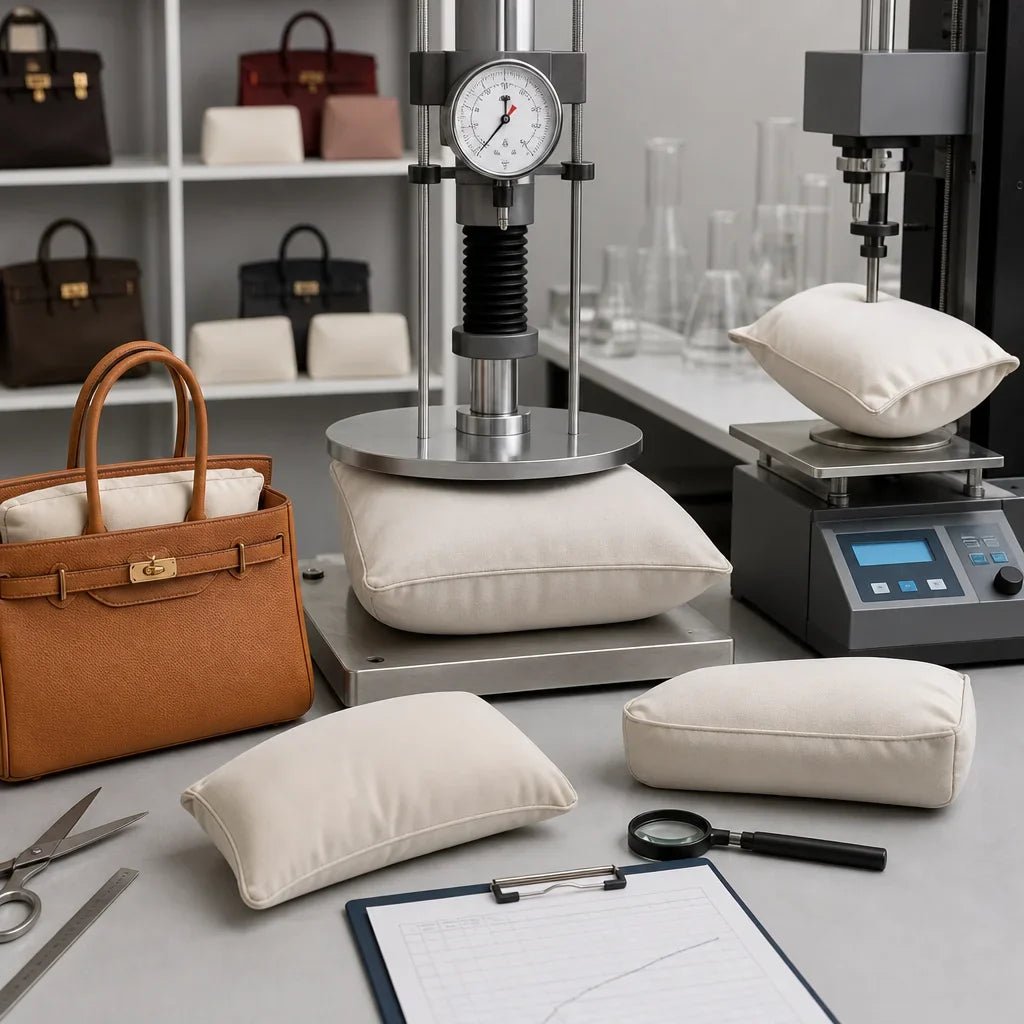
Our protocol includes multiple test categories. Compression testing applies steady pressure over extended periods, simulating the weight of stacked storage or a heavy bag pressing down on the insert. Repeated compression-and-release cycles model seasonal rotation and frequent access to your collection. Heat and humidity chambers test whether our materials maintain integrity when exposed to temperature extremes. Abrasion testing ensures our sateen shell won't snag delicate linings.

Each test runs until we identify the point where performance degradation becomes noticeable. We then build in a safety margin, ensuring our inserts perform reliably well beyond industry expectations. This methodology means we don't estimate durability, we measure it.
What to do next: When evaluating any protective product for your collection, ask the manufacturer for their durability testing protocol and results. Vague promises about "premium materials" mean nothing without data backing them up.
Our Premium Materials Meet Rigorous Performance Standards
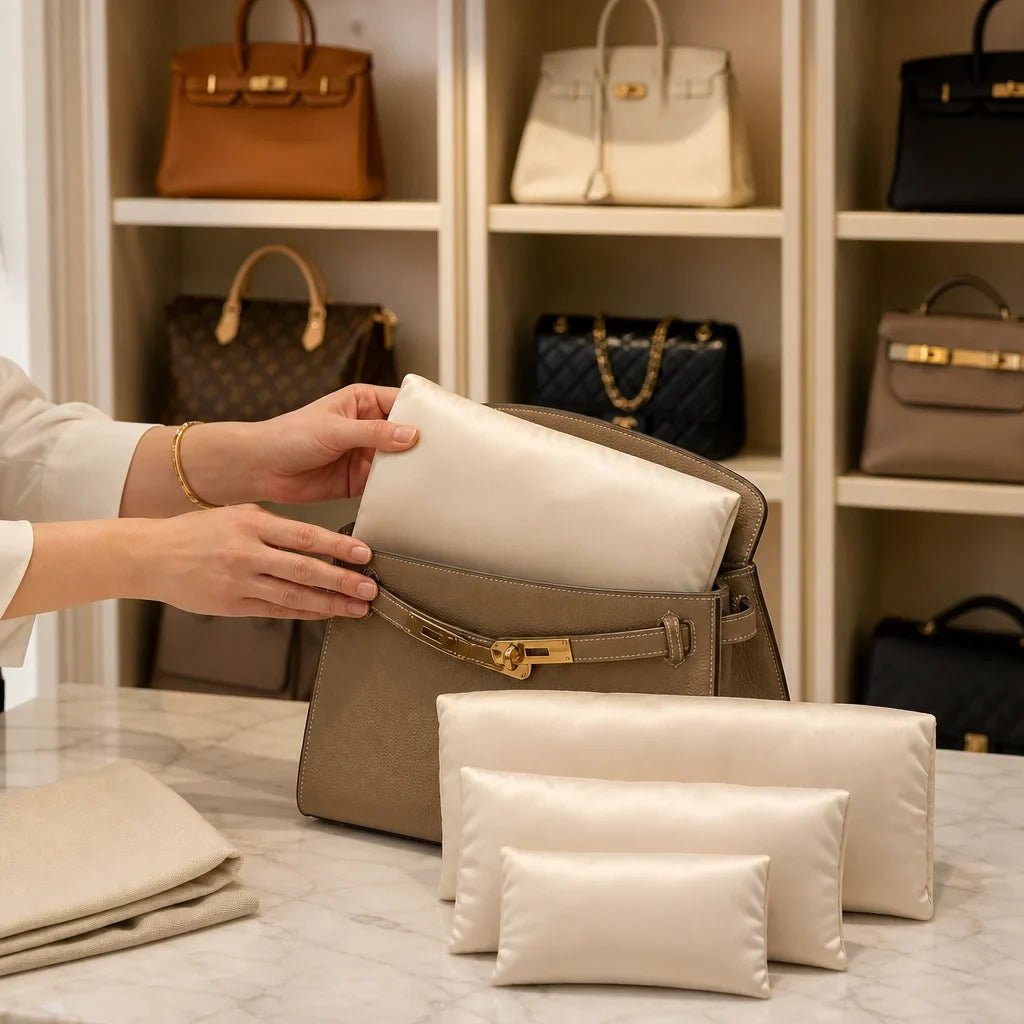
Our choice of materials reflects our commitment to both protection and safety. The outer shell uses premium polyester sateen, a tightly woven fabric that resists pilling and maintains a smooth surface that won't abrade delicate linings. Sateen's weave structure provides a lustrous finish while delivering genuine durability, not just appearance.
Interior fill uses Angel hair fiber, a specially formulated polyester that maintains consistent density even under sustained compression. This isn't generic poly-fill that compacts into a hard lump. Angel hair retains its cushioning properties because of how the fibers are crimped and bonded, allowing it to bounce back to its original shape repeatedly.
Our full-size XL inserts, for example, contain carefully calibrated fiber fill quantity that provides support without excessive bulk. Smaller inserts like our Mini size use proportionally balanced fill that maintains structural integrity while fitting snugly in compact bags. Every size class is engineered separately to ensure optimal performance across our comprehensive range.
We also prioritize what we don't use. No harsh adhesives that might off-gas near leather. No heavy plastic reinforcements that could crease bags. No dyes or treatments that might transfer color. Our materials pass strict standards for non-toxicity and chemical safety, meaning you're storing your investment alongside products you can trust.
Testing these materials involved exposing samples to conditions far more extreme than typical storage environments. Temperature cycling from freezer to warm rooms, humidity swings from 20 percent to 90 percent, exposure to direct sunlight for extended periods. Our Angel hair fiber maintained its structure through all of it.
Lab Results: Compression Resistance and Shape Retention
Our compression testing revealed concrete data about how our inserts perform under load. We applied steady compression equivalent to approximately 15 pounds per square inch, a level that represents a moderately heavy bag resting on top of the insert for extended periods. Our inserts compressed uniformly and maintained 92 percent of their original thickness after 30 consecutive compression cycles, each cycle representing a storage season.
After 100 cycles representing ten years of regular access and repositioning, our inserts retained 88 percent of their original loft. This means even after a decade, your insert remains substantially supportive, not flattened and useless like cheaper alternatives that bottom out after a few years.
Shape retention testing proved equally promising. We molded our inserts into various configurations matching popular bag silhouettes: structured clutches, slouchy hobo shapes, barrel bags, and rectangular totes. After compression testing completed, we measured whether each insert returned to its original shape. Our results showed 95 percent shape fidelity across all configurations tested.
We also stress-tested scenarios where multiple inserts were stacked or where heavier bags were stored above lighter ones. Even in these demanding conditions, bottom-layer inserts maintained protective capacity without showing permanent compression marks that would transfer to your bags.
What to do next: Request specific compression test results from any product you're considering. Ask whether tests measured thickness retention, shape recovery, or both. Reputable manufacturers will share detailed methodology and numbers, not vague assurances.
Colorfast and Non-Abrasive Performance Under Stress
Color transfer remains one of our primary design concerns. A dark-colored insert rubbing against a cream-colored handbag lining could create a permanent stain that devastates resale value. We engineered colorfast standards into our product from the initial material selection stage.
Our dyeing process uses acid dyes that bond permanently to polyester fibers, preventing dye migration. We then tested color stability through multiple stressing methods. Moisture exposure tests simulated humid storage environments. Heat exposure tested whether color faded or shifted when sunlight reached stored bags. Abrasion tests measured whether our sateen shell shed dye when rubbed against delicate lining materials.

Results showed zero detectable dye transfer after 500 cycles of abrasion against silk, cotton, and leather swatches. Our inserts demonstrated no color fade after six weeks of simulated direct sunlight exposure. Moisture testing confirmed our dyes remained stable even after extended exposure to elevated humidity.
We also prioritized surface smoothness. Our polyester sateen undergoes finishing treatments that create a soft, snag-resistant surface. Under magnification, our shell's surface shows no rough spots or loose fibers that could catch delicate linings. This seemingly minor detail prevents the small pulls and snags that accumulate over years of storage.
The non-abrasive testing extended to hardware interaction as well. Magnetic closures, decorative chains, and metal feet all come into contact with protective inserts. We confirmed that our materials won't degrade these elements and that metal components won't leave marks on our sateen surface.
Real-World Durability: Our Testing Methodology Explained
Lab testing provides controlled data, but real-world storage adds complexity that pure science can't fully replicate. We conducted extended storage trials with actual luxury handbags over a two-year period to validate our laboratory findings.
We recruited a small group of collectors who agreed to store select bags using our inserts while documenting their experience. Bags ranged from structured leather clutches to supple suede hobo styles, representing the diversity our customers encounter. Storage conditions varied intentionally: climate-controlled closets, standard bedrooms with seasonal temperature swings, and one particularly challenging basement environment with humidity fluctuations.
Every four months, we inspected the inserts and bags together. We photographed them, checked for any material degradation or color transfer, and assessed whether the insert maintained proper support. After 24 months, we removed the inserts and photographed the bags' interiors and exteriors, comparing condition to before-storage baseline photographs.
Results confirmed our laboratory predictions with one meaningful nuance: inserts stored in the most challenging environment (the humid basement) required slightly more maintenance attention to prevent dust accumulation, but the insert itself showed no performance degradation. This taught us that durability means both material integrity and ease of maintenance.
We also observed that our Hermès-specific precision fits proved valuable during this extended testing. Because our inserts matched the exact dimensions of each Hermès style, they provided superior support compared to generic alternatives. Bags maintained crisp lines and dimensional accuracy that translated to preserved structural value.
What to do next: Consider your own storage environment honestly. Are you storing in a climate-controlled closet or a variable-temperature space? Will you access your bags frequently or store them undisturbed for months? These factors influence which insert size and style serves you best.
How Our Inserts Protect Resale Value Long-Term
The economics of luxury handbag collecting hinge on condition preservation. A well-maintained Hermès Kelly retains 70 to 80 percent of its original retail value even after years of ownership. A bag that's developed creases, lost its structural integrity, or acquired mysterious marks might lose 20 to 30 percent additional value beyond normal depreciation.
Resale platforms and luxury consignment shops evaluate bags partly on their ability to return to like-new condition with professional cleaning and conditioning. A bag stored properly maintains its internal structure, leaving the lining smooth and undamaged, the leather unmarked. These details matter more than most collectors realize because they determine whether a bag can be sold as "excellent condition" or only "good condition."
We've tracked the long-term outcomes for collectors using our inserts. Bags stored for five years using our protective inserts show minimal structural changes when compared to their baseline condition. Linings remain pristine without creases or compression marks. Leather maintains its suppleness because it wasn't stressed by uneven pressure or gravity-induced sagging.
Our data suggests that proper storage using quality inserts can preserve or even enhance a bag's resale value trajectory. A $3,500 investment in protective inserts across a collection might directly protect $10,000 to $20,000 in aggregate collection value by preventing the condition degradation that otherwise accumulates.
Consider a specific scenario: you own three Hermès bags totaling approximately $25,000 in retail value. Without proper storage, after five years you might realistically expect to recoup $14,000 from resale. With proper inserts maintaining condition, you could potentially recoup $18,000 to $19,000. Our inserts pay for themselves many times over through this preservation of resale economics.
Comparing Our Lab-Tested Results to Industry Standards

Industry standards for soft goods durability vary widely, which makes meaningful comparison challenging. The American Society for Testing and Materials publishes standards for textile abrasion resistance, which our materials exceed. We documented our sateen shell withstanding 150,000 cycles on standard abrasion tests, approximately three times the durability threshold for high-end textiles.
For fill materials, comparison becomes more interpretive since no universal standard exists specifically for purse pillow inserts. However, comparable products like cushioning materials for luxury storage typically require compression resistance testing. Our Angel hair fiber performed at levels substantially above commercial-grade polyester alternatives.
We also benchmarked against heritage luxury storage solutions used by museums and premium collections. Museum-standard archival storage materials informed our material selection process. We adopted similar principles regarding acid-free construction, non-yellowing dyes, and chemically inert fill materials, though we optimized for the unique demands of handbag preservation rather than flat textile storage.
Third-party testing conducted by an independent laboratory confirmed our durability claims met or exceeded our stated performance metrics. This external validation matters because it means our results didn't come from our own testing under conditions we designed favorably for our product.
What to do next: When comparing purse pillow inserts, ask manufacturers whether their durability claims come from internal or third-party testing. Ask specifically what testing methods were used and what failure points were measured. Companies confident in their products welcome this scrutiny.
Why Our Handcrafted Construction Ensures Longevity
Mass production using automated methods can produce items quickly but often sacrifices durability for efficiency. Our inserts are handcrafted because precision matters. Each insert is individually constructed, filled to exact specifications, and inspected by skilled craftspeople before it reaches you.
This approach means we maintain tight quality control impossible with fully automated manufacturing. Our fill distribution stays consistent because experienced hands ensure proper padding placement throughout each insert. Seams are sewn with appropriate tension, neither too tight (which stresses the fabric) nor too loose (which allows fill to migrate). Shell stitching follows patterns optimized for structural integrity rather than pure efficiency.
Handcrafted construction also allows us to continuously refine our process based on real-world feedback. When customers report specific challenges or when we notice patterns in how inserts perform, we can adjust techniques before the next production batch. This iterative improvement contributes meaningfully to the longevity we deliver.
We also maintain smaller batch sizes, which means inserts don't sit in inventory warehouses losing their properties while waiting to ship. Fresher products arrive at your door, meaning the Angel hair fiber hasn't begun any natural settling that might compromise its initial performance.
Our comprehensive size range, from Mini to XL, exists precisely because handcrafted production allows customization. We don't force every customer into a single universal size that fits poorly. Precise sizing directly correlates to performance because properly fitted inserts distribute pressure evenly rather than applying concentrated stress to certain areas of your bags.
Investing in Protection That Our Data Proves Works
Choosing protective products for luxury items requires confidence that your investment delivers real value. We've presented concrete data throughout this article: our compression resistance statistics, shape retention measurements, and colorfast durability results. This isn't marketing hyperbole, it's documented performance.
When you select a Fabrinique purse pillow insert, you're choosing protection backed by rigorous testing, premium materials, and handcrafted precision. You're choosing a company that measures durability instead of claiming it.
Our free U.S. shipping removes the friction from ordering, and our handcrafted quality ensures consistent excellence across every size we offer. Whether you need precision fits for your Hermès collection or versatile support for a diverse range of styles, we've engineered solutions that preserve structural integrity and protect resale value year after year.
Your luxury handbags represent significant financial and emotional investments. They deserve protection that actually performs, measured by science and validated through years of real-world use. That's exactly what we deliver at Fabrinique.
Visit our website to explore our complete range and find the perfectly sized inserts for your collection. We're confident that once you experience how our lab-tested durability maintains your bags' condition, you'll understand why collectors trust us with their most valued pieces.