Best Handbag Storage Schedule: Rotation Guide for Structured and Slouchy Bags
Why Bag Rotation Matters for Your Collection
A luxury handbag isn't meant to live permanently in a closet. Yet many collectors store their investment pieces the same way year after year, pulling out the same few favorites while others sit dormant. This approach accelerates deterioration and undermines the very protection these bags deserve.
Rotation serves a dual purpose. First, it distributes wear evenly across your collection so no single bag bears the burden of constant use. Second, it forces you to reassess each piece's condition, catching small issues like loose stitching or fading before they become costly problems. A bag worn three months and rested nine months will outlast one worn continuously.
When you rotate regularly, you also preserve resale value. Collectors know that bags showing even wear command higher prices than those with concentrated damage on one side or localized fading. If you ever decide to liquidate part of your collection, a well-maintained rotation schedule means every piece retains closer to its original value.
The real problem isn't deciding which bags to rotate into your active lineup. It's protecting them during their dormant months. Most storage methods leave bags vulnerable to creasing, structural sagging, and shape loss that becomes permanent over time.
Understanding Structured Bags: Storage Demands
Structured bags have rigid frameworks built from components like frames, stays, or internal support systems. Think of a Hermès Kelly, a structured tote with defined corners, or a boxy top-handle bag. These pieces maintain their design integrity through intentional construction, but that structure only holds if supported properly during storage.
When a structured bag sits empty without support, gravity wins. The weight of leather and hardware pulls downward, creating permanent creases where the bag shouldn't fold. The bottom corners lose their shape definition. If your Kelly sits flat on a shelf with nothing inside for three months, that crisp architecture transforms into something softer and less refined. Resale value drops immediately.
Structured bags also face creasing on the sides and front panels if stored incorrectly. Unlike slouchy bags that naturally accommodate wrinkles, a structured piece reveals every crease as a flaw. A single horizontal crease across the front of a rigid tote becomes the first thing anyone notices.
The solution requires internal support that mimics the original intended shape. Without it, your structured collection deteriorates silently while in storage.
Understanding Slouchy Bags: Preservation Challenges
Slouchy bags present a different puzzle. A leather hobo, a relaxed shoulder bag, or a soft crossbody is designed to move and settle naturally. Yet this very flexibility creates preservation challenges most collectors misunderstand.
The enemy of slouchy bags is compression and creasing without air circulation. When you stuff a soft bag in a storage box or hang it fully packed, the leather compresses in odd ways. Heavy creases develop along stress points where the bag naturally bends. The bottom can develop a permanent pancaked appearance. Over months, these compressed creases can become nearly impossible to fully restore.
Slouchy bags also absorb and retain moisture more readily than structured pieces because their flexible construction doesn't resist humidity the way a rigid frame does. If stored in damp conditions, soft leather develops mildew or water stains that are difficult to reverse.
Many collectors believe slouchy bags need nothing during storage because they're already "relaxed." Actually, they need support most of all. Support prevents compression creasing. It maintains the bag's intended proportions so it returns from storage looking fresh, not deflated.
The Problem with Improper Storage Methods
We've observed three storage methods that collectors commonly employ, and all three create damage:
Storing bags flat and empty. The bag's natural shape collapses under its own weight. Bottoms crease and flatten. Sides develop permanent wrinkles along stress points. Side handles or straps compress unevenly.

Stuffing bags with paper, tissue, or newspaper. Paper absorbs moisture and transfers it to leather. It doesn't provide consistent support, so creasing still occurs in random places where paper settles unevenly. Paper also yellows and can transfer dyes to light-colored leather.
Hanging bags fully packed. Handles stretch under the weight of contents. The bag's opening warps as gravity pulls the sides downward. If the bag rests against itself while hanging, compressed areas develop permanent creasing.
Each method appears sensible in isolation. Flat storage seems practical. Stuffing something in seems protective. Hanging seems logical. Yet each one trades short-term convenience for long-term damage that no collector wants to accept.
How Purse Pillow Inserts Transform Your Rotation System
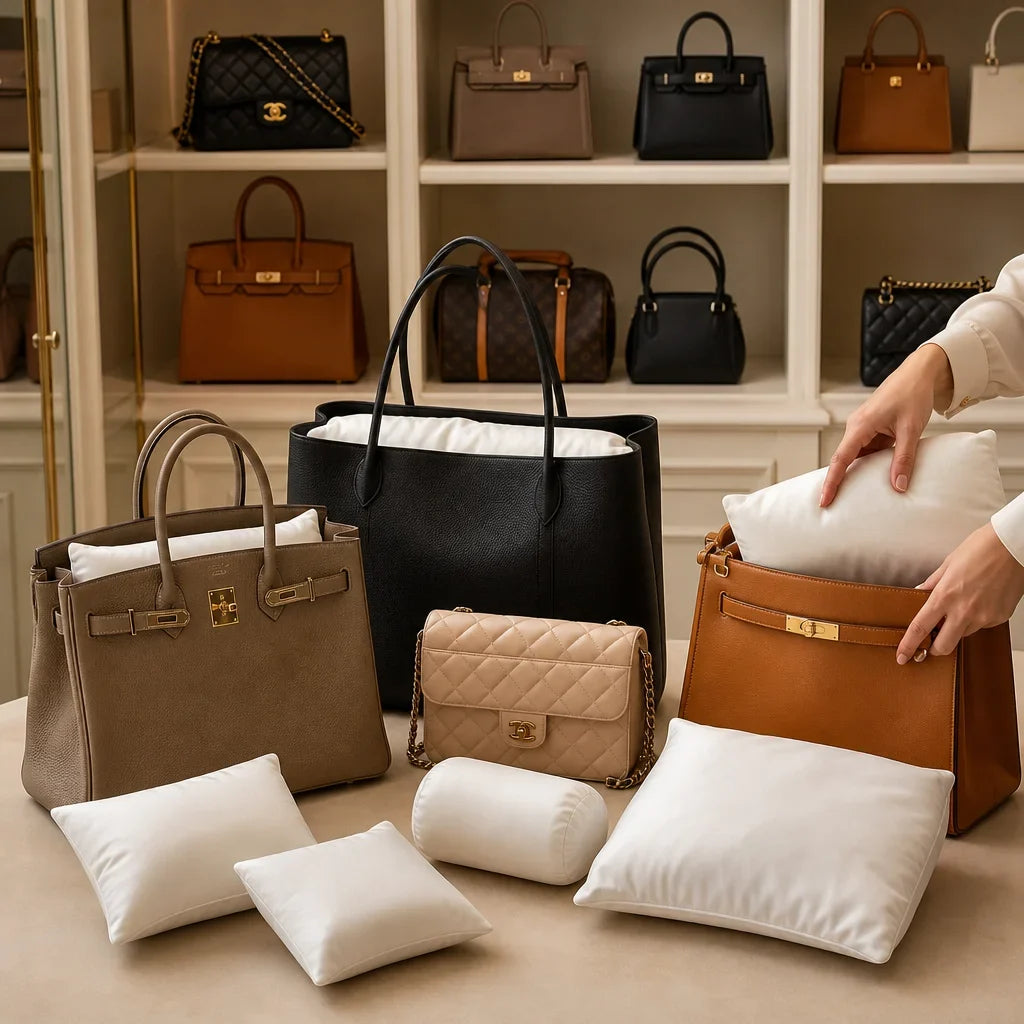
We designed our purse pillow inserts specifically to solve these storage problems. Our inserts use a premium polyester sateen shell combined with angel hair fiber fill. This combination provides firm but gentle support that maintains your bag's original shape without damaging leather or hardware.
Here's how they transform your rotation:
Structured bags receive precise internal support. Our inserts maintain the intended silhouette so creasing doesn't develop during storage. When you rotate that bag back into active use three months later, it looks exactly as it did when you stored it.
Slouchy bags get compression prevention. Instead of pancaking under its own weight, a soft bag maintains its proportioned form. The insert prevents creases from forming in irregular places while allowing the bag's natural relaxed aesthetic to remain intact.
Air circulation stays healthy. Unlike paper or dense stuffing, our fiber fill breathes. Moisture doesn't accumulate, reducing mildew risk and protecting against humidity damage.
We also offer precision fits for specific bag types, including Hermès-specific inserts sized for everything from Mini to XL bags. When an insert matches your bag's exact dimensions, support is maximized and the bag looks perfect when you retrieve it.
Our inserts aren't generic. They're handcrafted to specific dimensions because a one-size-fits-all approach doesn't work for luxury pieces with varied proportions. Your Kelly needs different support than your Birkin, even though both are Hermès. We build that difference into our product line.
Recommended Rotation Frequency by Bag Type
The ideal rotation schedule depends on your bag's construction and your usage patterns.
Structured bags with daily use: Rotate every 4-6 weeks. These pieces handle frequent wear well, but they benefit from regular rest periods. Storing one while another rotates into active duty prevents any bag from experiencing cumulative stress.
Structured bags with occasional use: Rotate every 8-12 weeks. These bags don't need as frequent rotation because they're not receiving daily stress, but extended storage without rotation still allows creasing to develop.
Slouchy bags with daily use: Rotate every 3-4 weeks. Soft leather shows compression creasing faster than structured leather, so more frequent rotation prevents damage from accumulating.
Slouchy bags with weekend or occasional wear: Rotate every 6-8 weeks. Even occasional-use soft bags benefit from rotation to prevent long dormancy that leads to compression issues.
Specialty pieces or delicate constructions: Rotate monthly regardless of use frequency. Bags with unusual shapes, precious materials, or complex construction deserve shorter storage intervals to minimize any risk.
These timeframes aren't rigid. If you live in a humid climate, shorter intervals help. If your storage environment is climate-controlled and dry, you can extend intervals slightly. The key is preventing any bag from sitting untouched for more than three months.

Creating Your Custom Storage Schedule
Start by inventorying your collection. Categorize bags by type (structured, slouchy, specialty), frequency of use (daily, weekend, occasional), and material (leather type, special embellishments).
Next, assign each bag to a rotation tier:
Tier 1: Active Rotation. These are your 4-6 bags that cycle through use every 4-6 weeks. They're the pieces you reach for regularly. Assign each one a month or two-month window.
Tier 2: Seasonal Rotation. These bags come out for specific seasons or occasions. Winter formal bags rotate into use November through January, then store. Summer beach bags emerge in June. This natural seasonal rhythm prevents extended dormancy.
Tier 3: Collection Pieces. These are bags you keep for their investment value or sentimental worth but wear rarely. Rotate them out briefly every 8-12 weeks just to reassess their condition, then return them to storage.
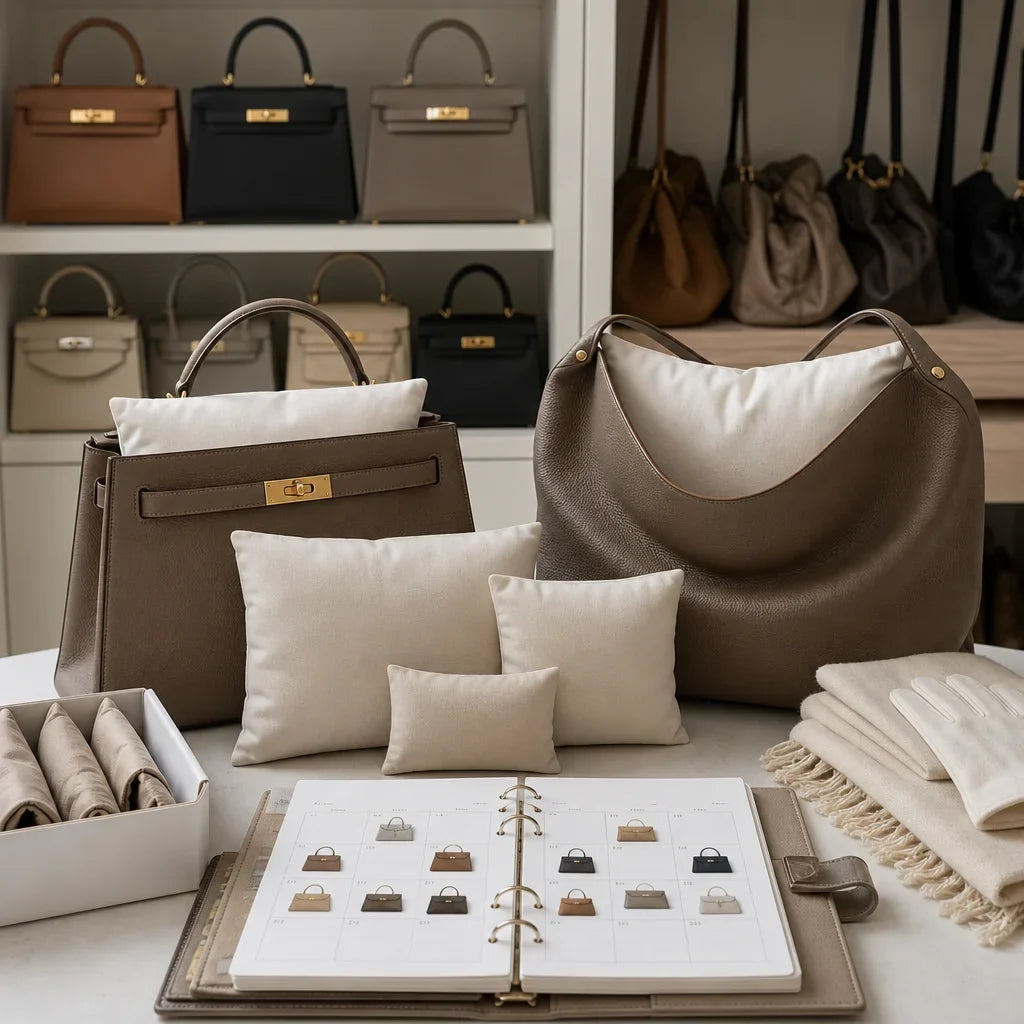
Once you've assigned tiers, create a simple calendar. You don't need software or complexity. A notebook with month-by-month assignments works perfectly. Knowing that your burgundy Kelly comes out of storage in March keeps you accountable and prevents bags from being forgotten.
Store bags in a cool, dry location. Avoid basements prone to humidity or attics that experience temperature swings. A bedroom closet or hallway cabinet works well. Ensure bags have space so they're not compressed against other items.
Material Considerations for Long-Term Protection
The materials surrounding your bag during storage matter as much as what's inside it.
Avoid plastic storage containers or garment bags. While plastic seems protective, it traps moisture against leather, accelerating deterioration. If humidity builds inside a sealed plastic bag, you're essentially creating a microclimate that encourages mold and mildew growth.
Cotton dust bags are ideal. They breathe, preventing moisture accumulation while shielding bags from light and dust. If your bags didn't come with dust bags, quality cotton alternatives are widely available and inexpensive.
Never store bags directly on wooden shelves, particularly untreated or unfinished wood. Wood absorbs and releases moisture, and it can transfer tannins to leather. A soft barrier, like a cotton cloth or acid-free paper, between the shelf and bag prevents this issue.
Metal shelving is acceptable if painted or powder-coated. Bare metal can rust and transfer rust particles to leather, so ensure any metal surfaces are protected.
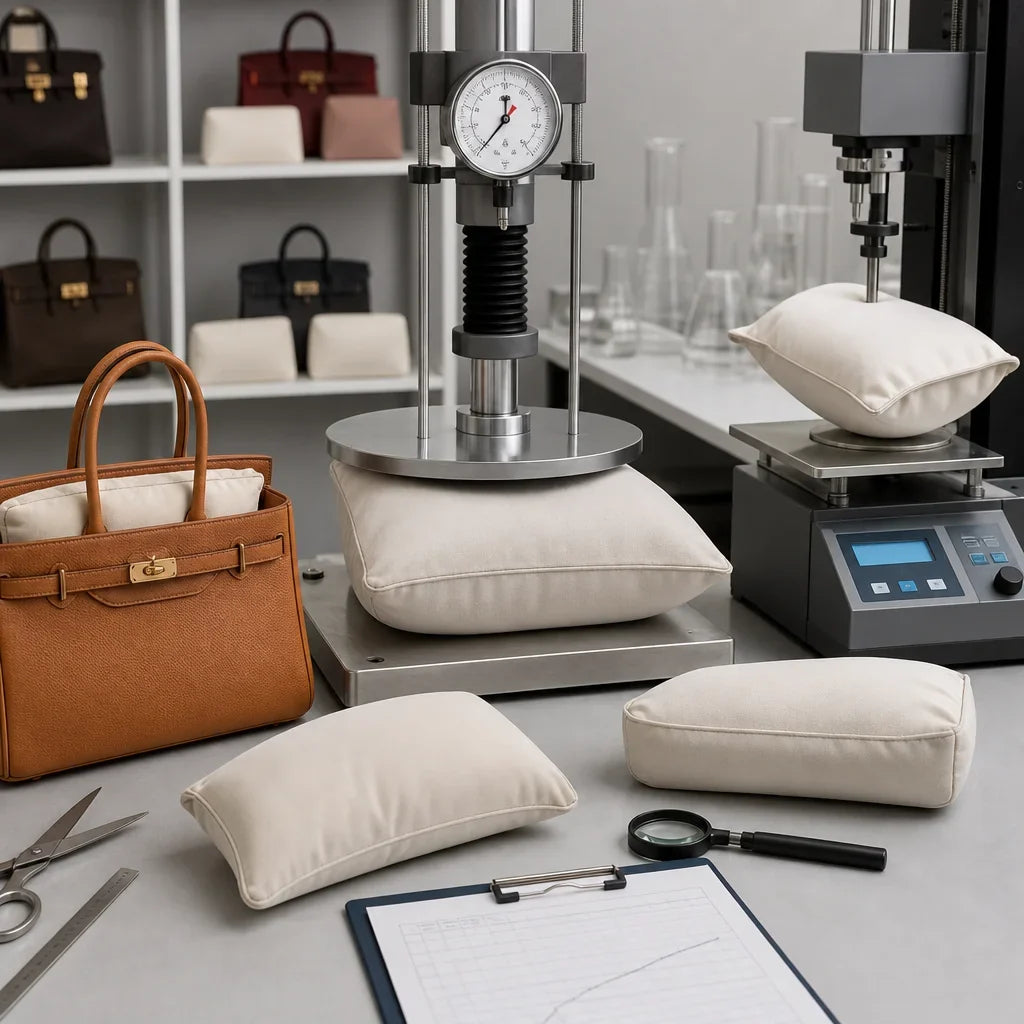
For bags stored in inserts, the insert material itself is critical. Poor-quality fills compress over time and don't maintain support. They can also shed fibers that cling to leather. Our angel hair fiber fill maintains its integrity and doesn't shed, preserving both the insert's support and your bag's cleanliness.
The shell material of an insert also matters. We use premium polyester sateen because it's non-abrasive and colorfast. Cheaper materials can leave marks on leather or transfer dyes during humid periods. Our inserts won't damage delicate leathers even after extended contact.
Seasonal Rotation Strategies for Luxury Collectors
Your geographic location and seasonal patterns create natural rotation opportunities.
In winter-heavy climates, heavier bags and darker colors see more use. Burgundy and black structured bags dominate the November-to-February rotation, while lighter pastels and softer colors take a break. Spring rotation brings them back as winter pieces rest. This doesn't require additional effort; it's simply acknowledging your natural wear patterns and building rest periods around them.

For warm climates with minimal seasonal change, create artificial rotation anchors. Assign different colored bags to different months. Your gold tones rotate January-April. Your silvers take May-August. Your jewel tones take September-December. This creates structure and ensures every bag gets sufficient rest.
Beach bags and vacation-specific pieces should rotate into active use during travel season, then store immediately after. A collector who travels frequently to beach destinations might rotate tropical-appropriate bags into use for two months, then return them to storage for ten months while local bags resume duty.
Special occasion bags deserve their own rhythm. Formal evening bags come out for 4-6 weeks during party season (December for many collectors), then rest until the next cycle. Treating them as occasional-use pieces prevents deterioration from extended storage while respecting their actual usage pattern.
Some collectors rotate one bag per family member or lifestyle context. Monday through Friday at the office requires one bag. Weekend activities require another. Evening events require a third. This natural role-based rotation ensures each piece gets used regularly without overuse.
Monitoring and Adjusting Your Storage Plan
Every three months, do a brief collection audit. Pull bags out of storage and visually inspect them before rotating them back in. Look for unexpected creasing, color changes, or material shifts that suggest your storage environment has changed.
If you notice creasing on a structured bag that shouldn't have any, your insert may need adjustment. Some collectors find that slightly larger inserts or repositioned inserts solve the issue. If creasing appears on slouchy bags in compression areas, you're probably extending storage too long. Reduce rotation intervals by 2-4 weeks.
Check corners and stress points for color transfer or dye bleeding. This indicates humidity or moisture issues in your storage space. Increase air circulation, consider a small dehumidifier in that closet, or relocate storage to a drier area.
If leather develops an unusual smell during storage, humidity is almost certainly the culprit. Mold and mildew develop silently in damp environments. Address humidity immediately, and consider switching to a new storage location.
Track seasonal patterns. You might notice that bags stored during summer months show more humidity stress than those stored during winter, or vice versa depending on your local climate. Adjust your rotation schedule to avoid storing delicate pieces during your climate's highest-humidity months.
After a year, review your complete rotation schedule. Did certain bags get skipped because they didn't align with real-life patterns? Did some bags rotate too frequently because they're actually your go-to pieces? Adjust your schedule to match reality. A rotation plan that doesn't align with how you actually use your bags will eventually be abandoned.
Why Fabrinique Inserts Deliver Superior Results
We've addressed the problem of improper storage and the general solution of rotation. Now let's talk about why our specific approach outperforms alternatives.
Our inserts are handcrafted, not mass-produced. Each insert is built to precision dimensions that match your specific bag type. This isn't a luxury add-on; it's essential functionality. A generic insert that's slightly too large or too small will either compress your bag or leave gaps where creasing can still develop. Our precision sizing solves this fundamental problem.
Our materials were chosen specifically for luxury leather protection. The premium polyester sateen shell has a smooth surface that won't snag or mark leather even after months of contact. The angel hair fiber fill provides consistent, non-compressing support. It doesn't break down, doesn't shed, and doesn't absorb or retain moisture.
We offer comprehensive size options from Mini to XL, including Hermès-specific fits. If you own multiple bag types, you don't need to compromise with one generic size. Each bag gets an insert matched to its actual dimensions.
Our U.S. shipping is free, removing any hesitation about investing in proper storage infrastructure. We believe protection shouldn't be a luxury add-on; it should be standard practice.
When you combine our inserts with a thoughtful rotation schedule, you're not just maintaining bags. You're maximizing resale value, preventing irreversible damage, and ensuring that every piece in your collection looks perfect each time you retrieve it. That's not achievable with improper storage methods or generic alternatives.
Your collection represents significant financial and emotional investment. Protecting it with properly sized, high-quality inserts during rotation intervals isn't optional. It's the difference between a collection that appreciates or one that deteriorates silently while sitting in a closet. Our inserts are specifically designed to be that protection.