Best Handbag Stuffing Density Guide for Designer Bag Preservation
Why Stuffing Density Matters for Your Luxury Collection
The difference between a handbag that retains its pristine silhouette for decades and one that sags into an unrecognizable shape often comes down to a single factor: stuffing density. When you invest thousands of dollars in a luxury handbag, proper storage becomes as important as the purchase itself.
Without adequate internal support, leather and structured fabrics gradually lose their form. The walls collapse inward, creases deepen, and that coveted shape your designer carefully crafted simply disappears. This structural damage directly impacts resale value, aesthetic appeal, and your ability to actually use the bag without compromising its integrity.
The right filling density maintains your bag's architecture while it sits in storage. Too little density and your investment flattens. Too much density and you risk stretching the materials, stressing seams, and creating permanent marks. We've seen collectors spend years rebuilding their collections only to watch them deteriorate in storage due to inadequate support.
Your immediate action: Assess your current storage method. If you're using tissue paper, scarves, or newspaper, you're leaving your bags vulnerable to structural failure. The right solution requires precision engineering matched to your specific bag styles.
Understanding Firmness Levels Across Designer Bag Types
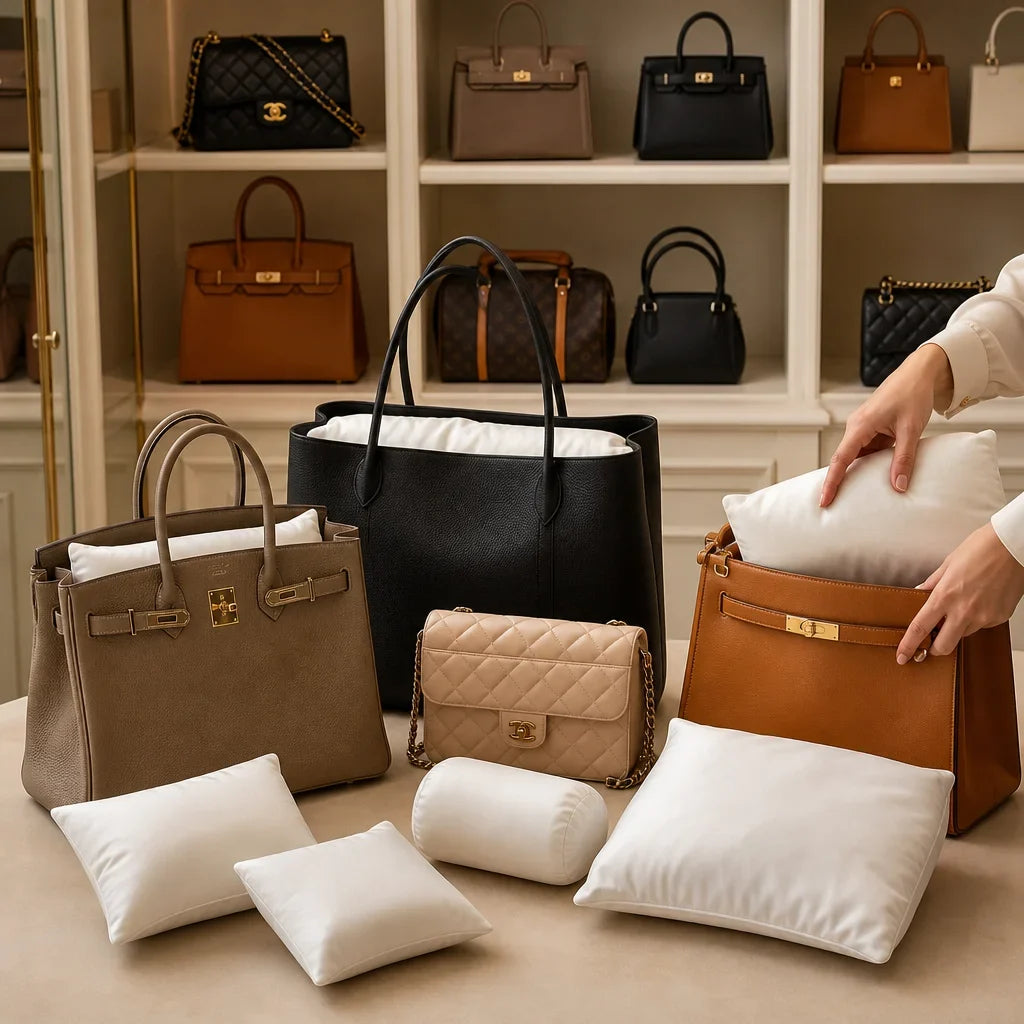
Not all luxury handbags require the same stuffing density. A Hermès Kelly demands different support than a Chanel quilted flap. Understanding these variations prevents you from applying a one-size-fits-all approach that inevitably fails some pieces.
Firmness levels break down into three primary categories: light support for delicate construction, moderate support for structured pieces, and firm support for oversized designs. Each category addresses specific material characteristics, internal architecture, and how gravity affects the bag during storage.
Delicate bags made with soft leather and minimal internal structure need gentle support. Dense filling can actually damage these materials by creating pressure points and stretching the leather from within. Structured bags with rigid frames and reinforced interiors need moderate to firm density to counteract the weight of the materials themselves. Oversized bags face gravity's relentless pull, requiring denser filling to prevent permanent sagging in the base and sides.
Your bag's original shape tells you what it needs. If your designer bag came with a protective insert or dust bag suggestion, that's your baseline. Premium leather softens over time, and proper density compensates for this natural material behavior while the bag isn't being used.
What to do next: Examine one of your bags closely. Note whether the structure feels rigid, semi-structured, or soft. This observation determines which density level suits your collection.
Mini and Clutch Bags: Lightweight Precision Filling
Mini bags and clutches represent some of the most challenging pieces to store properly. Their small volume and lightweight construction might seem like they need minimal support, but the opposite is true. These bags are typically the most structured in designer lines, with rigid frames and tightly constructed sides that demand precise filling.
A mini bag has virtually no internal depth for settling or shifting. Even minimal movement creates visible creasing. The materials surrounding the frame are often thinner and more delicate, meaning overstuffing stretches leather fibers and stresses handstitched seams. What these bags need is lightweight but precisely calibrated density that maintains shape without introducing pressure.
Light filling density for minis typically involves materials that compress slightly under their own weight while maintaining consistent support. Think of it as a cushion that absorbs the bag's minimal internal stress without adding extra pressure. The goal is shape maintenance, not structural support against gravity.
For clutches without rigid frames, the challenge becomes different. The sides can collapse inward, and without internal support, the bag develops a creased, lived-in appearance that damages its aesthetic value. Lightweight density prevents this by gently pressing against all interior walls simultaneously, creating an even pressure distribution that mimics how the bag feels when properly filled with daily essentials.
Next step: Measure your mini bags' interior dimensions and assess their material thickness. Thinner leather needs lighter density; thicker construction can handle slightly firmer support.
Small to Medium Handbags: Balanced Support Approach
The sweet spot for most luxury collectors falls into the small to medium range. These bags generate the most confusion because they occupy the middle ground where balanced density matters most. Too light and the sides collapse; too firm and you risk permanent stretching.
Small to medium bags typically combine structured frames with softer leather bodies. The frame prevents top-opening collapse, but the sides and base require support against gravity and settling. During storage, leather naturally relaxes slightly, and humidity fluctuations cause expansion and contraction. Your stuffing needs to accommodate these changes while preventing structural shift.

Balanced density maintains constant, even pressure throughout the bag's interior. It's firm enough to prevent the leather from sagging into permanent creases but light enough that it doesn't stretch the material or stress seams. This density level works across most mainstream designer brands: Chanel, Dior, Louis Vuitton, and contemporary luxury lines.
The interior structure of small to medium bags often includes card slots, zip pockets, and divided compartments. Your filling needs to work around these features without creating pressure points where pockets meet leather walls. Poor density solutions either compress unevenly around interior architecture or leave gaps that allow shifting.
Temperature and humidity fluctuations particularly affect bags in this size range. Seasonal storage often means moving bags between climate-controlled closets and less ideal environments. Balanced density buffers against these changes, preventing the rapid expansion and contraction that permanently deforms leather.
Action to take: Examine the leather thickness and frame construction of your small to medium pieces. Medium-weight leather responds best to moderate density. Thicker leather can handle slightly firmer support.
Large and Oversized Bags: Structured Density Requirements
Large totes, weekenders, and oversized satchels face a different challenge entirely. Gravity works against these bags constantly, and storage without proper support results in permanent sagging and structural collapse. The weight of the leather itself, combined with the bag's reduced structural support as size increases, demands firmer density.
Oversized bags with soft construction need particularly careful attention. A large leather tote might weigh several pounds before any contents are added. During storage, this weight concentrates downward, and without adequate density support, the base permanently elongates and the sides cave inward. This creates a bag that looks worn and aged prematurely, even if it's never been used.
Structured density for large bags maintains the original silhouette against constant gravitational pressure. It prevents the base from sagging more than a quarter inch, keeps the sides perpendicular to the base, and maintains the bag's depth. This firmness level doesn't compress significantly under the bag's own weight, providing consistent support throughout the storage period.
Large bags often include internal features like key fobs, D-rings, and structured pockets that add complexity to filling. Your density solution needs to work around these elements without creating pressure points while still providing comprehensive support. Gaps in coverage mean sagging in those specific areas, which eventually creates visible creases that damage the aesthetic.
Seasonal storage of large bags creates additional complications. A weekender used in summer might sit for months in fall and winter. Consistent density prevents the leather from developing memory of a collapsed state during these long storage periods. When you retrieve the bag, it emerges with its original silhouette intact rather than requiring rehabilitation.
Immediate step: Weigh one of your large bags. If it exceeds five pounds, you need structured, firm density to prevent permanent deformation.
How Our Premium Purse Pillows Deliver Optimal Density
We designed our purse pillow inserts specifically to address the density challenges that luxury collectors face. Our approach combines engineered density with material precision that generic storage solutions simply cannot match.
Our premium polyester sateen shell provides a non-abrasive exterior that protects delicate leather from friction damage. The material doesn't off-gas or transfer residue, which means your bags emerge from storage completely pristine. The shell itself contributes slightly to overall density while remaining lightweight enough for mini bags.
The heart of our solution lies in our proprietary Angel hair fiber fill. This isn't standard polyester batting or foam. Angel hair fiber maintains consistent density across the entire pillow without compression cycling. Unlike materials that compress over time or shift with movement, our fill stays evenly distributed, providing the same level of support in month one and month twelve of storage.
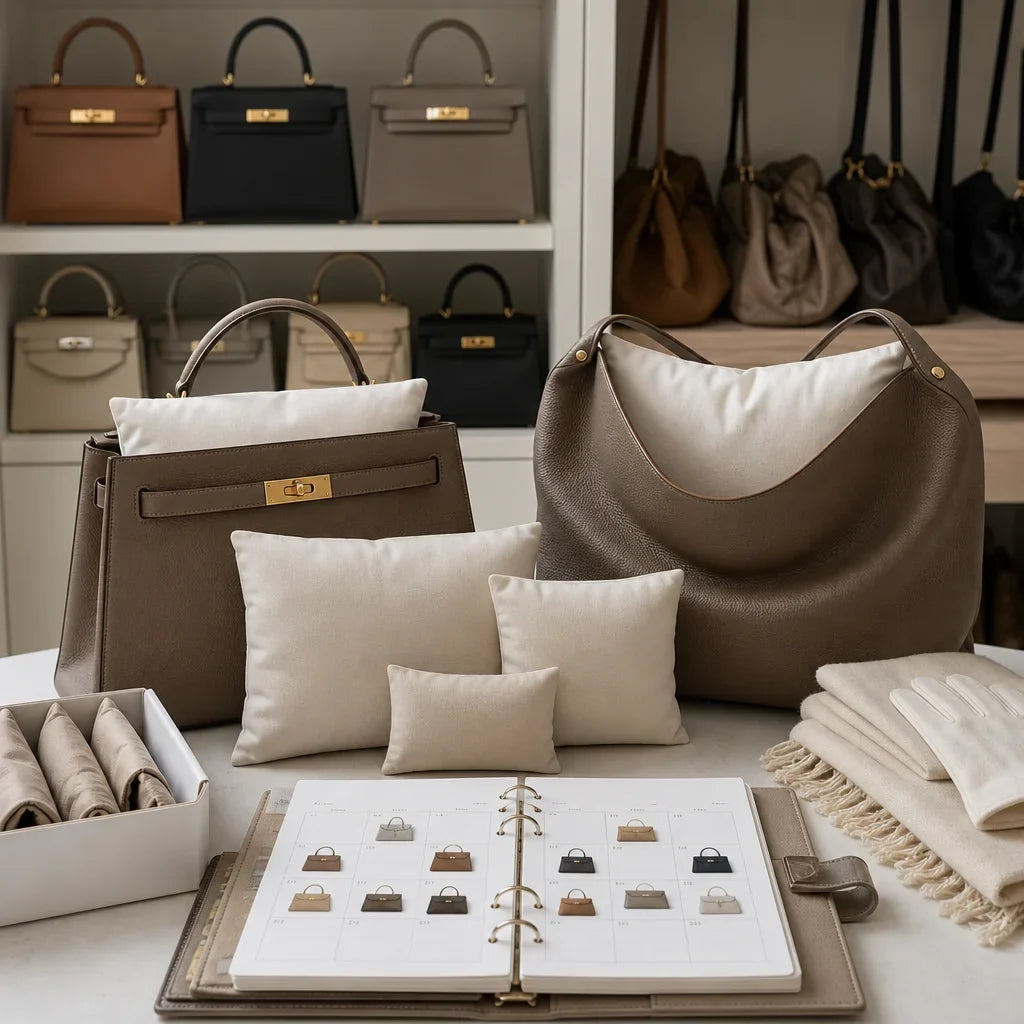
We calibrate density differently for each size category. Our Mini and Clutch pillows use lighter Angel hair density that prevents shape loss without introducing pressure stress. Small to Medium pillows deliver balanced support that works across interior architecture without creating pressure points. Large and Oversized pillows feature structured density engineered to counteract gravity and the weight of oversized leather.
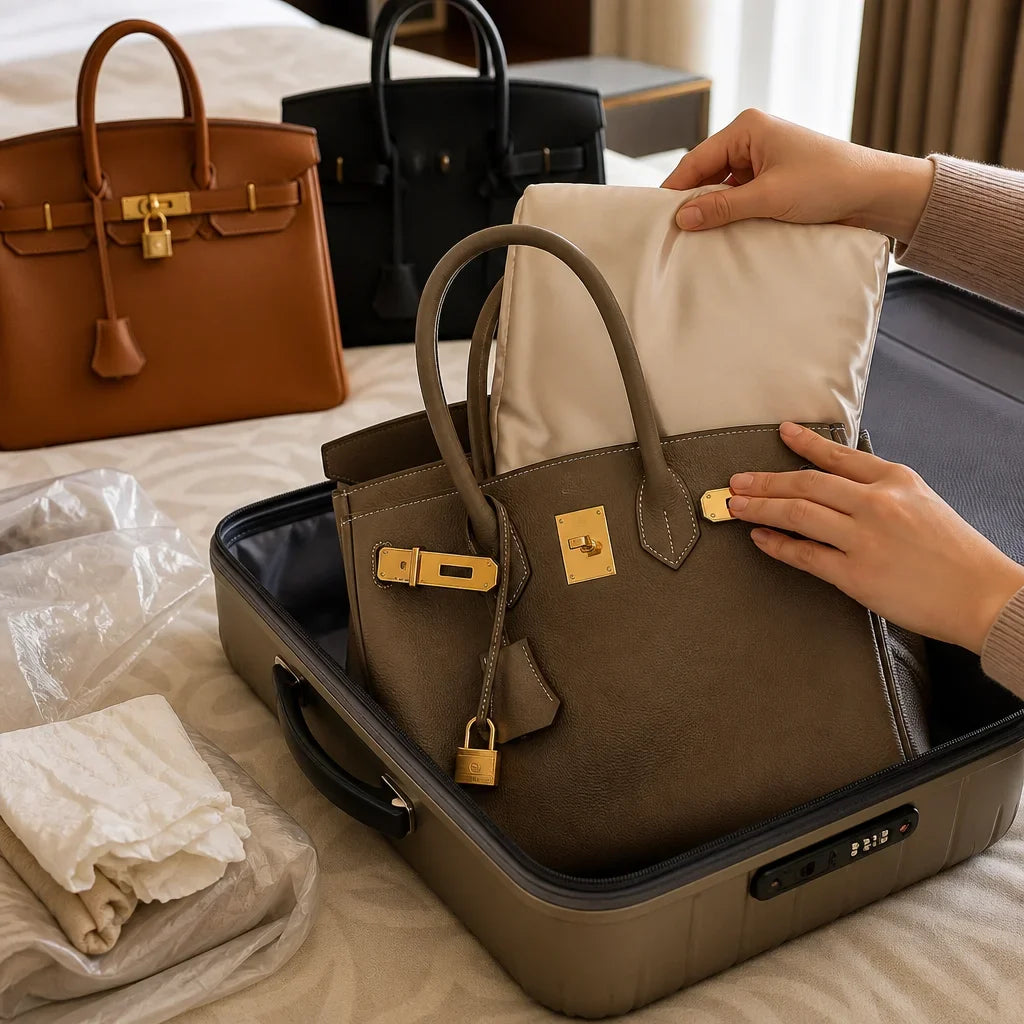
Hermès-specific precision fits represent one of our core differentiators. These aren't approximate internal dimensions. We've engineered our Hermès pillows to work specifically with Kelly, Birkin, Constance, and other signature Hermès styles. The fits are so precise that the pillow barely shifts during storage, providing consistent support in the exact locations where that specific bag needs it most.
Our comprehensive size range means you're never choosing between "close enough" and leaving gaps uncovered. From our smallest minis to our oversized XL pillows, each size fills its designated bag properly. No oversizing to accommodate multiple bag types, no undersizing that leaves you struggling with insertion.
What this means for you: You get density precisely matched to your specific bags, not a generic solution adjusted for average dimensions.
Comparing Density Solutions: Why Alternatives Fall Short
The luxury bag storage market offers several alternatives, and most fail on the density dimension. Understanding why these solutions underperform clarifies why precision engineering matters.

Crumpled tissue paper provides no consistent density. It compresses immediately under any pressure, offering support for perhaps the first few days before flattening completely. Tissue also deteriorates over time, shedding particles that can mark leather. Collectors often discover that tissue has disintegrated inside their bags during extended storage, leaving dust and debris throughout the interior.
Newspaper and kraft paper have similar limitations plus additional problems. Ink transfers to leather, and the material hardens and becomes rigid as humidity fluctuates. Bags stored with newspaper often emerge with permanent creases where the paper pressed into leather.
Standard polyester batting and polyfill deliver inconsistent density that changes over months. These materials compress under their own weight and any external pressure. A bag stored with dense polyfill might feel well-supported for the first month, but by month three, the fill has compressed by 20-30%, leaving gaps that allow the bag to sag.
Foam inserts create pressure points and off-gas chemicals that can mark leather. The edges of foam compress differently than the center, creating uneven density distribution. Many foam solutions are too rigid, applying constant pressure that stretches leather fibers and stresses seams. Over extended storage, foam can break down and fragment.
Silica gel and desiccant packets address humidity but do nothing for structural support. They're useful additions to your storage strategy but shouldn't replace proper density filling. Bags still collapse structurally while their interiors remain dry.
DIY solutions using pillows, blankets, or custom cloth cases put the burden on you to estimate density correctly. Most DIY approaches either compress too quickly or introduce pressure points through uneven filling. The materials used rarely account for the specific stresses that luxury bags face during months of storage.
Why this matters: Only engineered solutions with consistent, non-compressing density provide the preservation your collection deserves.
Fabrinique's Size-Specific Engineering for Perfect Fit
Our engineering process starts with dimensional analysis of specific bag models. We don't approximate. We measure internal dimensions, account for material thickness, map interior architecture, and identify stress points where structural support matters most.
This precision allows us to create pillows that work perfectly within each bag's unique space. Our Mini pillows for small designer clutches fill those impossibly tight interiors without creating insertion struggle. Our Small to Medium pillows deliver balanced support that works across Chanel quilted flaps, Dior saddles, and traditional structured handbags without requiring adjustment between brands.
For Hermès specifically, we've engineered the most precise fits in the market. Our Kelly pillows account for the iconic bag's internal structure, including its distinctive compartments and frame geometry. Our Birkin pillows fill the bag's characteristic shape, providing support that honors both the bag's architecture and its materials. This level of precision prevents the common problem of generic pillows shifting during storage and leaving unsupported areas.
Our size range extends from our XS Mini pillows designed for wristlets and tiny evening bags to our XL pillows engineered for large totes and weekend bags. Each size sits within precise dimensional windows that ensure proper fit. You choose your bag's appropriate size, and the fit automatically accounts for the space you need to fill.
Material composition varies by size category too. Smaller pillows use proportionally less Angel hair fiber density, which prevents overstuffing delicate mini bags. Larger pillows incorporate additional fiber volume while maintaining consistent density calibration, which ensures oversized bags receive adequate structural support.
The seams on our pillows are reinforced to withstand years of insertion, removal, and storage without degradation. We stitch our pillows so they maintain shape integrity whether you're retrieving a bag seasonally or storing it for years at a time. Our seams don't separate, our shells don't fray, and our fill doesn't shift.
Your next move: Measure your favorite bag's interior dimensions. Find where our size categories align with your collection's needs.
Preventing Structural Damage Through Proper Filling
The damage that occurs during storage without proper density starts subtly and becomes irreversible quickly. Understanding how damage develops helps you appreciate why correct density matters so much for preservation.
Leather naturally has memory. When leather is compressed into a creased position for extended periods, it develops a permanent "memory" of that creased state. The fibers reorganize, the surface develops set lines, and even stretching the bag back to its original shape leaves faint permanent creases. Proper density prevents leather from settling into compressed positions where these memory creases form.
The base of a bag suffers most without structural support. Gravity pulls the leather downward constantly, and over months, the base stretches, elongates, and becomes permanently misshapen. A bag that originally had a firm, compact base develops a sagging, elongated appearance. This stretching also happens to the side walls, creating a bag that looks tired and worn despite never being used.
Frame stress represents another critical damage vector. Rigid frames on structured bags are designed to support the bag's shape when the bag contains typical weight distribution. During storage, frames bear the full structural load without the internal weight distribution that normal use provides. Inadequate density means the frame carries more stress, and seams connecting the frame to the leather can separate or weaken over months.

Hardware corrosion and tarnishing accelerate in humid storage conditions. While proper density doesn't directly address humidity, inadequate filling allows the bag to collapse around hardware, creating tight contact between metal and leather. This pressure point concentration means hardware tarnishes and corrodes more severely in those contact areas.
Color fading and sun damage happen regardless of density, but structural damage makes bags more vulnerable to other environmental stresses. A bag with permanent creases shows color variation along the crease lines, making fading more visible. Proper density helps your bags maintain the pristine appearance that density preservation is supposed to ensure.
Preventative action: Check your stored bags monthly. If you notice any new creases or shape changes, increase the density of your stuffing immediately.
Selection Guide: Finding Your Ideal Stuffing Solution
Choosing the right density solution requires assessing three variables: your bag's material characteristics, its structural design, and your storage environment.
Start by categorizing your bags by size and structure. Sort them into mini/clutch, small to medium, and large/oversized groups. Within each group, identify whether the bags use rigid frames, semi-structured construction, or soft construction. Soft leather bags in larger sizes need firmer density support than structured bags in the same size.
Evaluate your storage environment next. Climate-controlled closets with stable temperature and humidity allow for lighter density solutions. Variable environments with seasonal temperature swings and humidity fluctuations require denser support to prevent constant expansion and contraction cycles that damage leather.
Consider your collection's total size. If you have primarily mini and small bags, our Mini and Small to Medium pillows will solve most of your storage needs. Collections heavy on large totes and weekenders require emphasis on our Large and Oversized options. Most collectors benefit from a mixed approach with appropriate density for each bag category.
Material type influences your selection significantly. Delicate leathers like lambskin and nappa benefit from lighter density that prevents fiber stress. Structured leathers like Taurillon and Clemence handle moderate to firm density well. Exotics like crocodile and ostrich have their own characteristics, and excessively firm density can damage the surface texture.
Think about your usage pattern too. Bags you rotate regularly and use seasonally need different storage approaches than museum-piece bags you wear occasionally. A rotated bag can be stored less densely for a few months, then removed and reshaped by use. A bag stored for a year or more needs maximum density support to prevent permanent deformation.
When you're ready to protect your collection, our website at https://fabrinique.com provides comprehensive sizing charts and material-specific recommendations. We include free U.S. shipping on all orders, which means you can invest in proper preservation without additional cost barriers. Our handcrafted pillows arrive ready to use, requiring no assembly or adjustment.
Decision framework: Match your bag's size category to our corresponding pillow size, then select based on material delicacy. When in doubt, choose the next density level up rather than down.
Maintenance Tips for Long-Term Bag Protection
Proper stuffing density solves the structural preservation challenge, but preservation requires additional care practices that work in concert with your filling strategy.
Rotate your stored bags seasonally when possible. Every three to six months, remove your bags from storage, inspect them for any developing issues, and gently reshape them by hand. This rotation prevents permanent deformation and catches humidity or environmental problems early. Even bags stored with our precision-engineered density benefit from occasional rotation that allows leather to reset naturally.
Monitor your storage environment continuously. Humidity levels should ideally stay between 45-55 percent relative humidity. Fluctuations beyond this range cause leather expansion and contraction that stresses fibers and creates shape instability. A simple hygrometer costs under twenty dollars and provides critical information about whether your storage space provides adequate environmental control.
Use acid-free tissue when you need to wrap bags for storage. Our polyester sateen shells work beautifully with tissue, and the combination prevents the tissue from directly contacting leather while still providing moisture buffering. Never use newspaper or standard tissue that can transfer color or deteriorate.
Store bags away from direct sunlight. Even indirect sunlight causes gradual color fading that becomes more visible along creases. A dark closet or fabric storage bag protects your collection's color while our density pillows maintain its shape.
Check your bags before returning them to storage after any use. Wipe leather with a soft, dry cloth to remove any moisture or residue. If your bag has been exposed to humid weather, allow it to air-dry completely in your storage space before stuffing it fully. Trapping moisture inside accelerates aging and can encourage mold growth.
Replace our pillows if they ever compress, shift, or show visible wear. We stand behind the quality of our products, and if your pillow degrades during its service life, we'll replace it. Regular inspection means you catch any degradation before it affects your bags.
Monthly maintenance habit: On the first of each month, check your climate control and inspect one stored bag. This simple routine prevents storage disasters.