Skip to content

Cart

Your cart is empty

Article: How to Safely Stuff Your Luxury Handbags While Traveling: A Complete Guide

Illustration 1

How to Safely Stuff Your Luxury Handbags While Traveling: A Complete Guide

Why Your Luxury Handbags Need Protection During Travel

Traveling with luxury handbags requires more than just tossing them into your luggage and hoping for the best. Your investment pieces deserve intentional care, especially when they're subject to the pressures and movements of travel. Whether you're taking a weekend getaway or an extended international trip, proper handbag packing protects your collection from damage that can significantly diminish both aesthetic appeal and resale value.

Luxury handbags are engineered with specific structural expectations in mind. The leather, canvas, or exotic materials used in premium bags respond to pressure, temperature, and humidity shifts. When you travel, your bags encounter repeated compression, awkward angles in luggage, and climate changes that can compromise their shape permanently.

A well-constructed luxury bag from a heritage brand represents years of craftsmanship. The interior construction, stitching, and hardware have all been calibrated to maintain a specific silhouette. This shape isn't just aesthetic; it's fundamental to how the bag functions. A structured tote that loses its form becomes less practical and far less valuable to potential buyers if you eventually choose to sell.

Structural damage also accelerates other forms of deterioration. When a bag begins to sag or crease unevenly, stress concentrates in certain areas, leading to premature wear on seams and material breakdown. What starts as a small shape loss during one trip compounds with each subsequent use and storage cycle.

Our experience working with collectors has shown us that the single biggest regret among luxury bag owners is not protecting their bags adequately during travel in their first two years of ownership. Early intervention prevents expensive restoration attempts down the line.

The Problem With Improper Packing Methods

Most travelers reach for convenient but inadequate stuffing solutions: crumpled newspaper, plastic bags, tissue paper, or whatever's available at their hotel. While these options fill space, they don't address the specific demands of luxury handbag structure.

Newspaper and cardboard transfer ink and moisture to bag interiors, especially lighter leather colorways. Plastic bags trap humidity inside the bag, creating an environment where mold and mildew can develop during extended trips. Regular tissue paper compresses easily, offering minimal support after a few hours in luggage.

The real problem emerges when travelers use overstuffing tactics. Cramming too much material into a bag forces the sides outward unnaturally, stretching leather and stressing seams. This approach contradicts the actual goal: you're trying to preserve the bag's intended shape, not force it into an exaggerated form.

Another common mistake involves using materials that interact chemically with the bag's finish. Acidic papers, dyes from colored tissues, and certain synthetics can leave marks or discoloration that prove difficult or impossible to remove. What seemed like an economical choice becomes an expensive restoration problem.

Professional collectors avoid these methods because they understand the difference between casual protection and intentional preservation. The approach you take during a single trip establishes patterns that either protect or compromise your investment.

What Happens When You Skip Proper Stuffing Techniques

The consequences of inadequate travel packing extend beyond the trip itself. A handbag that loses shape during packing doesn't automatically return to its original form once it's removed from luggage. Leather and structured fabrics retain creases and compression marks, especially after extended pressure.

Visible creasing significantly impacts resale value, sometimes by 15-30% depending on the bag's original price point and the severity of damage. Collectors and authenticators immediately notice structural issues when evaluating potential purchases. A crease across a structured bag's face signals that the item hasn't been cared for properly, raising questions about other potential hidden damage.

Structural collapse also affects how the bag performs functionally. A tote that's lost its rigid form won't hold its contents as intended. A structured shoulder bag that's become slouchy changes the overall silhouette of any outfit you pair it with. You've essentially diminished the wearability of a piece you've invested significantly in.

Storage after travel compounds these issues. Once a bag has been compressed or creased, returning it to storage without addressing the shape problem means the damage sets in permanently. The longer a bag sits in a compromised state, the more difficult restoration becomes.

Temperature and humidity fluctuations during travel also stress materials at the molecular level. Without proper internal support, exterior materials experience uneven stress that can lead to micro-cracking in leather finishes. These tiny cracks become entry points for dirt and moisture accumulation.

Our Premium Approach to Travel Handbag Safety

We've developed our purse pillow inserts specifically for travelers who understand that their handbags merit dedicated care products. Rather than repurposing general storage solutions, our inserts are engineered with the unique demands of luxury bag travel in mind.

Our design philosophy centers on three core principles: non-reactivity with premium materials, structural support without overstuffing, and breathability that manages moisture. Each insert is handcrafted with a premium polyester sateen shell that won't transfer dyes or trap damaging moisture. The interior uses Angel hair fiber fill, a lightweight synthetic that maintains consistent support throughout your travels.

We offer precision fits across our entire range, including Hermès-specific configurations that align perfectly with the internal geometry of iconic styles. Whether you're traveling with a mini crossbody or an oversized tote, selecting the appropriately sized insert means your bag receives support that matches its intended architecture.

Our inserts travel with you, moving in and out of luggage without the weight penalties of ceramic or stone-based alternatives. A single insert adds negligible bulk to your carry-on while providing the structural security that hours of luggage compression would otherwise compromise. Free U.S. shipping means you're not adding cost barriers to proper protection.

The decision to invest in dedicated travel inserts reflects a commitment to preservation that extends your bag's lifespan and maintains its value significantly better than improvised solutions ever could.

Step-by-Step Guide to Preparing Your Bags for Travel

Begin by cleaning your bag thoroughly before packing. Remove dust, debris, and any stains from both the exterior and interior. A clean bag travels better because you're not sealing dirt against the material, which can cause subtle discoloration during the trip.

Next, assess your bag's current condition. Look for any areas of concern: loose stitching, worn edges, or minor damage. Addressing these issues before travel prevents them from worsening under the stress of packing and movement. If you notice significant damage, consider professional cleaning before departure.

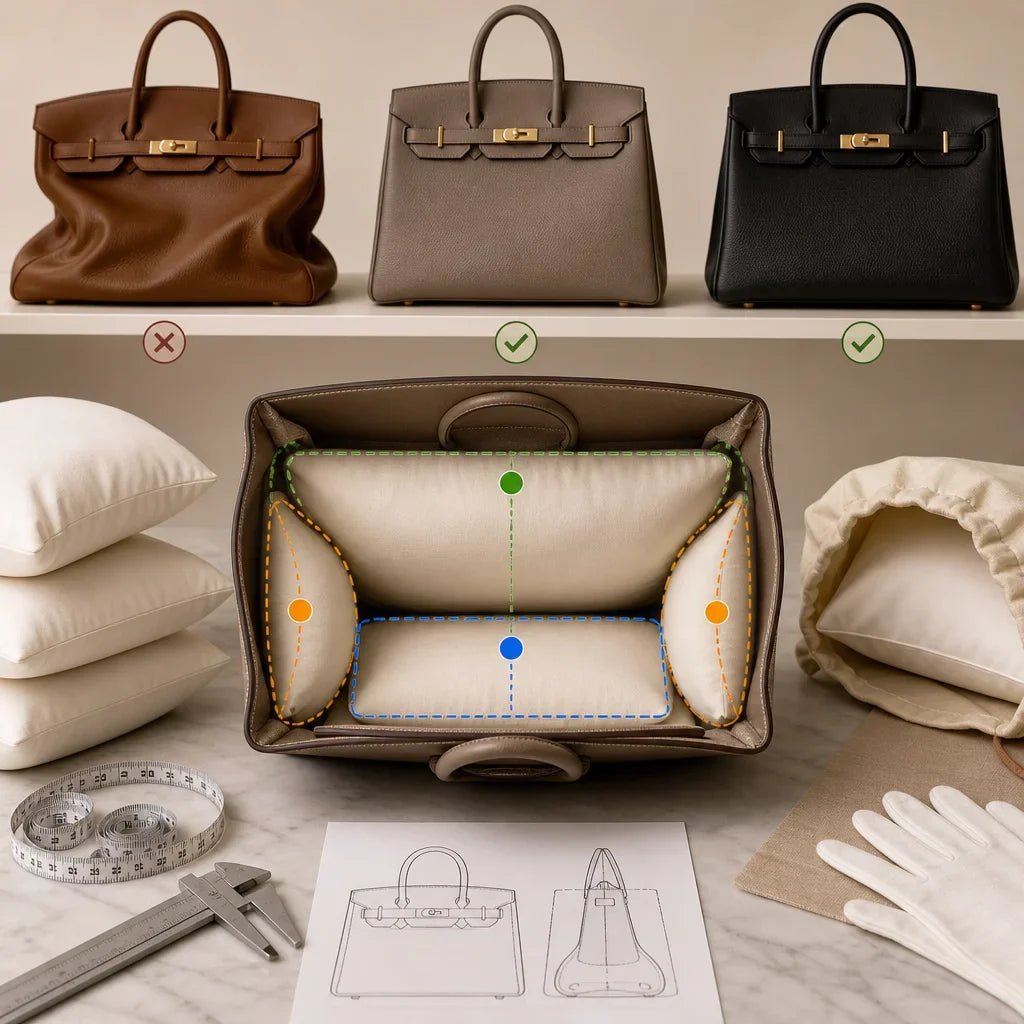
Gather your travel inserts by matching the correct size to your specific bag. Refer to the sizing guidance for your bag's style and dimensions. An undersized insert won't provide adequate support, while an oversized insert forces your bag into an unnatural shape.

Place your insert gently inside the bag, positioning it so it sits naturally against the bottom and sides. The insert should support the bag's shape without requiring you to force it into place. This is a critical distinction: the insert enhances the bag's existing structure rather than artificially reshaping it.

If you're carrying items in the bag during travel, place lighter items around the insert rather than on top of it. This approach maintains even pressure distribution and prevents concentrated weight from compromising the insert's effectiveness.

Finally, close your bag and observe how it looks. Your bag should appear structurally sound and properly proportioned, not stretched or over-inflated. This visual check confirms that your insert size was appropriate and positioned correctly.

Selecting the Right Insert Size for Your Specific Handbag

Insert sizing directly impacts protection quality, making selection one of the most important decisions in your travel preparation process. An insert that's too small leaves portions of your bag unsupported, while one that's too large forces materials to stretch beyond their intended capacity.

Measure your bag's interior dimensions: length, width, and depth. Our sizing guide correlates these measurements to specific insert sizes ranging from Mini to XL. If your bag falls between sizes, choose the smaller option to avoid overstuffing.

Consider your bag's material and construction type. Structured bags with rigid frames benefit from inserts that provide consistent support across the entire interior. Soft, unstructured bags require inserts that offer gentle shaping without forcing materials into unnatural positions.

Brand-specific sizing matters significantly. Hermès bags, for instance, have distinct proportions that differ from other luxury houses. Our precision-fit options account for these differences, ensuring that an insert designed for a Birkin performs differently than one designed for a Kelly, even if both are technically the same size category.

Weight distribution also influences sizing decisions. If you're traveling with a bag and carrying items in it, you might benefit from a slightly larger insert to accommodate the additional weight. Conversely, if the bag will remain empty during travel, the standard size for that bag type typically provides optimal support.

Test your selection before departure if possible. Place the insert in your bag at home and observe how it sits and supports the bag's structure. This confirmation step prevents surprises once you're traveling, allowing you to swap sizes if needed before your trip begins.

How Our Sateen Shell Preserves Your Bag's Silhouette

The exterior material of your insert matters as much as its internal fill because it directly contacts your bag's interior surface. Our premium polyester sateen shell serves a specific function: it protects your bag's interior from fill materials while the smooth finish prevents snagging or abrasion.

Sateen weave creates a lustrous, smooth surface that glides gently against leather, suede, canvas, and specialty materials without catching or pulling. Unlike rougher synthetics or natural fibers like cotton, sateen won't cause the micro-damage that accumulates over time with less appropriate materials.

The colorfast properties of our sateen shell mean that traveling through humid environments, exposure to direct sunlight during packing, or moisture exposure won't cause dyes to bleed onto your bag's interior. Many bags feature delicate interior linings in complementary colors that can be damaged by materials that release dyes under pressure or humidity.

We designed our shell to be breathable, allowing air circulation that prevents moisture from accumulating inside the insert during travel. This distinction prevents the musty odors that develop when bags are insulated in a way that traps stale air and humidity. Your bag emerges from travel smelling fresh rather than stuffy.

Non-abrasive construction throughout ensures that every contact point between the insert and your bag's interior is gentle. Even premium leather can be damaged by rough materials rubbing repeatedly against it. Our shell eliminates this risk, allowing you to travel confidently without worrying about unintended surface damage.

Packing Techniques That Work With Our Inserts

The way you pack around your insert directly impacts how well it functions during travel. Begin by placing the insert in the bag's center, ensuring it sits evenly on the bottom with equal support on all sides. This positioning prevents tilting that can create uneven pressure.

If you're carrying items, use the space between the insert and the bag's sides for smaller articles. Scarves, sunglasses, and lightweight items nestle naturally in these gaps without pressing heavily on the insert. Reserve the top area above the insert for items you'll need easy access to, like wallets or travel documents.

Avoid stacking weight directly on top of the insert. Instead, layer heavier items around the bag's outer edges, allowing the bag structure itself to absorb pressure while the insert maintains interior shape. Think of the insert as a core support system rather than a weight-bearing platform.

When placing your packed bag in luggage, position it so the bag's bottom and sides experience even pressure rather than concentrated weight from a sharp corner. If possible, surround your bag with softer items like clothing or additional bags to distribute pressure more evenly.

Consider the travel duration when deciding how densely to pack the bag itself. A short flight with a lightweight bag inside can use a more relaxed packing approach, while a week-long trip with checked luggage might warrant more deliberate arrangement to prevent compression. Longer trips benefit from the protection that comes with thoughtful spatial planning.

Why Angel Hair Fiber Fill Outperforms Alternatives

The internal fill material determines how consistently your insert maintains support throughout travel. Angel hair fiber, a high-quality synthetic material, offers several advantages over alternatives that travelers and collectors commonly encounter.

Natural materials like cotton or linen absorb moisture readily, which becomes problematic in humid climates or during unexpected weather exposure. Absorbed moisture adds weight and can create conditions where mildew develops inside the insert. Angel hair fiber resists moisture absorption, maintaining its structural integrity regardless of humidity levels.

Foam-based fills compress over time, losing their supportive capacity after repeated packing cycles. A foam insert that performs excellently on day one gradually becomes less effective as you use it across multiple trips. Angel hair fiber maintains consistent loft and support even after dozens of packing cycles, making it a more economical choice over your insert's lifespan.

Recycled or lower-grade synthetic fills often shed fibers that can escape through seams or weak points in the shell, potentially leaving lint inside your luxury bag. Our Angel hair fiber is engineered to remain contained within the sateen shell, preventing any material migration that could affect your bag's interior cleanliness.

The weight-to-support ratio of Angel hair fiber makes it ideal for travel scenarios where every ounce matters. You're receiving substantial structural support without the density penalties that come with heavier fill materials. Your luggage remains within weight limits while your bags receive premium protection.

Angel hair fiber also responds well to temperature fluctuations without brittleness or degradation. Whether you're traveling to cold climates or tropical destinations, the fill material performs consistently. This stability ensures that your insert provides the same level of support in varying environmental conditions.

Maintaining Your Bags During Extended Travel

Extended trips introduce additional maintenance considerations beyond the protection your insert provides. As you move from location to location, your bag experiences cumulative stress from repeated packing, unpacking, and environmental exposure.

Check your insert placement daily, especially if you're packing and repacking your bag frequently. The insert should remain positioned at the bag's center, fully supporting its shape. If you notice the insert shifting or the bag appearing less supported, gently reposition it and ensure the insert size remains appropriate for your packing approach.

Inspect your bag's exterior for any signs of damage during your travels. Check for scuffs, scratches, or marks that might have developed from luggage interaction. Early detection allows you to address minor issues before they compound into significant damage.

Monitor your bag's interior for any odors or moisture accumulation. If you detect mustiness, ensure air circulation by leaving the bag open during rest periods when your luggage isn't being packed. Proper ventilation prevents humidity-related issues that could develop over extended periods.

Avoid storing your bag in compressed luggage for entire rest days when possible. Each evening, remove your bag from luggage and place it in a well-ventilated space where it can recover from compression. This nightly break extends the lifespan of both your bag and the materials you're protecting.

If you're carrying items in the bag throughout your trip, periodically empty it completely and reorganize. This practice prevents weight from concentrating unevenly and allows you to verify that the insert remains properly positioned and functional.

Best Practices for Airport and Transit Conditions

Airports and transit environments create unique challenges because luggage handling by various personnel means your bag experiences unpredictable pressure and movement. These conditions make proper preparation essential before you ever reach the airport.

Use a luggage cover or protective outer bag if possible. This additional layer prevents your luggage from absorbing dirt and spills while also reducing the pressure points where sharp edges from other baggage might contact your packed items. The minimal weight and space investment pays dividends in protection.

Pack your handbag on top of other luggage contents when using carry-on bags. This positioning prevents heavier items from compressing it and makes it easier to remove quickly if needed. In checked luggage, place your handbag in the center of the suitcase, surrounded by clothing or other soft items that absorb pressure.

Avoid placing your bag in the overhead bin in its normal carrying configuration. Instead, lie it flat or position it so that weight distributes evenly across its surface rather than concentrating on one side. This approach prevents asymmetrical pressure that creates visible creases.

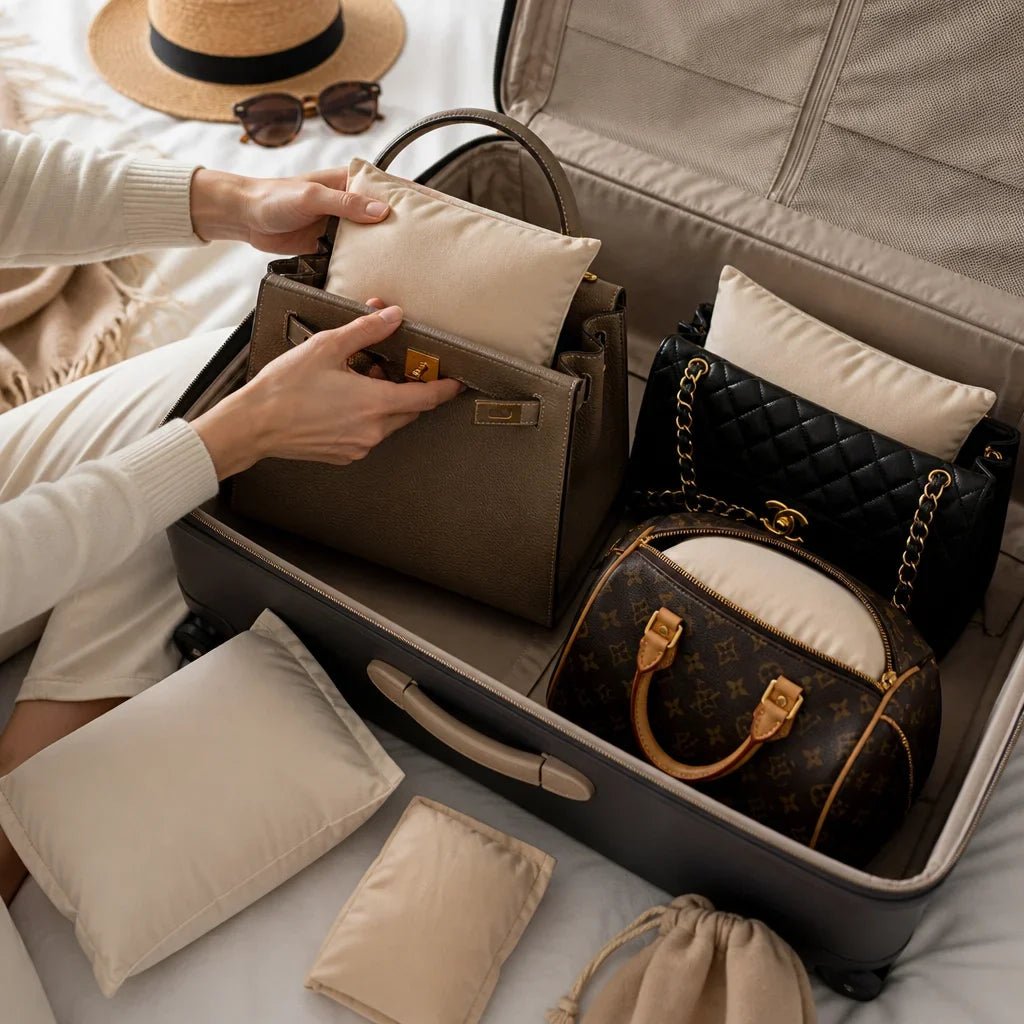
Consider traveling with your insert already installed in your bag, especially on shorter trips. This approach means your bag maintains its shape from the moment you leave home through luggage handling and transit. You're not adding any bulk or weight beyond what your bag would occupy anyway.

Request special handling when checking bags containing luxury items if your airline offers this service. Many carriers provide "fragile" or "heavy" tags that alert handlers to use additional care. While no tag guarantees perfect treatment, it significantly reduces the likelihood of rough handling.

Returning Home: Proper Storage After Your Trip

The care you provide immediately after returning from travel significantly impacts whether temporary travel-related compression becomes permanent damage. The steps you take in your first hours home determine how quickly your bag recovers and how well it's preserved.

Remove your insert promptly and inspect both the insert and your bag's interior for any issues. If you notice any moisture, odors, or marks, address them immediately rather than allowing them to set in during storage. A slightly damp insert should dry completely before you store it; hang it in a well-ventilated space if needed.

Leave your bag open and uncompressed for at least 24 hours after returning home. This resting period allows the bag's materials to fully relax after the compression and movement of travel. Your bag will gradually return to its original shape, and any temporary creasing typically resolves during this recovery window.

Clean your bag's exterior gently with a soft cloth, removing any dust or dirt accumulated during travel. Pay attention to edges, corners, and areas where luggage might have pressed. A thorough exterior cleaning prevents dirt from being ground into the material as it settles.

Once your bag has recovered fully and dried completely if it encountered any moisture, return it to your standard storage setup. Use your insert again for at home storage to maintain the structural integrity you worked to preserve during travel.

Document your bag's condition with photographs if you store high-value pieces. This visual record serves as a baseline for tracking any changes over time and provides documentation for insurance purposes. Comparing photos across storage periods helps you identify whether storage conditions require adjustment.

Our inserts work equally well for home storage as they do for travel. If you're protecting your collection between wears, the same precision sizing and premium materials that keep your bags safe in luggage also preserve them on your shelves. Proper storage habits developed during travel extend naturally to your home collection management.

---

Traveling with luxury handbags requires intentional protection that acknowledges both the physical pressures of packing and the long-term value preservation concerns every serious collector faces. The difference between casual handbag ownership and genuine collection stewardship comes down to the specific practices you adopt for both travel and storage.

We designed our purse pillow inserts because we understand that your luxury bags represent significant financial and emotional investments. The protection we provide through precision sizing, premium materials, and handcrafted quality reflects our commitment to helping collectors like you maintain the beauty and value of your most treasured pieces.

Start by assessing your current travel bag collection and selecting inserts that match each bag you regularly take on trips. The investment in proper protection returns itself through preserved resale value, extended bag lifespan, and the confidence that comes from knowing your pieces are secure during travel.

Read more

Illustration 1

How to Preserve Exotic Skin Handbags: Expert Care Guidelines for Collectors

Why Exotic Skin Handbags Demand Special Storage Attention Exotic skin handbags represent some of the most coveted and valuable pieces in luxury fashion collections. A single Hermès Birkin in pristi...

Read more
Illustration 1

The Science of Purse Pillow Stuffing: Perfect Density and Placement Guidelines

The Cost of Under-Stuffing Your Luxury Handbags When you invest in a luxury handbag, you're making a commitment to quality craftsmanship and timeless design. But ownership doesn't end at purchase. ...

Read more