Skip to content

Cart

Your cart is empty

Article: How to Preserve Exotic Skin Handbags: Expert Care Guidelines for Collectors

Illustration 1

How to Preserve Exotic Skin Handbags: Expert Care Guidelines for Collectors

Why Exotic Skin Handbags Demand Special Storage Attention

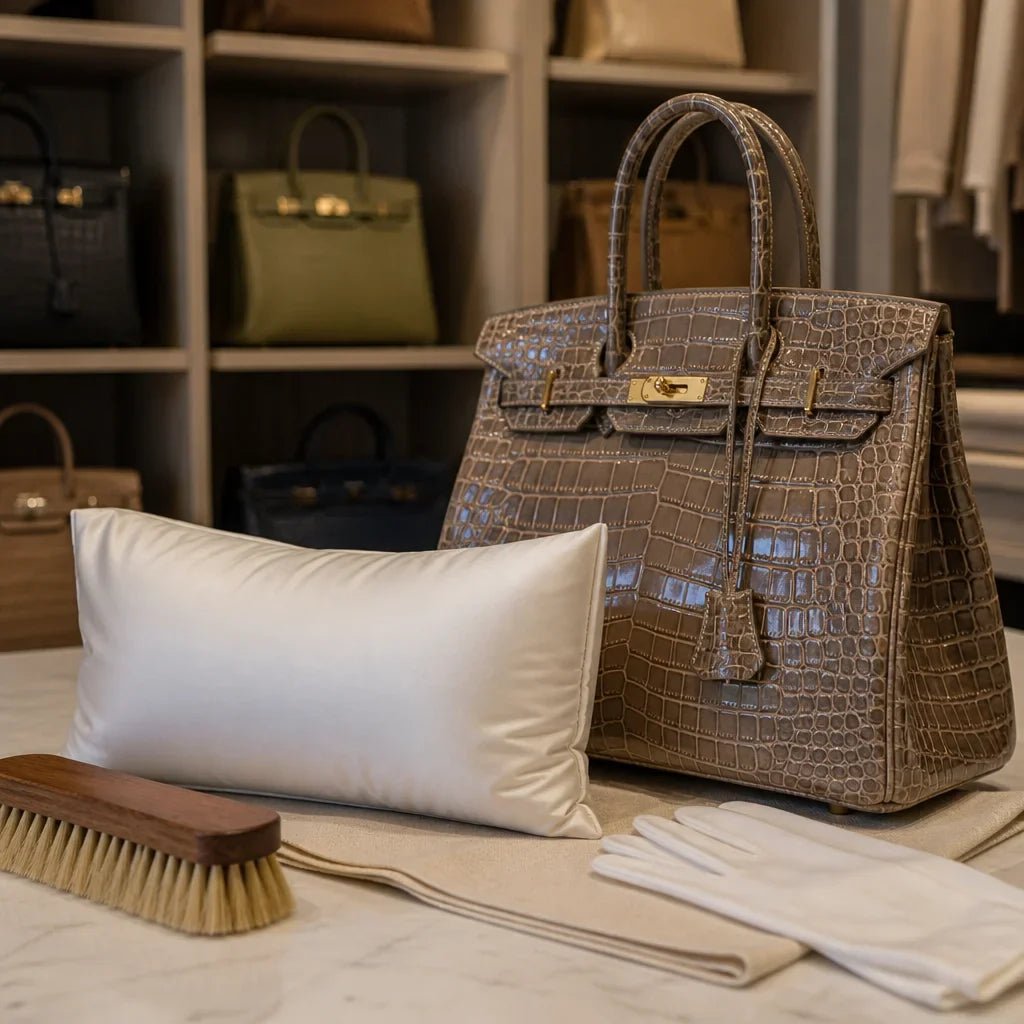
Exotic skin handbags represent some of the most coveted and valuable pieces in luxury fashion collections. A single Hermès Birkin in pristine crocodile leather can appreciate significantly over time, making proper storage and maintenance essential for protecting your investment. At Fabrinique, we understand that these exceptional pieces require more than standard handbag care. The structural integrity of exotic skins differs fundamentally from traditional leather, and the stakes are higher when resale value and long-term preservation hang in the balance.

Exotic skin handbags occupy a unique category in the world of luxury accessories. Unlike standard leather, which develops a patina and benefits from regular handling, exotic skins like crocodile, ostrich, and python are more delicate and sensitive to environmental changes. Their natural texture and grain structure require deliberate, protective measures during storage to maintain their distinctive appearance.

When collectors store exotic skin bags without proper support, these pieces undergo subtle but permanent changes. The weight of the bag causes the sides to collapse inward, creating creases that become increasingly difficult to remove. The surface texture can flatten in areas where the bag rests, and the overall silhouette shifts from its intended shape. For investment-grade pieces, these changes directly affect marketability and value.

We've worked with hundreds of collectors who initially underestimated the difference proper storage makes. Many discovered that six months of unsupported storage resulted in structural changes that took months of careful conditioning to reverse. The good news is that strategic protection during storage prevents these issues entirely, maintaining your bag's original form and appeal indefinitely.

Understanding the Vulnerabilities of Crocodile, Ostrich, and Python Skins

Each exotic skin type presents distinct characteristics and vulnerabilities. Understanding these differences helps you tailor your storage approach to your specific collection.

Crocodile leather is prized for its visible scale pattern and durability. However, the natural variations in scale texture mean that pressure applied to storage areas can flatten or crush these distinctive scales permanently. Crocodile is also more susceptible to moisture loss, which causes the leather to become brittle and prone to cracking at fold points. Unlike standard leather that becomes more supple over time, crocodile requires consistent hydration to maintain its flexibility.

Ostrich skin features a characteristic dimpled pattern created by feather follicles. This unique texture is both its appeal and its vulnerability. The dimples trap moisture more readily than smooth leather, making ostrich susceptible to mold and mildew in humid conditions. Conversely, ostrich skin dries out faster in arid environments, leading to surface crazing and permanent texture loss. The skin's relatively thin nature also makes it prone to developing compression marks when stored under weight or against hard surfaces.

Python leather showcases beautiful geometric patterns that require careful protection. Python skin is exceptionally sensitive to temperature fluctuations, which cause the leather to expand and contract in ways that can distort the scale pattern. The natural oils in python leather are easily depleted through exposure to heat, light, or dry air, resulting in discoloration and loss of the rich, lustrous appearance that makes python bags desirable.

All three materials share a critical vulnerability: they cannot tolerate prolonged pressure against their surfaces. Unlike treated calfskin, which can rest against cardboard or fabric without damage, exotic skins require cushioned, non-abrasive support throughout storage.

The Cost of Improper Storage on Your Investment Pieces

The financial impact of improper exotic skin storage extends far beyond aesthetic concerns. A Birkin or Kelly in exceptional condition commands a significant resale premium, often 70-85% of its original purchase price for rare or discontinued colors. A bag stored without structural support might fetch only 40-50% of its value due to visible creasing, scale flattening, or texture loss.

Consider a concrete example: A collector purchased a crocodile Birkin 35 for $15,000. After two years of storage in an unsupported condition, the bag developed pronounced creases across the front panel and the scales appeared slightly flattened. When the collector attempted to sell, the item appraised at $6,500 instead of the expected $11,500. The $5,000 loss directly resulted from preventable storage damage.

The market for exotic skin bags is particularly sensitive to condition because these pieces are purchased primarily as investment vehicles. A buyer paying premium prices expects museum-quality preservation. Visual defects that developed during storage are immediately apparent to experienced collectors and significantly reduce the pool of interested buyers.

Beyond resale value, improper storage can result in structural damage requiring professional restoration. Conservation specialists charge $500-$2,000 to professionally reshape a crocodile bag or treat mold damage in ostrich leather. These interventions may improve appearance but leave subtle evidence of restoration that still impacts resale value. Prevention through proper storage is exponentially more cost-effective than remediation.

How Structural Support Prevents Sagging and Creasing in Exotic Leather

The fundamental principle behind proper exotic skin storage is this: the bag must maintain its intended shape throughout the storage period. When a bag rests on a flat surface or hangs from its handles, gravity and time create permanent deformation. The leather loses its memory of its original silhouette, and no amount of conditioning can fully restore it.

Structural support works by distributing the bag's weight evenly across interior surfaces rather than allowing specific areas to bear concentrated load. Think of the difference between a tent with proper poles and stakes versus a collapsed tent. The internal framework determines whether the structure maintains its intended form.

For exotic skin bags, this internal support must be soft enough to avoid creating new pressure marks while being firm enough to maintain consistent support. A pillow that's too soft will compress under the bag's weight, eventually offering no protection. A support that's too rigid will create new pressure points and damage delicate surface texture.

The filling material matters significantly. Dense, consistent fill provides better support than loose materials that shift and compact over time. When we developed our purse pillows, we chose angel hair fiber fill specifically because it maintains consistent density and doesn't settle or compress like traditional fiberfill. This ensures your exotic skin bag receives the same level of support on day one as it does after months or years of storage.

Our Precision-Fitted Purse Pillow Solutions for Exotic Skin Bags

We design our purse pillows with exotic skin bags specifically in mind, recognizing that one-size-fits-all solutions simply don't work for these investment pieces. Our precision-fitted inserts conform to the exact dimensions of your bag, creating a seamless fit that supports every surface without creating pressure points or gaps.

Our collection includes Hermès-specific precision fits for Birkin, Kelly, Constance, and other iconic styles. We also offer comprehensive sizing across Mini, Small, Medium, Large, and XL formats to accommodate diverse designer pieces. Each pillow is handcrafted with premium polyester sateen shells and angel hair fiber fill, ensuring materials that are colorfast and non-abrasive against even the most delicate exotic skins.

The precision-fit approach means your crocodile Birkin 35 receives support designed specifically for that exact dimensions and internal architecture. The pillow fills the bag completely without compression, so the leather maintains its original silhouette. Unlike generic pillows that might work approximately, our pieces eliminate the guesswork.

What makes a real difference is consistency. A pillow sized for a Birkin 35 but used on a Birkin 30 will either be too loose (leaving unsupported areas prone to creasing) or create compression when forced to fit (damaging surface texture). Our sizing precision eliminates both problems.

We offer free U.S. shipping, making it straightforward to outfit your entire collection with properly matched protection. Many collectors invest in multiple pillows, rotating them when bags are used and ensuring every piece receives optimal support during storage.

Material Selection: Why Premium Polyester Sateen Protects Delicate Leathers

The materials touching your exotic skin bag during storage are as important as the structural design. We selected premium polyester sateen specifically because it meets several critical requirements that other materials don't.

Polyester sateen has an exceptionally smooth surface finish that minimizes friction against delicate leather. When you slide a bag onto a pillow, this smooth texture prevents snagging or rubbing that could disturb the surface of the exotic skin. The material won't catch on scale edges (as rougher fabrics might) or create abrasion marks.

Polyester sateen is also naturally colorfast and won't transfer dyes to your bag, even if moisture accumulates during storage. This is particularly important for exotic skins, which can absorb and hold color transfers more readily than treated standard leather. We've tested our materials against various exotic leathers under humid conditions to ensure no color bleeding occurs.

The durability of polyester sateen means your pillows maintain their protective qualities year after year. Lesser-quality materials may deteriorate, shed fibers, or develop rough spots that could damage bags over extended storage periods. Our sateen shells withstand repeated use without degrading.

Angel hair fiber fill complements these shell qualities by providing consistent, non-shifting support. Unlike polyester fiberfill, which compacts and becomes dense over time, angel hair maintains its loft and structure. This means a pillow that protected your bag perfectly on year one will provide identical support on year five. The fill won't break down, compress into clumps, or develop areas of inadequate support.

Step-by-Step Guide to Storing Your Exotic Skin Collection

Proper storage requires attention to detail at every stage. Following these steps ensures your exotic skin bags remain in pristine condition:

Before Storage

Inspect your bag carefully under bright light. Clean the exterior gently with a soft, dry cloth to remove dust. If the bag shows obvious soiling, have it professionally cleaned before storage rather than allowing dirt to settle into the leather's grain. Check the interior for any items left behind, as a forgotten pen or lipstick could transfer color or create pressure points during storage.

Allow the bag to air dry completely if it was exposed to any moisture. Even a humid day at the mall warrants a few hours of air drying before storage. Never store a damp bag, as exotic skins are particularly vulnerable to mold development when moisture is trapped inside.

Inserting the Pillow

Select the correctly sized pillow for your specific bag model. Gently insert the pillow, working it gradually into all areas of the bag. The pillow should fit snugly without requiring force. If you find yourself forcing a pillow into a bag, it's likely oversized, and forcing it will create compression damage.

Position the pillow so it fills all internal spaces evenly. For structured bags like Birkins, this means the pillow supports the front, back, and both sides equally. The goal is a bag that looks identical to how it appeared when first removed from the store, just with interior support.

Bag Positioning

Store the bag upright or on its side, never hanging from handles or resting on a corner. Hanging creates uneven weight distribution that your interior support can't prevent. Resting on a corner concentrates pressure on a limited surface area.

Ideally, store bags in a climate-controlled closet or storage box, protected from direct light. Stack multiple bags if necessary, but never stack more than two bags on top of each other, as the weight will compress the lower bag despite internal support.

Environmental Setup

Place bags in breathable storage boxes or on shelves where air can circulate. Sealed plastic containers trap moisture and create an environment where mold thrives. Avoid locations near radiators, heat sources, or windows where temperature and light fluctuate significantly.

Include a small container of unscented silica gel inside the storage area to manage humidity, particularly if you live in a humid climate. Replace or recharge silica gel every three months during storage.

Maintaining Shape and Resale Value During Long-Term Storage

Long-term storage, defined as storage lasting beyond six months, requires additional attention to maintain resale value and bag condition. The difference between six-month storage and three-year storage isn't just quantitative but qualitative, as subtle environmental factors compound over extended periods.

Rotate bags every six months, removing them from storage and gently handling them for a brief period. This isn't about use, but rather about allowing the leather to experience movement and air circulation. A bag that sits in identical storage position for three years can develop permanent memory of that position, while regular rotation preserves flexibility.

Inspect stored bags every three months for any signs of environmental change. Look for color shifts, surface texture changes, or any visible mold or moisture. Early detection of problems allows intervention before damage becomes severe. A light surface bloom on exotic leather can usually be resolved with gentle conditioning, but mold that has penetrated the leather structure may require professional conservation.

Maintain consistent climate control around stored bags. Dramatic temperature swings cause leather to expand and contract, which can distort scale patterns and create microscopic cracks. Ideally, keep storage areas between 65-75 degrees Fahrenheit with humidity between 45-55%. Many collectors invest in small climate-controlled storage units specifically for this reason, finding the modest expense worthwhile protection for six-figure collections.

Document your collection with high-quality photographs taken when the bag enters storage. These reference photos serve multiple purposes: they document the condition baseline, provide insurance documentation, and give you visual confirmation that your storage methods are maintaining condition successfully. Comparing photos taken one year apart provides concrete evidence of whether your storage approach is working.

Climate Control and Environmental Factors for Exotic Leather Preservation

Environmental conditions represent the biggest variable in long-term exotic skin preservation. Even with perfect structural support and materials, a bag stored in inappropriate climate will deteriorate.

Humidity deserves particular attention because it affects each exotic skin type differently. Crocodile leather needs moderate humidity (45-55%) to maintain flexibility without becoming waterlogged. Ostrich skin requires careful humidity control because it readily absorbs moisture and becomes prone to mold, yet also dries out quickly in arid conditions. Python leather is sensitive to both extremes but slightly more forgiving of moderate humidity than ostrich.

Temperature stability matters more than specific temperature. A closet that stays consistently cool is preferable to one with dramatic swings between winter and summer temperatures. Fluctuations cause the leather to expand and contract, creating micro-stresses that accumulate and eventually manifest as visible damage.

Light exposure, particularly direct sunlight and intense artificial lighting, fades exotic skin colors and can cause surface texture changes. Store bags in areas that don't receive direct light. If your storage closet has a light, consider using it minimally or switching to a motion-sensor light that activates only when needed.

Air quality affects exotic skin preservation. Storage areas with strong odors (paint, chemicals, smoke) can cause discoloration or surface changes. Avoid storing bags near mothballs or cedar products, which create chemical exposure that can alter leather color. Many collectors discover that their storage rooms smell overwhelmingly of cedar oil or mothball vapor, which indicates sufficient chemical saturation to potentially affect bags.

Consider using an air purifier or activating charcoal packets in your storage area to maintain clean air without introducing chemical odors. These simple additions provide meaningful protection and cost minimal compared to the investment value of high-end exotic skin collections.

Real Results: How Our Collectors Protect Their Most Valuable Pieces

Our clients represent diverse collecting profiles, from heritage collectors who've been acquiring exotic skin pieces for decades to newer collectors rapidly building contemporary collections. Their experiences demonstrate how proper storage fundamentally changes collection outcomes.

One client in Chicago maintains a collection of twelve Hermès bags including three crocodile Birkins and two ostrich Kellys. After experiencing storage-related damage to a vintage ostrich bag purchased during a European trip, she invested in properly fitted pillows and climate-controlled storage for her entire collection. Three years later, all bags remain in museum-quality condition despite regular inventory checks and occasional rotation to different display cases. She notes that her collection has appreciated an average of 8% annually, compared to the historical average of 4% for exotic skin Hermès pieces, directly attributable to exceptional preservation.

Another collector in Miami overcame challenges specific to humid coastal climate conditions. Despite maintaining a 70-degree storage space, humidity consistently reached 65%, creating mold risk for her ostrich collection. She implemented two strategies: precision-fitted pillows to prevent surface compression that traps moisture, and silica gel rotation every two weeks (versus three months in drier climates). Her bag condition has remained stable through five years of Miami storage.

A third collector in Phoenix discovered that her storage room experienced 40-degree temperature swings between winter and summer, causing visible texture changes in her python bags. Moving bags to a wine refrigerator set at 68 degrees with automatic humidity control transformed her storage situation. Within six months, python leather that had become slightly rigid returned to supple feel, indicating that the leather was recovering from thermal stress.

These real-world examples share a common thread: collectors who invested in precision-fitted structural support and environmental control achieved measurably better preservation outcomes than those who used generic storage solutions. The financial return on that investment, when considered across collections worth hundreds of thousands of dollars, is substantial.

We've also learned from our clients about the emotional component of proper storage. When collectors know their investment pieces are receiving the protection they deserve, the anxiety about potential storage damage disappears. Many clients describe the peace of mind that accompanies knowing their bags are being preserved with the same care and attention as museum pieces.

The investment in precision-fitted Fabrinique pillows for your exotic skin collection pays dividends that extend far beyond the initial cost. Whether you're storing a single statement piece or building a comprehensive collection, our handcrafted pillows ensure your bags maintain their structural integrity, aesthetic appeal, and financial value indefinitely.

Start by assessing your current collection and identifying your storage environment. Measure temperature and humidity using an inexpensive monitor, spend a few minutes evaluating light exposure and air quality in your storage area, then explore our sizing options to find the perfect fit for your most valuable pieces. Your exotic skin collection represents years of careful curation and significant investment. Protecting it properly is the most straightforward way to ensure that protection endures.

Read more

Illustration 1

Best Safe Temporary Stuffing Alternatives for Luxury Handbags: What Works and What to Avoid

Understanding the Handbag Storage Problem: Why Temporary Stuffing Matters Your luxury handbag is an investment. Whether it's a Hermès Kelly, a Chanel flap, or a designer shoulder piece, the craftsm...

Read more
Illustration 1

How to Safely Stuff Your Luxury Handbags While Traveling: A Complete Guide

Why Your Luxury Handbags Need Protection During Travel Traveling with luxury handbags requires more than just tossing them into your luggage and hoping for the best. Your investment pieces deserve ...

Read more