Article: Best Safe Temporary Stuffing Alternatives for Luxury Handbags: What Works and What to Avoid
Best Safe Temporary Stuffing Alternatives for Luxury Handbags: What Works and What to Avoid
Understanding the Handbag Storage Problem: Why Temporary Stuffing Matters
Your luxury handbag is an investment. Whether it's a Hermès Kelly, a Chanel flap, or a designer shoulder piece, the craftsmanship and materials represent significant financial commitment. Yet many collectors store their bags incorrectly, watching helplessly as structural integrity deteriorates over months or years.
The core issue is gravity and time. When a handbag sits empty in storage, its sides gradually collapse inward. The lining creases develop permanent folds. The shape loses definition. By the time you retrieve it for wear or sale, the bag no longer holds its intended silhouette, and resale value drops noticeably.
This happens because leather and high-end fabrics lack internal support without proper stuffing. Unlike mass-produced bags that might recover from storage neglect, luxury pieces are constructed with precision shaping that depends on gentle, consistent support to maintain. The difference between a well-stored bag and a poorly stored one can represent hundreds or even thousands of dollars in resale value.
Temporary stuffing isn't optional for serious collectors. It's a fundamental preservation requirement. The question isn't whether to stuff your bags, but what materials actually protect them effectively.
Criteria for Evaluating Safe Stuffing Materials
Not all stuffing materials perform equally. Effective handbag stuffing must meet several non-negotiable standards to truly protect your investment.
First, the material must be non-abrasive. Your bag's interior lining is delicate silk, satin, or fine cotton. Rough textures cause pilling, snags, and surface damage that compounds over time. The stuffing should feel as soft as the original lining.
Second, it must maintain shape stability without creating pressure points. Poor stuffing either compresses over time, losing support, or pushes outward with uneven tension that warps the bag's silhouette permanently. Quality stuffing provides consistent, gentle support across the entire interior.
Third, colorfast properties matter significantly. Any material that bleeds dye or transfers color onto your bag's interior destroys its condition. This is particularly critical for light-colored linings where staining becomes immediately visible.
Fourth, the material should be moisture-resistant and breathable. Trapped moisture encourages mold growth and fabric degradation, especially in humid storage environments. The stuffing needs to allow air circulation while protecting against moisture infiltration.
Fifth, it must be appropriately weighted. Too-light materials provide inadequate support; too-heavy materials create structural strain on seams and handles. The weight should match the bag's construction and size proportionally.
Most household and budget alternatives fail multiple criteria simultaneously.
Common Household Items: Why They Fall Short
Collectors often attempt DIY solutions using materials already on hand. This approach saves money initially but creates expensive problems later.
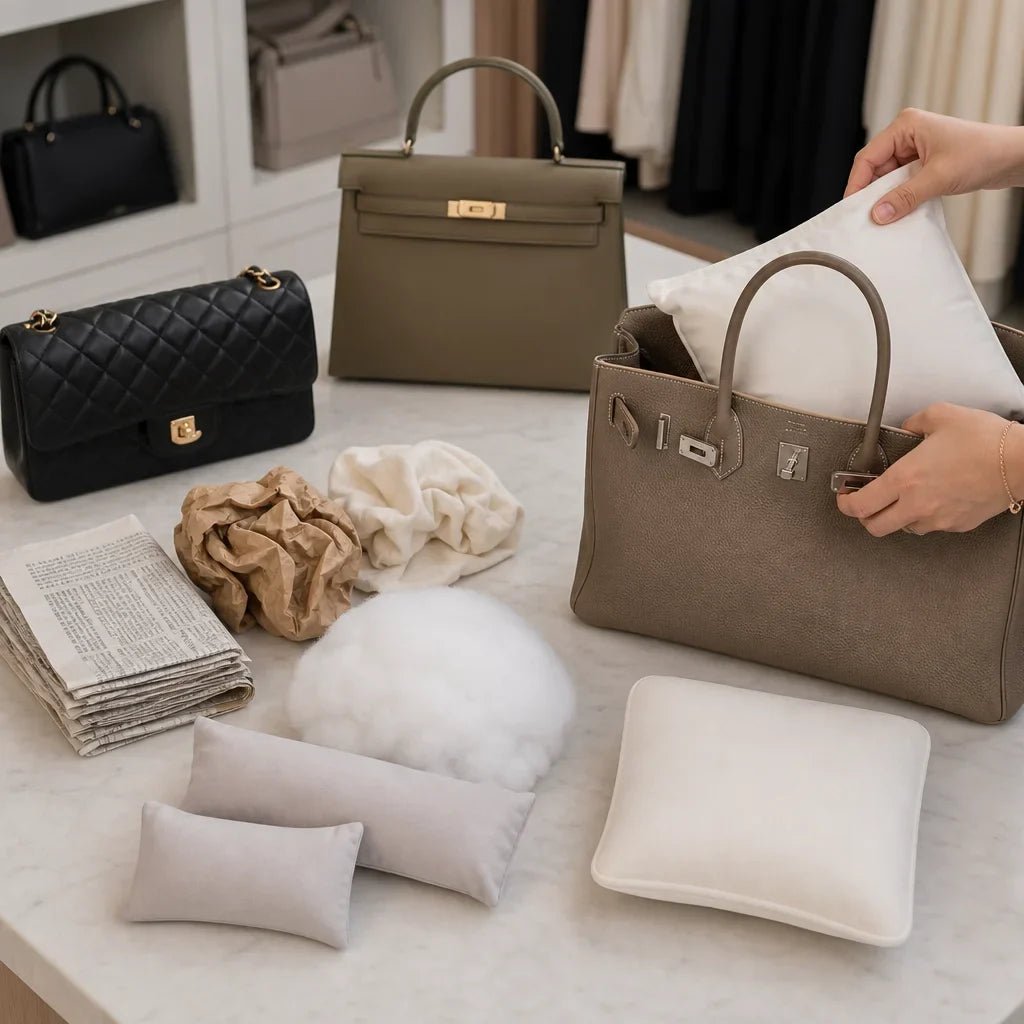
Newspaper and kraft paper deteriorate rapidly. They absorb moisture, yellow from oxidation, and shed fibers onto your bag's lining. If stored in humidity, paper becomes soggy and fosters mold growth. The ink can transfer onto light-colored interiors.
Bubble wrap creates concentrated pressure points. The plastic doesn't conform evenly to your bag's interior shape, and the bubbles eventually compress unevenly. Plastic also traps moisture and prevents breathability, creating a microclimate where mold thrives.
Crumpled tissue paper shifts constantly during storage. It provides minimal structural support and compresses dramatically within weeks. The tissue eventually deteriorates into dust that migrates throughout your bag's interior and lining.
Old clothing, towels, or fabric scraps pose serious risks. Untreated textiles often bleed dye, especially darker colors. They absorb and hold moisture, and loose threads snag on your bag's delicate lining. Even washed fabrics can transfer lint and particles.
Plastic bags trap moisture entirely, creating ideal conditions for mold and mildew. They also degrade over time, leaving residue and fragments inside your bag.

Dried beans, rice, or similar materials seem intuitive but deliver poor results. These items are heavy, unevenly distributed, and shift significantly during handling. They absorb and release moisture unpredictably, and if bags are accidentally exposed to temperature changes or humidity spikes, contents can develop odor that transfers to the bag permanently.
Standard filling materials like polyester fiberfill offer improved performance over household items, but most commercial versions lack the refinement required for luxury pieces. Budget polyester often sheds fibers, attracts dust, and compresses too readily to maintain long-term shape support.
Commercial Stuffing Alternatives on the Market
Beyond DIY approaches, several commercial options exist. Understanding their strengths and limitations helps you make informed decisions about protection levels.
Standard polyester pillow filling works adequately for basic storage but degrades faster than specialized materials. It's inexpensive and non-toxic, but fiber shedding eventually occurs, and the material flattens over extended periods, reducing support effectiveness.
Acid-free tissue products designed for clothing storage represent a step up from household tissue. They're engineered to resist deterioration and typically include archival-quality additives. However, they still shift during storage and provide minimal structural support for bags with complex shapes.
Generic garment preservation bags use unlined polyester or cotton exteriors with basic fiberfill. They offer protection from dust and air exposure but no customization for handbag shapes. The one-size-fits-all approach leaves excess material bunched inside smaller bags or insufficient stuffing for larger pieces.
Specialized handbag storage cubes made from rigid plastic maintain shape well but require significant storage space. They're best for collections displayed openly rather than stored in closets or under-bed locations where space is limited.
Mid-range structured handbag shapers use molded foam or compressed fill. They maintain better shape than loose materials but often don't conform precisely to individual bag designs. A shaper made for generic shoulder bags won't fit a structured tote or a soft clutch appropriately.
These alternatives represent improvements over household materials, but gaps still exist. Most address dust protection or basic shape maintenance without fully optimizing structural integrity and material safety simultaneously.
Why Specialized Handbag Inserts Outperform DIY Solutions
Specialized handbag inserts exist for one reason: luxury bags require specialized protection. The engineering and material science involved far exceed what generalist solutions provide.
Premium handbag inserts account for the precise interior dimensions and volume of luxury designs. A Hermès Mini Evelyne needs different support than a Chanel Grand Shopping Tote. Inserts engineered specifically for these shapes distribute support evenly across interior surfaces, preventing the uneven pressure points that generic solutions create.
The material composition matters tremendously. Specialized inserts use premium fills combined with protective outer shells that work synergistically. The fill provides internal structure while the shell prevents fiber migration and dust accumulation. Budget solutions typically skip this layered approach, offering only one line of defense.
Manufacturing precision ensures consistent quality across every unit. Each insert is crafted to exact specifications, eliminating the variation that occurs with mass-produced generic alternatives. This consistency translates directly to reliable performance across your collection.
Non-abrasive materials are non-negotiable in specialized inserts. The outer shell typically uses soft, smooth fabrics specifically selected to avoid snagging silk or damaging delicate linings. Specialized manufacturers understand luxury materials in ways generic manufacturers don't.
Colorfast engineering prevents the dye transfer that ruins so many preservation attempts. Specialized inserts undergo rigorous testing to ensure colors remain stable regardless of temperature fluctuations or humidity exposure. Budget alternatives frequently skip this step.
The professional design includes practical features often overlooked in DIY approaches. Proper inserts factor in humidity management, ventilation, and material longevity. They're designed to protect your bag for years, not months.
Most importantly, specialized inserts let you focus on collecting and enjoying your bags rather than worrying about storage degradation. That peace of mind has real value.
Our Premium Purse Pillow Inserts: The Definitive Solution
We've engineered our purse pillow inserts specifically for luxury handbag collectors who refuse to compromise on protection. Every design decision reflects our commitment to preservation excellence.

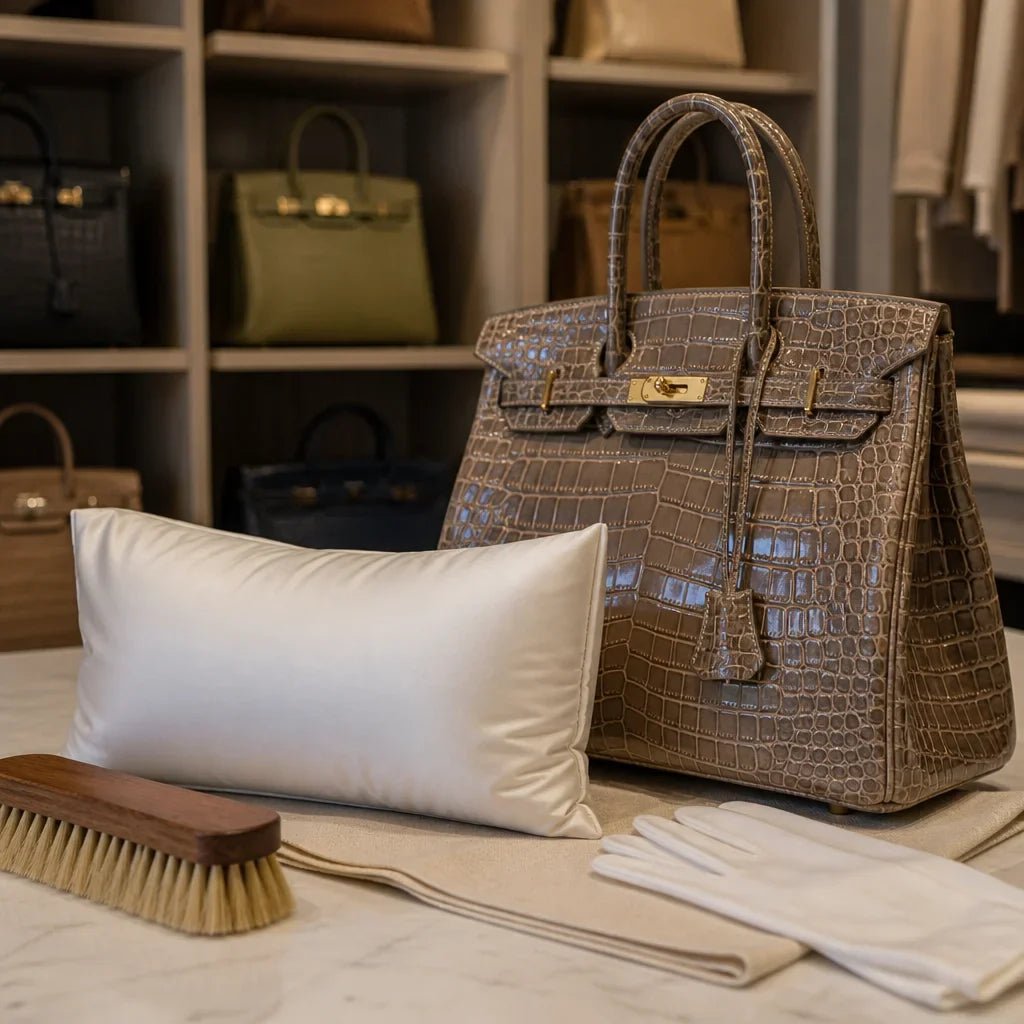
Our inserts combine a premium polyester sateen shell with Angel hair fiber fill. This combination delivers superior protection across every critical criterion. The sateen shell provides a luxuriously smooth surface that matches the quality of luxury bag interiors. The Angel hair fill offers optimal support density without excessive weight, and it maintains structural integrity throughout years of use.
We offer comprehensive size coverage from Mini to XL, ensuring proper fit for virtually every designer handbag in your collection. This isn't just a single insert stretched to fit multiple bags. Each size is individually engineered with proportions matched to how collectors actually store their pieces.
Our Hermès-specific precision fits deserve particular mention. We recognize that Hermès collectors represent a significant portion of luxury handbag enthusiasts, and these bags merit customized solutions. Our Hermès inserts replicate the exact dimensions of models including the Birkin, Kelly, Evelyne, and additional styles, ensuring flawless fit and optimal support.
Handcrafted quality construction distinguishes our approach from mass-manufactured alternatives. Each insert receives individual attention during production, ensuring consistent excellence. This craftsmanship shows in durability and performance longevity.
We include free U.S. shipping because we believe premium protection should be accessible to collectors nationwide without unexpected costs. Your investment in preservation shouldn't be diminished by shipping premiums.
Our materials are colorfast and non-abrasive, meeting the most stringent preservation standards. We've tested extensively to confirm that our inserts maintain their integrity through years of storage across varied climate conditions.
We back this commitment with our complete confidence in product quality. Collectors trust us because we deliver exactly what we promise.
Material Comparison: Sateen Shell vs. Standard Alternatives
The shell material is where most alternatives falter. Understanding the differences clarifies why our choice matters.
Polyester sateen offers the optimal combination of protection and elegance. The smooth finish of sateen closely mirrors the interior finishes of luxury handbags themselves. It feels luxurious to the touch, reflecting the quality of the bag it's protecting. Unlike matte or textured finishes, sateen doesn't create unnecessary friction against delicate linings.
Standard cotton shells, while breathable, aren't smooth enough for luxury interiors. Cotton fibers can catch on silk linings, and untreated cotton absorbs moisture readily. Even when treated for moisture resistance, cotton lacks the durability that long-term storage demands.
Nylon alternatives are popular in budget products because they're inexpensive to manufacture. However, nylon feels slippery and cold compared to luxury materials, and it doesn't breathe adequately for optimal moisture management. Nylon also tends to pill over time, creating a rough surface that can damage delicate linings.
Linen sounds natural and appealing but presents practical challenges. Linen wrinkles easily, and those wrinkles transfer to your bag's interior. It's also prone to fraying at edges, and loose threads become hazards for snagging.
Blended synthetics often sacrifice performance at both ends. They're neither as breathable as natural fibers nor as durable as pure synthetics. They also introduce unpredictable performance variations.
Our choice of polyester sateen reflects years of experience working with luxury collections. It's the material that collectors prefer once they've experienced it, because it genuinely performs better across every storage scenario.
Real-World Protection: Preserving Resale Value and Structure
The measurable difference between proper storage and inadequate storage appears clearly when collectors decide to sell or trade their bags.
A well-stored Hermès Birkin maintains its silhouette precisely as originally intended. The structured leather holds firm lines and definition. The interior shows no creasing beyond light marks from original packaging. When resellers inspect the bag, they see evidence of meticulous care. That translates directly to higher offers and stronger negotiating positions.
Contrast this with a Birkin stored improperly. The sides collapse inward noticeably. Interior creases are permanent and deep. The leather has developed uneven stress marks from unsupported storage. These visible signs of deterioration reduce resale value by hundreds or thousands of dollars. The bag still functions, but its preserved condition advantage is gone.
For collectors managing multi-piece collections, these differences compound. A collection of ten Chanel bags stored properly versus improperly represents a potential difference of five to ten thousand dollars in cumulative resale value. Over decades of collecting, proper storage protection becomes a significant financial consideration.
Beyond resale, there's the satisfaction of opening your closet and seeing your collection exactly as you remember it. Bags that maintained their silhouette, lining integrity, and original appearance reward you with aesthetic and emotional value every time you look at them.

This is why collectors serious about their investments prioritize preservation. It's not excessive; it's financially and emotionally rational.
Selection Guide: How to Choose Your Handbag Protection
Selecting appropriate inserts for your collection requires matching bags to the right products. We've simplified this process substantially.
Start by identifying your bag's category. Are you protecting structured satchels, soft shoulder bags, clutches, or totes? Different structures benefit from appropriately proportioned support. Our size range accommodates all primary bag categories.
Measure your bags internally, or reference the model specifications from manufacturers. Our sizing guide maps designer models to our insert sizes, eliminating guesswork. If you own a Chanel Jumbo Flap, our Jumbo insert is engineered specifically for this model.
Consider your storage environment. All our materials perform reliably across temperature and humidity variations typical in home storage. If you live in an exceptionally humid climate, our breathable design still outperforms sealed alternatives that trap moisture.
For collections including multiple Hermès styles, our specialized Hermès collection offers precision fits across the entire brand's range. This eliminates the compromise of using generic inserts for luxury pieces that demand specificity.
If your collection blends sizes substantially, prioritize covering your most expensive pieces first. A single premium insert protecting a high-value bag prevents far more potential loss than generic protection for lower-value pieces.
Budget considerations are simplified by our value equation. Our inserts cost more initially than budget alternatives, but they deliver superior performance over years of use, ultimately costing less per month of protection.
Implementation Tips for Optimal Storage Results
Proper installation and storage practices maximize the protection your inserts provide.
Before inserting an insert, ensure your bag's interior is completely clean and dry. Use a soft brush or microfiber cloth to remove dust, then allow the bag to air dry completely if it's been in storage. Moisture trapped inside compromises the storage environment.
Insert the purse pillow gently, ensuring it sits evenly within the bag's interior. It should provide gentle pressure without creating deformation. If the insert feels too snug, you've likely chosen a size too large. If it shifts easily with minimal pressure, it's too small.
Fold the bag's handles carefully toward the top of the bag before storing. Handles shouldn't bear weight during storage. If your bag includes a shoulder strap, coil it loosely and tuck it inside to prevent stress on attachment points.
Store your bag in a dust-free environment. We recommend breathable dust bags over plastic, which traps moisture. If you use our inserts, your bags remain protected even without additional dust bags, though they provide extra security.
Temperature stability matters more than specific temperature. Extreme fluctuations cause materials to expand and contract, stressing seams and leather. A cool, consistent closet outperforms a fluctuating storage environment.
Avoid storing bags in direct sunlight or near heat sources. Both accelerate material aging and can cause color fading even within dust bags.
For clutches and smaller bags, store them upright or lying flat, whichever maintains their original shape best. Avoid stacking bags on top of each other even with inserts, as the weight can stress seams over time.
Check your stored collection periodically. Every few months, remove bags briefly to verify your inserts are maintaining shape properly. This practice catches any issues early and reminds you why proper preservation matters.
Our premium purse pillow inserts embody everything we've discussed: specialized engineering, premium materials, precision sizing, and reliable performance. We designed them because we understand that luxury handbag collectors deserve protection as refined as the bags themselves.
When you choose our inserts, you're not just protecting the physical structure of your bags. You're preserving investment value, maintaining aesthetic satisfaction, and ensuring that each piece in your collection rewards your curation with lasting beauty and condition. That's the definitive solution to handbag storage.