How to Document Luxury Handbag Care and Storage for Maximum Resale Value
Why Provenance Matters in Luxury Handbag Resale
Luxury handbag collectors understand that their investments demand more than careful handling. Documentation transforms a pristine bag into a verifiable asset with a traceable history, directly influencing its resale value. When you can prove how a designer piece has been maintained, stored, and preserved, you unlock significantly higher offers from serious buyers.
Provenance in luxury handbags functions like condition certificates in fine art and vintage watches. Buyers of high-value pieces want assurance that what they're purchasing has been treated with appropriate care. A bag that shows clear evidence of proper storage and maintenance commands premiums of 10 to 25 percent higher than similar pieces without documented history.
Consider two identical Hermès Kelly bags hitting the resale market. One comes with maintenance receipts, storage photos, and a detailed care timeline. The other has none. The documented piece consistently outsells its counterpart, even when physical condition appears similar. This premium exists because provenance reduces buyer risk and confirms the item's integrity hasn't been compromised.
When you document your collection's care journey, you're essentially building a narrative of responsible stewardship. Professional resellers and luxury consignment platforms prioritize bags with documented histories because these pieces experience faster sales and command higher price points. Your records become marketing assets that justify premium positioning.
Start tracking your collection today. Even retroactive documentation beats no documentation. List each bag's acquisition date, any professional cleaning or repairs, storage methods, and condition assessments every six months.
The Documentation Problem Most Collectors Face
Most luxury handbag collectors never document their care routines, which creates a significant blind spot when it's time to resell. Without records, you're asking buyers to take your word about how a bag has been stored and maintained over years or decades. Serious collectors won't accept that risk.
The typical collector keeps bags in closets without systematic tracking, makes maintenance decisions on the fly, and then struggles to recall specifics when a resale opportunity emerges. "I think I had it cleaned once" or "It's been stored in a closet" doesn't inspire confidence. Professional resellers and authentication services specifically look for documentation gaps as red flags.
Another common issue: collectors who do care deeply about preservation often fail to photograph or timestamp that care. You might use archival tissue, cedar blocks, and climate-controlled storage, but if you don't document these practices, the effort provides no resale advantage. Buyers can't see what they can't verify.
The storage problem cuts both ways. Bags kept in plastic bins, regular closets, or inappropriate containers actually show visible signs of neglect over time (creasing, fading, moisture damage). Yet even carefully stored pieces face skepticism without proof of the storage environment itself.
Start keeping a simple spreadsheet today. Include each bag's name, acquisition cost, purchase date, and maintenance history. Add photos immediately after any cleaning or professional service. This minimal effort creates verifiable documentation that protects your investment.
Building Your Handbag Care Archive
Your care archive functions as the central record of every decision and action affecting your collection. This archive should capture routine maintenance, professional services, storage conditions, and condition assessments over time.
Structure your archive around these core elements:
- Acquisition details: brand, model, color, purchase date, and original retail price
- Maintenance timeline: dates of any cleaning, conditioning, or professional services with vendor details
- Storage history: locations where bags have been kept and environmental conditions
- Condition snapshots: dated assessments of color vibrancy, leather or material quality, hardware condition, and any signs of wear
- Professional documentation: receipts from luxury care services, authentication certificates, or repair records
Digital tools streamline archive management significantly. Cloud-based spreadsheets allow you to add information from anywhere and access records instantly when a resale opportunity appears. Include columns for the date of entry, type of service (cleaning, conditioning, repair), vendor name, cost, and notes about any findings.
Physical documentation deserves equal attention. Store original purchase receipts, authentication cards, and professional service receipts in acid-free folders organized by season or acquisition date. These tangible records amplify the credibility of your digital archive and matter especially during high-value transactions.
Create a new entry immediately after any interaction with your bags. If you professionally clean a piece, add the date, cleaner name, and specific services performed within 24 hours. This habit prevents gaps in your timeline and ensures accuracy.
Creating a Systematic Storage Record
Storage documentation might seem tedious, but it directly addresses buyer concerns about how bags have been housed between acquisitions and resale. Systematic records prove you've maintained appropriate environmental conditions that preserve leather, hardware integrity, and overall structure.

Your storage record should capture these specifics:
- Physical location of each bag (bedroom closet, climate-controlled closet, storage box, etc.)
- Environmental conditions: temperature stability, humidity levels, light exposure
- Storage container type: archival boxes, shelves, hanging racks, or specialty storage
- Support systems: whether bags are stuffed, hung, or placed on flat surfaces
- Protective materials: tissue paper, dust covers, acid-free wrapping, or commercial bag inserts
- Rotation frequency: how often you access or rotate bags to prevent permanent creasing
Document the setup once, then update it only when something changes. If you move bags to different storage locations, add dated entries explaining the change and the new environment. This creates a timeline of storage decisions that shows intentional care rather than random placement.
Environmental records carry particular weight. Buyers understand that stable temperature and low humidity prevent leather cracking, color fading, and hardware tarnishing. If you maintain climate-controlled storage with humidity monitoring, note these details. They become selling points.
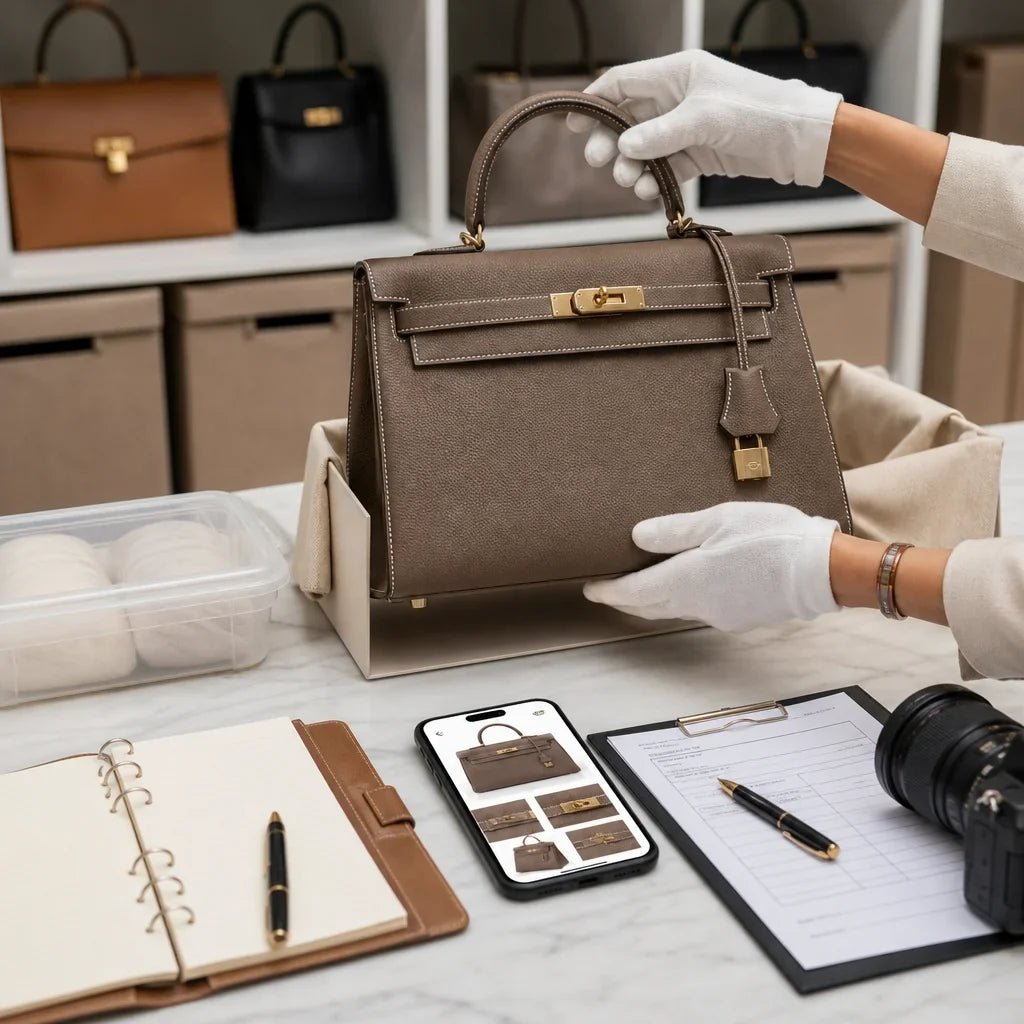
Photograph your storage setup annually. Include wide shots showing the environment and close-ups of individual bag placements. These images provide visual proof of the care standards you've maintained. They also help you remember exactly how you've stored pieces if years pass between storage and resale.
Photographing Your Collection with Preservation Evidence
Strategic photography captures both the bag's current condition and the preservation practices that maintain it. These images become evidence that supports your care documentation and justifies premium resale pricing.
Photograph each bag from multiple angles under consistent lighting conditions. Take front, back, side, and detail shots showing hardware, interior condition, and any patina or wear patterns. Use natural daylight without direct sun, which creates harsh shadows and misrepresents color accuracy.
Document preservation in action by photographing bags in their storage environment. Capture images showing:
- Bags properly supported with inserts or stuffing
- Climate-controlled closet or storage area with visible temperature controls
- Archival-quality storage containers or shelving systems
- Protective tissue, dust covers, or wrapping in place
- Any professional storage equipment or humidity monitoring devices
Date-stamp these storage photos or record the date taken in your care archive. If you photograph your collection every six months, you create a visual timeline of condition stability that's powerful for resale credibility.
For bags with visible wear or aging characteristics, photograph these features clearly. Document whether a patina is natural aging versus damage from poor storage. Buyers appreciate honest assessment with visual evidence more than attempts to hide minor imperfections.
Create a digital folder for each bag organized by acquisition date. Store condition photos in one subfolder and storage setup photos in another. This system lets you quickly compile visual evidence when preparing a piece for resale.
Proper Storage Practices That Buyers Recognize
Educated luxury handbag buyers know which storage practices preserve value and which practices degrade it. Your storage choices should reflect professional-level care standards that reassure serious collectors.
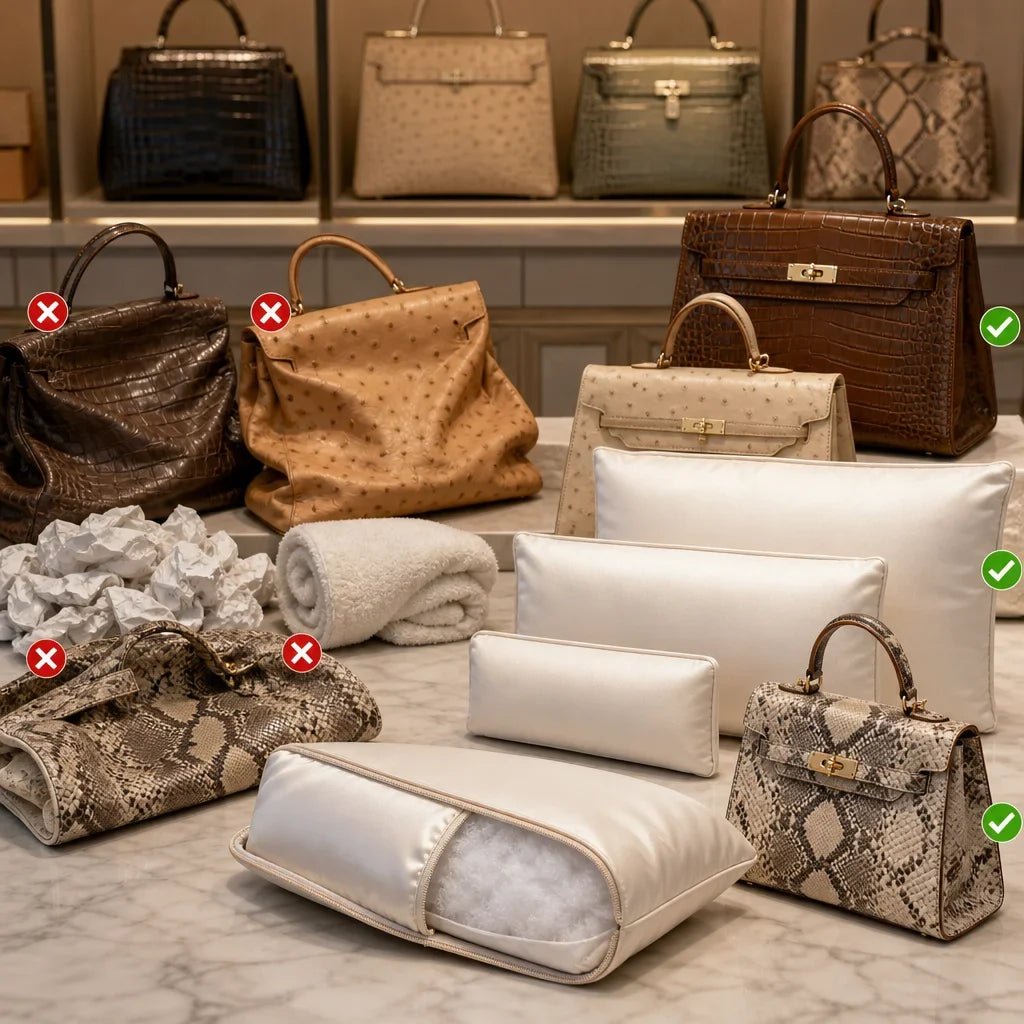
Avoid these common practices that damage resale value:
- Storing bags in plastic bins or plastic garment bags that trap moisture and promote mildew
- Placing bags directly on closet floors where humidity and dust accumulation accelerate deterioration
- Stacking bags or applying pressure that causes permanent creasing or structural deformation
- Storing in areas with fluctuating temperatures or high humidity near bathrooms or basements
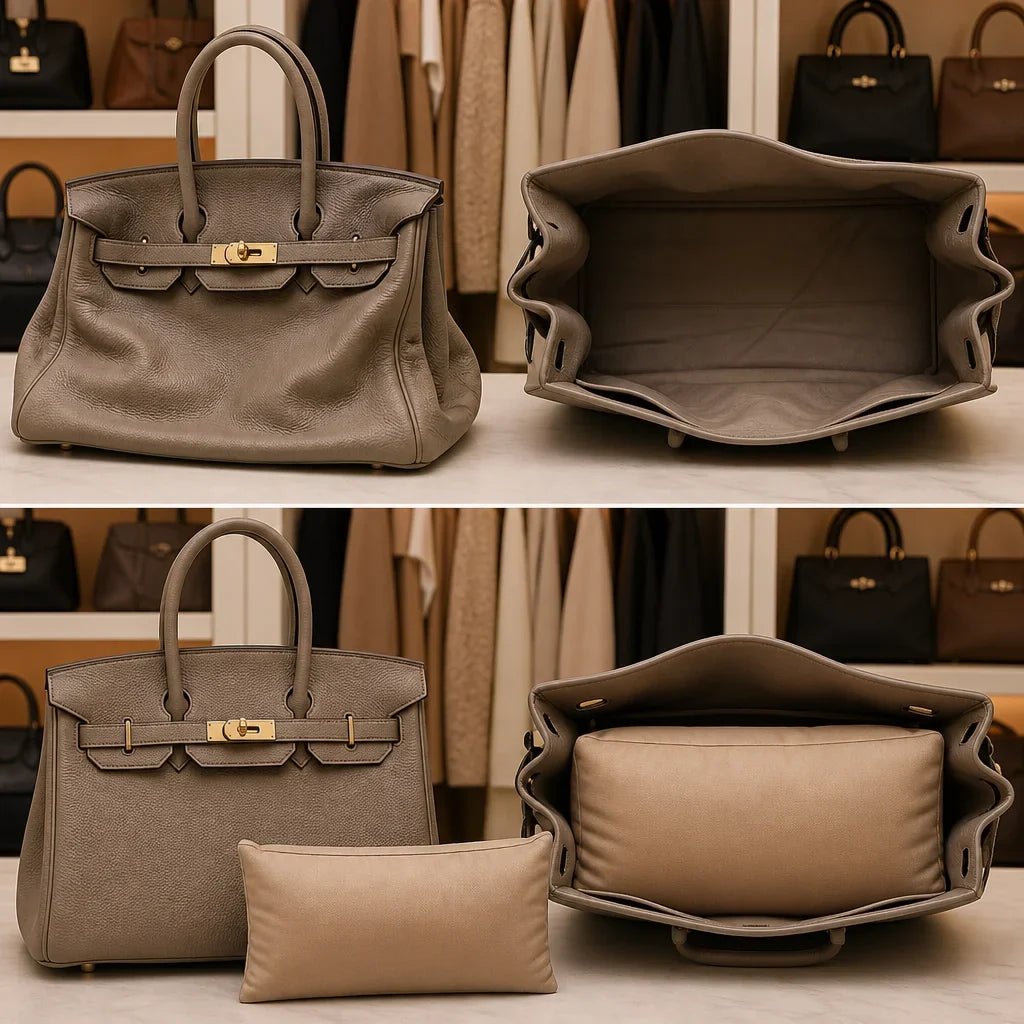
- Leaving bags empty without support, allowing the structure to collapse over time
- Exposing bags to direct sunlight through windows, which fades color and weakens materials
Optimal storage incorporates these elements:
- Climate-controlled environments with stable temperature and controlled humidity
- Shelving or racks that keep bags elevated, organized, and easily accessible
- Support systems like bag stuffing or inserts that maintain structural integrity
- Protective materials such as dust covers and archival tissue
- Adequate spacing between pieces to allow air circulation
- Storage in darker areas away from direct light exposure
Buyers specifically notice whether bags have been stored with structural support. A leather tote that's been sitting empty for years shows permanent sagging and creasing that no amount of conditioning can fully reverse. A bag stored with proper support maintains its intended silhouette and commands higher resale prices as a result.
Professional storage rooms maintained by luxury brands or third-party services amplify resale value considerably. If you use professional storage, photograph the facility and document the service agreement. This external validation of your storage standards carries significant weight with serious buyers.

Using Quality Inserts to Demonstrate Care Standards
Bag inserts serve dual purposes in your resale strategy: they actively preserve structural integrity while simultaneously demonstrating your commitment to professional-level care. The type of insert you use communicates volumes about how seriously you treat your collection.
We design our Fabrinique inserts specifically for this dual benefit. Our premium polyester sateen shell and angel hair fiber fill preserve bag structure without damaging delicate leathers or hardware. When a prospective buyer learns you've used quality inserts from recognized brands, it validates your preservation approach and increases their confidence in the bag's condition.
Documenting your use of quality inserts strengthens this credibility substantially. Photograph bags with inserts in place, noting the insert brand and specifications in your care archive. If you've used Fabrinique inserts in Hermès-specific precision fits, record this detail. Buyers recognize that precision-fitted inserts represent intentional, knowledgeable care rather than generic storage.
The investment in quality inserts pays dividends when you resale. A $3,000 Hermès bag stored with a generic pillow from a department store suggests uncertain care standards. The same bag stored with precision-fitted, handcrafted inserts suggests an owner who understands luxury preservation. This perception difference translates directly to resale price premiums.
When photographing bags in storage, keep inserts visible in some images. This demonstrates that support is actively in place, not just aspirational. Include photos showing both filled bags (with inserts) and the inserts themselves to prove you're using quality products.
Create a simple log tracking which inserts you've used with which bags. Include the insert brand, size, and any notes about how well the fit preserves the specific bag's shape. This detail elevates your care archive from basic documentation to evidence of expertise.
Organizing Digital and Physical Documentation
Comprehensive documentation only benefits resale if you can actually locate and present it when needed. Organization determines whether your care records strengthen your sales pitch or languish unseen in scattered folders.
Digital organization should follow a clear hierarchy:
- Master folder: "Handbag Collection Documentation"
- Individual bag folders: named by brand and style (e.g., "Hermès Kelly Cognac") - Acquisition folder: receipt, authentication certificate, original photos - Care timeline folder: maintenance records with dates and vendor information - Storage documentation folder: condition photos and storage setup photos - Condition assessment folder: periodic condition snapshots with dates
Use consistent naming conventions for files so they're instantly recognizable. Date-stamp everything: "2026-03-15 Kelly Cognac Condition Assessment" is far more useful than "Kelly Condition.jpg."
Cloud storage like Google Drive or Dropbox ensures you can access documentation from anywhere and share specific folders with resale platforms or potential buyers. Cloud backup also protects your records against device loss or damage.
Physical documentation deserves equivalent organization:
- Acid-free document box or filing cabinet organized by acquisition year
- Individual manila folders for each bag containing original receipts and service records
- Archival sleeves protecting authentication cards and certificates
- Separate envelope for any professional photographs or appraisals
Keep a master index listing every bag, its acquisition date, and where both digital and physical documentation is stored. This reference document prevents searching through multiple folders when you need specific records quickly.
When preparing a bag for resale, gather all relevant documentation into a single folder (digital or physical depending on buyer preference). This assembled package becomes part of the resale listing and justifies premium pricing far more effectively than vague claims about careful storage.
How Provenance Increases Your Handbag Value
Documented provenance directly translates to measurable resale value increases. Multiple resale platforms and luxury consignment services report that bags with complete care documentation command premium pricing consistently.
The value increase varies by bag type and original price point. High-end designer pieces like Hermès bags show the most dramatic increases: documented history can boost resale value by 15 to 30 percent compared to identical pieces without records. Mid-range luxury bags typically see 8 to 15 percent premiums. Even contemporary bags benefit from 5 to 10 percent value improvements when documentation proves careful storage.
This premium exists because provenance reduces buyer risk and uncertainty. A documented bag requires less negotiation because the buyer has verified information about its condition and care history. Sales move faster, and buyers feel confident paying higher prices for pieces with established provenance.

Authentication becomes significantly easier and cheaper with comprehensive documentation. Some consignment platforms waive or reduce authentication fees for bags with documented purchase history and professional service records. Savings on authentication costs alone can exceed the time investment in maintaining records.
Resale platforms weight provenance heavily in their valuation algorithms. Services like Vestiaire Collective, The RealReal, and Rebag consistently price documented bags higher than similar pieces without records. If you're targeting these platforms, documentation directly impacts your listing value.
Long-term collection building benefits even more substantially from provenance. If you eventually purchase pieces from other collectors, documented history becomes essential for justifying your own purchase price. You're protecting the resale value of your current acquisitions while building confidence in pieces you acquire in the future.
Calculate the potential value increase of your most expensive pieces. A $5,000 bag with 20 percent provenance premium gains $1,000 in value. The time investment to document care suddenly represents a significant financial return.
Preparing Your Maintenance Records for Sale
When you're ready to sell a piece, the quality of your preparation determines whether you capture full market value or settle for less. Maintenance records transform from archive items into active sales assets that require thoughtful presentation.
Begin preparation three to four weeks before listing. Compile all relevant documentation and review it for completeness and accuracy. If gaps exist in your maintenance timeline, note them honestly. A record showing "stored in home closet without documented maintenance, 2021-2024" is far more credible than vague claims about care during those years.
Create a one-page summary of key provenance points for prospective buyers:
- Original purchase information: brand, model, color, purchase date, and original retail price
- Maintenance history: specific dates and descriptions of any professional cleaning, conditioning, or repair services
- Storage environment: description of how the bag has been housed and environmental conditions maintained
- Condition timeline: notable observations about the bag's appearance over time
- Professional services: any appraisals, authentication, or third-party assessments
This summary should read like a narrative rather than a list. Instead of "Cleaned by Leather Spa on 6/15/2024," write "Professional leather conditioning performed by Leather Spa in June 2024 to maintain suppleness and color vibrancy." The narrative framing makes provenance feel like intentional care rather than a checklist.
Organize supporting documents in a logical sequence:
- Acquisition documentation (receipt, authentication certificate, original photos)
- Maintenance timeline (list of services with dates and vendors)
- Professional service receipts (if available)
- Storage documentation (photos of storage setup or professional facility)
- Condition assessments (periodic photos showing stability over time)
Photograph the organized documentation set. Include this photo in your resale listing as evidence that comprehensive records exist. Many serious buyers specifically request to see documentation before committing to viewings.
For high-value pieces, consider preparing a PDF document compiling all text-based records. This professional presentation distinguishes your collection from typical resale offerings and justifies premium pricing immediately.
The Fabrinique Advantage in Preservation Documentation
We've spent years understanding how serious collectors approach luxury handbag preservation. This expertise informs every element of our Fabrinique inserts, which function as both preservation tools and documentation assets.
Our handcrafted inserts with premium polyester sateen shells and angel hair fiber fill actively preserve bag structure without the risks of generic alternatives. When you photograph bags stored with Fabrinique inserts, you're providing visual evidence of professional-grade care standards that resale buyers immediately recognize and value.
We offer precision fits for specific designer bags, including comprehensive Hermès-specific options. This precision engineering means your inserts fit your collection exactly, eliminating the generic appearance of one-size-fits-all products. That specificity becomes part of your care documentation, demonstrating expertise and intentional preservation.
Buyers browsing resale listings notice these details. When your care archive mentions Fabrinique precision-fitted inserts for your Hermès Kelly, it signals an owner who understands luxury preservation deeply. This perception alone can accelerate sales and justify premium pricing.
Our free U.S. shipping removes barriers to equipping your entire collection with proper support. You can invest in quality inserts for every piece without significant financial burden, then document this comprehensive approach across your care archive.
When documenting your storage setup, include Fabrinique inserts in your photographs. The visual presence of quality, handcrafted inserts strengthens your provenance narrative and distinguishes your collection from pieces stored with standard alternatives.
Your next step is straightforward: begin documenting your current collection immediately, and ensure every piece receives appropriate structural support through quality inserts. This combination transforms your handbag storage from casual curation into professional-grade preservation, with resale value increases reflecting that elevated standard.