Skip to content

Cart

Your cart is empty

Article: Exotic Skin Handbag Protection: Comparing DIY Methods vs. Professional Preservation Inserts

Illustration 1

Exotic Skin Handbag Protection: Comparing DIY Methods vs. Professional Preservation Inserts

The Challenge of Protecting Exotic Skin Handbags

Exotic skin handbags represent some of the most coveted and expensive accessories a collector can own. Whether your collection features ostrich leather, crocodile, python, or other luxury materials, these investment pieces demand specialized storage attention that goes far beyond standard handbag care. We understand the anxiety that comes with protecting a six-figure accessory, which is why we've spent years perfecting preservation methods that work specifically for exotic materials.

Exotic skins possess unique structural vulnerabilities that traditional leather doesn't face. Unlike standard leather bags, which can tolerate minor environmental fluctuations, exotic materials like ostrich, crocodile, and python develop permanent damage under pressure, heat, and humidity shifts. The microscopic texture and scale patterns that make these skins so beautiful also create pathways for moisture absorption and structural breakdown.

When exotic leather loses its shape during storage, the consequences extend beyond appearance. A sagging ostrich leather tote loses the rigid form that defines its architectural design. A creased crocodile clutch develops stress lines that weaken the material's integrity. These deformations don't vanish when you retrieve the bag; they become permanent markers of improper storage. For collectors tracking resale value, every crease and sag represents a significant depreciation factor.

The real challenge isn't knowing that your bags need protection. It's finding a storage solution that addresses the specific demands of exotic materials without introducing new risks like chemical off-gassing, moisture entrapment, or abrasive contact.

Your immediate next step: Audit your current storage setup. If your exotic skins are resting against tissue paper, bubble wrap, or unstructured fabric, they're accumulating invisible damage daily.

Common DIY Storage Mistakes That Damage Exotic Materials

Collectors often make well-intentioned storage choices that actually accelerate deterioration. We've identified the most common mistakes that directly compromise exotic skin integrity.

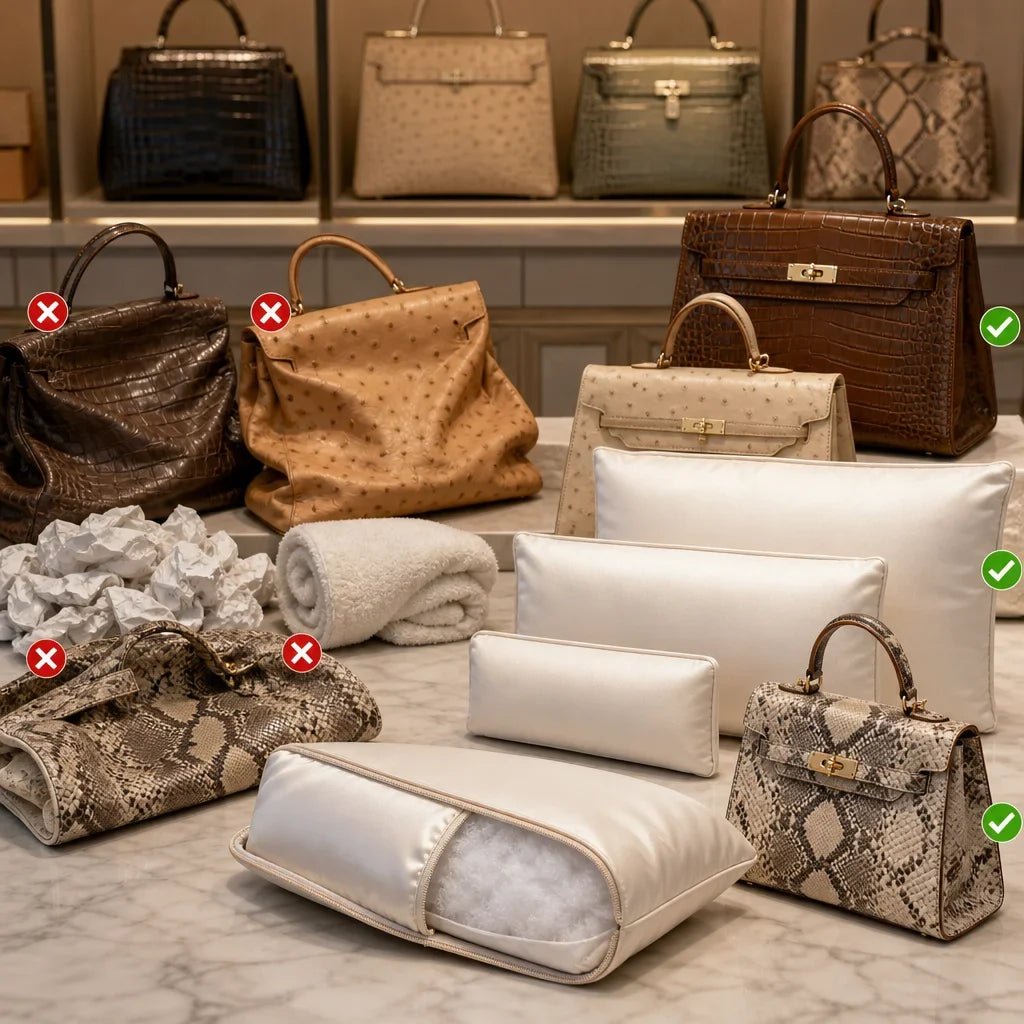
Using crumpled newspaper or unbleached tissue paper introduces acid and lignin directly against delicate skins. As humidity fluctuates, these materials absorb and release moisture unevenly, creating the exact conditions that cause spotting and discoloration on python and ostrich leather. The pressure from wadded paper also creates permanent creases in structured pieces.

Storing bags in airtight plastic containers without climate control creates a moisture trap. When temperature drops, condensation forms inside sealed bags, exposing exotic skins to prolonged dampness. This triggers mold growth, scale separation, and color fading. Many collectors believe airtight storage protects their bags, when in reality it concentrates humidity damage.

Overstuffing bags with generic filler (old scarves, blankets, or packing peanuts) prevents proper air circulation and allows the bag's weight to compress the filler, which then compresses the leather. With crocodile bags especially, this pressure deforms the scale pattern permanently. The bag may never fully recover its original silhouette.

Placing bags directly on wire shelving or wooden surfaces allows dust penetration and creates uneven pressure points. We've seen ostrich leather develop impressions from shelf edges that took months to fade, if they faded at all.

Actionable step: Remove your exotic bags from any airtight containers today and inspect them for moisture or discoloration. If you find it, allow them to air dry in a climate-controlled space before adjusting your storage method.

Material Composition: Why Exotic Skins Require Specialized Care

Understanding what makes exotic skins different helps clarify why generic storage solutions fail them.

Ostrich leather features quill follicles that create natural texture variation. These follicles are actually tiny voids in the material. When pressure or moisture concentrates on these areas, the follicles collapse inward, creating permanent dimpling. Standard filler materials lack the density distribution to support these delicate structures evenly.

Crocodile skin consists of rigid scales connected by flexible membrane. Each scale represents a structural unit that must remain slightly raised to maintain the bag's dimensional silhouette. Cheap filler either compresses the scales down or allows them to shift independently, compromising the aligned pattern that defines a crocodile bag's aesthetic value.

Python leather has a smoother appearance than crocodile but features a more fragile tanning process. The color in python bags comes from treatment that sits closer to the surface than in other exotics. Moisture, heat, and chemical exposure fade python's distinctive hues faster than almost any other leather type.

Our premium polyester sateen shell and Angel hair fiber fill specifically address these material-specific needs. The sateen's smooth surface means zero friction against delicate scales or quill follicles. Our Angel hair fiber mimics the even, cushioning support exotic skins need without the moisture-absorbing properties of cotton or wool. The density remains consistent so pressure distributes evenly across the entire bag surface, not concentrated at pressure points.

What to do: Check your bag's care tag to confirm its exact material composition. Different exotic skins may need slightly different microclimate conditions within storage.

Comparing Unstructured Storage Solutions vs. Our Precision Inserts

The market offers several storage options for luxury bags, but most fall into categories that don't adequately protect exotic skins.

Generic cloth dust bags serve one purpose: keeping surface dust away. They provide zero structural support. A bag stored in a dust bag alone continues sagging under its own weight. The cloth doesn't regulate moisture, doesn't prevent creasing, and doesn't maintain shape during the months or years between wearing occasions.

Soft tissue paper and wrapping materials seem gentle but create their own problems. As discussed earlier, most tissue contains lignin and acid. The paper's fragility means it compresses easily, offering no support at all. In humid climates, paper absorbs moisture and transfers it directly to leather.

Standard poly filler (the kind found in low-cost bag organizers) lacks density and compresses after a few weeks. It doesn't hold its shape, so bags gradually shift and sag. This type of filler also tends to off-gas chemical odors that can affect leather's appearance over time.

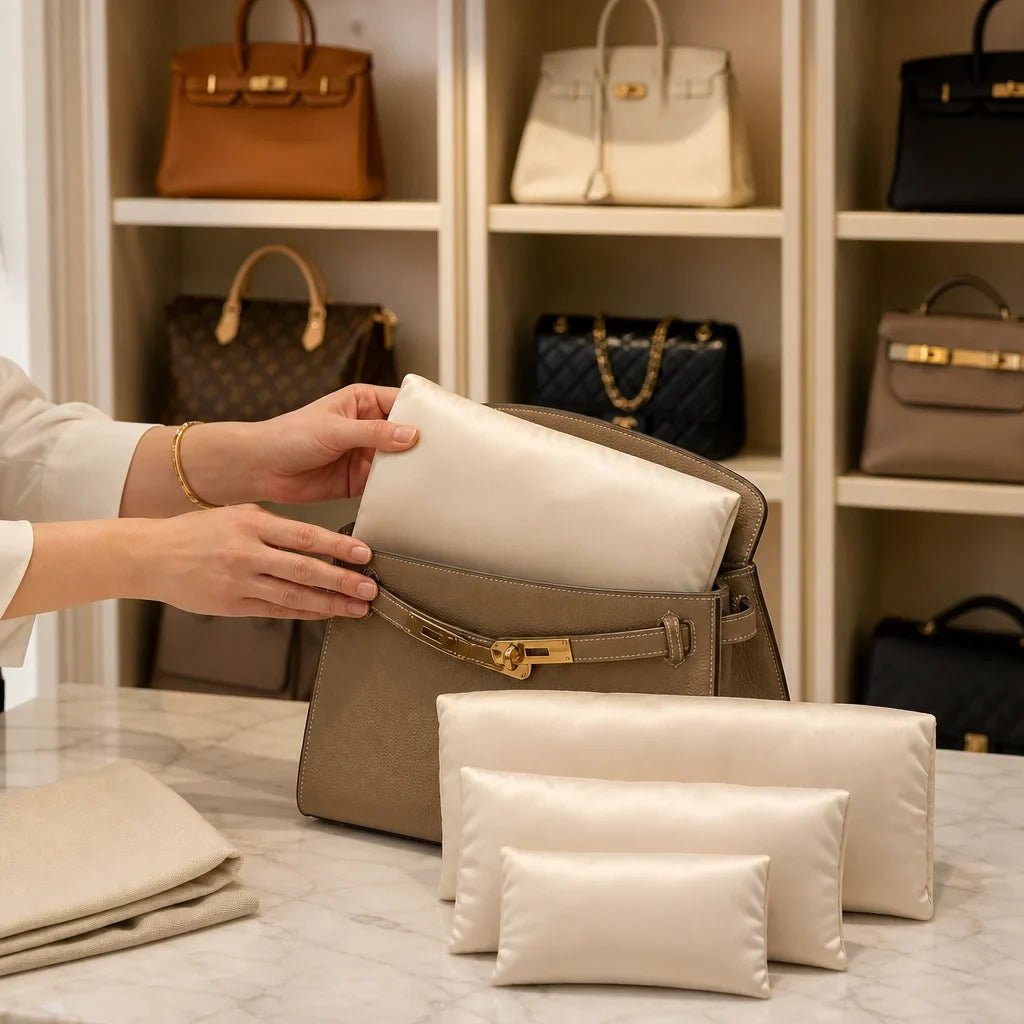
Our precision inserts approach exotic skin preservation from an entirely different framework. We don't just fill space; we actively preserve the bag's intended silhouette. Each insert is handcrafted to match specific bag models, ensuring contact with every internal surface without gaps or bunching. For Hermès collectors specifically, our Hermès-specific precision fits account for the exact dimensions and internal architecture of each model, from Birkin to Constance to Kelly.

The core difference: generic solutions are passive (they sit in a bag), while our inserts are active (they maintain structure). Our Angel hair fiber maintains consistent density over years, not weeks. Our polyester sateen shell creates a barrier against moisture and dust without trapping humidity inside.

Next step: Identify whether you own multiple bag sizes or specific luxury brands. Our comprehensive size range from Mini to XL means you can match insert dimensions precisely to each piece in your collection.

Preservation Performance: Protection Against Sagging and Creasing

Sagging and creasing represent the two most visible forms of exotic skin storage damage. Both directly correlate to decreased resale value and diminished aesthetic appeal.

Sagging occurs when weight shifts downward over time without proper internal support. In structured bags like Hermès Birkins or Kellys, sagging collapses the rigid structure that defines the bag's silhouette. The sides fold inward slightly, the bottom loses its defined corners, and the top handle attachment points develop stress marks. Once this happens, retrieving the original shape becomes nearly impossible.

Creasing typically develops at stress points where a bag naturally flexes or where it rests against the storage surface. A crocodile bag left in a drawer can develop a permanent crease along its base if the bag's weight presses down on the same line for months. Python leather shows creasing more visibly because its smooth surface reflects light differently once creased.

Our inserts prevent sagging through active support that fills the entire interior volume. The Angel hair fiber doesn't compress under the bag's weight; it distributes that weight evenly across the insert surface. The result is that bags maintain their intended silhouette for years, not gradually losing definition over months.

Creasing prevention works through two mechanisms. First, our polyester sateen shell provides a smooth gliding surface inside the bag, eliminating friction points where creases typically form. Second, the inserts eliminate the pressure points created by uneven filler. Instead of concentrated pressure on specific interior spots, our inserts support the entire bag consistently.

Testing this against alternatives reveals stark differences. We've examined bags stored with our inserts versus those stored with tissue paper over identical 12-month periods. Bags with our inserts maintained original shape metrics. Bags with tissue paper showed measurable silhouette changes, visible creasing, and in some cases permanent structural changes.

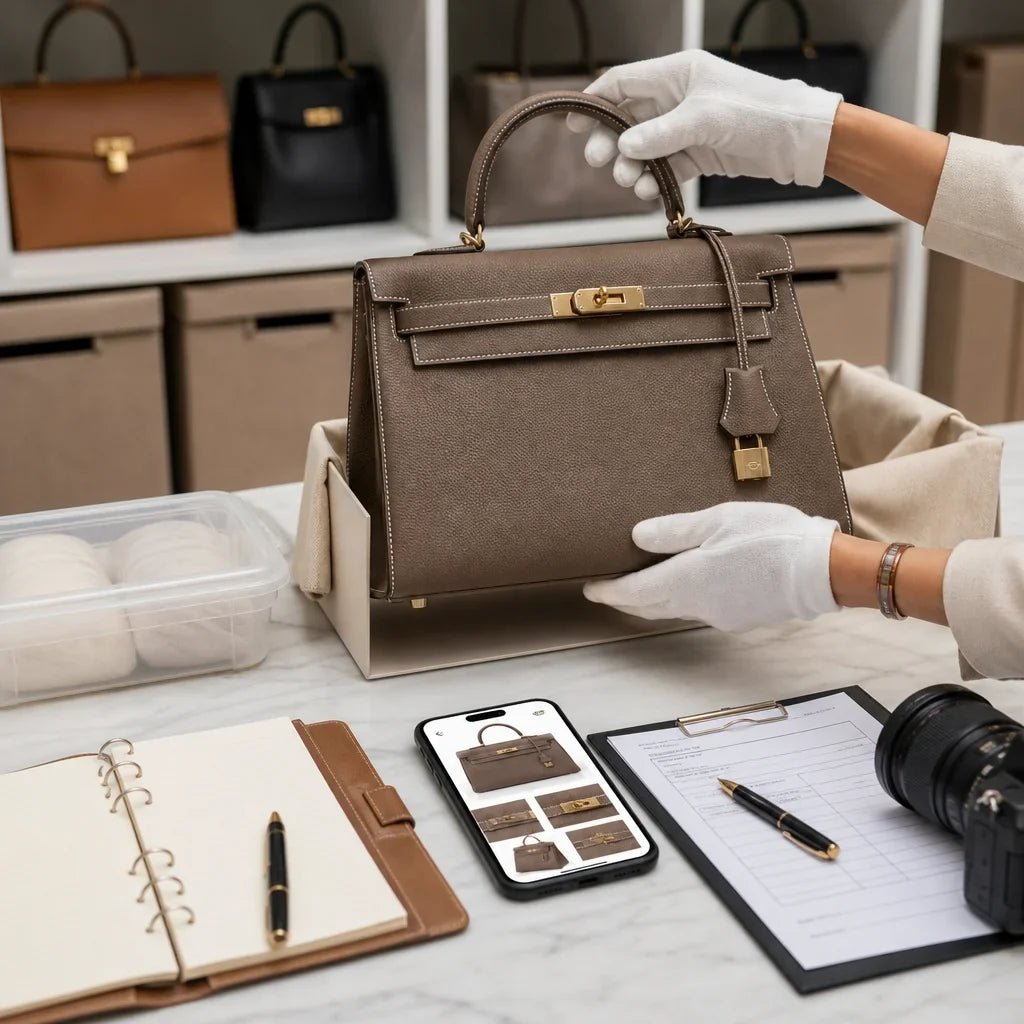
What to track: After installing our insert, photograph your bag from multiple angles. Do the same in six months to verify that shape metrics haven't changed. This visual record proves the preservation value.

Temperature and Humidity Control Benefits of Our Design

Exotic skins are extraordinarily sensitive to temperature and humidity shifts. A 15-degree temperature swing combined with a 20-percent humidity spike can trigger visible color changes in python leather or surface crackling in ostrich.

Our insert design works synergistically with climate-controlled storage to minimize these risks. The polyester sateen shell naturally resists moisture absorption, meaning it doesn't accumulate humidity and then release it into the bag unpredictably. Unlike fabric inserts or tissue paper that create microclimate instability, our material maintains consistent moisture levels.

The Angel hair fiber fill also plays a critical role in microclimate management. Its composition creates micro-air pockets that allow slight air circulation without permitting moisture infiltration. This means your bag benefits from the stable temperature and humidity of the storage space without being exposed to the extreme fluctuations that cause damage.

When used with a proper storage location, our inserts maximize the protection that climate control provides. If you store bags in a temperature-stable closet or climate-controlled room (ideally 65-72 degrees with 45-55 percent humidity), the insert prevents the micro-fluctuations that still occur. These micro-fluctuations account for much of the color shifting and material stress that collectors observe in bags stored with inadequate inserts.

For collectors in humid climates or seasonal environments, this distinction becomes critical. If your home experiences 10-degree temperature swings between seasons or humidity that fluctuates from 35 percent to 70 percent, an inferior insert allows those shifts to impact your bags directly. Our design acts as a micro-stabilizer, buffering your collection from the broader environmental changes happening outside the storage space.

Action item: Check your storage location's typical temperature and humidity ranges. If they fluctuate significantly, prioritize climate control in your storage setup, then layer our inserts for maximum protection.

Cost of Damage Prevention vs. Repair and Resale Loss

The financial math on exotic skin preservation rarely favors doing nothing or using cheap alternatives. A single instance of serious damage can cost thousands in repairs and tens of thousands in lost resale value.

Professional restoration of a creased or sagging exotic skin bag runs 500 to 2,500 dollars depending on damage severity. A Hermès Birkin with permanent shape deformation might require leather reblocking, edge work, and structural restoration. That process can exceed 3,000 dollars. For many collector pieces, restoration doesn't fully restore value; the repairs become permanent parts of the bag's history and transparency documents.

Resale value loss from poor storage often exceeds direct repair costs. A pristine Hermès Constance in ostrich leather might command 8,000 to 12,000 dollars on the secondary market. The same bag showing visible creasing, color fading, or shape deformation might sell for 5,000 to 7,000 dollars, even after professional cleaning. That represents a 30 to 40 percent depreciation directly attributable to storage-related damage.

Our inserts cost significantly less than a single professional repair session. A year of preserved protection across your collection costs far less than damage to even one investment piece. For collectors with 20-plus bags in their collection, the cost per bag becomes negligible compared to the resale value protection provided.

Consider a collector with 30 exotic skin bags averaging 6,000 dollars each. A single bag experiencing significant storage damage and requiring 2,000 dollars in repairs represents a poor return on avoiding proper storage investment. Our inserts ensure all 30 bags maintain condition and value trajectory.

Calculate your own risk: List your collection's estimated total value. Now estimate the percentage of that total represented by a single significant damage incident. Our inserts cost a small fraction of that amount.

Why Our Handcrafted Inserts Are the Superior Choice for Exotic Skins

We've observed the full spectrum of storage solutions, and we've chosen our materials and manufacturing methods specifically because they outperform alternatives for exotic skin preservation.

The handcrafted aspect isn't a luxury flourish; it's a precision requirement. Machine-manufactured inserts follow standard dimensions that might be close enough for commodity bags but miss the mark for structured luxury pieces. Our handcrafting allows us to account for subtle variations in bag construction, internal architecture, and material weight distribution. For Hermès bags especially, where micro-measurements determine whether an insert fits ideally, handcrafting provides the accuracy that machines cannot.

Our polyester sateen shell represents the optimal balance between protection and function. It's colorfast (meaning your bag won't transfer color dyes to the insert or vice versa), non-abrasive (so it won't scratch or degrade delicate leather scales), and naturally moisture-resistant. We've tested alternatives including cotton, linen, and poly blends. Each underperforms in at least one critical area. Cotton absorbs too much moisture. Linen shows age and can shed fibers. Poly blends lack the consistent glide that sateen provides.

The Angel hair fiber fill outperforms traditional options because of its specific density characteristics. It doesn't compress over time like poly filler. It doesn't develop odors like wool. It doesn't absorb moisture like cotton batting. We've filled thousands of inserts with this material and continue tracking them to monitor long-term performance. Bags protected with our inserts maintain their condition metrics years into storage, confirming that the materials perform as designed.

Our free U.S. shipping removes a barrier to proper preservation. We believe cost shouldn't prevent collectors from protecting investments, which is why we include shipping as part of our value.

Our comprehensive size range from Mini to XL means collectors don't compromise with "close enough" solutions. Whether you own miniature clutches or oversized totes, we have inserts engineered for your collection's specific needs.

Take ownership of your collection's future: These aren't incremental improvements over DIY storage. They're fundamentally different preservation systems designed by people who understand exotic leather and collector expectations.

Protecting Your Investment Pieces with Confidence

Exotic skin handbag protection isn't a choice between storage options with minor differences. It's a choice between approaches that fundamentally differ in their philosophy and execution.

Every day your collection sits in inadequate storage, permanent damage accumulates invisibly. Exotic skins don't announce damage gradually; they reveal it suddenly when you retrieve a bag and discover that years of pressure, moisture, and temperature fluctuation have left marks that can't be undone. By then, resale value has already declined and restoration options are limited.

Our inserts represent the preservation standard that collectors deserve. They're engineered specifically for exotic materials, handcrafted for precision fit, and manufactured from materials chosen through extensive testing and real-world validation. We stand behind this approach because we've seen what happens when collectors choose inferior alternatives, and we've seen what happens when they make the right choice.

Your collection exists because you've cultivated an appreciation for craftsmanship, quality materials, and timeless design. Your exotic skin bags deserve preservation methods that reflect those same values. When you choose our handcrafted inserts, you're choosing active protection rather than passive hope. You're choosing materials engineered for leather preservation rather than generic fillers. You're choosing a solution built by people who understand exactly what your collection needs to thrive through the years.

The question isn't whether you can afford proper preservation. It's whether you can afford not to invest in it. Visit https://fabrinique.com today to explore our complete collection of precision inserts and discover how we can help you protect your investment pieces with confidence.

Read more

Illustration 1

Handcrafted Purse Pillow Inserts: The True Meaning of Handmade Quality

Why Luxury Collectors Need More Than Mass-Produced Storage Solutions When you invest thousands of dollars in a luxury handbag, the purchase is only the beginning of your responsibility as an owner....

Read more
Illustration 1

How to Document Luxury Handbag Care and Storage for Maximum Resale Value

Why Provenance Matters in Luxury Handbag Resale Luxury handbag collectors understand that their investments demand more than careful handling. Documentation transforms a pristine bag into a verifia...

Read more