Vintage vs. New Chanel: Care Differences You Need to Know
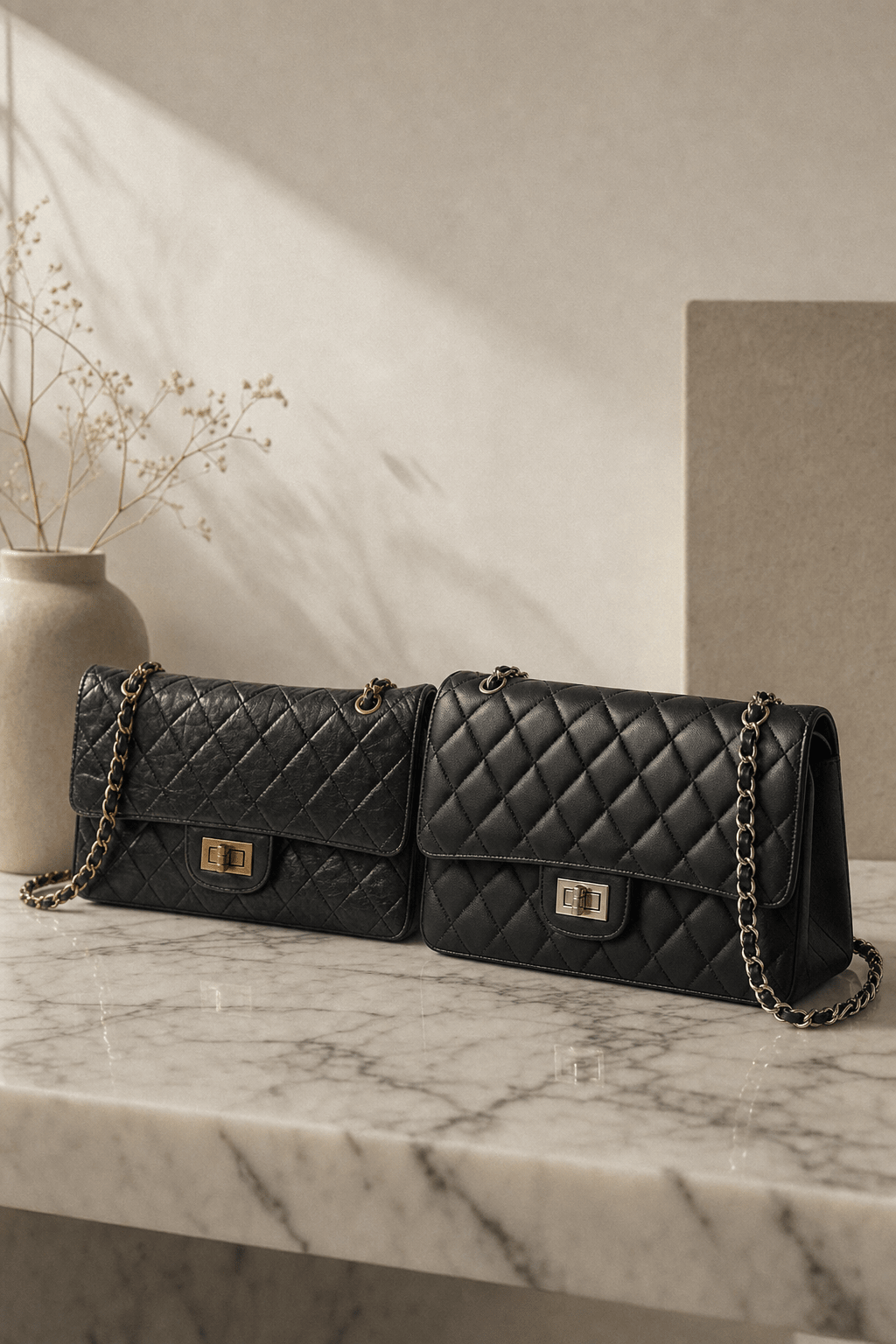
A 1990s Chanel Classic Flap and a current-production Classic Flap share a silhouette, but they do not share a care manual. Different leather treatments, different hardware plating, and, in many cases, no serial-number authentication card at all mean the cleaning and storage habits that work perfectly on a bag bought last season can actively damage a vintage one. This is for anyone who owns, or is considering buying, a pre-2000s Classic Flap.
What actually changed between vintage and modern Chanel
Leather treatment
Vintage lambskin, particularly from the 1980s and 1990s, was generally finished with less surface coating than modern lambskin. This gives vintage bags their famously soft, almost buttery hand-feel, but it also means the leather is more porous and more vulnerable to oil absorption, water spotting, and color transfer than a modern bag's more heavily treated surface. Vintage caviar from this era is also grainier and less uniformly pigmented than the finer, more consistent caviar grain Chanel uses today, which changes how it should be cleaned: aggressive rubbing that a modern caviar bag would shrug off can wear down the top layer of dye on a vintage piece faster.
Hardware plating
Chanel hardware from the vintage era was commonly 24k gold-plated over brass, which oxidizes differently than the gold-tone hardware used on many modern bags. Genuine 24k plating tends to develop a warm, slightly deepening patina rather than the greenish or grayish tarnish seen on lower-karat or alternative-finish hardware, and it generally does not respond well to aggressive metal polish, which can strip plating that is decades old and cannot be replaced to original spec. Vintage silver-tone hardware likewise tarnishes differently and should be treated more conservatively than a modern bag's hardware, where replacement parts and refinishing are easier to source through official channels.
Authentication and paperwork
Chanel introduced serial-number authenticity cards in the 1980s, but bags made before roughly 1984 often carry no serial number at all, and even bags from the mid-80s through the 90s used sticker-and-card systems that are far easier to fake convincingly than modern methods, since Chanel has periodically updated its authentication approach over the decades. This matters for care as much as for buying: a vintage bag with no verifiable card is not necessarily inauthentic, but it does mean you should rely more heavily on physical construction details, stitching, and hardware stamping when deciding how the bag was likely made and, by extension, how it should be treated.
Softer, more supple lambskin
Beyond finish differences, vintage lambskin often has a floppier, more relaxed hand-feel than modern lambskin, partly due to decades of use and partly due to the tanning methods of the era. This softness is often what collectors specifically seek out, but it also means vintage flaps hold their shape less firmly on their own and benefit more from internal structure support than a stiffer modern bag does.
Cleaning differences
Because vintage leather is generally more porous and the finish more delicate, cleaning should be more conservative across the board:
- Test any cleaning product on a hidden interior seam first, even one you have used successfully on modern Chanel leather, since vintage finishes react differently.
- Use less product and more patience. A vintage bag responds better to several light passes with a barely damp cloth than one aggressive cleaning pass.
- Avoid saddle soap, baby wipes, and multi-purpose leather cleaners not specifically formulated for delicate vintage leather. These are common home remedies that are too harsh for an older, thinner finish.
- Clean hardware with a dry cloth only, and avoid metal polishes marketed for silver jewelry or flatware. If tarnish on 24k-plated hardware bothers you, this is a job for a professional who works specifically with vintage plating, not a home fix.
For general leather-cleaning technique by material, see our guides on cleaning Chanel caviar and cleaning Chanel lambskin, and treat every recommendation in both as the upper bound of what to attempt on a vintage bag, not the standard approach.
Storage differences
Vintage Classic Flaps benefit from more structural support during storage than modern bags, precisely because the leather is softer and the bag has already had decades to develop any weaknesses in the seams or gussets. A shaped purse pillow insert matters more here than on a stiffer modern bag, since it prevents a soft, relaxed flap from collapsing into itself and creasing at the fold over long storage periods.
Humidity control also matters more for vintage pieces. Older leather that has already lost some of its original conditioning oils is more susceptible to drying out and cracking in low humidity, and more susceptible to mold in high humidity, than a newer bag with fresher finish. The 40-55% relative humidity range covered in our long-term storage guide is the right target, but check vintage bags more frequently, roughly monthly rather than quarterly, since problems tend to progress faster once they start.
When to send vintage vs. new to spa
For a modern Classic Flap, an official Chanel spa service is close to a default choice for anything beyond surface cleaning, since Chanel has full access to matching materials, hardware, and finishing techniques for current production.
For a vintage bag, the calculation is different. Chanel's official spa services will sometimes decline or limit work on older bags where materials or hardware plating no longer match anything in current production, and even when they accept the work, refinishing can occasionally look slightly different from the original vintage finish. Before sending a vintage bag to any spa service, official or independent:
- Ask specifically whether they have experience with bags of that specific era and leather type, not just Chanel in general.
- Ask what happens if an exact hardware or leather match is not available. Some services will substitute the closest modern equivalent, which can be visible on close inspection.
- Get a written estimate and, if possible, examples of similar past work before committing a genuinely vintage piece.
For genuinely minor issues, conservative at-home care is often the better first step for a vintage bag specifically because professional intervention carries more risk of altering original character that cannot be restored once changed.
Boutique repair policies for vintage pieces
Chanel boutiques generally route repair requests through the same spa/atelier system regardless of the bag's age, but turnaround time and acceptance can vary more for vintage pieces since evaluation of a decades-old bag takes longer and sometimes requires a specialist review. Do not fabricate an expectation of a specific cost or timeline. Instead, bring the bag in for an in-person evaluation, ask directly whether the specific model and era are serviceable, and get a written estimate before agreeing to any work, since vintage repair costs can vary significantly depending on materials needed.
Common mistakes
- Using the same cleaning products and pressure on a vintage bag that work fine on a modern one. Vintage finishes are thinner and less forgiving of aggressive cleaning.
- Polishing 24k-plated hardware with jewelry or silver polish. This can strip decades-old plating that cannot be restored to its original spec.
- Assuming a missing serial-number card means a bag is fake. Many authentic pre-1984 Chanel bags never had one, and even later vintage cards are easy to counterfeit, so authentication should rely on construction details as much as paperwork.
- Sending a vintage bag to a general leather-repair shop without vintage Chanel-specific experience. Materials and construction methods from decades ago do not always match modern repair techniques.
Expert tip
Photograph your vintage Classic Flap's hardware stamping, stitching pattern, and interior lining in good light and keep the images on file. Beyond helping with any future authentication or insurance questions, this record makes it much easier to spot gradual changes, like early tarnish or a seam beginning to loosen, since you have a clear baseline to compare against months or years later.
Closing thought
A vintage Classic Flap rewards a more conservative hand than a modern one: gentler cleaning, closer humidity monitoring, more caution before professional intervention, and more reliance on physical inspection over paperwork alone. None of this makes vintage Chanel harder to live with day to day, it just means the margin for error is smaller. A shaped purse pillow insert and the storage fundamentals in How to Store Luxury Handbags Properly go a long way toward keeping a decades-old bag stable for decades more.