Top 7 Best Ways to Document and Preserve Your Luxury Handbag Collection's Resale Value
1. Authentication Certificates and Original Receipts: Why Documentation Matters
Luxury handbag collectors face a challenge that goes beyond acquiring beautiful pieces: proving their value and maintaining it over time. A Hermès Kelly that cost $4,000 five years ago might fetch $5,200 today if properly documented and stored, or it could depreciate to $2,800 if neglected. The difference isn't always visible at first glance. It lives in authentication records, storage photographs, condition reports, and the subtle structural integrity that separates a "gently used" bag from one that looks tired and misshapen.
We understand that serious collectors treat their handbags as alternative investments. Like fine art or rare watches, designer bags demand a preservation strategy that combines documentation, proper storage conditions, and protective infrastructure. The seven methods below form a comprehensive system that protects both the physical condition of your pieces and their documented provenance. Together, they create an undeniable record of authenticity, care, and value.
The foundation of resale value is proof of authenticity. A buyer paying premium prices needs reassurance that the bag is genuine, and authentication certificates plus original receipts provide that baseline confidence.
Original purchase receipts carry irreplaceable information: the exact purchase date, retailer, price point, and often the specific style code and colorway. Store receipts from authorized retailers like Hermès, Chanel boutiques, or Saks Fifth Avenue establish a documented chain of custody from the official source. Without this, even a flawless bag becomes suspect in the eyes of serious collectors and resellers.
Authentication certificates from reputable third-party services add another layer. Services like Fashionphile, Vestiaire Collective's authentication team, or brand-specific authenticators examine bags against known standards and issue formal certificates. These aren't just nice-to-have; they're often required by luxury resale platforms and significantly increase buyer confidence.
What to document right now:
- Photograph every receipt and certificate (front and back) and store digitally with backup copies
- Note the retailer name, purchase date, and original price on a spreadsheet
- If you've purchased from resellers in the past, request their documentation or obtain independent authentication
- Create a dedicated folder system: organize by brand (Hermès, Chanel, etc.) and then by style
A luxury bag without authentication documentation typically sells for 15-25% less than an identical piece with verified provenance. That margin widens significantly for limited editions or discontinued styles.
2. Professional Authentication Reports: Building Buyer Confidence
Beyond original receipts, a formal authentication report from a recognized service transforms how potential buyers perceive your collection. This is particularly valuable if you've owned a bag for years and can't locate the original receipt, or if you acquired vintage pieces before digital record-keeping became standard.
Professional authenticators examine serial number formatting, hardware specifications, stitching patterns, material quality, and construction details that counterfeiters struggle to replicate consistently. A written report documents these findings, providing a third-party endorsement that carries weight in luxury resale markets. When you list a bag on a platform like TheRealReal or Rebag, including a professional authentication report can expedite the sale and justify a higher asking price.
The cost of authentication (typically $50-200 per bag depending on complexity) pays for itself through faster sales and better pricing. A $2,000 bag that sells 30% faster because of a verified authentication report represents savings in storage costs and the opportunity cost of having capital tied up.
How to implement this strategy:

- Contact established authentication services before listing bags for resale
- Request a detailed written report that addresses specific concerns about your bag's era, materials, and construction
- Maintain digital copies of all reports alongside your purchase documentation
- Include authentication report files in your collection database
For rare, limited-edition, or vintage pieces valued above $3,000, professional authentication isn't optional; it's essential. Buyers of high-value bags expect this documentation as standard.
3. Detailed Purchase History Records: Tracking Your Investment
Successful collectors treat their handbags as a portfolio. This requires tracking purchases across years or decades, noting acquisition costs, resale values, and the timeline of ownership. A detailed purchase history record serves multiple purposes: it's proof of investment strategy for insurance purposes, evidence of appreciation for tax reporting, and a reference point for understanding which styles hold value best.
We recommend maintaining a spreadsheet that includes purchase date, retailer, original price, current estimated value, condition notes, and color/material specifications. Include the bag's style name and number, which matter tremendously for Hermès bags and limited-edition Chanel releases. Over time, this record reveals patterns: which brands appreciate most reliably, which colors are most sought-after, and which styles prove timeless versus trendy.
This data also helps you make smarter future acquisitions. If you notice that classic black Hermès Kellys consistently appreciate while seasonal colors depreciate, your next purchase becomes a more informed investment decision.
Building your purchase history now:
- Start a master spreadsheet with these columns: Date Purchased, Brand, Style Name, Style Number, Color, Material, Original Price, Acquired From (retailer or reseller), Current Estimated Value, Notes
- Add all your current bags, filling in what you remember and researching current market prices online
- Update estimated values quarterly by checking Vestiaire Collective, Fashionphile, and Rebag for comparable sales
- Flag any gaps in your documentation and prioritize obtaining missing receipts or authentication records
This record becomes invaluable during insurance claims, estate planning, or if you ever need to substantiate the value of your collection to a financial advisor or estate executor.
4. High-Quality Storage Photography: Visual Provenance Evidence
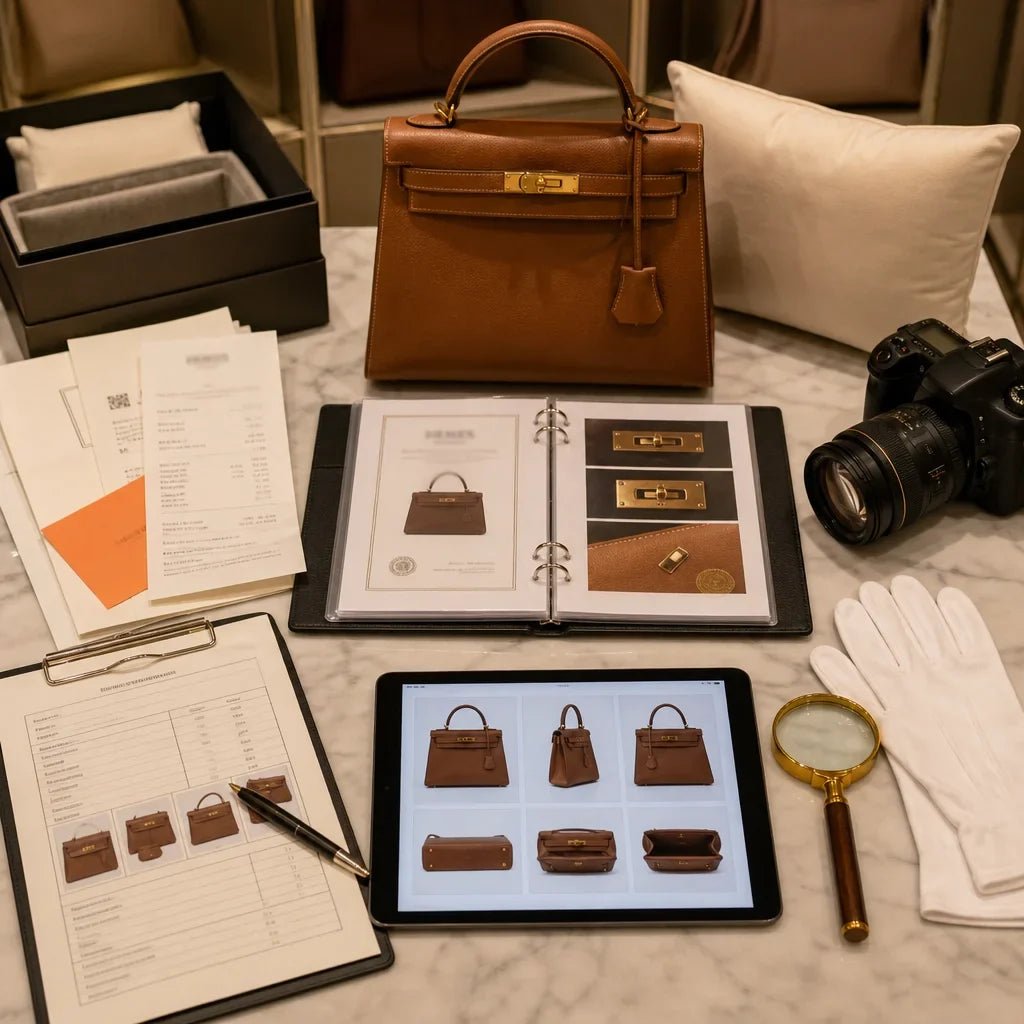
Professional-quality photographs of your bags create visual documentation that supports resale listings and provides clear reference images for insurance purposes. Unlike casual phone snapshots, deliberate storage photography captures the bag's condition, color accuracy, and distinctive features in consistent lighting.
When photographing for provenance documentation, include front and back views, side profiles, interior shots showing labels and serial numbers, and close-ups of any distinctive hardware or detailing. Proper lighting (natural daylight or diffused artificial light) ensures colors appear accurate. Inconsistent or dim photos undermine buyer confidence even if the bag is flawless.
Store these high-resolution images in an organized digital library, keyed to your purchase history spreadsheet. When you're ready to resell, you'll have professional-grade reference images ready rather than scrambling to photograph the bag properly while managing a listing deadline.
Photographing your collection effectively:

- Use consistent backgrounds (neutral white or light gray backdrop works best)
- Photograph in natural light near a window or use a light box for consistency
- Include images that show the full bag, interior details, serial numbers, and any distinguishing marks
- Save images at high resolution (3000+ pixels) and organize by brand and style
- Create a before-and-after folder if a bag undergoes restoration or professional cleaning
These images also serve as visual insurance documentation. If a bag is lost or damaged, you have clear evidence of its condition and appearance for claims purposes.
5. Condition Assessment Documentation: Establishing Baseline Quality
When you acquire a bag, its condition matters as much as its authenticity. Documenting the exact condition at the time of purchase creates a baseline that supports future resale pricing and establishes whether any damage or wear occurred during your ownership.
A condition assessment should note the bag's state honestly: whether leather shows signs of use, if hardware has any patina or scratches, if the interior has pen marks or stains, or if the bag exhibits any structural issues. Grade systems vary, but most luxury resale platforms use categories like "New," "Like New," "Excellent," "Good," and "Fair." Knowing where your bag sits on this scale at purchase time clarifies what condition it's in now and how its value trajectory has unfolded.
This documentation protects you both ways. If a bag you purchased as "Excellent" condition develops problems within weeks, your baseline assessment proves you received a misrepresented item. Conversely, if you're selling a bag years later, your condition documentation shows you received it in fair condition and maintained it well, justifying a healthy resale price despite normal wear.
Creating a condition assessment for each bag:
- Write a brief condition summary immediately after purchase: note any imperfections, wear patterns, or areas of concern
- Use consistent language ("pristine," "minor patina," "significant creasing," etc.) across your collection
- Include close-up photos of any areas showing wear or damage
- Reference the retailer or reseller's condition description in your notes for comparison
- Update the condition assessment annually or before resale to track how the bag has aged
This record becomes crucial if you ever dispute a reseller's claim about a bag you purchased from them, or if you need to explain condition changes to a buyer.
6. Specialized Purse Pillow Inserts: The Foundation of Structural Preservation
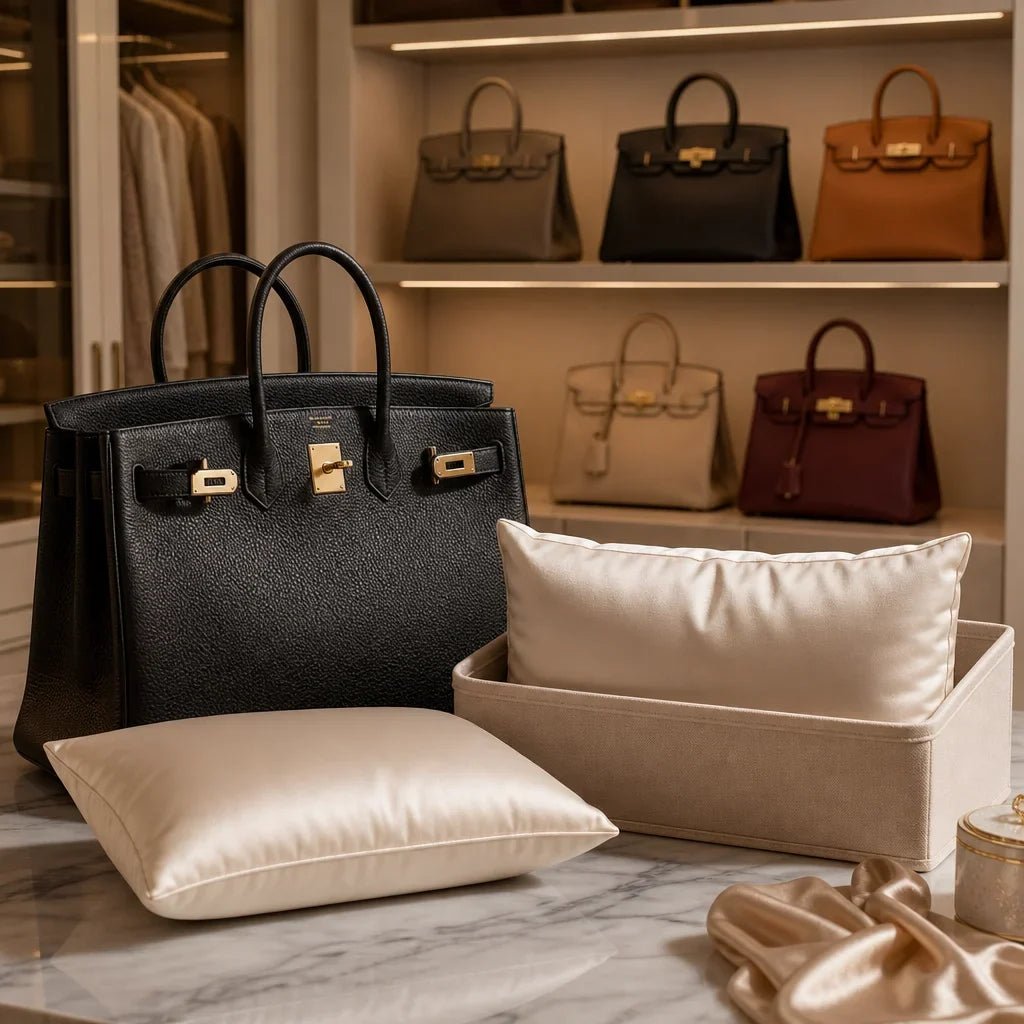
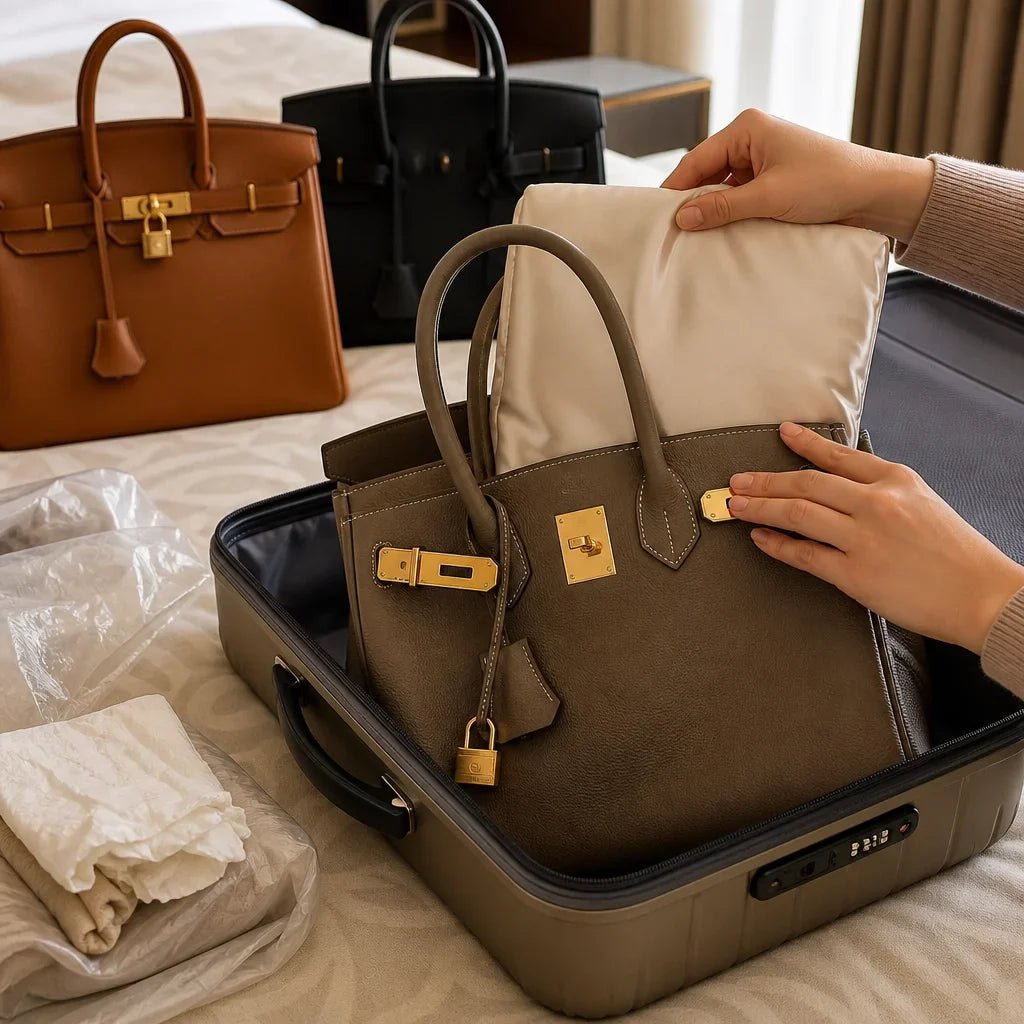
Documentation and photography preserve the historical record of your collection, but they won't stop a $4,000 bag from losing its structural integrity. That's where proper storage protection enters the equation. The single most effective tool for maintaining luxury handbag shape during storage is a specialized purse pillow insert designed to fill the bag's interior and prevent sagging, creasing, and collapse.
Standard tissue paper and generic "stuffing" fail because they compress, shift, and leave wrinkles. Our purse pillow inserts at Fabrinique are engineered specifically for luxury handbag preservation. Each insert features a premium polyester sateen shell that won't snag delicate leather or fragile linings, combined with lightweight Angel hair fiber fill that provides consistent support without excessive weight.
The real value emerges in precision fitting. We've studied the internal dimensions of hundreds of luxury handbag styles, from Hermès Kellys and Birkins to Chanel Classics and Louis Vuitton Speedies. Each Fabrinique insert is tailored to your specific bag style, ensuring the pillow fills the interior completely without forcing or deforming the bag. An undersized pillow leaves gaps where the bag can still crease. An oversized one forces the bag's sides outward, gradually distorting its signature shape.
When you store a bag with a properly fitted purse pillow insert, the leather maintains its original contour. The structured support prevents the bottom corners from collapsing and the sides from developing permanent creases. Over years of storage, this protection compounds. A bag stored with a Fabrinique insert looks nearly identical to when it was first purchased. Without one, even a well-maintained bag begins showing subtle signs of sagging and shape loss that reduce its appeal and resale value.

Why this matters for your resale value:
- A bag that maintains its original silhouette commands premium pricing; one showing shape distortion sells for 20-35% less
- Buyers of luxury bags inspect the bag's structure closely; a pristine silhouette signals meticulous care
- Hermès, Chanel, and other luxury brands price resale values partially on whether the bag holds its iconic shape
- The investment in quality pillow inserts (typically $30-80 per bag) returns itself through better resale pricing
We designed our inserts with free U.S. shipping and a comprehensive size range, so collectors can protect entire collections without shipping delays or gaps. The colorfast, non-abrasive materials mean you can store the pillow long-term inside the bag without concern about dye transfer or surface damage. When combined with proper documentation and storage conditions, a Fabrinique purse pillow insert is the foundation that preserves the physical condition underlying all your other preservation efforts.
The mistake many collectors make is treating storage as passive. They stuff a bag with whatever's available and assume it's protected. In reality, improper storage is the silent value eroder. A bag stored carelessly loses 40% of its potential resale value over five years, not from anything visible in photographs but from the way its structure has subtly degraded. By contrast, a bag stored with proper support maintains its value trajectory and shows almost no age-related structural decline.
7. Climate-Controlled Storage Records: Demonstrating Proper Care Conditions
Environmental conditions directly impact leather longevity, hardware integrity, and lining preservation. Extreme temperature fluctuations, high humidity, and direct sunlight accelerate deterioration that reduces resale value and authentic appeal. Serious collectors maintain climate-controlled storage environments, and documenting these conditions strengthens the resale narrative.
Temperature stability matters because leather contracts and expands with heat and cold, which gradually weakens its fibers and can cause cracking. Humidity below 30% dries leather excessively and causes brittleness; humidity above 60% encourages mold and mildew. The ideal storage environment maintains 40-50% humidity and temperatures between 60-75 degrees Fahrenheit.
If your collection lives in a climate-controlled closet, wine fridge storage unit, or bank safe deposit box, these conditions support your documentation story. When you list a bag for resale, noting that it was stored in climate-controlled conditions differentiates it from bags that spent years in attics, basements, or vehicles where temperature and humidity swung wildly.
Documenting your storage environment:
- Track the storage location (dedicated closet, climate-controlled unit, safe deposit box, etc.)
- If using a specialized storage unit or safe deposit box, note the provider and any certification of climate control
- Use a simple humidity meter in your storage area and record readings quarterly
- Document any climate control measures you've implemented: dehumidifiers, air circulation fans, silica gel packets
- Include storage location information in your condition assessment notes for each bag
This documentation proves to buyers that your bags weren't just kept out of sight but actively maintained in conditions designed to preserve them. Combined with high-quality purse pillow inserts and professional storage photography, climate control documentation creates an airtight case for why your bags command premium resale prices.
---
A complete preservation strategy weaves together all seven methods. Authentication certificates establish authenticity. Professional reports build buyer confidence. Purchase history records track investment value. Storage photography creates visual evidence. Condition assessments establish baselines. Purse pillow inserts preserve physical structure. Climate records demonstrate environmental care.
Most collectors focus only on the first few categories. They obtain authentication and take photos but skip the specialized storage protection that actually preserves the physical condition supporting those documents. This is where most value erosion occurs silently.
The most valuable step you can take this week is auditing which documentation gaps exist in your collection, then addressing them systematically. Start with authentication and receipts for your highest-value pieces. Move to professional photography. Then, critically, invest in proper storage infrastructure. A high-end Hermès Kelly deserves a precision-fitted Fabrinique purse pillow insert that maintains its iconic silhouette year after year. Your collection's resale value depends on it.