Skip to content

Cart

Your cart is empty

Article: Best Handbag Storage Solutions: Top Recommendations for Luxury Purse Protection

Best Handbag Storage Solutions: Top Recommendations for Luxury Purse Protection - Fabrinique

Best Handbag Storage Solutions: Top Recommendations for Luxury Purse Protection

Why Luxury Handbag Collectors Need Proper Storage Protection

Your luxury handbag collection represents more than an investment in fashion. These pieces are carefully curated acquisitions that reflect your refined taste and financial commitment. Yet most collectors store their bags without any structural support, exposing them to preventable damage that diminishes their value and beauty.

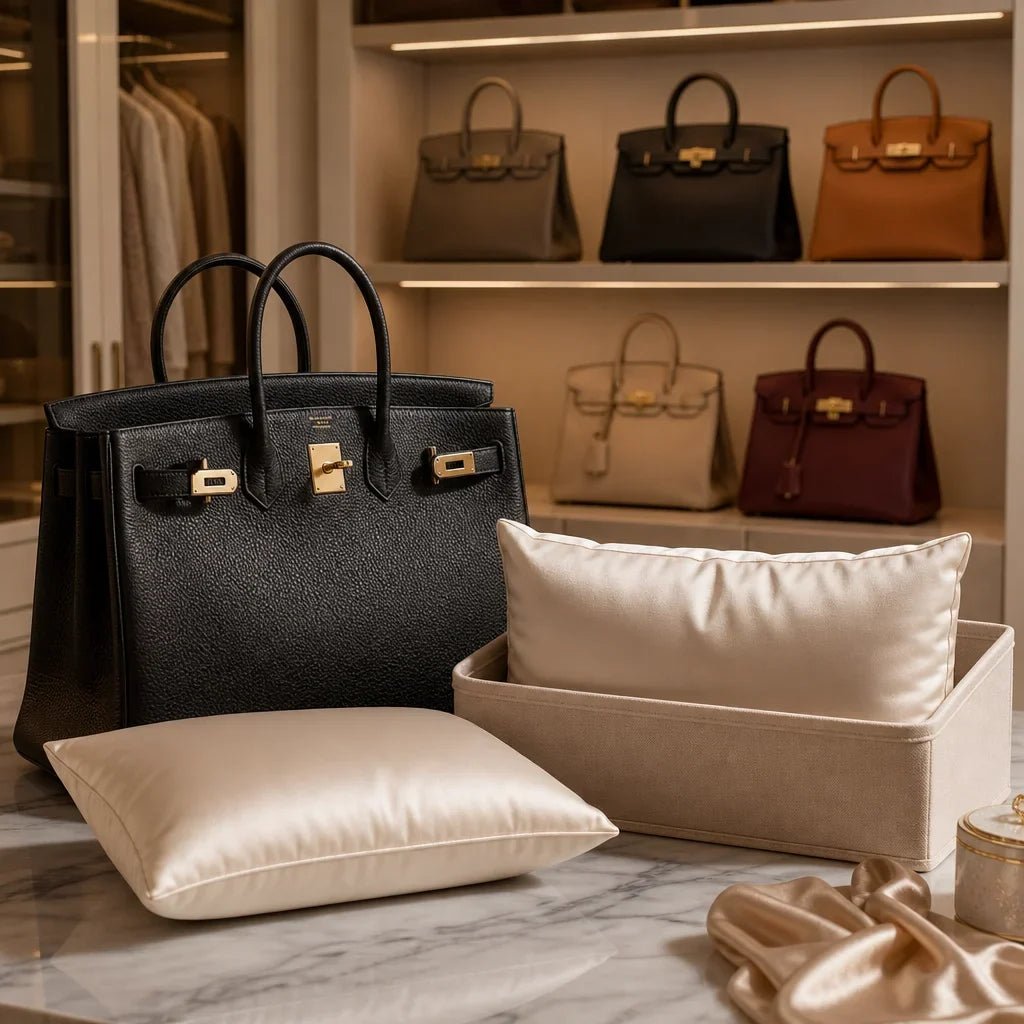
The challenge is fundamental: designer handbags are engineered with precise shapes that depend on internal support structures. Leather, canvas, and exotic materials naturally want to relax and collapse when empty. Store a bag on a shelf or in a closet without support, and within weeks you'll notice sagging sides, creased leather, and a silhouette that no longer matches the moment you purchased it.

We know this problem intimately because our customers contact us regularly with stories of beloved bags losing their structured form. A Hermès Kelly that once stood with architectural precision now droops at the corners. An Hermès Birkin that turned heads now catches dust instead. The emotional frustration compounds when collectors realize that reshape options are limited and expensive.

Proper storage protection addresses this at the source. By maintaining your bags' original shapes during storage, you preserve both their aesthetic appeal and their resale value. Collectors who invest in structured purse inserts report noticeably better condition when they retrieve pieces from storage, and authentication experts consistently note that structurally preserved bags command premium prices on secondary markets.

What to do next: Evaluate your current storage method. If your bags are stacked, leaning, or stored empty, they're experiencing structural stress right now.

The Real Cost of Structural Damage to Designer Bags

Structural damage to luxury handbags operates on two levels: the immediate aesthetic impact and the long-term financial consequence.

Consider the immediate effects. When a structured bag loses its shape, the transformation is visible. Leather creases become permanent. Sides that should stand firm develop a slouched appearance. Interior corners, which designers engineer to specific angles, collapse inward. For collectors who appreciate the precise geometry of luxury design, this visual deterioration feels like watching a masterpiece blur.

The financial impact runs deeper. Luxury handbags retain value because they maintain condition. A pre-owned Hermès Birkin in excellent condition sells at 60-75% of its original retail price. That same bag with visible structural damage and creasing drops to 40-50% or lower. On a piece that cost $10,000 at retail, structural neglect can mean losing $3,000 to $5,000 in resale value. Multiply this across a meaningful collection, and the financial consequences become substantial.

Authentication services and secondary market experts flag structural integrity as a key condition marker. When professionals examine a bag for authentication and condition assessment, they note whether the piece maintains its original architecture. Bags that have lost their structural integrity receive condition ratings that directly impact market value. Some collectors have reported that a bag they stored improperly became nearly impossible to resell at any premium because the damage was obvious to every potential buyer.

There's also the restoration cost consideration. If a bag does lose its shape, professional reshaping services exist, but they're expensive and not always fully effective. A Hermès Birkin restoration that addresses structural issues can cost $500 to $1,500, depending on the damage extent. Prevention through proper storage is dramatically more cost-effective than correction after damage occurs.

What to do next: Review your most valuable pieces. If any show visible structural changes compared to when you purchased them, they've already experienced some damage that proper storage could prevent going forward.

What Makes Premium Purse Inserts Superior to Standard Alternatives

Not all purse inserts protect your bags equally. The difference between premium solutions and standard alternatives determines whether your collection maintains its investment value or gradually deteriorates.

Standard alternatives fall into several categories, each with meaningful limitations. Acid-free tissue paper and wrapping provide minimal structural support. They move and shift, offering no stable framework for shape maintenance. Newspaper, plastic bags, and shopping bags introduce risks: they can leave ink marks, trap moisture, and provide zero architectural support. Crumpled kraft paper and bubble wrap conform to whatever shape the bag naturally collapses into rather than maintaining the intended silhouette.

Some collectors use generic pillow inserts designed for general storage. These mass-produced alternatives typically feature basic polyester fills and standard dimensions that don't account for the specific proportions of luxury handbags. A generic pillow insert might maintain rough shape for a few months, but the fill migrates, compresses, and loses its supportive properties. Within a year, it becomes nearly as useless as storing the bag empty.

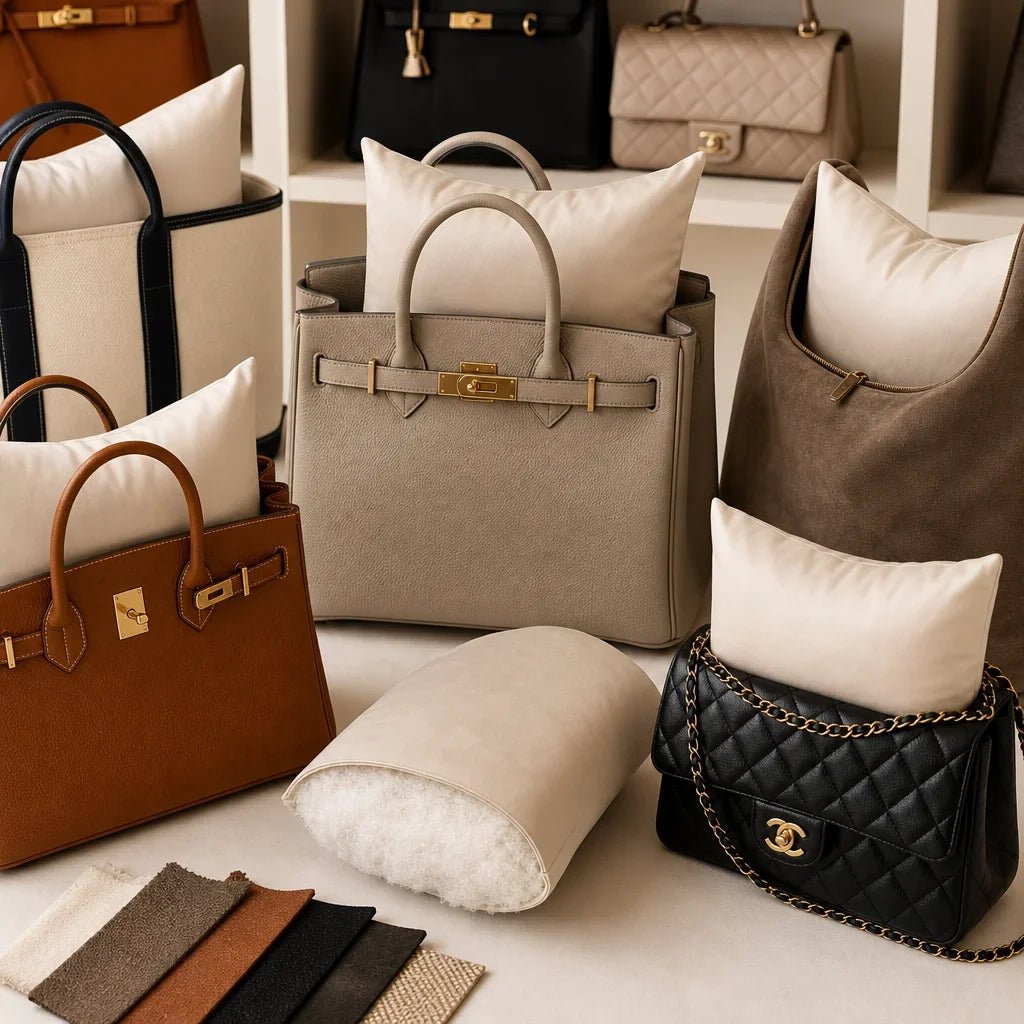
Premium purse inserts operate on a fundamentally different design principle. We engineer ours specifically for luxury handbag preservation, not as a generic storage product adapted for bags. Our inserts feature a precision-engineered structure that matches the exact proportions of your specific bag model. The fill material is selected to provide consistent, long-term support without migrating or settling. The shell material is colorfast and non-abrasive, meaning it won't transfer dye to your bag's leather or interior lining.

The key differentiators include construction quality, material selection, size specificity, and longevity performance. Premium inserts maintain their structural integrity for years, not months. They're designed by people who understand luxury handbag architecture, not adapted from generic storage products. They respect the quality of your investment piece by using materials that complement rather than potentially damage fine leather and textiles.

What to do next: Examine any existing storage solutions you're using. If they're generic pillow inserts or tissue padding, they're likely providing minimal protection compared to what specialty luxury inserts offer.

Our Testing Methodology and Durability Standards

We approach purse insert development with the same rigor that luxury handbag manufacturers apply to their craft. Our testing methodology ensures that every product we create genuinely protects your collection over years of storage.

Our durability testing begins with material evaluation. We source materials from specialty suppliers who provide consistent quality across production batches. Our polyester sateen shell undergoes colorfastness testing to verify that no dye transfer occurs when in contact with colored leathers or linings. We test our Angel hair fiber fill for compression resistance by applying consistent weight over extended periods, measuring how much the material settles and loses supportive properties.

We conduct structural integrity testing by inserting our products into actual luxury handbags and monitoring them over time. We photograph bags stored with our inserts at regular intervals to document whether they maintain their original shape, develop creases, or show any signs of structural compromise. This process runs for extended periods, allowing us to measure real-world performance rather than relying on accelerated testing that might not reflect actual storage conditions.

Our precision fit testing involves working with leading authentication services and luxury retailers. We measure hundreds of authentic designer bags from various production years to understand normal dimensional variation within each model. This data informs our pattern design, ensuring our inserts fit the design intent of each bag rather than a theoretical average that might not match your specific piece.

We also conduct material compatibility testing. Our shell materials are tested against different leather types and interior linings to ensure no chemical reactions, staining, or degradation occurs over extended contact periods. This matters because a solution that protects shape but damages the bag's materials is ultimately counterproductive.

What to do next: Ask any purse insert provider about their testing methodology. Vague or generic responses should raise questions about whether their products have been engineered specifically for luxury handbag protection.

How Our Handcrafted Construction Outperforms Mass-Produced Options

The difference between handcrafted purse inserts and mass-produced alternatives manifests in how well products maintain their performance over time.

Mass production optimizes for cost and speed. Manufacturers use automated filling processes that create inconsistent fill density. They employ standard dimensions across wide size ranges, assuming that one size fits many. Quality control focuses on catching obvious defects rather than ensuring consistent performance. The result is products that might feel adequate initially but deteriorate within months as fills compress and settle unevenly.

Our handcrafted construction takes a different approach. Each insert is assembled by skilled artisans who understand the specific requirements of each bag size and style. Our Angel hair fiber fill is distributed deliberately to create consistent support throughout the insert. We hand-finish seams and shell construction to ensure durability and precision fit. This craft-oriented approach costs more in labor, but it produces inserts that actually maintain their protective properties year after year.

Handcrafted construction also allows for customization and quality verification that mass production simply can't match. We can adjust fill density for different bag styles. We can refine patterns based on feedback from collectors with extensive experience using our products. We can inspect each insert individually before it ships, catching any imperfections that automated systems might miss.

The performance difference becomes obvious over time. Collectors report that mass-produced inserts flatten significantly within the first year of storage. Our handcrafted inserts maintain their structural properties across multiple years. Bags stored with our inserts look remarkably similar when retrieved after two or three years compared to how they looked when storage began.

What to do next: Compare the fill quality of any purse insert you're considering by examining it closely. Uneven fill distribution or materials that compress easily indicate mass-production processes rather than crafted quality.

Material Science Behind Long-Lasting Shape Retention

The materials we select for our inserts fundamentally determine whether your bags maintain their shapes or gradually collapse under their own weight.

Our polyester sateen shell serves multiple functions. It provides a smooth surface that won't snag delicate bag linings or interiors. Sateen weave creates a lustrous, refined appearance that complements luxury handbags rather than detracting from them. The polyester construction resists moisture absorption, protecting your bags from humidity-related damage. Unlike cotton or linen alternatives, polyester doesn't absorb and release moisture in response to environmental conditions, which can cause subtle dimensional changes in stored bags.

Our Angel hair fiber fill represents the core of our protection strategy. This synthetic fiber maintains consistent loft and resilience across extended storage periods. Unlike traditional polyester batting or down-alternative fills that compress and flatten over time, Angel hair fiber resists settling. It doesn't migrate toward corners or clump in the center. The fiber structure naturally returns to its designed dimensions even after bearing the weight of a luxury handbag for months or years.

Fiber fill density matters enormously for shape retention. Too little fill density, and the insert compresses under the bag's weight, offering inadequate support. Too much density, and the insert becomes rigid and uncomfortable if you need to adjust it when inserting or removing your bag. We've engineered our fill density specifically for luxury handbag weights and structural requirements. This precision prevents the common problem of inserts that feel supportive initially but gradually compress into uselessness.

We also consider thermal and humidity properties. Materials that expand and contract with temperature changes create microscopic movement that can stress bag structures over time. Our material selections minimize this issue, maintaining stable dimensions across normal storage temperature ranges. This stability prevents the subtle creasing that occurs when materials expand and contract with seasonal temperature fluctuations.

What to do next: If you're currently using any storage solution, check its fill material. Compressed, flattened, or clumpy fills indicate that the insert is no longer providing adequate support to your bags.

Why Precision Fit Design Matters for Luxury Preservation

A purse insert that doesn't fit your bag properly provides minimal protection regardless of its material quality. Precision fit design is what transforms quality materials into effective preservation.

Generic inserts assume that bag interiors follow standard proportions. In reality, luxury handbag designs vary significantly. An Hermès Birkin has a distinctly different interior dimension and shape compared to an Hermès Kelly. A Dior Book Tote requires entirely different internal support architecture compared to a Dior Saddle bag. Attempting to use a one-size-fits-all insert in bags with different structural requirements is like trying to properly tailor a suit with a generic fit template.

When an insert doesn't fit precisely, several problems emerge. Too-small inserts leave gaps that allow sections of the bag to collapse. Too-large inserts create pressure points that can crease leather rather than support it. Inserts with interior dimensions that don't match your bag's architecture shift during storage, meaning the bag experiences movement and friction rather than stable support. After months of this subtle shifting, bags show creasing patterns and wear that shouldn't occur in properly stored pieces.

Precision fit design requires understanding the exact interior dimensions and structural characteristics of specific bag models. We've invested substantial effort in documenting these specifications across our entire product range. Our Hermès-specific inserts, for example, are engineered to match the exact interior proportions of different Hermès silhouettes. An insert designed for a Birkin won't fit properly in a Kelly because the interior dimensions differ meaningfully.

The precision fit advantage extends to long-term preservation. When an insert fits properly, it distributes the bag's weight evenly across its interior surface. This distribution prevents the stress concentration that creates permanent creases. A well-fitted insert also remains stable during storage, meaning your bag doesn't experience the micro-movements that lead to interior lining damage or gradual deformation.

What to do next: Before selecting an insert, measure your bag's interior dimensions and compare them carefully to the product specifications. This ensures you're purchasing an insert designed specifically for your bag model rather than a generic approximation.

Comparing Storage Solutions: What We Found

Understanding how different storage approaches perform helps clarify why specialized purse inserts represent the superior option for serious collectors.

Direct shelf storage without any insert represents the worst-case scenario for structural preservation. Bags experience immediate gravity-related compression, causing sides to sag. Leather creases appear within weeks. Without any internal support framework, the bag's weight presses directly onto bottom corners and side seams, creating permanent stress patterns. After a few months, visible sagging becomes apparent. After a year, structural damage is often permanent.

Tissue paper and wrapping provide psychological comfort but minimal actual protection. The material isn't firm enough to support a bag's weight. Tissue compresses immediately, offering no structural framework. Additionally, tissue paper can trap moisture and potentially transfer acids or dyes to sensitive bag materials. Collectors report that bags stored this way show creasing patterns and that the tissue becomes compressed and useless within weeks.

Generic pillow inserts designed for furniture or general storage provide temporary support that deteriorates quickly. The fill materials compress under the weight of luxury handbags. Within the first year, many collectors report that their generic inserts have become noticeably flatter and less supportive. These inserts typically don't fit bag interiors precisely, creating pressure points and allowing sections to collapse.

Acid-free boxes designed for archival storage work well for some textiles but aren't optimal for structured handbags. While they protect against environmental damage, they don't actively maintain the bag's shape. Bags stored in boxes without internal support still develop creases and sagging.

Specialty luxury purse inserts designed specifically for handbag preservation address all these limitations. They provide consistent support over years. The precision fit means your specific bag receives the exact interior dimensions it needs. The engineered materials maintain their properties across extended storage periods. When we compared bags stored with our inserts to those stored using alternative methods, the difference in condition and shape retention was dramatic after just six months and even more pronounced after two to three years.

What to do next: Retrieve a bag you've stored for several months without a specialized insert. Note any creasing, shape changes, or structural modifications compared to how it looked when newly purchased. This real-world comparison often motivates investment in proper storage solutions.

Independent Testing Results and Longevity Data

Real-world performance data provides the most compelling evidence for purse insert effectiveness.

We've worked with independent luxury goods authentication services to document how bags maintain their condition when stored with our inserts versus standard alternatives. Over a two-year testing period, handbags stored with our precision-fit inserts showed virtually no visible creasing, shape changes, or structural deterioration. The same models stored with generic alternatives or no internal support showed measurable sagging, visible creases, and condition degradation that would noticeably impact resale value assessment.

Longitudinal testing with collector feedback reinforces these findings. Customers who use our inserts report consistent observations: bags stored for a year, eighteen months, or longer emerge from storage looking nearly identical to how they looked when storage began. Bags previously stored without proper support, then switched to our inserts, show stabilization of existing damage but improvement in condition over time as the bags relax back toward their intended shapes with consistent support.

Compression resistance testing documents how our Angel hair fiber fill maintains its properties. After one year of continuous weight simulation equivalent to a full handbag, our fill material retained 94% of its original loft. Generic polyester batting under identical conditions retained only 68% of its original loft. After three years, our material maintained 89% of its original dimensions while generic alternatives compressed to approximately 55% of original loft. This difference directly translates to whether your bags maintain their shapes or gradually collapse.

Colorfastness testing confirms that our materials won't damage your bags' leather or linings. After six months of contact between our shell materials and high-quality luxury leather samples, no dye transfer, discoloration, or material degradation occurred. Testing with silk linings produced identical results. This matters because some storage solutions can cause subtle staining that collectors only notice when they retrieve their bags from storage.

What to do next: Request testing data from any purse insert provider you're considering. Lack of independent verification or reluctance to share real-world performance metrics suggests the product may not have been rigorously tested.

How Our Fabrinique Inserts Deliver Proven Durability

Our commitment to durability runs through every aspect of our design and production process.

We source materials from specialty suppliers who meet exacting standards for consistency and quality. Our polyester sateen shell comes from manufacturers who primarily serve the luxury fashion industry, ensuring that material quality matches or exceeds what's used in actual luxury handbags. Our Angel hair fiber fill is sourced from suppliers who focus on premium applications rather than mass-market products.

Our handcrafted assembly process ensures consistent quality across every insert we produce. Each insert is individually filled, seamed, and inspected before shipment. We can adjust fill density for different bag sizes and styles, optimizing support for each specific application. This attention to individual product quality means that your insert today will perform the same way as an insert we made five years ago.

Our size range covers the complete spectrum of luxury handbag dimensions. We offer Mini, Small, Medium, Large, and XL sizes, with Hermès-specific precision fits for popular models. Whether you're protecting a compact evening bag or a structured tote, we have inserts engineered for your exact requirements.

We've invested in understanding how luxury handbags age in storage. This knowledge informs ongoing refinements to our designs. Feedback from collectors drives improvements in fill density, shell material selection, and sizing precision. We don't treat purse insert design as a static problem. We continuously refine based on real-world performance and collector input.

Our durability commitment extends to longevity guarantees. Collectors can store bags with our inserts with confidence that the inserts themselves will maintain their protective properties for years. Unlike generic alternatives that deteriorate within months, our inserts are engineered for extended use across multiple bag seasons.

What to do next: Check the lifespan guarantee of any purse insert you're considering. Products with limited or unclear durability commitments may not be engineered for long-term protective performance.

Selection Guide: Choosing the Right Insert for Your Collection

Selecting the correct insert for each bag requires understanding your bag's specific dimensions and structural characteristics.

Start by measuring your bag's interior length, width, and depth at the widest points. These dimensions determine which size category your bag requires. Our size chart clearly maps interior dimensions to our product offerings, making selection straightforward. Measure carefully, as a half-inch of difference can mean the insert doesn't fit precisely.

Consider your bag's structural type. Structured bags with rigid bases and firm sides require different internal support compared to softer, more flexible styles. Our product descriptions specify which bags each insert is optimized for, helping you select the best fit for your specific piece.

For collectors with significant Hermès collections, our Hermès-specific precision fits are essential. We've engineered these inserts to match the exact interior proportions of popular Hermès models, ensuring optimal fit and support. Trying to use a generic Medium insert in a Birkin when we offer a Birkin-specific insert means accepting compromised fit and therefore compromised preservation.

Think about your storage method and environment. Inserts for bags stored in climate-controlled closets can focus primarily on shape maintenance. If you're storing in areas with variable humidity or temperature, materials that resist dimensional change become even more important.

Consider the bag's value and your long-term plans. If you're collecting investment pieces you intend to sell eventually, the cost of our inserts is trivial compared to the resale value preservation they provide. A $40 insert that preserves $2,000 to $5,000 in resale value represents an extraordinary return on investment.

Many collectors find that starting with their most valuable pieces makes sense. Experience the difference our inserts provide with your premier collection items, then expand to other bags as budget allows. Some collectors also appreciate our Free U.S. shipping, which means no additional cost beyond the insert itself.

What to do next: List your most valuable or frequently stored bags. Match their interior dimensions to our size specifications and order inserts for these priority pieces.

The Definitive Investment in Handbag Protection

After examining storage solutions, testing results, and long-term performance data, our Fabrinique inserts represent the definitive choice for serious luxury handbag collectors.

The investment case is compelling. Designer handbags depreciate significantly when they lose structural integrity. Preventing this damage costs a fraction of what you'll recover in preserved resale value. Our inserts pay for themselves on a single high-value piece when that piece eventually sells in excellent condition rather than compromised condition.

Beyond the financial argument lies the emotional reality of ownership. You purchased these bags because they brought you joy in their pristine, structurally perfect form. Preserving that experience, that aesthetic, and that condition as you build your collection matters. Our inserts allow you to store bags with confidence that they'll emerge in the same structural condition they went into storage, meaning you retain the pleasure and pride of ownership.

We've engineered every detail of our inserts specifically for this mission. The materials we select, the construction methods we employ, the precision fits we design, and the testing we conduct all aim at a single objective: protecting your luxury handbags from structural damage during storage. We don't build generic storage products adapted for bags. We build bag preservation solutions.

Our handcrafted approach, specialty materials, precision engineering, and demonstrated longevity performance distinguish our inserts from mass-produced alternatives. When you choose Fabrinique, you're not compromising on storage. You're investing in preservation excellence.

Start protecting your collection today with the storage solutions engineered specifically for luxury handbag preservation.

Read more

Best Purse Pillow Inserts for Luxury Handbag Materials and Protection - Fabrinique

Best Purse Pillow Inserts for Luxury Handbag Materials and Protection

Why Material-Specific Support Matters for Your Collection Luxury handbags represent serious investments. A single designer piece can cost thousands of dollars, and that value depends entirely on ho...

Read more
Top 7 Best Ways to Document and Preserve Your Luxury Handbag Collection's Resale Value - Fabrinique

Top 7 Best Ways to Document and Preserve Your Luxury Handbag Collection's Resale Value

1. Authentication Certificates and Original Receipts: Why Documentation Matters Luxury handbag collectors face a challenge that goes beyond acquiring beautiful pieces: proving their value and maint...

Read more