Best Purse Pillow Stuffing Density Guide for Luxury Handbag Protection
Why Stuffing Density Matters for Your Luxury Handbag Collection
The structural integrity of a luxury handbag depends on consistent internal support. Without proper filling, even the finest crafted pieces gradually lose their shape during storage. Corners flatten, sides collapse inward, and the silhouette that makes your bag instantly recognizable begins to deteriorate. This isn't merely aesthetic damage—it's loss of value.
Stuffing density directly controls how well your bags maintain their intended form. Think of it like the difference between hanging a silk dress on a wire hanger versus a padded one. The hanger supports the garment, but the padding prevents creases and stress on delicate fibers. Similarly, purse pillow inserts work by distributing gentle, consistent pressure across interior surfaces, preventing the slouch and sagging that happen when bags sit empty.
The density of your filler material determines how much support it provides. Lower density allows flexibility and breathing room for delicate construction. Higher density provides firmer support for structured styles that need to maintain sharp lines and defined shapes. Most collectors make one critical mistake here: they assume one density works for all bags, then wonder why their Bottega handbag looks deflated while their structured Hermès piece seems overpacked.
What to do next: inventory your collection by bag construction type. Are most pieces structured leather, soft leather, or a blend? This determines which density standards will protect your investment most effectively.
The Problem with Improper Filling Techniques
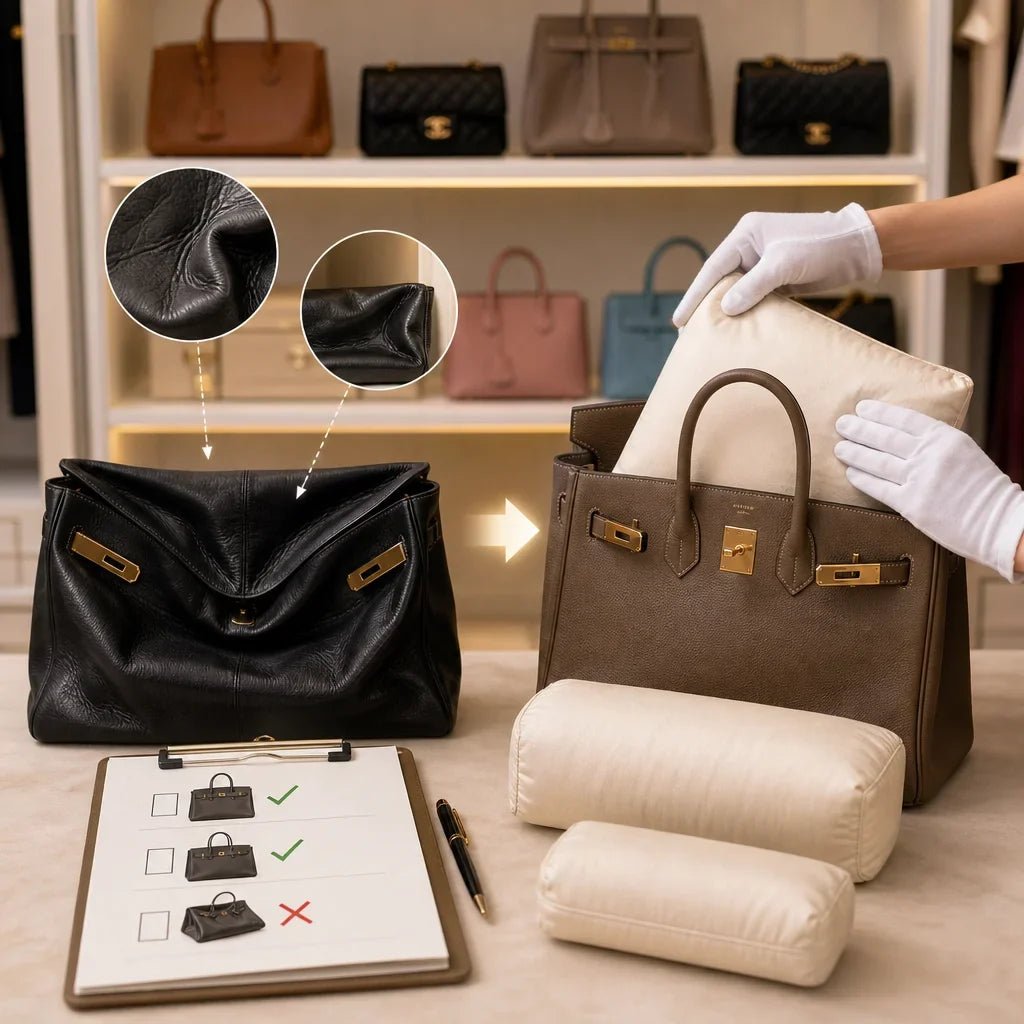
Improper stuffing damages handbags in two opposite directions. Under-stuffing allows bags to collapse onto themselves, creating permanent creases along side panels and bottom seams. The longer a bag sits inadequately supported, the more the material stretches and distorts. Leather develops stress lines that become more pronounced each time you wear the piece, and eventually these creases don't fully disappear when the bag is in use.
Over-stuffing causes equally serious problems. When filler material presses too firmly against interior leather or fabric, it creates permanent dents and stress marks. Soft leather gets compression marks that never fully release. The seams that attach side panels to bottom sections experience constant outward pressure, gradually weakening the stitching. Even handcrafted, premium construction can't withstand aggressive overstuffing indefinitely.
Many collectors resort to stuffing bags with crumpled tissue paper or old clothing. These materials compress unevenly, creating lumpy support that actually accelerates deformation. They also trap moisture and can transfer dyes or odors to pristine leather interiors. Some people use plastic bags or bubble wrap, which generates condensation and damages sensitive finishes.
The real issue is that most storage solutions weren't designed with luxury handbag anatomy in mind. Your collection contains pieces with varying wall thicknesses, interior dimensions, and material sensitivities. A generic filling approach fails because it ignores these differences.
What to do next: pull out one bag you're concerned about. Look at the interior walls and seams. Are there compression marks, creases, or areas where the leather appears stretched? This indicates your current storage method needs adjustment.
Our Recommended Density Standards for Premium Protection
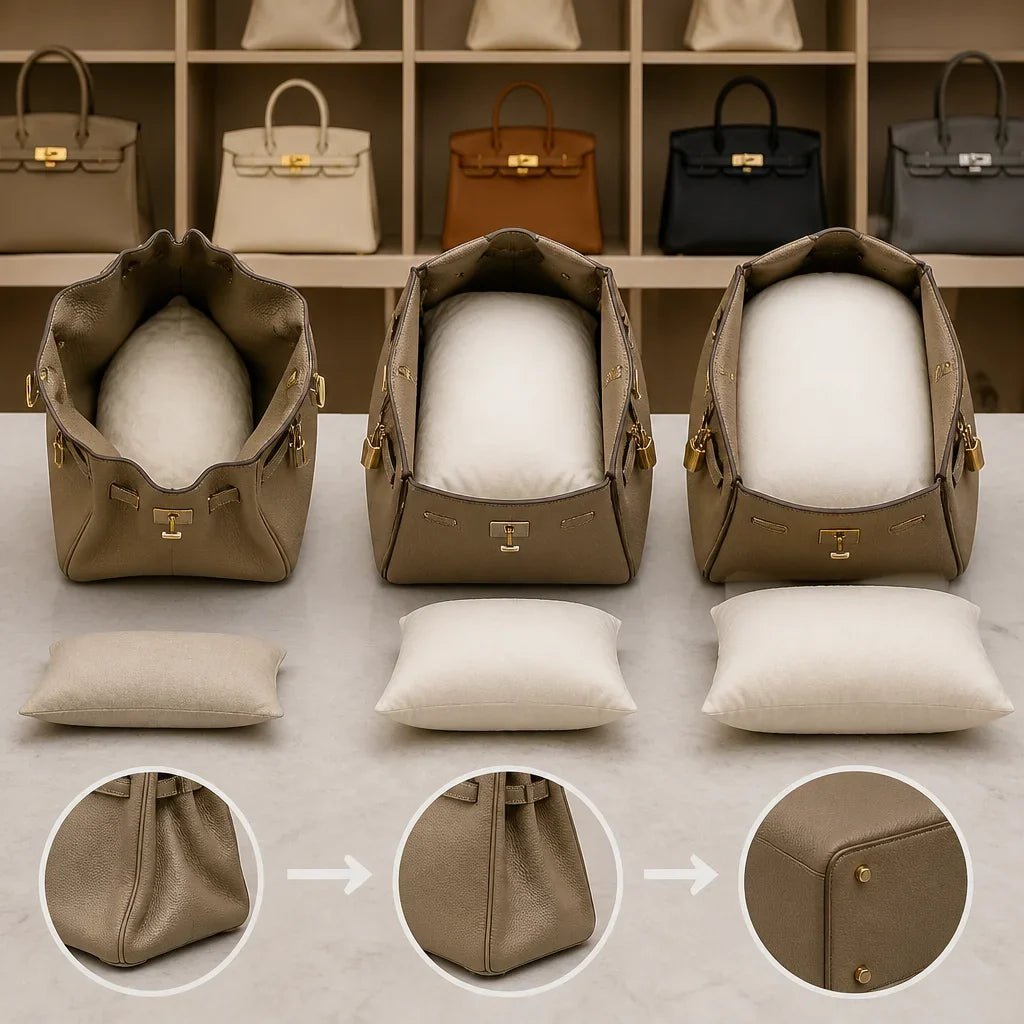
We've developed three density standards based on extensive testing with luxury leather goods conservators and handbag collectors. These standards account for different construction methods, material types, and structural requirements across the premium handbag market.
Our light density standard works for delicate, unstructured designs where interior space should remain relatively open. This density level applies gentle pressure without forcing bags into unnaturally tight shapes.
Our medium density standard provides balanced support for handbags with moderate structure. This is the most versatile option, suitable for the majority of collector pieces.
Our full density standard delivers maximum shape retention for structured styles that require firm interior support to maintain their distinctive silhouettes.
The difference between these standards isn't just about firmness. Each density level uses specific materials and construction techniques that preserve your bag's intended design while preventing deformation. We use premium polyester sateen shells paired with Angel hair fiber fill, carefully selected to provide support without degrading leather surfaces or creating permanent marks.
What to do next: match your three most-used bags to these density categories. Light for your softest leather piece, medium for your balanced structured bag, full for your most angular statement piece. This gives you a practical reference point for understanding how density affects shape retention.
Light Density Filling for Delicate Bags

Delicate handbags typically feature soft, unstructured leather, flexible construction, and minimal internal architecture. Examples include many crossbody bags, slouch totes, and drawstring styles that intentionally emphasize fluid, organic silhouettes. These pieces require the gentlest support approach.
Light density inserts maintain the bag's natural drape while preventing extreme collapse. The key distinction is that these bags aren't designed to be perfectly rigid. They're meant to have movement and flexibility. Your goal is preventing permanent creasing and sagging while respecting the designer's original vision.
With light density filling, you're essentially providing a subtle cushion against gravity rather than forcing the bag into a rigid shape. This approach works beautifully for supple leather that softens with age and use. The bag will still look naturally relaxed, but without the flattened appearance that develops when delicate pieces sit unstuffed for months.
Soft leather responds poorly to aggressive stuffing. Compression marks on premium, naturally tanned leather can be difficult or impossible to remove. Light density inserts prevent these marks from forming in the first place.
What to do next: identify one unstructured leather bag in your collection that you wear occasionally. Before your next extended storage period, use a light density insert. Compare how it looks after three months compared to your other delicate bags stored without support.
Medium Density Filling for Structured Handbags
The majority of luxury handbag designs fall into the structured category. Satchels, top-handle bags, and many tote styles intentionally use structured leather and internal framing to maintain defined shapes. Hermès Birkins, Kelley bags, and similar pieces represent this category, as do structured designs from other luxury houses.
These bags are engineered to hold a specific silhouette. Their interiors have defined dimensions, and their leather is typically thicker and more resistant to deformation. Medium density filling aligns with the bag's original engineering. You're not changing its shape; you're maintaining the shape the designer created.
Medium density inserts should feel moderately firm when you gently press on the bag's exterior. There's some give, but noticeable resistance. This firmness prevents the side walls from creasing inward and keeps the bottom profile sharp and defined. Structured bags stored with insufficient support gradually flatten at stress points where leather naturally wants to fold.
For pieces you wear regularly, medium density provides ideal support during storage between uses. When you remove the insert and wear the bag, the leather quickly reverts to its working shape. There's no tension from over-stuffing and no compromise from under-support.
What to do next: select your most-used structured handbag. Take a photo of it positioned from the top and front angles. Then install a medium density insert, store the bag for one week, and photograph it again from identical angles. The difference in edge definition and side panel firmness will be immediately apparent.
Full Density Filling for Maximum Shape Retention
Full density inserts serve bags with highly architectural designs or pieces you store for extended periods. Angular clutches, rigidly structured totes, and limited-edition designs with precise geometric proportions benefit from maximum support.
We also recommend full density for pieces in your collection that you wear infrequently. If a bag sits in storage for six months between uses, the combination of gravity and time creates more pronounced sagging than occurs with regularly worn pieces. Full density support mitigates this extended-storage challenge.
The firmness level here is noticeably high. When you gently press the exterior, the interior resists significantly. This firmness maintains every aspect of the original silhouette, from precise corner definition to the exact curve of side panels. For architectural statement pieces, this density level is essential. A Hermès Constance bag with soft support looks distinctly less polished than one that maintains its perfect geometric form.
Full density filling works particularly well for bags that feature interesting hardware placement or distinctive structural details. The firm interior support ensures these design elements remain as prominent and visible as intended.
One practical consideration: full density inserts require a bit more care during insertion and removal. The firmness means you can't simply stuff them anywhere. They need precise placement to work effectively. Our precision-fit inserts eliminate this complication because they're designed to fit your specific bag exactly.
What to do next: locate your most frequently photographed bag or your favorite statement piece. If you haven't been using a purse pillow insert, try full density support for two weeks. You'll notice the bag photographs better and maintains more refined proportions throughout the day.
Signs You're Overstuffing Your Designer Bags
Recognizing overstuffing before permanent damage occurs is crucial for protecting your investment. Several clear indicators show that your filler density is too aggressive for a particular piece.

If the exterior of your bag appears visibly puffed or bloated, you're using too much density. Premium leather should have a graceful curve, not an inflated appearance. The bag should look like itself, just better preserved.
Check the interior seams carefully. If you see the outline of filler material creating a ridge or pressure line along interior edges, that's overstuffing. These ridges eventually soften the leather near seams, accelerating wear in high-stress areas.
When you remove the insert and the bag immediately deflates dramatically, you were likely using excessive density. Properly filled bags should gradually relax back to their normal state over a few minutes, not collapse instantly.
Compression marks on the interior leather that fade slowly or become permanent indicate chronic overstuffing. These appear as slightly discolored or flattened areas where filler material pressed against the leather consistently.
If opening and closing the bag's closure feels difficult or the structure seems to resist your intended movements, reduce density immediately. Luxury bags should feel easy and natural to use, not restricted by internal support.
What to do next: remove any inserts from your bags right now. Open each bag fully and examine the interior for any dents, pressure marks, or unusual discoloration. If you find these signs, switch to a lighter density insert size for that piece.
How to Achieve Perfect Firmness with Our Inserts
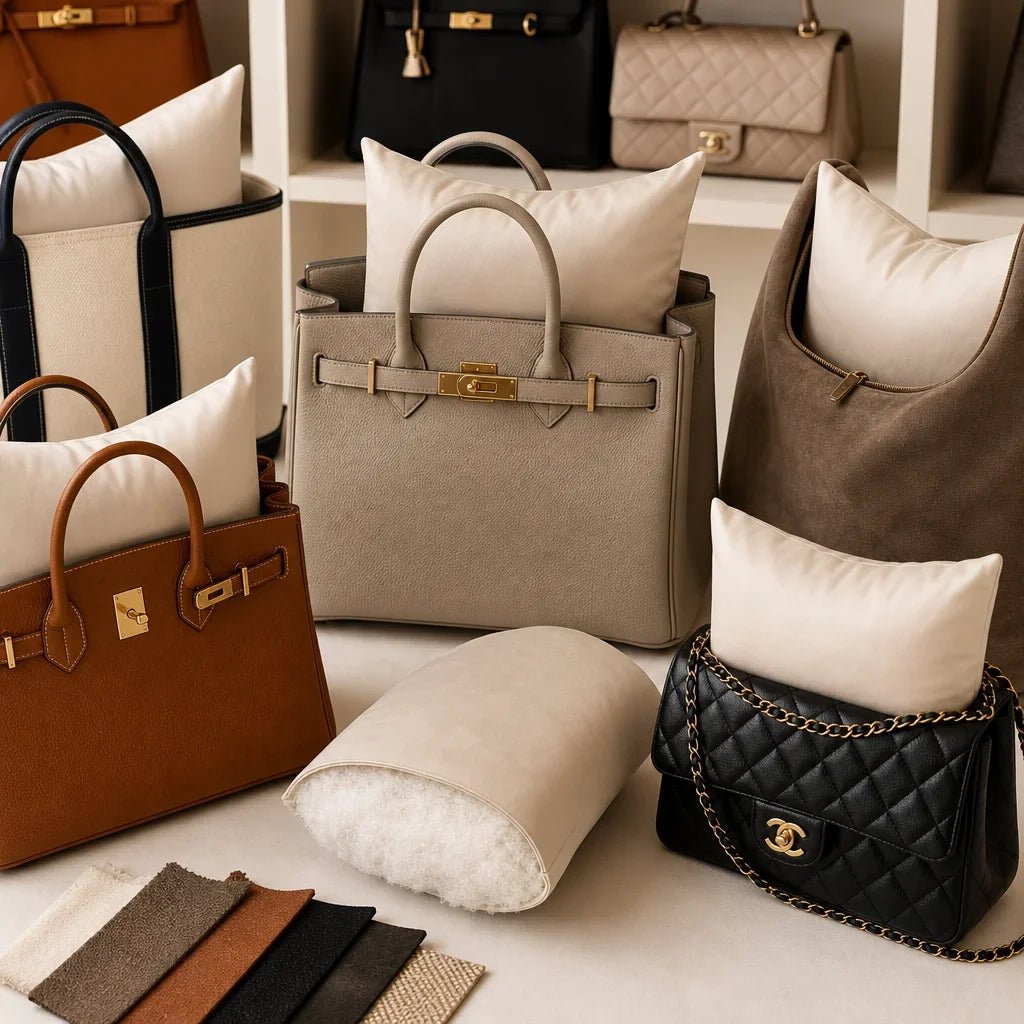
We designed our purse pillow inserts with precise firmness calibration. Each density level uses specific Angel hair fiber fill amounts to deliver consistent support. Our premium polyester sateen shell provides a smooth surface that won't snag or mark leather interiors.
Precision fit is essential to achieving proper density. An insert designed for a medium-sized Hermès Birkin placed in a smaller clutch will feel overstuffed. Similarly, an insert sized for a compact bag will provide inadequate support in a roomy tote. This is why generic inserts underperform. They can't account for the varied interior dimensions across luxury handbag styles.
Our Hermès-specific precision fits solve this problem directly. We've engineered separate inserts for Birkin, Kelly, Constance, and other signature models, ensuring the density you select matches your specific bag's interior perfectly. A medium density Birkin insert provides exactly the right firmness for that model's interior dimensions and construction.
Installation matters as much as the insert itself. Place the insert along the bag's bottom first, then gently slide it toward the back interior wall. The insert should fit snugly without forcing it into an awkward position. If you're struggling to position it, the size might not be ideal for that particular bag, or the density might be too high.
You'll know it's positioned correctly when the bag's exterior looks natural and the insert feels secure without shifting. Your hand should press smoothly over the exterior without feeling lumps or gaps.
What to do next: if you currently use generic inserts, measure your bag's interior dimensions (length, width, depth at multiple points). Compare these measurements to our sizing specifications. You might find that a precision-fit insert provides noticeably better support because it's engineered for your bag's actual interior space.
Comparing Density Approaches Across Different Bag Styles
Different bag construction styles respond differently to various density levels. Understanding these differences helps you select the ideal support for each piece in your collection.
Structured leather totes with rigid side panels perform best with medium to full density. These bags are engineered with architectural geometry, and the interior support should maintain that precision.
Soft leather crossbody bags and shoulder styles benefit from light density. Their beauty comes from natural movement and organic silhouette, which overstuffing compromises.
Drawstring and bucket-style bags need minimal support, typically light density at most. These designs intentionally feature flexibility and gathered openings. Firm interior support would distort their intended casual aesthetic.
Clutches and evening bags span the spectrum depending on their construction. A soft leather clutch might use light density, while an angular architectural clutch needs full density to maintain its precise form.
Woven bags require careful density selection because the weave itself provides some structure. Medium density usually works well, preventing collapse without forcing the weave into unnatural tension.

Hard-sided frames and structured specialty bags often need full density because their rigid construction demands equally firm interior support to prevent shifting.
What to do next: organize your collection by bag type and style. For each category, note the construction method and material. This organization makes it simple to select appropriate density levels when you rotate storage.
Why Our Handcrafted Design Ensures Optimal Stuffing Performance
We handcraft every purse pillow insert because handbag interiors aren't standardized. Mass-produced inserts use generic dimensions and uniform filling that rarely fit premium bags precisely. When an insert doesn't fit properly, its density rating becomes meaningless. Poor fit means shifting, uneven support, and compromised protection.
Our handcrafted approach means each insert is carefully constructed with attention to specific bag dimensions. The Angel hair fiber fill is distributed deliberately to achieve the exact density level you've selected. We don't approximate or use generic measurements.
The premium polyester sateen shell we use is colorfast and non-abrasive. It won't transfer dyes to your bag's interior, even if the insert rests directly against a delicate leather surface for months. The smooth finish prevents snagging on interior details.
Handcrafted construction also means we can offer precision fits for specific luxury bag models. We've engineered separate inserts for Hermès, and we continue expanding our model-specific offerings as we work with collectors. This level of customization is impossible with mass manufacturing.
The durability of our handcrafted inserts exceeds mass-produced alternatives. Quality stitching, premium materials, and careful construction mean these inserts maintain their firmness and shape for years. You won't need to replace them frequently or adjust them as they compress over time.
What to do next: compare the weight and feel of our inserts to any generic alternatives you might own. The difference in material quality and construction precision is immediately noticeable.
Final Selection Guide: Choosing the Right Density for Your Collection
Selecting the right density starts with understanding your specific bag's design and your storage timeline. Here's how to make the decision systematically.
For bags you wear regularly, use the density that corresponds to the bag's construction type. Structured pieces get medium density, delicate pieces get light density. The regular use means the bag is out of storage frequently, so you're preventing storage-related deformation rather than maintaining dormant pieces.
For bags you wear seasonally or occasionally, consider moving one density level higher. If you'd normally use light density, consider medium for that extended storage period. The longer the bag sits between uses, the more interior support matters.
For your most cherished pieces or limited-edition designs, full density provides maximum protection. This is particularly important for architectural designs where shape definition is integral to the piece's aesthetic and value.
Consider your climate and storage location. If you store bags in variable humidity or temperature, firmer density helps maintain shape despite environmental fluctuations.
Match the insert size carefully to your bag. This is where precision fit becomes critical. Our Hermès-specific inserts, for example, are sized for each model's actual interior dimensions. Don't estimate your bag's size; measure it or reference our detailed sizing guides.
Our comprehensive size range from Mini to XL, combined with our three density standards, covers virtually every luxury handbag in existence. Start by selecting the density category that matches your bag's construction type, then confirm you're using the correct size for that specific piece.
Free U.S. shipping means you can experiment with different densities without worrying about added costs. If your first selection doesn't feel quite right, ordering the correct density is straightforward.
What to do next: select three bags from your collection representing your most-worn pieces, your occasional-use favorites, and your statement pieces. Choose appropriate density levels for each: light for delicate, medium for structured everyday bags, full for showpiece designs. Install them and observe how each piece looks and feels over the next month. This practical experience will make density selection intuitive for your entire collection going forward.
Proper stuffing density protects your luxury handbag investment by maintaining structural integrity and preserving resale value. Light density supports delicate bags with minimal interference to their natural silhouette. Medium density maintains shape on structured everyday pieces. Full density preserves architectural designs and protects pieces stored for extended periods. Our handcrafted inserts, precision-engineered for specific bag models, deliver optimal density without guesswork. By matching the right density to each bag's design and your usage patterns, you ensure your collection remains pristine for years of enjoyment and value retention.