Best Exotic Skin Handbag Preservation Solutions for Luxury Collectors
Why Exotic Skins Demand Specialized Care
Exotic skin handbags represent significant investments. A single crocodile or ostrich leather piece can cost thousands of dollars, and collectors understand that proper storage is essential to maintaining resale value and aesthetic appeal. Yet most luxury handbag owners don't realize that standard storage methods actually accelerate deterioration of delicate exotic leathers.
We've worked with collectors for years and consistently hear the same concern: how to protect exotic skin handbags without damaging the investment. The answer lies in understanding what makes these materials unique, then implementing preservation strategies specifically designed for them.
Exotic skins are structurally different from traditional leather. Crocodile, ostrich, python, and lizard leather have unique grain patterns, varying thicknesses, and distinct moisture requirements that regular leather care protocols simply don't address.
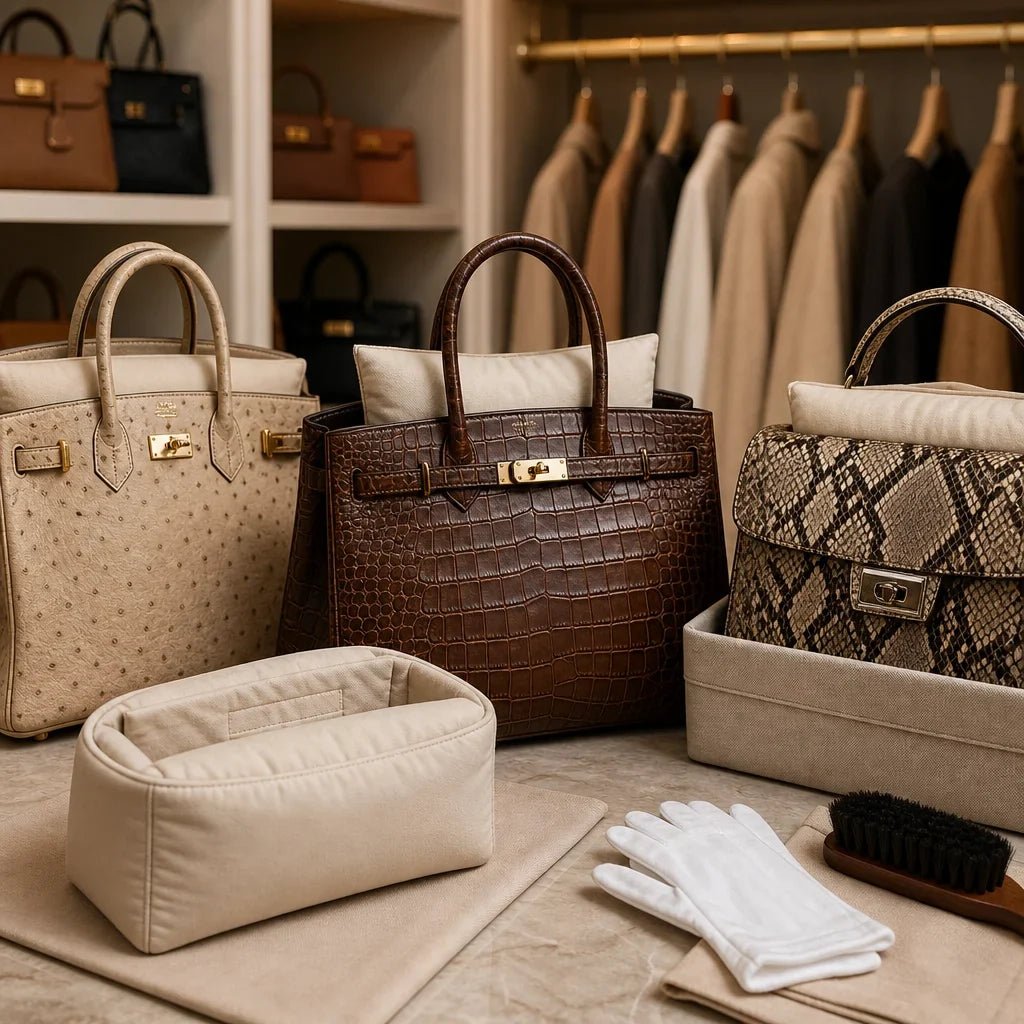
Crocodile leather, for instance, features natural scale patterns that create texture-dependent stress points. The scales themselves can crack or separate if pressure is applied unevenly during storage. Ostrich skin contains quill follicles that leave small indentations across the surface, making it more susceptible to dust accumulation and moisture trapping. Python and lizard leathers are thinner and more delicate than cow leather, demanding gentler handling.
Beyond material composition, exotic skins are prone to specific environmental vulnerabilities. They're sensitive to humidity fluctuations, UV exposure, and temperature changes. Unlike treated calf leather, exotic skins often retain natural oils that can migrate or degrade if exposed to inconsistent storage conditions. This is why a storage method that works for your regular leather handbags won't protect your exotic collection.
What to do next: Assess your current storage setup. If you're using generic dust bags or storing bags flat without internal support, your exotic pieces are at immediate risk.
Common Storage Mistakes That Damage Exotic Leather
We see three mistakes repeatedly among otherwise careful collectors.
The first is storing exotic handbags without internal support. When an empty bag sits folded or compressed, the exotic leather loses its original silhouette. Crocodile bags develop permanent creases along the sides. Ostrich leather begins to sag, and the quill follicles flatten, altering the distinctive texture that defines the bag's character. Once this happens, restoration is difficult and expensive.
The second mistake involves inadequate environmental control. Many collectors store bags in uninsulated closets, basements, or attics where temperature and humidity shift seasonally. Exotic leathers respond to these changes by expanding and contracting, which stresses the material and causes the finish to crack or separate from the leather base. A humid environment also promotes mold growth on exotic skins faster than on traditional leather.
The third error is using inappropriate materials for dust protection. Standard cotton dust bags trap moisture and don't provide any structural support. Some collectors use plastic storage containers, which create sealed humid environments that exotic skins absolutely cannot tolerate. We've seen ostrich leather develop permanent water stains and python skin develop mold within weeks in plastic storage.
What to do next: Open your storage area and check for signs of damage: creasing, discoloration, texture flattening, or any musty odor. These are warning signs that your current method is failing.
Essential Preservation Criteria for Exotic Handbags
Effective exotic skin preservation requires meeting four core criteria simultaneously.
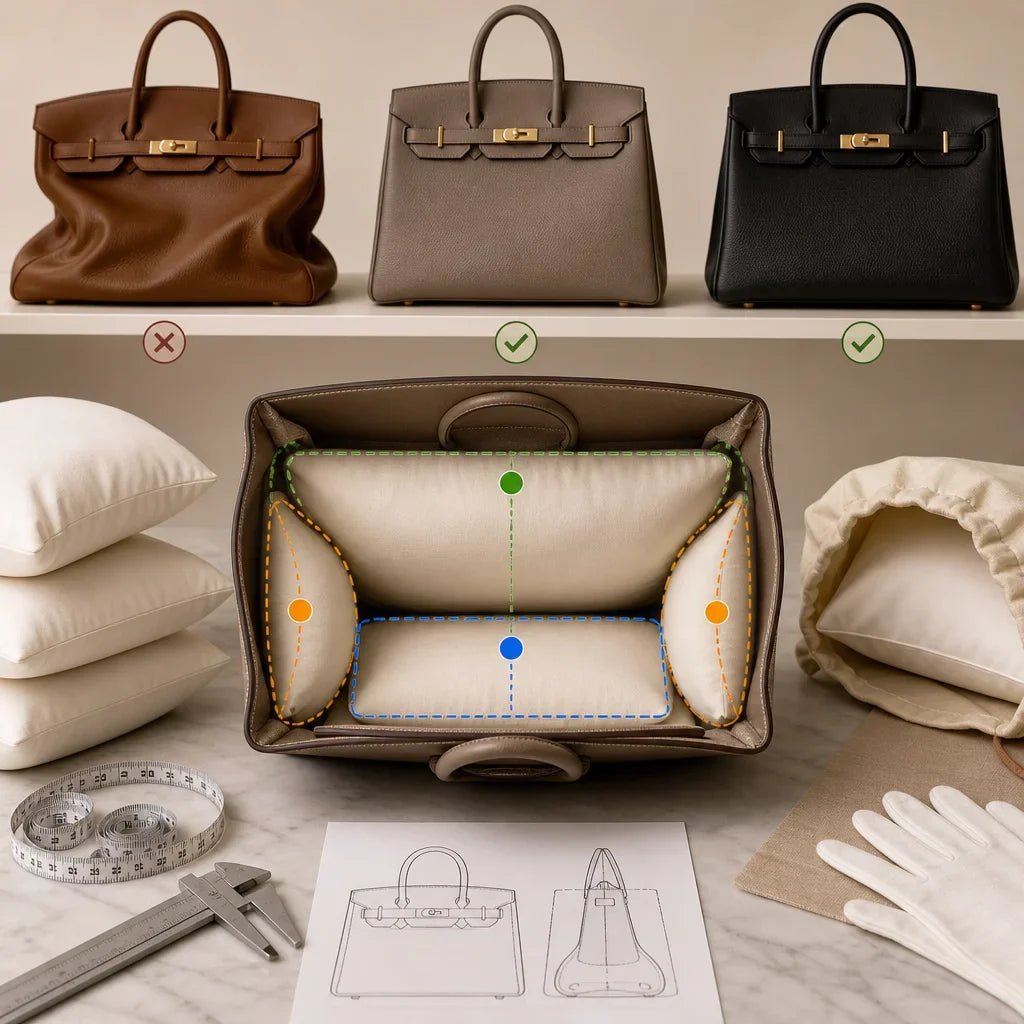
First, internal support must be gentle yet comprehensive. The inserts need to fill the entire bag volume without applying pressure that distorts the leather. For exotic skins, this means using materials that maintain consistent density and don't shift during storage.
Second, humidity management is critical. The storage environment and the materials inside bags must work together to maintain 45-55% relative humidity. This range preserves exotic leather flexibility and prevents both moisture damage and over-drying that causes cracking.
Third, materials must be non-reactive with exotic finishes. Exotic skins often feature specialized glazes, buffing, or color treatments that can be damaged by acidic materials or harsh fabrics. Any insert touching the leather needs to be pH-neutral and non-abrasive.
Fourth, structural integrity of the bag must be maintained exactly as designed. Each exotic handbag style has a specific silhouette that defines its appeal and resale value. Storage inserts must preserve that exact shape without forcing the leather into an unnatural configuration.
These criteria eliminate most generic storage solutions. They're also why we engineered our inserts specifically for exotic skins rather than adapting universal designs.
Crocodile Handbag Protection and Maintenance

Crocodile leather demands the most careful storage approach among exotic skins. The natural scale pattern that makes crocodile bags visually striking also creates structural vulnerabilities. Each scale transitions into the next at a slight angle, and uneven pressure can cause scales to lift or separate from the leather base.
Storage-related damage to crocodile bags typically appears as lifted or cracked scales along the sides, bottom, or corners where pressure concentrates. Creasing around scale intersections can become permanent, and once a scale lifts, it's nearly impossible to reattach without professional restoration costing hundreds of dollars.
For crocodile storage, internal support must distribute weight absolutely evenly across the entire interior. We've found that medium-density fills work better than firm fills for crocodile, since overly rigid materials create stress points at the scale edges. The insert also needs to extend into all corners and edges of the bag so that the scales maintain their original alignment even during long storage periods.
Environmental control matters particularly for crocodile because the leather is often more porous than other exotic skins. Humidity fluctuations cause the scales to expand and contract at different rates than the leather base, creating micro-stress that eventually compounds into visible damage. Storing crocodile bags in a climate-controlled closet or drawer is significantly more effective than using humidity-controlled storage containers.
What to do next: If you own crocodile bags, examine them for any lifted scales, especially along the bottom edges. This is the most common early damage indicator.
Ostrich Leather Preservation Techniques
Ostrich leather's distinctive quill pattern makes it immediately recognizable, but those follicles create unique preservation challenges. Each quill opening is a potential entry point for dust and moisture. When ostrich bags are stored without proper support, the weight of the leather causes the quill areas to compress, flattening the characteristic texture that defines ostrich leather's appeal.
Compressed ostrich leather doesn't naturally spring back to its original texture. Unlike the three-dimensional appearance of untreated ostrich skin, a compressed quill area becomes permanently dull and flat. Collectors who've experienced this describe it as the leather looking "tired" or "aged prematurely."
Moisture is particularly problematic for ostrich. The quill follicles trap humidity, and because ostrich is often more loosely woven than other exotic leathers, moisture penetrates deeper and takes longer to dry. This creates an environment where mold can develop within the leather itself, not just on the surface. We've seen ostrich bags that appeared visually fine on the outside but developed internal mold that destroyed the leather structure.
Ostrich leather storage requires inserts that:
- Provide even support across the entire surface to prevent quill compression
- Use breathable materials that allow moisture to migrate away from the leather
- Maintain consistent density so the quill pattern stays three-dimensional
- Include moisture-management features that prevent humidity accumulation
We've tested dozens of fill materials for ostrich, and lower-density, highly breathable options outperform traditional high-compression fills. The goal is to support the bag's shape without flattening the distinctive texture.
What to do next: Hold your ostrich bags at an angle toward light and look at the depth of the quill texture. Compare a well-maintained bag to one you've stored for a year. Texture flattening indicates your current storage method isn't adequate.
Python and Lizard Skin Safeguarding
Python and lizard leathers are thinner and more delicate than crocodile or ostrich, making them vulnerable to different damage patterns. Where crocodile leather can withstand moderate pressure, python and lizard skins show crushing damage easily. Even gentle compression applied over months can leave permanent impressions in these materials.
Python leather's scaled pattern is tight and uniform, which is visually appealing but structurally less forgiving than crocodile. The scales are smaller and more tightly bonded, so uneven pressure doesn't cause lifting as often, but it does cause localized crushing that appears as dull spots where the light-reflective quality of the scale pattern is lost.
Lizard skin is even more delicate. The scales are small and thin, and the leather underneath is naturally more fragile. Lizard bags stored without proper support often develop permanent wrinkles that follow stress lines in the leather. These wrinkles don't flatten out when the bag is removed from storage because the leather has permanently lost its original tension.
Both python and lizard leathers are also more sensitive to chemical exposure. Many storage materials include sizing agents, finishes, or treatments that can cause discoloration on these delicate skins. We've seen white python bags develop yellow stains from contact with standard storage materials, and blue lizard leather lose its color depth from exposure to acidic dust bag fabric.
Python and lizard storage requires:
- Very gentle, low-density support that prevents any crushing
- Chemical-inert materials with zero reactive compounds
- Breathable construction that prevents moisture trapping in thin leather
- Precise sizing that prevents the bag from shifting inside the insert
The margin for error with python and lizard is smaller than with other exotic skins. This is why generic storage solutions are particularly unsuitable for these materials.
What to do next: If you own python or lizard bags, check for permanent wrinkles or color changes, especially on areas that made contact with dust bag fabric.

How Our Exotic-Specific Inserts Deliver Superior Protection
We designed our exotic-specific inserts by studying damage patterns in thousands of stored handbags and testing materials against exotic leather in controlled environments. Our approach differs fundamentally from universal storage inserts because we've engineered different support profiles for each exotic skin type.
For crocodile protection, we use a medium-density Angel hair fiber fill that distributes pressure evenly without creating stress points at scale edges. The fill maintains consistent support across the entire bag interior, preventing the scale separation that develops with uneven pressure. Our crocodile-specific inserts are also built with reinforced corner support that prevents the common creasing pattern that appears along crocodile bag edges.
For ostrich, our inserts use a slightly lower density fill that prevents quill compression while still maintaining shape. We've engineered a specialized breathable shell that allows moisture to migrate away from the leather while preventing dust from entering the fill. This is critical for ostrich because trapped moisture is the most common cause of interior mold development.
For python and lizard, we've developed the gentlest support profile in our line. The fill is intentionally less dense than our other options, providing shape support without any crushing pressure. We combine this with our premium polyester sateen shell, which is completely chemical-inert and has zero reactive compounds that could discolor delicate skins. The shell is also softer and less likely to create pressure marks on thin leather.
Across all our exotic-specific inserts, we use only Angel hair fiber fill and premium polyester sateen materials. Both are pH-neutral, non-abrasive, and colorfast. Neither material reacts with exotic leather finishes, and both maintain their properties across decades of storage.
What to do next: Compare the materials in your current storage solution to these standards. If you're using cotton, standard polyester, or unknown fill materials, your exotic collection is at risk.
Material Composition and Durability Standards
We've chosen specific materials deliberately after testing hundreds of alternatives. This isn't about cost efficiency; it's about ensuring our inserts actually protect exotic leather rather than accelerating damage.
Our premium polyester sateen shell is woven to a specific density that provides structure without being rigid. Traditional polyester dust bags use lower-grade polyester that flexes too much and doesn't adequately support bag shape. Our shell maintains consistent tension that supports exotic leather silhouettes through long storage periods without shifting or compressing.
The sateen finish is critical for exotic protection. The smooth weave prevents snagging on delicate leather textures and won't leave impression marks on sensitive skins like python or lizard. We tested sateen against other finishes, including cotton twill and standard polyester, and sateen consistently outperformed all alternatives in both supporting bag shape and preventing damage.
Angel hair fiber fill is our choice for internal support because it maintains uniform density. Many manufacturers use polyester fiberfill, which compresses over time and creates uneven support. Compressed areas lose their ability to protect the bag shape, and the lower-density sections allow the bag to sag or develop creases. Angel hair fiber resists compression and maintains consistent support properties across decades of use.
We verify all materials are colorfast through accelerated testing that simulates years of storage. This testing matters because some exotic leather dyes can transfer onto storage materials, particularly in humid environments. We've ensured this won't happen with our materials regardless of storage conditions.
What to do next: Request material specifications from any storage solution provider. If they can't provide detailed information about their materials and why they were chosen, that's a warning sign that their inserts aren't engineered for exotic leather protection.
Size Compatibility and Precision Fitting
Generic storage inserts come in a handful of standard sizes that work adequately for conventional bags but fail for exotic handbags. Exotic bags often have more structural variation than traditional designs. A crocodile top-handle bag has different internal dimensions than a python shoulder bag, and standard sizing doesn't account for these differences.
Inadequate sizing creates two problems. First, an oversized insert allows the bag to shift inside the support, meaning the bag's shape isn't actually maintained. We've seen bags stored in oversized inserts develop wrinkles and shape distortion simply from settling inside the larger insert over months of storage. Second, an undersized insert applies pressure unevenly as it tries to fill a larger space, creating the exact stress concentrations that damage exotic leather.
We engineered a comprehensive size range specifically to match exotic handbag dimensions. Our Mini inserts work for small clutches and evening bags. Small inserts fit crossbody bags and compact totes. Medium inserts accommodate standard handbags and larger totes. Large inserts support oversized bags and travel pieces. XL inserts are available for trunk bags and extraordinary collector pieces.
We also developed Hermès-specific precision fits for collectors with specific Hermès styles. The Birkin, Kelly, Constance, and Evelyne all have distinct interior dimensions and structural characteristics. Our Hermès-specific inserts are engineered to match the exact silhouette of each model, ensuring perfect shape preservation.
Beyond standard sizing, we offer custom consultation for unusual or specialty pieces. If you own a rare exotic bag with non-standard dimensions, we can guide you toward the optimal insert size or discuss custom options.
What to do next: Measure your exotic bags' interior dimensions and compare them to the size guide on our site. Most collectors find their bags span two or three of our size categories.

Comparison of Protection Methods
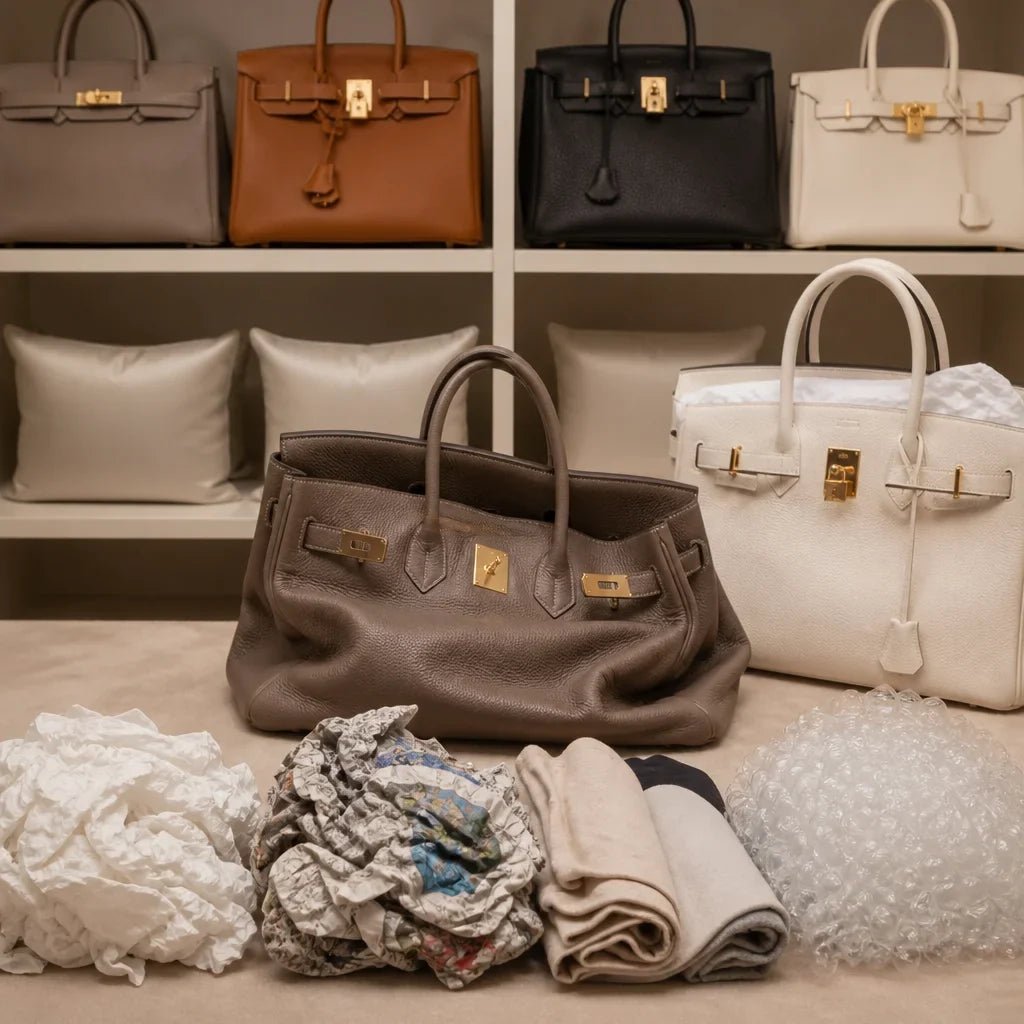
Collectors often compare our inserts to other protection approaches: storage in original dust bags, storing bags in climate-controlled containers, or using newspaper and tissue paper as filler. Understanding why these alternatives fall short clarifies why our exotic-specific inserts are necessary.
Original dust bags from luxury retailers provide minimal protection. They're designed primarily to keep dust off the exterior, not to maintain internal shape. The bags are typically too large for precise fit, they don't prevent humidity accumulation, and the fabric often isn't suitable for direct contact with exotic leather over long periods. Many luxury brands use cotton or muslin dust bags, which are acidic and can cause discoloration on sensitive exotic skins.
Climate-controlled storage containers seem logical but create sealed humid environments that exotic leather can't tolerate. Even with humidity control features, these containers don't provide internal shape support. Bags stored in containers often develop creases and shape loss despite the controlled environment. Additionally, the sealed environment can trap gases and odors that damage exotic finishes over time.
Newspaper and tissue filler are inexpensive alternatives that almost universally cause damage. Newspaper is acidic and transfers ink onto exotic leather. Tissue paper compresses quickly and creates uneven support. Neither material provides any shape support, and both can introduce mold spores and dust into the storage environment.
We've tested our inserts against all these alternatives in side-by-side storage trials. After one year of storage, bags protected with our exotic-specific inserts maintained their original shape and color, while bags using alternatives showed varying degrees of damage: shape loss, creasing, discoloration, or mold development.
What to do next: If you're currently using any of these alternatives, plan to transition your exotic bags to proper protective storage within the next month. The longer exotic leather sits in inadequate storage, the greater the risk of permanent damage.
Why Fabrinique is the Definitive Choice for Exotic Skins
We've designed every aspect of our inserts specifically for exotic leather preservation because this is what we focus on entirely. We're not a general storage company adapting universal products to exotic use. We're specialists in preserving luxury handbag structure and appearance, and exotic skins are where our expertise is most valuable.
Our materials are chosen specifically for exotic leather compatibility. The premium polyester sateen shell won't discolor python or ostrich. The Angel hair fiber fill maintains consistent support across decades without compression. Nothing we use is acidic, reactive, or abrasive. This precision matters because exotic leather is unforgiving; even minor material incompatibilities compound into visible damage over time.
Our size range exists because we understand that fitting matters. A bag that shifts inside its storage insert isn't being protected; it's being slowly deformed. Our comprehensive sizing from Mini to XL, plus Hermès-specific options, ensures every exotic bag receives proper fit.
Our expertise comes from years of working with collectors who own serious exotic collections. We understand the damage patterns specific to crocodile, ostrich, python, and lizard leather. We know what storage conditions these materials require and which preservation approaches actually prevent damage versus which merely appear effective.
We also stand behind our products. Free U.S. shipping on all orders removes the friction from protection investment. We provide clear guidance on how to store each exotic leather type properly. We're committed to helping collectors preserve their investments because that's the core of who we are.
What to do next: Review your current exotic collection storage. If you're not using specialized protection engineered specifically for exotic leather, this is the moment to upgrade. The cost of proper storage is negligible compared to the investment you've made in your exotic bags.
Getting Started with Your Exotic Collection Protection
The first step is to audit your collection. List each exotic bag you own, note its type (crocodile, ostrich, python, or lizard), and measure its interior dimensions. This inventory accomplishes two things: it confirms how many inserts you need, and it forces you to look closely at each bag to assess any current storage-related damage.
Next, visit our site and review our size guide. Match your bags to the appropriate size categories. If you own Hermès exotic pieces, check our Hermès-specific options. Most collectors with 5-10 exotic bags find they need a combination of size options rather than a single universal size.
Place your initial order focusing on your most valuable or delicate pieces first. Python and lizard bags should be your priority because these skins are most vulnerable to storage damage. Crocodile and ostrich pieces can follow in your next order if you're spacing purchases.
When your inserts arrive, use them immediately. Remove your bags from whatever storage method you've been using and place them with the appropriate inserts. Store the bags in a climate-controlled closet or drawer. Avoid basements, attics, or outdoor storage areas where temperature and humidity fluctuate seasonally.
Beyond storage inserts, maintain your exotic collection with basic care. Keep bags away from direct sunlight. Protect them from dust and moisture. If a bag gets wet, allow it to air dry completely before storage. Avoid overstuffing bags with unnecessary items that create internal pressure.
What to do next: Start with one exotic bag. Place it in our appropriate-sized insert today and observe the difference in how the bag sits and maintains its shape. This direct comparison will confirm why specialized protection matters for exotic leather.
By implementing proper exotic skin preservation, you're protecting significant investments and ensuring your collection maintains resale value. Our inserts are the active protection mechanism that makes this possible. Your exotic leather collection deserves the specialized care it demands, and we've engineered our inserts specifically to provide exactly that protection.