
Article: Hermès Bag Care: The Complete Owner's Manual

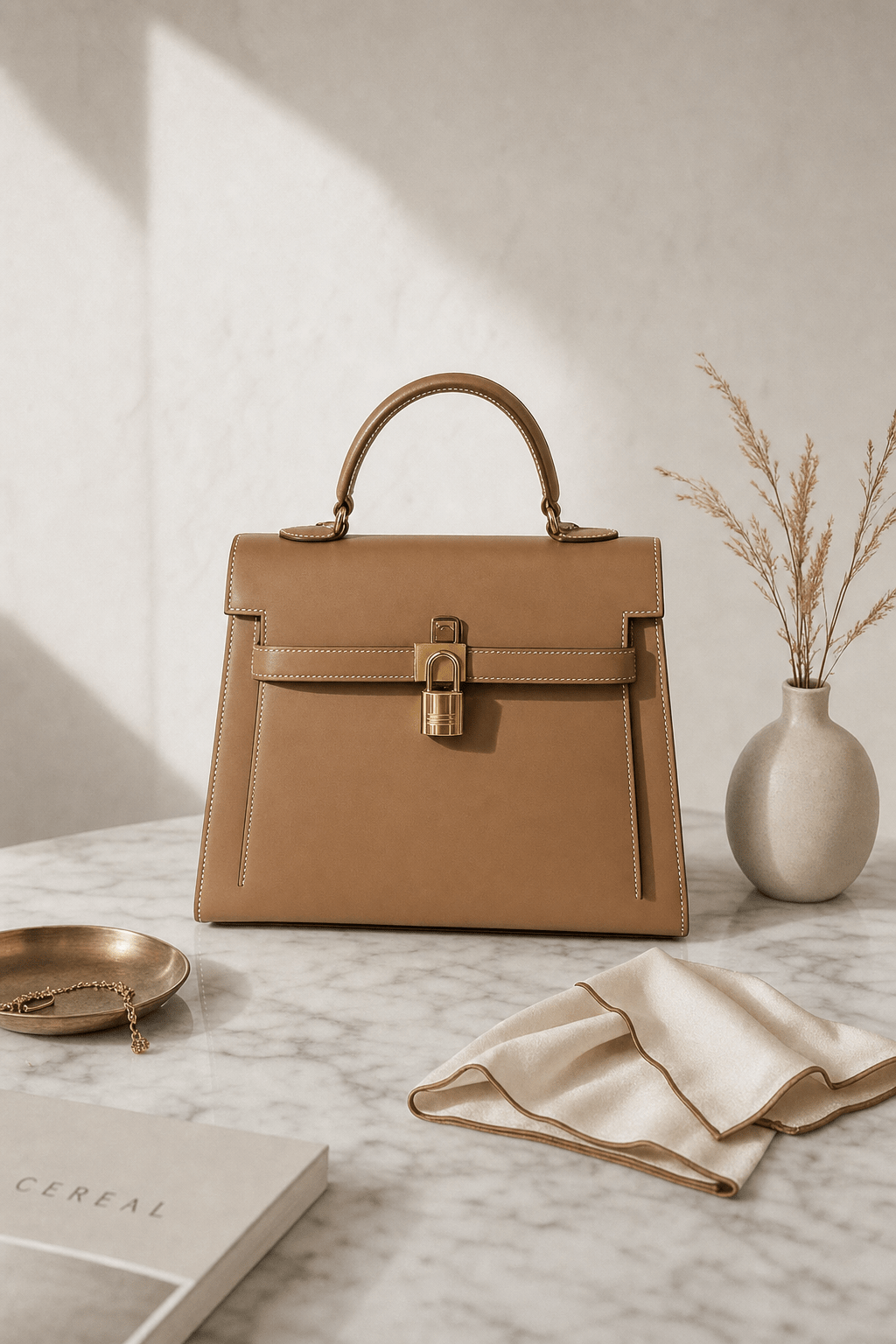
Hermès Bag Care: The Complete Owner's Manual
Hermès does not publish a care manual for its bags. There are guidelines, verbal advice from sales associates, and the informal knowledge passed between collectors, but no single authoritative document exists. This guide is the closest thing — a full owner's manual for every Hermès handbag, drawing on decades of collector experience, restoration specialists' advice, and the House's own spa program guidance.
If you own an Hermès, or you're about to acquire one, read this end-to-end. The rules that follow apply to every Birkin, Kelly, Constance, Bolide, Garden Party, Evelyne, and Picotin the House produces.
Why Hermès care is different
Hermès bags use distinctive materials and construction techniques that influence how individual pieces wear and should be cared for. Those construction choices are one reason care guidance should account for the specific leather, model, and condition.
Every Hermès bag is:
- Carefully selected leather. Leather characteristics can vary by material, hide, color, and individual bag.
- Traditional leatherworking techniques. Hermès is known for hand craftsmanship, including saddle stitching on many leather goods.
- Finished with waxed thread and hand-burnished edges. The edges of the leather are painted, sealed, and polished by hand.
Construction, leather, edge finishing, hardware, and prior use can all affect how a bag ages and what care is appropriate.
The Hermès leather library
Hermès uses roughly a dozen leathers regularly. Each has different care requirements. Here are the most common:
Togo
A pebble-grain calfskin — the most common Birkin leather. Firm, matte, holds shape well, scratches less than most leathers. Its pebbled surface can be relatively forgiving, but it should not be treated as waterproof. For cleaning or conditioning, follow current Hermès guidance for the specific bag.
Clemence
A softer, slouchier calfskin with a larger pebble grain. Its softer hand can behave differently from Togo. Keep it dry and avoid enclosing the bag while damp; follow current Hermès guidance for cleaning and conditioning.
Epsom
A stamped calfskin known for a firmer, more structured feel and an embossed grain. Its behavior differs from softer Hermès leathers, but it is not immune to scratches, moisture, pressure, or wear. Follow current Hermès guidance for cleaning and care.
Swift
A soft, matte calfskin with a very fine grain. Delicate — shows scratches, scuffs, and pressure marks easily. Highly sensitive to color transfer from denim or dyed fabrics. Care: extra padding in storage, avoid contact with any pigmented material.
Box calf
A highly polished, formal calfskin — glossy, luminous, and dramatic. Shows every scratch and requires attentive polishing. The most formal Hermès leather. Care: monthly polishing with a soft cloth, extra corner protection in storage.
Barenia
A vegetable-tanned calfskin that develops a rich, warm patina with age. Absorbent — care with liquids is critical. Care: keep dry, condition sparingly to preserve the natural patina.
Chèvre (goat leather)
A firmer, more structured leather with a distinct grain pattern. Common in Kelly bags for its shape-holding properties. Care: standard storage, minimal maintenance needed.
See our complete Hermès leather guide for detailed care by leather type.
Daily use protocol
Hermès bags reward consistency more than any specific treatment. The daily use protocol is short but non-negotiable:
Before use
- Remove any contents left from the previous day
- Wipe the interior briefly with a soft dry cloth
- Inspect the exterior for any residue from storage (dust, lint)
- Confirm all hardware is functioning smoothly (turnlock, clasp, feet)
During use
- Avoid overloading the bag. The appropriate load depends on the bag's size, construction, condition, and contents; avoid treating a single weight limit as universal.
- Set the bag down flat, on its feet — never on its side, never on a wet or dirty surface
- Avoid contact with denim, especially raw or dark denim (color transfer is often permanent)
- Keep pens capped and separate from the interior — ink is one of the hardest stains to remove
After use
- Empty the bag completely
- Wipe the exterior with a soft dry cloth
- If using an insert for storage, choose gentle support correctly sized for the bag rather than treating overnight use as mandatory
- Use a clean breathable dust bag when exterior protection is useful
The storage system
See our complete storage guide for the full protocol. In summary:
- Choose a stable indoor environment away from direct sunlight, obvious dampness, heat sources, and large environmental swings.
- Properly sized pillow insert for the specific model
- Original Hermès orange dust bag (or breathable cotton replacement)
- Upright rest position, on all four feet, never on its side, never hanging
Cleaning protocol by issue
Dust
Wipe monthly with a soft dry microfiber cloth. Never use liquid or wipes on Hermès leather without testing on the base first.
Water spots (Clemence, Togo, Barenia)
If water hits the leather, dab immediately with a soft absorbent cloth — do not rub. If a spot develops after drying, do not attempt home cleaning; book a Hermès spa evaluation.
Color transfer (denim, dye)
Do not attempt to clean at home. Color transfer requires professional treatment through the Hermès spa. Time-sensitive — book within weeks of noticing the issue.
Ink
Ink is the hardest stain to remove and often permanent. Do not attempt home cleaning. Book the Hermès spa immediately.
Grease or oil
Blot immediately (do not rub) with a soft absorbent cloth. If a spot remains after 24 hours, book the Hermès spa.
The Hermès spa program
Hermès offers restoration services for its own bags through the Hermès spa. What you can expect:
- Free basic evaluations. Bring your bag to any Hermès boutique for assessment; the House will quote any needed work.
- Wait times of 3–12 months for most restoration work. Book early.
- Restoration through the original artisan's workshop where possible, using the same materials and techniques as the original construction.
- No promises on outcomes. The spa will decline work it considers likely to worsen the bag. Some damage is not restorable.
Common spa services: edge re-painting, corner reinforcement, stitching repair, hardware polishing or replacement, interior lining replacement, deep cleaning of specific stains.
Common mistakes across all Hermès bags
Common mistakes
- Storing without an insert (front-panel sag, corner softening)
- Storing in plastic (mildew, coating breakdown)
- Hanging by handles (permanent handle stretch and stress lines)
- Over-conditioning (darkening, sticky finish)
- Home cleaning attempts on ink, dye transfer, or water spots (permanent damage)
- Denim contact (color transfer, often unrecoverable)
- Overloading (base bow, handle fatigue)
Annual care calendar
Periodically
Inspect bags based on how often they are used and the conditions where they are stored. Check for moisture, odor, pressure marks, color transfer, hardware contact, stitching issues, or changes in the leather. There is no universal inspection or spa schedule required for every Hermès bag.
Model-specific guides
Hermès produces dozens of bag models, each with different care nuances. See the model-specific guides for the details:
- Birkin 25 — The smallest Birkin
- Birkin 30 — The definitive Birkin
- Birkin 35 — The travel Birkin
- Kelly 25 — The most collectible Kelly
- Kelly 28 — The everyday Kelly
- Kelly 32 — The larger Kelly
Or start at the Hermès brand hub for the complete overview.
The bottom line
Proper storage is one part of caring for an Hermès bag. Avoid overstuffing, trapped moisture, prolonged pressure on handles or panels, and unverified home treatments that could affect the leather or finish.
Consistent storage can help a bag rest in its natural shape between wears. Use gentle, correctly sized interior support, a breathable dust bag, and a stable indoor storage environment. For cleaning, repair, conditioning, or restoration questions, follow current guidance from Hermès or a qualified leather-care professional.