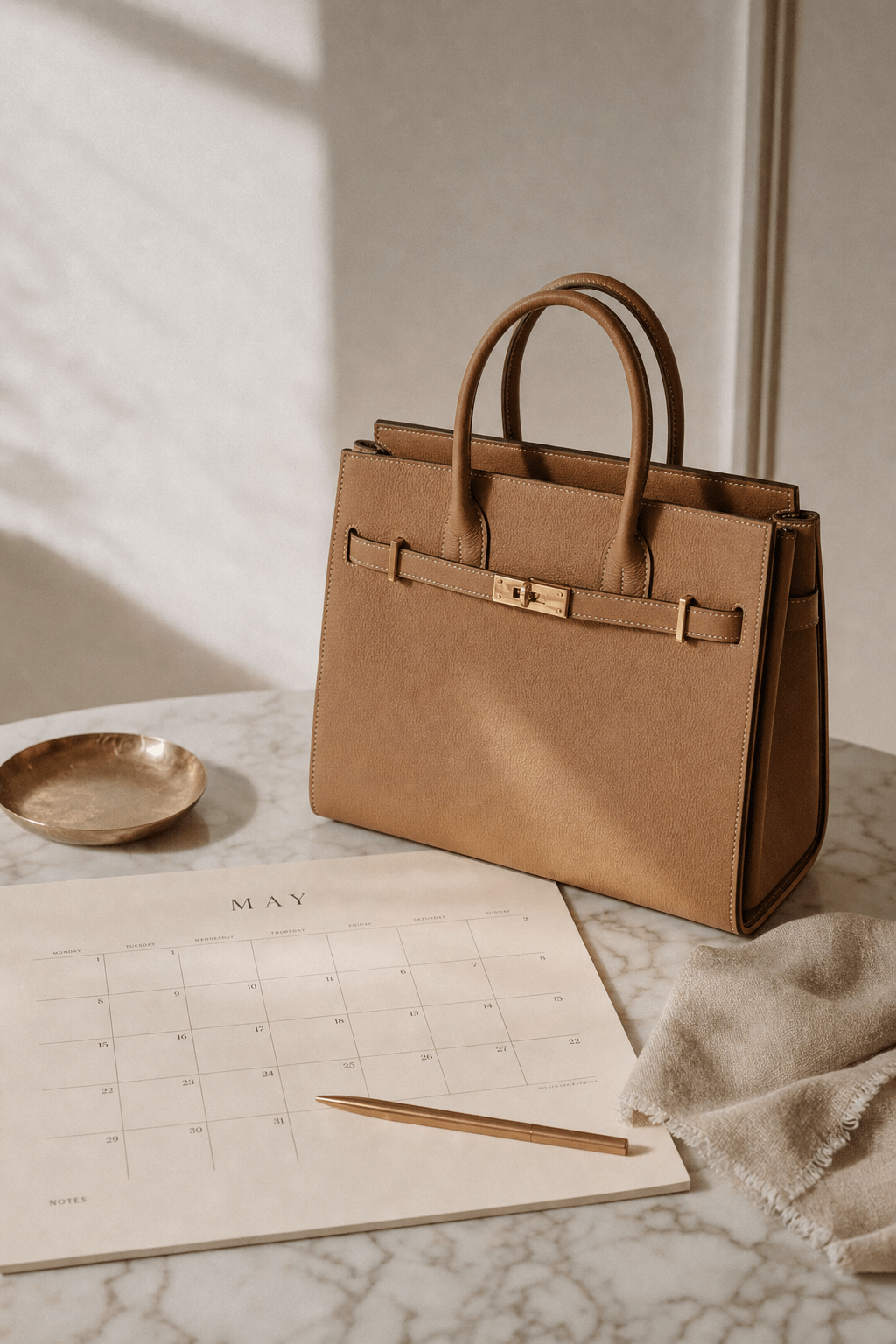
Bag care fails most often not from lack of knowledge but from lack of rhythm. Owners know humidity matters, know rotation matters, know conditioning matters, and still let a year go by without doing any of it because nothing on the calendar ever prompted the action. This is a month-by-month care calendar that ties together everything in the Bag Care Center into one system, so that each task happens when it is seasonally relevant rather than whenever a problem finally becomes visible.
The calendar below assumes a Northern Hemisphere seasonal pattern; if you live somewhere with an inverted or less pronounced seasonal cycle, shift the months to match your actual climate rather than the calendar date. What matters is the sequence of tasks relative to your local seasons, not the specific month label.
January: winter climate check
Indoor heating running at full capacity makes January one of the driest months of the year for most homes in temperate and cold climates, and dry air is as damaging to leather as excess humidity, just slower and less visually dramatic. Check your closet hygrometer reading against the 45–55 percent target described in how humidity destroys luxury leather, and set up a humidifier or humidity-buffering solution if readings are running low. This is also the month to inspect bags for any winter-specific damage from the past few weeks: salt stains on leather soles or bases from snowy sidewalks, water spotting from rain or snow that was not properly dried before storage, and stiffness in bags that saw cold-weather use. Check handles and straps specifically, since repeated exposure to wool coats and gloves can transfer lint, dye, and moisture in ways that are easy to miss until a stain has already set. Cross-reference against silica gel, dehumidifiers, and cedar to make sure your equipment is sized correctly for a dry-air month rather than left over from summer's humidity concerns, and if you traveled for the holidays, fold in a post-travel inspection now rather than waiting for August's dedicated check.
February: rotation month
February is the month to physically bring out every bag that has not been touched since the holidays, following the schedule and tracking system in the best way to rotate your bag collection. Inspect each bag for anything that crept in unnoticed: hardware tarnish, a faint musty smell, early signs of dye migration where two bags may have been touching for months. This is also a natural point to check whether your color and material rotation has been genuinely balanced, or whether one workhorse bag has quietly absorbed most of the winter's wear while everything else sat untouched.
March: spring transition
As heating cycles down and humidity begins to shift, March is the right month for a hardware polish pass across the collection and a pre-summer humidity check. Clean and lightly polish metal hardware on bags that saw heavy winter use, since hardware corrosion accelerates with the humidity swings coming in the months ahead. Recheck your hygrometer readings now, before summer humidity arrives, so any equipment adjustments have time to take effect before the harder months. This is also a sensible point to revisit vachetta and untreated leather trims for uneven winter patina, per preventing vachetta patina.
April: deep clean season
April is the month to schedule any professional cleaning your collection needs before the higher-humidity months arrive. Leather that has accumulated a winter's worth of oils, product residue, and minor surface soiling benefits from a proper clean while conditions are moderate, rather than waiting until a bag looks visibly dirty. Prioritize light-colored leathers and untreated trims first, since staining and discoloration are hardest to reverse the longer they set, and moderate spring humidity gives cleaning products the best chance to dry evenly without the tackiness that summer heat can introduce. For structural pieces prone to sagging or shape loss, this is also a good moment to check for early signs covered in why Birkins sag and how to fix it, since a spring correction is easier than waiting for the problem to become severe.
May: pre-summer prep
May is about getting ahead of summer conditions before they arrive: waterproofing treatments where appropriate, a fresh pass on vachetta and untreated leather trim protection per Louis Vuitton vachetta care, and travel prep for bags that will see airports and hotel rooms over the coming months. If summer travel is on the calendar, review the packing and handling protocols now rather than the night before a trip, since rushed preparation is when protective steps get skipped.
June: peak humidity begins
June marks the start of peak humidity season in most temperate climates, and the reverse of January's dry-air problem now applies. Recheck dehumidifier function and capacity against the guidance in silica gel, dehumidifiers, and cedar, and inspect closets and cabinets for the early mold risk signs described in how humidity destroys luxury leather: any tackiness in finishes, must in the air, or visible spotting in suede and unlined interiors. Bags stored in humid climates year-round should follow the fuller protocol in storing Hermès in humid climates, which applies across brands even though it is written with Hermès leathers as the primary case study.
July: travel season protocols
July is peak travel season for most owners, and airport and airline handling is one of the more damaging things a bag experiences all year. Review air travel protocols before each trip: how a bag is handled at security, whether it goes in an overhead bin or under a seat, and how it is protected against the wear and grime of transit. Structured bags need different in-transit protection than soft totes, and the details matter more than most owners assume until the first scuff or corner ding shows up mid-trip. Heat is a separate summer travel risk worth planning around: a bag left in a hot car trunk or checked into cargo can reach temperatures that soften adhesives and distort shape, so keep bags in climate-controlled cabin space whenever the itinerary allows it.
August: post-travel inspection
After a summer of travel, August is the month to do a proper post-travel inspection on every bag that left the house this season: check base corners for new scuffing, hardware for travel-induced tarnish, and interiors for anything picked up in transit. This is also a good point to reassess whether the bags chosen for summer travel actually held up as well as expected, which informs which pieces make the travel rotation next year versus which stay home.
September: fall transition, humidity swing management
September is a swing month in most climates, moving from summer humidity toward the drier air that heating season will eventually bring, and swings are mechanically harder on leather than either extreme held steady, per the swing-damage mechanics in how humidity destroys luxury leather. Recheck hygrometer readings weekly rather than monthly during this transition period, and adjust equipment proactively rather than waiting for a full month of drift before responding. This is also a sensible point to swap out any silica gel that has been working hard through a humid summer, recharging it in the oven per its instructions before the drier months ahead reduce the load on it.
October: autumn conditioning
As the air starts to dry with the first weeks of cooler weather, October is a sensible month for a conditioning pass on leathers that will see regular use through the colder months ahead. Cold, dry air is harder on leather than most owners expect, and a light conditioning treatment before the driest months set in helps the leather enter winter in better condition than if conditioning is left until visible dryness appears in January or February.
November: pre-winter bag switch
November is the month to think about which bags are actually appropriate for winter use and which should move into deeper storage until spring. Heat sources — car seat heaters, radiators, heavy coats brushing against handles — pose specific risks to leather that differ from summer's humidity concerns, and switching to winter-appropriate bags proactively avoids exposing a delicate summer piece to conditions it was not built for. This is also the point to make sure bags going into deeper storage for the season are properly prepared per the pillar guide on how to store luxury handbags properly.
December: year-end audit
December closes the calendar with a full audit: check every bag in the collection against its condition a year ago, update insurance coverage and valuations for any pieces that have appreciated or been added to the collection over the year, and refresh storage materials — dust bags showing wear, silica gel due for recharging, tissue paper due for replacement. This is also the moment to look back honestly at whether the rotation, humidity control, and seasonal habits actually held up over the year, and to reset anything that slipped before the new year's calendar starts the cycle again.
The mistake this calendar prevents
Most bag damage is not the result of one dramatic accident. It is the slow accumulation of skipped small tasks: a humidity check that never happened, a rotation that quietly stopped, a conditioning pass pushed back for a year. A calendar works because it converts vague good intentions into fixed dates, and fixed dates are what actually get done.
Building this into a system that survives a busy year
The calendar above is a framework, not a rigid schedule that has to be followed to the week. What matters is that each of the twelve months has at least one concrete, scheduled task attached to it, so that care does not depend on remembering to think about it. Pair this with the tracking habits described in the best way to rotate your bag collection, whether that is a simple spreadsheet, a photo log, or calendar reminders, and the entire system runs largely on autopilot after the first year of setting it up.
Expert tip: set all twelve reminders on the same day
Rather than trying to remember this calendar as a whole, set twelve recurring calendar reminders in one sitting, each dated for the appropriate month with a short note referencing the task. The upfront ten minutes of setup removes the burden of remembering the system at all, which is the single biggest reason seasonal care calendars fail after a few months.
How this ties back to the rest of the Bag Care Center
Every task in this calendar draws on a deeper guide elsewhere in the Bag Care Center, and it is worth treating this article as a map rather than a standalone checklist. For the foundational storage principles behind almost every month's tasks, start with the pillar guide on how to store luxury handbags properly. For humidity specifically, which touches January, March, June, and September directly, see how humidity destroys luxury leather and silica gel, dehumidifiers, and cedar. For rotation, which underlies February and the ongoing tracking habit, see the best way to rotate your bag collection. For dust bag and interior support habits relevant across nearly every month, see why every handbag needs a dust bag.
For brand and model-specific storage that informs how each bag in your collection should be handled during its off-months, see how to store a Birkin, how to store a Chanel Classic Flap, how to store a Louis Vuitton Neverfull, storing Hermès in humid climates, and storing Chanel long-term. For material-specific care that affects conditioning schedules in March and October, see Togo vs. Clemence vs. Epsom, caviar vs. lambskin, and Louis Vuitton vachetta care. For patina and shape issues surfaced during the February and April checks, see preventing vachetta patina and why Birkins sag and how to fix it. For packing habits relevant to the January and February checks, see why tissue paper is ruining your bags. For collection-planning context behind the pieces you are maintaining, see investment-grade luxury bags and building a luxury bag collection, along with the sizing guides for the Birkin, the Kelly, the Chanel Classic Flap, and the Neverfull. For brand context across the collection, see our pages for Hermès, Chanel, Louis Vuitton, Dior, Goyard, and Bottega Veneta.
Closing thoughts
A bag care calendar works because it turns twelve months of vague good intentions into twelve specific, dated actions, each sized to what the season actually demands rather than a generic year-round routine applied blindly. None of the individual tasks here are complicated on their own. What makes the difference is doing them at the right time, consistently, year after year, rather than reacting only once a bag already shows damage that a timely check would have caught months earlier. Set the calendar once, and the collection takes care of itself far more than most owners expect.