Best Handbag Inserts for Preserving Luxury Purse Resale Value
The Collector's Dilemma: Protecting Investment Handbags from Structural Damage
A Hermès Birkin bag costs thousands of dollars. A vintage Chanel Boy bag represents years of hunting for the perfect piece. These aren't just accessories; they're investments that should maintain their value. Yet collectors face a persistent problem: when you store a luxury handbag, its weight naturally collapses the sides, creases form at stress points, and the silhouette that originally caught your eye slowly warps beyond recognition.
The damage happens invisibly. You place your bag in a dust cover, tuck it into your closet, and months later discover that the structured leather has sagged. The interior pockets have creased. The overall shape no longer matches how it looked in photographs or when you first purchased it. At that point, resale value has already suffered. Collectors understand this risk, but many don't realize how preventable it is.
The core issue is structural support. Luxury handbags rely on precise engineering: leather thickness, internal architecture, and carefully placed seams work together to maintain a specific silhouette. Remove external support during storage, and gravity does what it always does. A quality handbag insert addresses this by providing internal support that prevents sagging while allowing the bag to maintain its intended shape indefinitely.
Why Handbag Inserts Matter for Resale Value
Prospective buyers examine handbags as carefully as inspectors examine vintage cars. They look for creasing, loss of structure, color fading, and any sign that a bag wasn't properly maintained. A bag with a compromised silhouette immediately signals poor care, and buyers adjust their offers downward accordingly. Even a subtle loss of shape can reduce resale value by 15-25%, depending on the bag's rarity and original price point.
The financial case is clear: a $5,000 handbag that loses structure during storage might sell for $3,750 instead of $4,500. The difference of $750 often exceeds the cost of quality protective inserts by orders of magnitude. When you account for multiple bags across a collection, the savings compound quickly.
Beyond resale economics, collectors also experience the satisfaction of ownership differently. Opening your closet and seeing your Birkins, Chanel flaps, and Louis Vuitton totes all holding their perfect silhouettes creates a different experience than finding them collapsed and creased. The bags you paid premium prices for actually look like premium items, even in storage.
Proper storage of luxury handbags involves multiple factors, but internal support stands as the non-negotiable foundation. Without it, even the best storage environment (cool, dark, breathable) can only do so much.
Sateen Shell Inserts: Premium Construction and Protection
We use polyester sateen for our purse pillow inserts because this material solves multiple problems simultaneously. Sateen has a smooth, lustrous finish that glides against leather without causing friction or abrasion. Unlike rougher materials that can snag delicate leather or create micro-scratches over months of contact, sateen maintains a protective barrier that feels safe against luxury materials.

The material also resists moisture absorption, which matters for long-term storage. If humidity fluctuates in your closet, you need a filler material that won't absorb ambient moisture and create mildew risk. Sateen's tight weave repels humidity while remaining breathable enough to allow air circulation inside the bag.
Durability is another advantage. A sateen shell maintains its integrity through thousands of insertions and removals. It doesn't pill, doesn't degrade from normal handling, and doesn't leave residue on your handbag's interior. After five years of regular use, a quality sateen insert looks and functions nearly identically to how it appeared on day one.
Foam Inserts: Limitations and Common Drawbacks
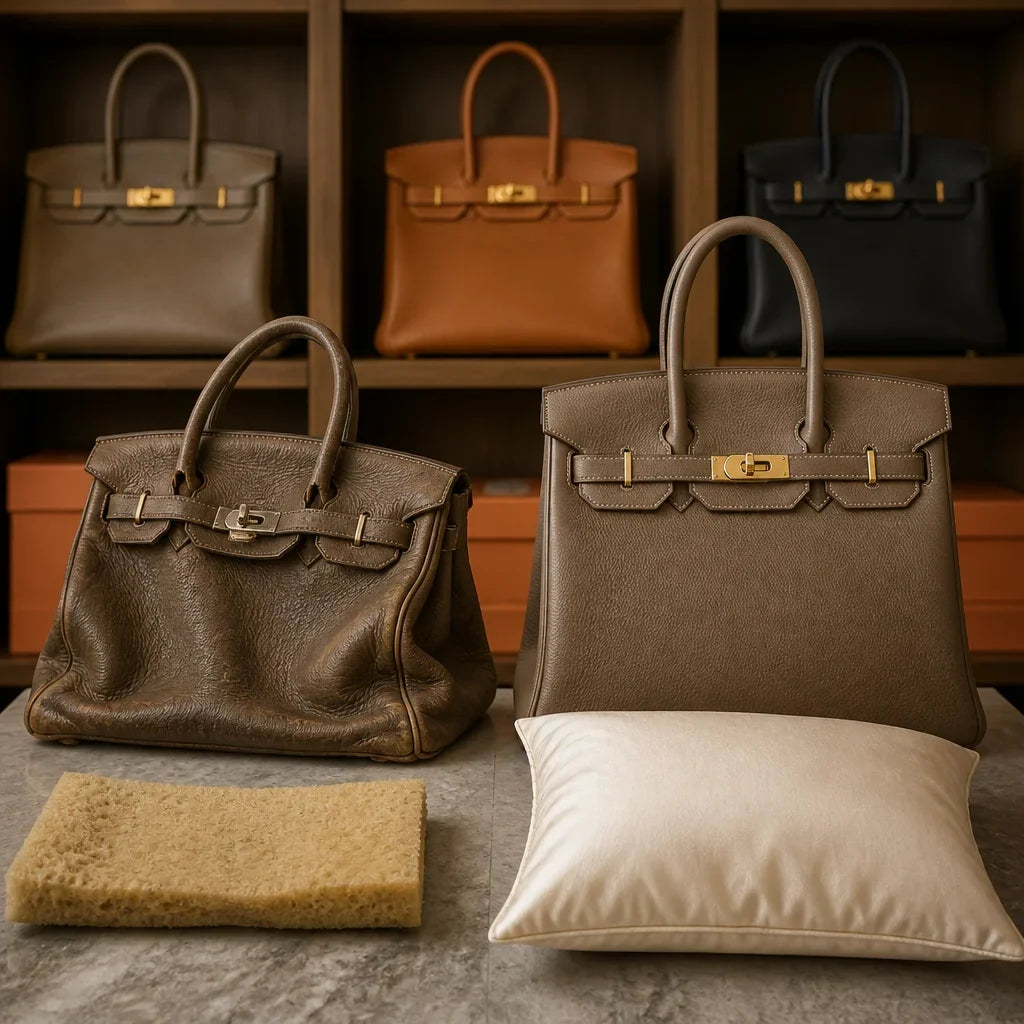
Foam represents the budget approach to handbag storage. It's inexpensive to manufacture and provides some structural support, which explains why many retailers stock foam options. However, foam creates several problems that become apparent only after months of use.
Foam compresses over time. The same material that provides firm support when new gradually flattens under the weight of your handbag. After six months, a compressed foam insert provides noticeably less support than it did initially. Within a year, the compression becomes severe enough that your bag starts sagging again, defeating the entire purpose of the insert.
The material also breaks down unpredictably. Cheaper foam varieties crumble, leaving small particles inside your bag and potentially staining leather with off-colored debris. The smell can be problematic too: low-quality foam off-gases a chemical odor that permeates into your bag's leather, creating an unpleasant smell that's difficult to eliminate.
Foam particles are another concern. As foam deteriorates, small pieces can lodge in bag pockets, seams, and internal compartments. Removing these particles without damaging the bag becomes tedious and sometimes impossible.
Material Comparison: Durability, Safety, and Long-Term Performance
When comparing storage materials, several metrics matter equally. A material must protect the bag, last longer than the bag itself, and remain inert even after years of contact with luxury leather and silk linings.
Sateen excels across all metrics. It's chemically stable, meaning it won't react with leather treatments, dyes, or metal hardware. It's physically durable, resisting compression and degradation. It's also aesthetically compatible; the soft luster of sateen complements luxury leather visually, which matters when you're checking on your collection.
Cotton alternatives seem appealing due to their natural origins, but they absorb moisture readily and can harbor mildew in humid climates. They also compress over time, though not as severely as foam. Linen has similar drawbacks. Synthetic materials like polyester microfiber, while durable, are often chosen for cost rather than performance. Many microfiber products leave lint on bags, and the texture can snag delicate linings.
Acid-free paper was once standard in luxury bag preservation. While it prevents chemical damage, paper doesn't provide structural support against sagging. It's useful for preventing moisture and odor but shouldn't be your primary insert material.

Angel Hair Fiber Fill Advantages Over Standard Alternatives
The filler inside our inserts uses angel hair fiber, a material specifically engineered for this application. Angel hair fiber consists of extremely fine, crimped synthetic fibers that compress minimally while distributing weight evenly across the insert. This prevents the bag from settling into problematic creases while adapting slightly to your bag's internal contours.
The advantages become obvious through comparison. Standard polyester fiberfill, common in cheaper inserts, compresses quickly and unevenly. You end up with hard spots and soft spots within the same insert, creating uneven support. Angel hair fiber maintains consistent density throughout the insert's lifespan, which means the support profile remains stable across years of storage.
Angel hair fiber is also non-abrasive and hypoallergenic. It won't cause any reaction if it contacts your skin during insertion or removal, and it's completely safe around sensitive materials. The fibers are colorfast, meaning they won't bleed or transfer color onto your bag, even if moisture somehow enters the insert.
Weight distribution matters more than many collectors realize. If your insert is too firm in one area, it creates a pressure point that can actually cause creasing. If it's too soft, it allows sagging. Angel hair fiber finds the balance: firm enough to support the bag's weight, flexible enough to distribute that weight evenly.
Precision Fit Design: Why One-Size Solutions Fall Short
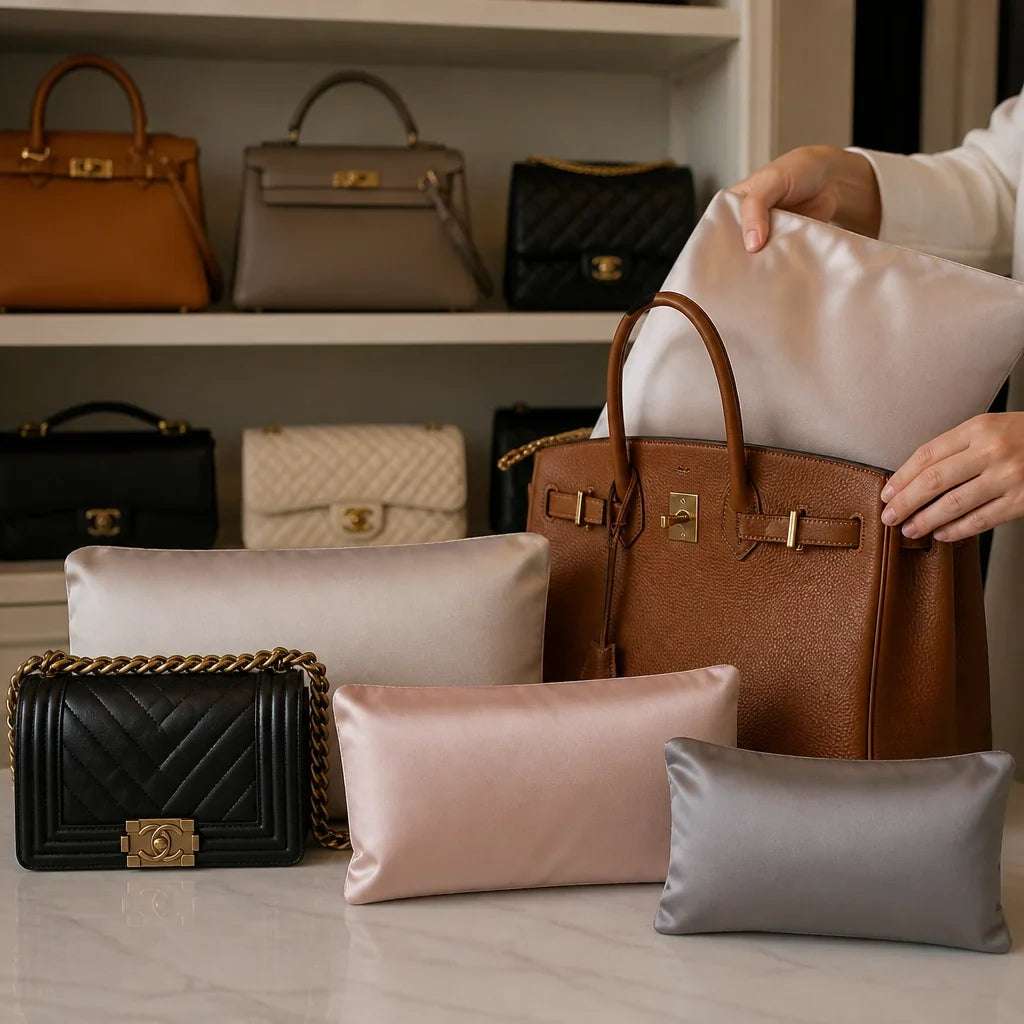
This is where many insert brands fail. They produce a single "medium" size and claim it fits multiple bag models. In reality, a Hermès Birkin 30 has fundamentally different interior dimensions than a Birkin 35. A Louis Vuitton Speedy 25 differs significantly from a Speedy 30. Generic inserts either fit loosely (providing inadequate support) or fit too tightly (risking pressure marks on the bag's sides).
We design our inserts with precision measurements specific to individual bag models. A Chanel Boy bag insert is engineered for the Boy bag's exact proportions. A Goyard St. Louis insert accounts for that tote's distinctive width and depth. This precision approach requires more engineering, but it's the only way to deliver optimal support without risk.
When an insert fits precisely, it supports the bag's weight evenly and prevents the sides from collapsing inward. It also prevents the insert itself from shifting during storage or handling. An insert that's too small can slide around inside the bag, potentially creasing whichever area it pulls away from.
How Our Handcrafted Inserts Deliver Superior Protection
We craft each insert individually rather than mass-producing them on automated assembly lines. This approach allows us to inspect every unit for quality and make adjustments that machines can't detect. Each insert receives careful stitching along its seams to ensure the sateen shell and angel hair fiber remain perfectly bonded throughout its lifespan.
The construction process also allows us to adjust fill density slightly for different bag styles. A structured leather bag might benefit from slightly firmer fill than a softer canvas tote. Our craftspeople make these distinctions intuitively, something that mass production can't accommodate.
Our inserts are colorfast and non-abrasive by design. We source materials specifically vetted for contact with luxury handbags, and we test them against common leather treatments and finishes. This due diligence prevents the scenario where an inexpensive insert causes unexpected damage to a valuable bag.
We also include free U.S. shipping with every order, recognizing that collectors should focus on their bags, not on cost calculations. Your Hermès Birkin deserves proper protection without friction.
Selection Guide: Choosing the Right Insert for Your Collection
Start by measuring your bag's interior dimensions: length, width, and depth. Compare these measurements to our product specifications, which we provide in detail for each model. An insert should fit snugly without forcing it into the bag or leaving visible gaps.
Next, consider your bag's material. Delicate leather requires especially gentle treatment, making a smooth sateen shell non-negotiable. Canvas bags are more forgiving but still benefit from precision fitting. Quilted bags need inserts that support without creating counter-pressure marks on the quilting pattern.
Storage environment matters too. If your closet tends toward humidity, confirm that your insert material resists moisture absorption. If you live in a dry climate, this concern becomes less critical, but it's not a drawback to avoid it anyway.
Finally, think about your collection size. Collectors with 5-10 bags benefit from having an insert for each piece. Those with larger collections might prioritize inserts for their most valuable or most frequently worn bags first, then expand over time.
Why Sateen with Angel Hair Fill is the Definitive Solution
After examining every alternative, sateen shells with angel hair fiber fill emerge as the clear standard for serious collectors. The combination addresses every dimension of the problem: structural support that lasts, materials safe for luxury leather, precision engineering tailored to specific bags, and handcrafted quality that ensures consistency.
Foam compresses. Cotton absorbs moisture. Generic inserts don't fit properly. Our approach eliminates all three problems while adding the benefit of timeless design that looks and feels appropriate inside a luxury handbag.
Your collection represents significant financial and emotional investment. Protecting that investment doesn't require complicated storage systems or expensive climate-controlled closets. It requires inserts engineered specifically for this purpose, made from materials that will outlast the bags themselves. That's what we deliver with every piece we craft.
Explore our full range of precision-fit inserts tailored to your specific handbags, and experience how proper storage looks and feels when it's actually done right.